Pixel Flow Level 386 Solution Walkthrough | Pixel Flow 386

How to solve Pixel Flow level 386? Get instant solution for Pixel Flow 386 with our step by step solution & video walkthrough.

Share Pixel Flow Level 386 Guide:
Pixel Flow Level 386 Gameplay
Pixel Flow Level 386 Solution 1
Pixel Flow Level 386 Solution 2
Pixel Flow Level 386 Solution 3

Pixel Flow Level 386 Overview

The Board Layout and Starting Colors

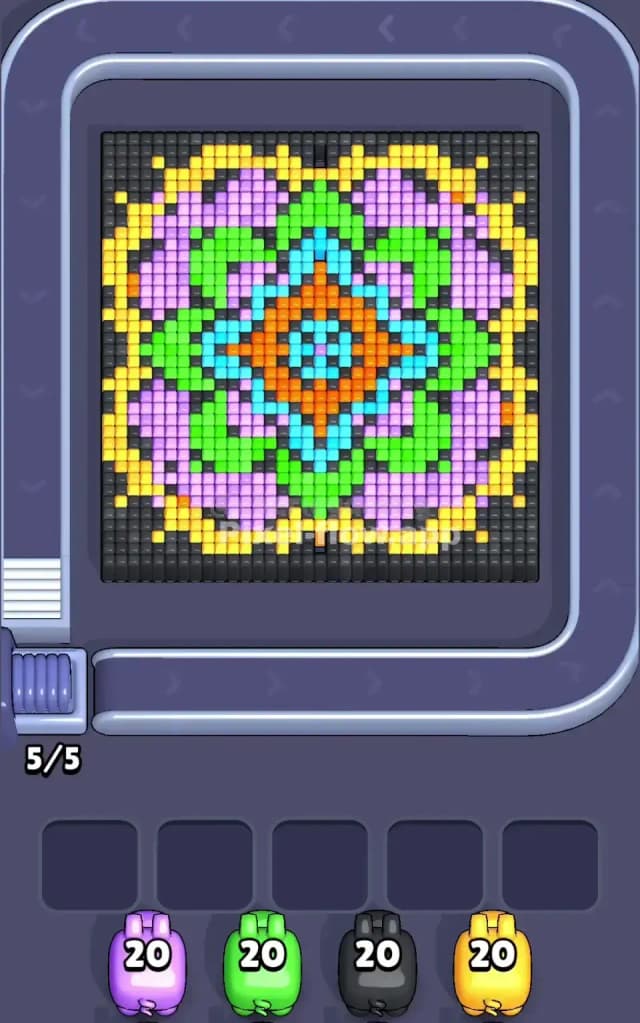
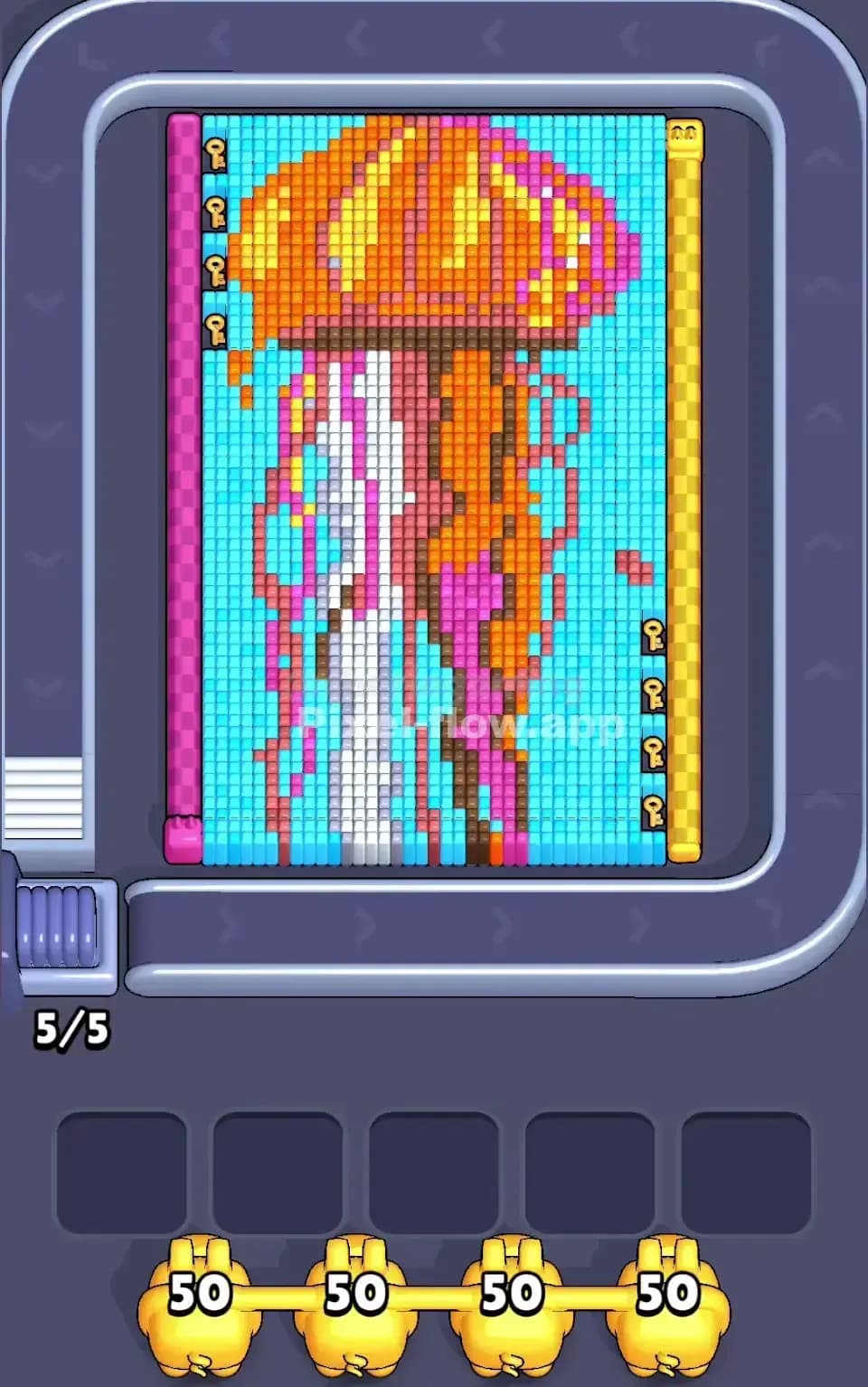
Pixel Flow Level 386 presents a charming jellyfish illustration rendered in vibrant voxels against a bright cyan background. The main subject dominates the center of the play area, with warm orange and golden tones forming the bell of the jellyfish, while magenta and pink accents create highlights and shadow depth. Below the bell, the tentacles extend downward in a mix of white, orange, magenta, and brown cubes, creating a complex layered structure that'll keep you thinking strategically about which colors to expose and when.

The board is densely packed with color, and you'll notice that the cyan background fills most of the negative space around the jellyfish. This means you're working with at least five distinct colors that need careful sequencing: cyan, orange, magenta, pink, white, and brown. The waiting slots on either side of the screen show five color-coded pigs lined up, each with a 50-ammo capacity displayed at the bottom. Your job in Pixel Flow Level 386 is straightforward in theory—clear every single voxel cube by shooting them with matching-colored cubes from the conveyor pigs—but the execution demands precise planning.

Win Condition and the Deterministic Challenge

You win Pixel Flow Level 386 by eliminating all voxels on the board. Here's the critical part: every pig's ammo count is fixed at 50, and the pig order is predetermined on the conveyor belt. You can't change the sequence or the ammo values, which means success hinges entirely on your decision-making about when to activate each pig. The deterministic nature of pig order and ammo means there's no luck involved—only strategy. If you miscalculate and jam all five waiting slots with pigs that have nowhere to spend their remaining ammo, you've locked yourself into a failure state that no subsequent moves can escape. This makes planning two or three pigs ahead absolutely essential for Pixel Flow Level 386.


Why Pixel Flow Level 386 Feels So Tricky

The Cyan Bottleneck and Waiting Slot Pressure

The biggest threat to your success in Pixel Flow Level 386 is the sheer volume of cyan cubes scattered throughout the board. Cyan forms the background layer, so it's everywhere—literally surrounding and interspersed with the jellyfish details. This creates an immediate problem: you need to clear cyan strategically to expose the layers beneath, but if you're too aggressive, you'll burn through ammo without creating a path for the other colors. The cyan pig has 50 ammo, which sounds like plenty until you realize that wasting even ten shots on poorly positioned cyan cubes means you won't have enough ammo to finish the job later. The real tension in Pixel Flow Level 386 is managing when to hit cyan so that subsequent pigs can find valid targets without getting stuck in the waiting slots. If the cyan pig lands in a waiting slot with 20 ammo remaining and no visible cyan cubes, you're one step closer to a jam.

Awkward Color Patches and Hidden Layers

The jellyfish's tentacles in Pixel Flow Level 386 create some genuinely tricky color pockets that don't become visible until you've cleared the surrounding cubes. For instance, there are isolated magenta and pink clusters that sit behind orange and cyan layers. If you activate the magenta pig before exposing these hidden magenta cubes, you'll watch helplessly as it drops into the buffer with 40-plus ammo and nowhere to go. Similarly, the white cubes forming parts of the tentacles are spaced unevenly, so the white pig might have only three or four valid shots in the early game, forcing it to wait for you to clear more layers before it can finish its job. The brown accents add another layer of unpredictability—they're sparse enough that you might activate the brown pig prematurely and watch it jam instantly.

The Aha Moment

I'll be honest: Pixel Flow Level 386 stumped me for a solid fifteen attempts. I kept trying to clear the cyan and orange quickly, thinking I could rush through to the magenta and pink details underneath. What actually happened was I'd always end up with three or four pigs stuck in the buffer, each with ammo remaining but no targets visible, and I'd be locked out. The level finally clicked when I stopped thinking "what can I clear right now?" and started thinking "what layers do I need to expose to let future pigs succeed?" Once I realized that the white tentacle details were key to unlocking the hidden magenta pockets, and that I should leave a few cyan cubes exposed specifically to keep the magenta pig happy, the whole puzzle suddenly made sense.


Step-by-Step Strategy to Clear Pixel Flow Level 386

The Opening: Expose, Don't Exhaust

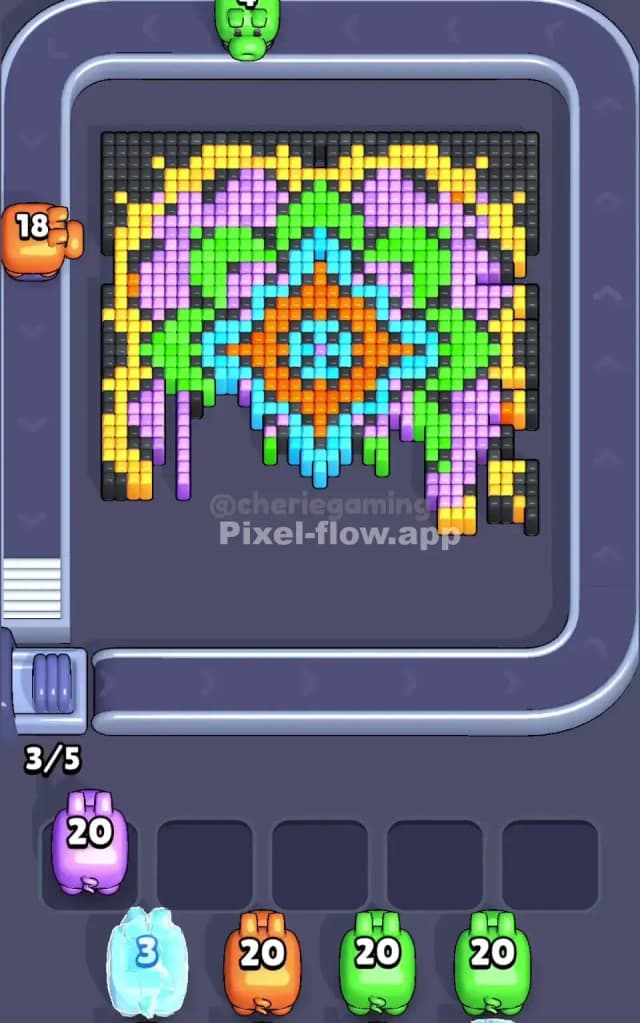
Your first move in Pixel Flow Level 386 should be to activate the cyan pig and start methodically clearing the background. But here's the catch—don't go crazy. Fire the cyan pig and let it target visible cyan cubes, aiming to clear maybe 15–20 ammo's worth on the first round. The goal is to expose some of the orange and magenta details in the jellyfish's bell without fully clearing every accessible cyan cube. Once you've opened up a few orange pockets, stop and let the cyan pig drop into a waiting slot if it runs out of targets. At this point, you should still have at least three free slots remaining.

Next, activate the orange pig while cyan is parked safely. The orange pig should have plenty of targets on the jellyfish's bell and upper tentacle regions. Let it fire and clear the majority of the orange surface layer. This is where Pixel Flow Level 386 starts to reward patience—by clearing orange, you're exposing the magenta and pink highlights underneath, and you're also revealing more opportunities for future colors. Once orange has spent maybe 30–35 ammo, it'll likely run out of targets and settle into the buffer. Keep two slots open still.

Mid-Game: Sequence and Layer Management

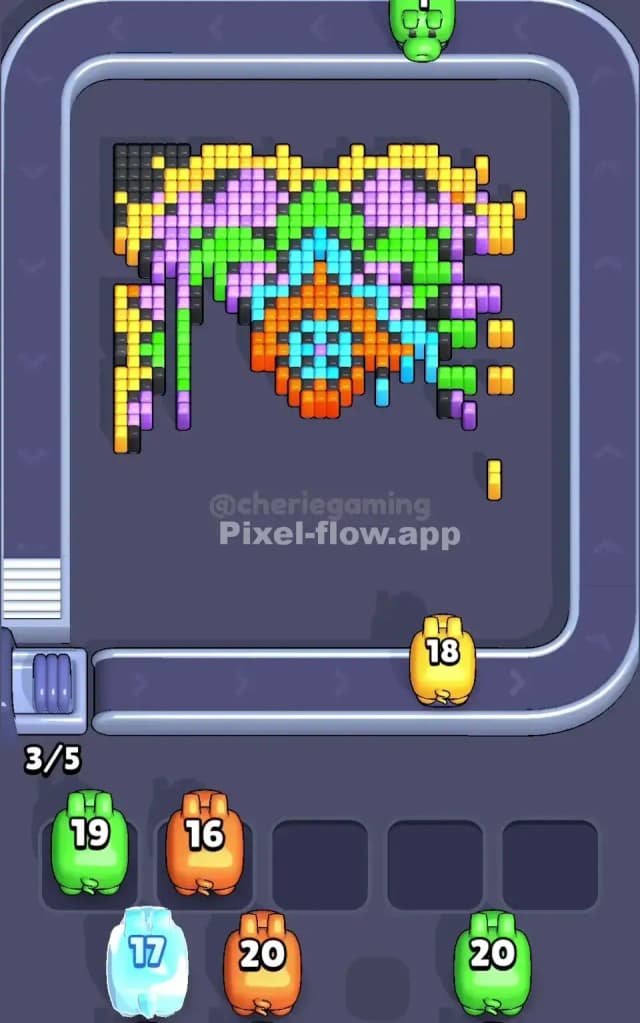
Now comes the trickiest part of Pixel Flow Level 386: the magenta and pink pigs need careful orchestration. Before you activate magenta, fire up the cyan pig again. Use this second round of cyan to clear the background around the tentacles and expose the hidden magenta pockets within them. The magenta pig will be useless if those inner magenta cubes remain buried, so this intermediate cyan push is crucial. Once you've exposed the magenta clusters, park cyan again and activate magenta.

The magenta pig in Pixel Flow Level 386 should now have multiple valid targets across the bell and tentacles. Let it spend 30–40 ammo, clearing the magenta accents and highlights. Once magenta is satisfied and parked, it's time to address the white and brown tentacle details. Activate the white pig and let it clear the structural cubes of the tentacles. White's ammo should land perfectly here because you've already removed the orange and magenta cover. After white, move to brown for the fine shadow details.

End-Game: The Pink Pig and Final Polish

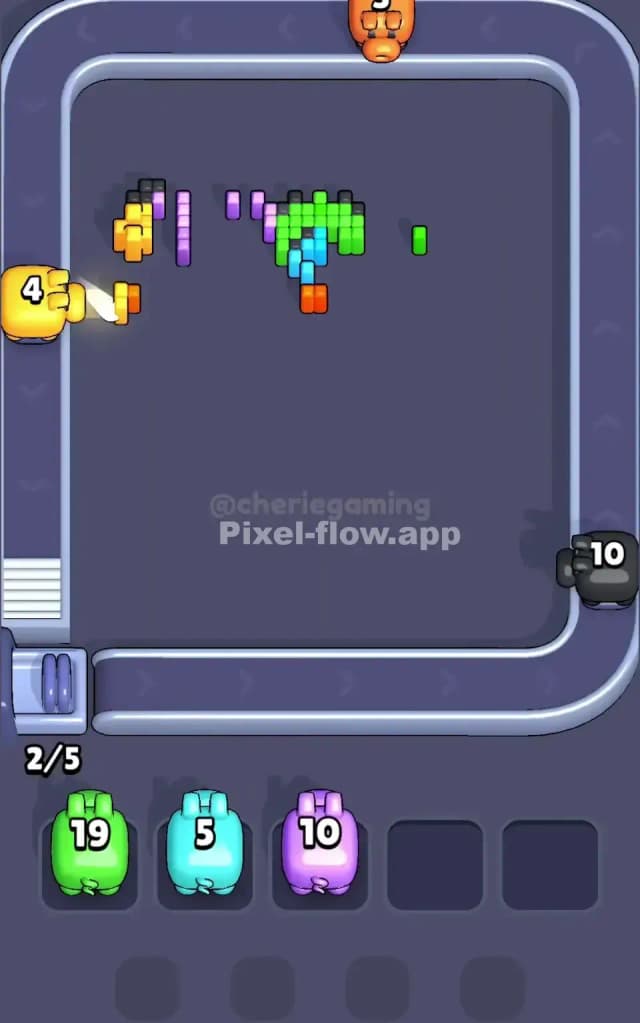
By the time you reach the final pig in Pixel Flow Level 386, you should have four pigs parked in the buffer, each with little to no ammo remaining. The pink pig is your cleanup crew, and it should finish off any remaining pink and magenta cubes you couldn't quite reach with the earlier pigs. The pink pig's 50 ammo should be more than enough to polish off the last details of the jellyfish.

The key to a clean end-game in Pixel Flow Level 386 is counting your remaining shots carefully. Before you activate pink, do a quick mental scan: are there any exposed pink cubes? If not, you've made an error earlier—you probably didn't expose all the pink details when you cleared the surrounding layers. If pink drops into a waiting slot with 45 ammo and only one valid shot visible, you've created a jam. To avoid this, make sure that by the time pink enters the queue, at least 10–15 of its shots are already visible and reachable. Your final move in Pixel Flow Level 386 should empty all five waiting slots completely, leaving no stuck pigs behind.


The Logic Behind This Pixel Flow Level 386 Plan

Exploiting Pig Order and Ammo Efficiency

The strategy for Pixel Flow Level 386 works because it respects the immutable constraints of the game. You can't change the pig order, and you can't increase anyone's ammo, so you have to work backward from the end state. Ask yourself: what does the final pig need to see in order to succeed? For Pixel Flow Level 386, pink needs visible pink cubes, so white and cyan must clear the cover first. What does white need? Clear orange and magenta. What does orange need? Clear cyan. This backward-chaining logic prevents you from activating pigs randomly and crashing into the buffer wall. Every pig activation in Pixel Flow Level 386 serves a dual purpose—it clears cubes and it exposes targets for future pigs.

Staying Calm and Counting Ahead

The psychological challenge of Pixel Flow Level 386 isn't the puzzle itself; it's resisting the urge to activate pigs frantically. I've found that success comes from taking a three-pig-ahead mentality. Before you press activate on any pig, ask yourself: which pig comes next, and will it have at least three to five valid targets when it enters the queue? If the answer is no, you need to expose more of those targets first. Watch the queue constantly in Pixel Flow Level 386—know which pig is coming, know roughly how much ammo they have, and mentally mark where their targets are on the board. This deliberate pacing transforms Pixel Flow Level 386 from a chaotic voxel-blasting game into a solvable logic puzzle where every move reinforces your progress toward clearing the board entirely.