Pixel Flow Level 391 Solution | Pixel Flow 391 Walkthrough
How to beat Pixel Flow Level 391: Video solution & walkthrough. The fastest way to pass Pixel Flow 391.
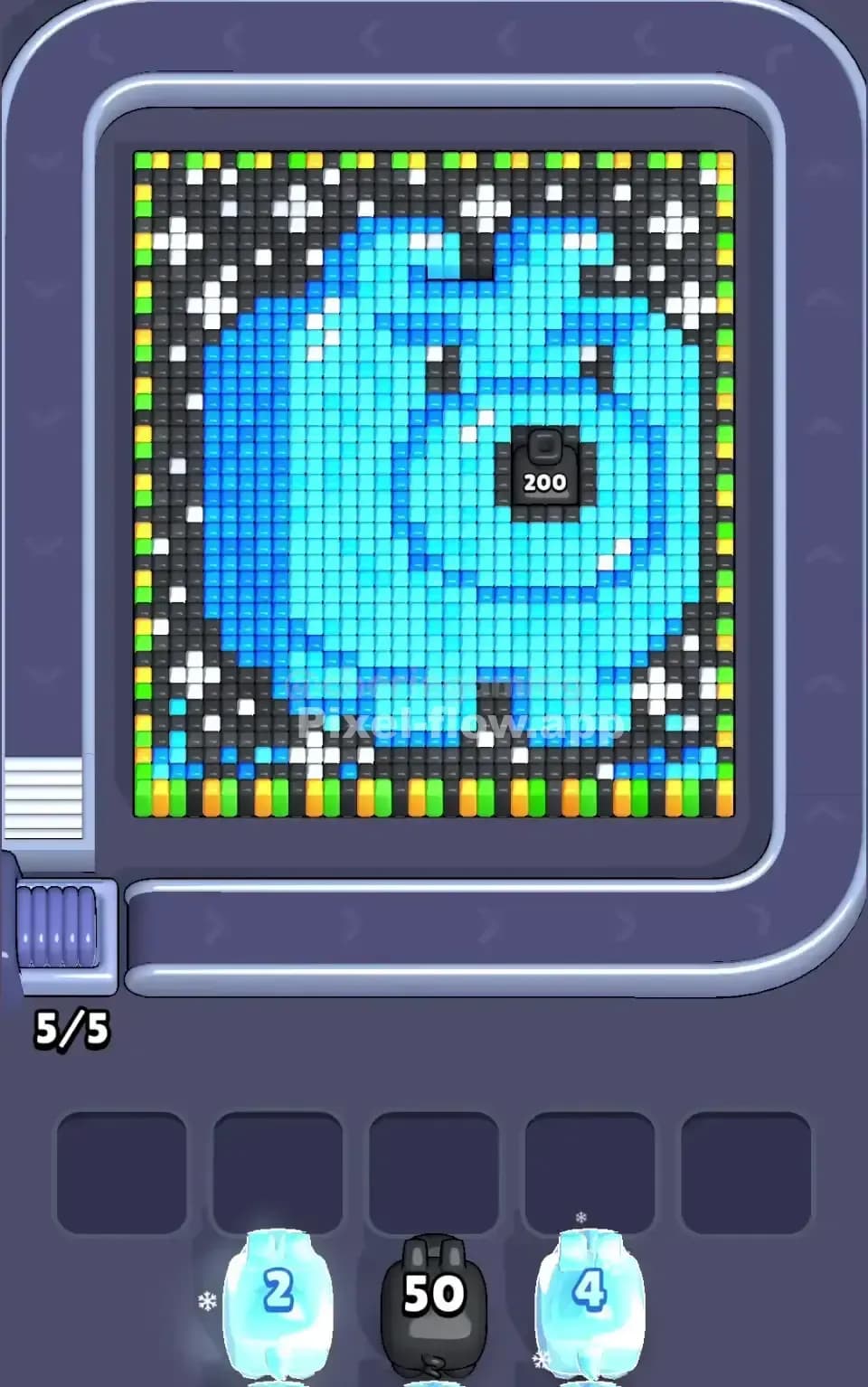
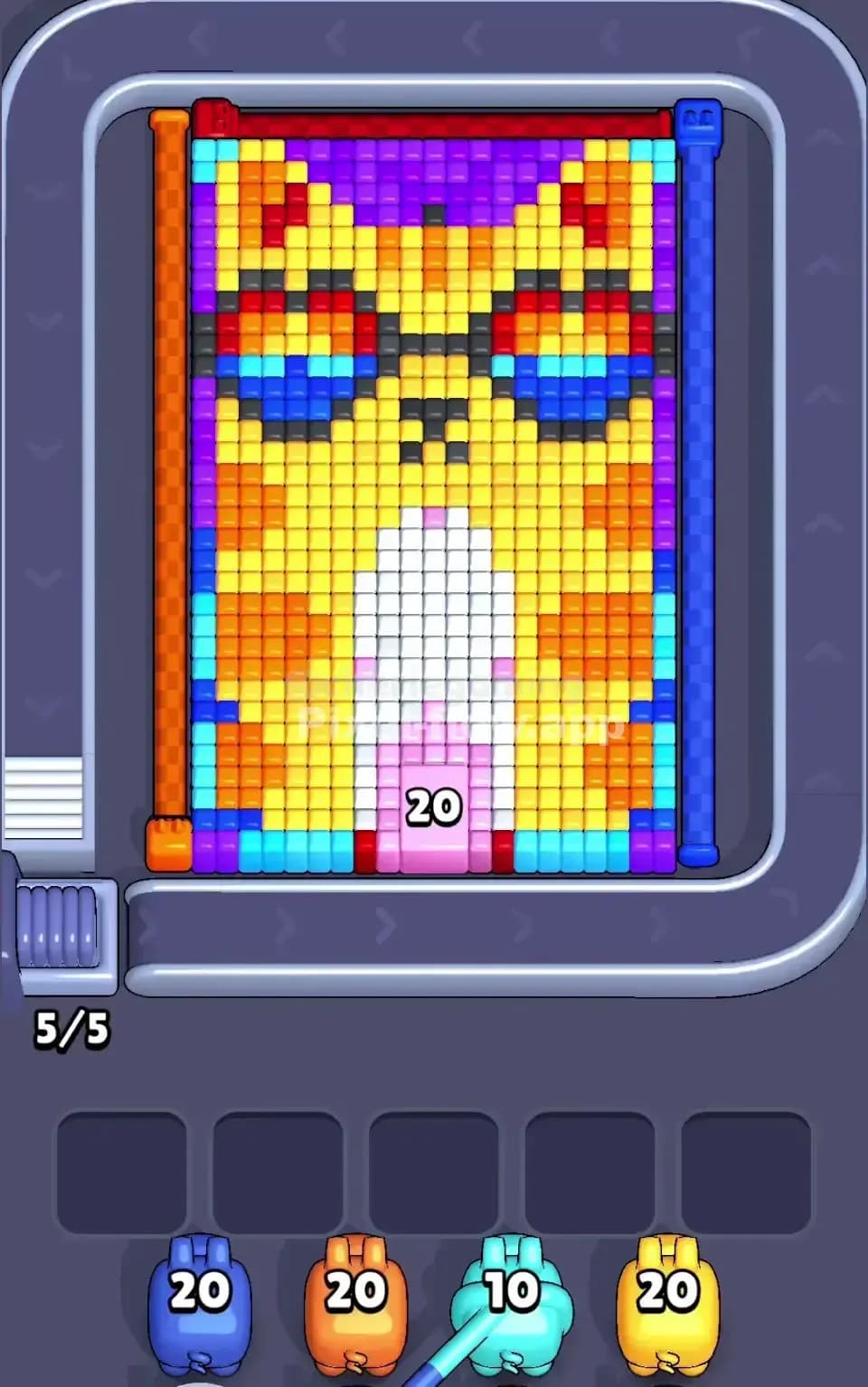
Is this the wrong level layout?🤔
Pixel Flow randomizes levels for different players. Don't worry, just upload a screenshot of your board, and our AI will find the correct video instantly.
Pixel Flow Level 391 Walkthrough
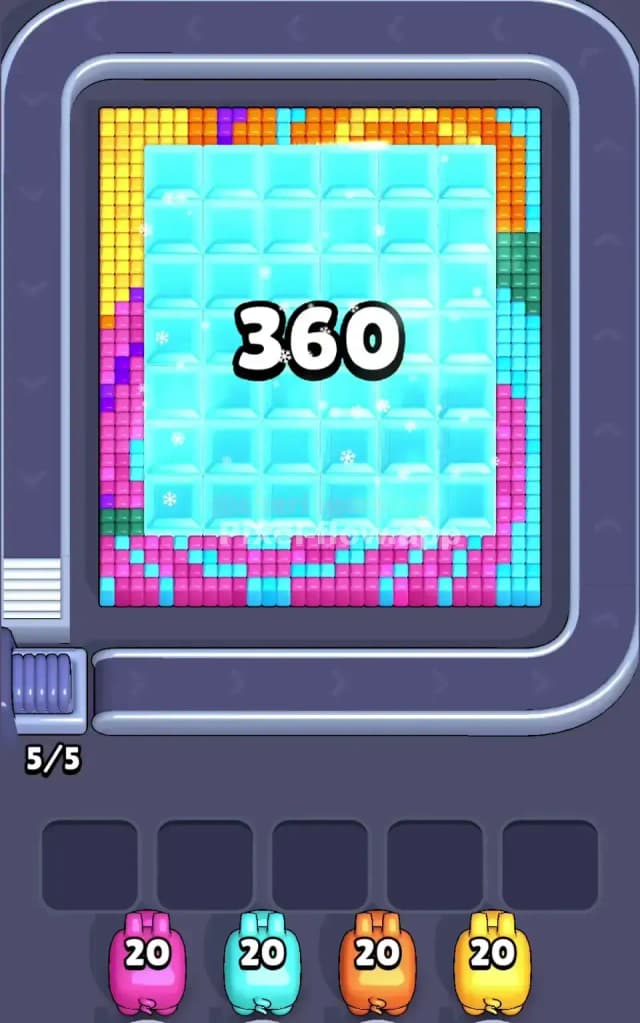
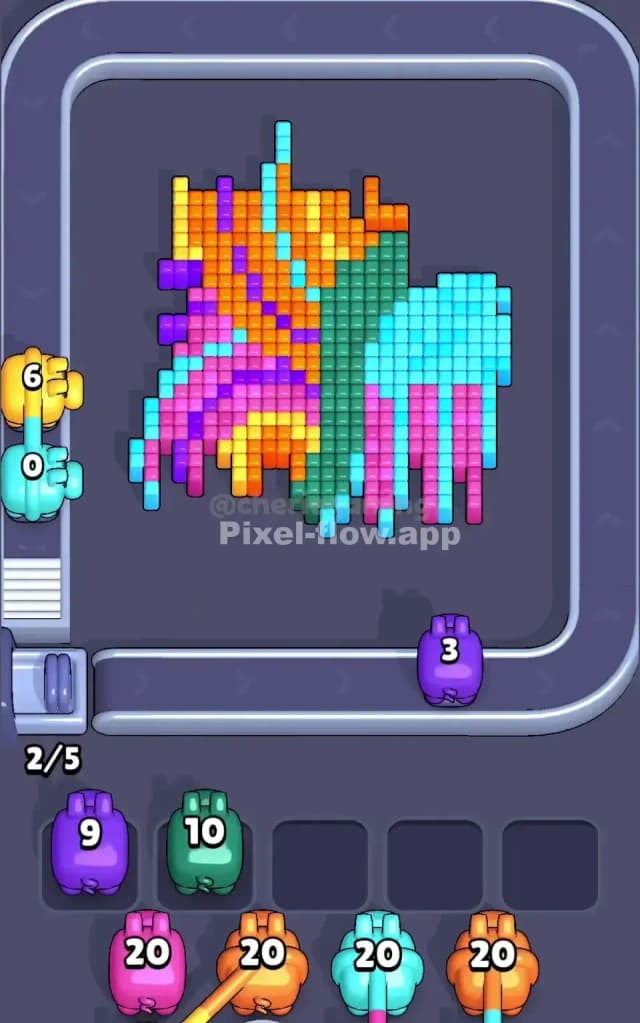
This level features a giant, frozen block obstacle in the center that obscures most of the actual pixel art. You are essentially digging through a massive ice sheet to reveal a colorful parrot underneath. The main colors are concentrated around the edges initially: yellow and orange in the top left, purple and pink on the left vertical strip, cyan on the right, and a chaotic mix of pink/blue at the bottom.
To beat Pixel Flow Level 391, you must prioritize clearing the "frame" of colors surrounding the central ice block first. The ice block itself is an obstacle layer that requires specific clearing later or melts as you clear adjacent pixels (depending on the specific mechanic for this ice set, but usually, it's about clearing the valid pixels around it).
Is this a hard level? Yes, it is very hard. The massive central block restricts your valid moves significantly in the early game, forcing you to be extremely precise with your slot management.
Pixel Flow Level 391 Overview
Imagine looking through a frosted window at a tropical bird. That is exactly what this level feels like. The central area is dominated by a large 6x7 grid of light blue "ice" blocks that you cannot directly shoot initially.
The actual artwork hiding underneath is a vibrant, multi-colored parrot.
- The Left Flank: Dominated by warm yellows and oranges at the top corner, transitioning into a messy mix of purple and bright pinks as you go down.
- The Right Flank: A tall, clean strip of cyan and teal blocks.
- The Bottom: A jagged, alternating pattern of pink and blue pixels that acts as the "floor" of the frame.
The asymmetry here is dangerous. The left side is "heavy" with multiple colors (Yellow, Orange, Purple, Pink) mixed together, while the right side is mostly uniform Cyan/Teal. This means your left-side pigs are at higher risk of jamming your slots if you aren't careful, while right-side pigs (Cyan) are safer bets early on.
Step by step solution walkthrough for Pixel Flow Level 391
First Color Zone to Erase in Pixel Flow Level 391
Start with the Bottom Pink/Blue Strip.
Why? Logically, the bottom row is the most accessible and least "layered." Looking at the board, the pink and blue pixels at the very bottom are exposed. Clearing this bottom foundation does two things:
- It frees up space immediately without digging deep into the complex top-left corner.
- It widens the "hit box" for the central ice block. Once the bottom pixels are gone, you can start chipping away at the layers underneath.
Narratively, you are "melting" the frame from the bottom up. Grab a Pink pig or a Cyan pig. Do not touch the Yellow or Orange pigs yet—their targets are stuck in the top left corner, which is a logic trap. If you pull a Yellow pig now, it might only shoot 2-3 pixels and then clog a slot.
How to pass Pixel Flow Level 391 without power ups or boosters
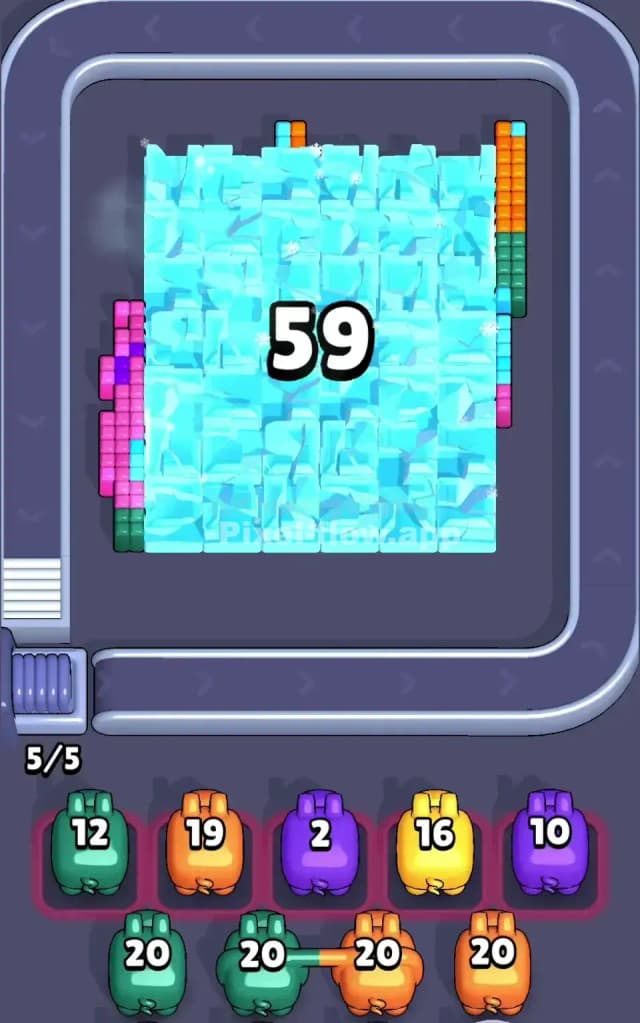
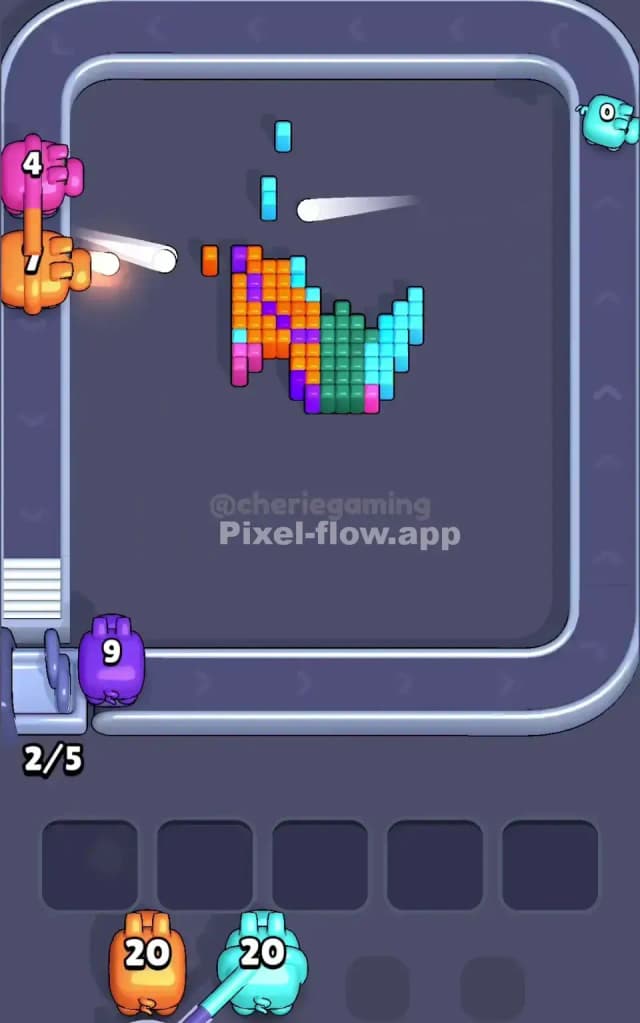
Once you clear the bottom row and the right-side cyan strip, the picture will look half-destroyed. The central ice block will have receded, revealing the parrot's main body. At this mid-level point, you will see a dense vertical chunk of Dark Green and Orange pixels in the center (the parrot's wing and chest).
This is the danger zone.
- Avoid the "Rainbow" Trap: The left side of the remaining structure has stripes of purple, pink, and orange woven together. Do not alternate pigs rapidly here.
- Focus on the big blocks: Look for the Dark Green vertical section. It is a solid block of color. If you see a Dark Green pig, prioritize it. It will likely empty its entire ammo clip in one go because the target is a huge, contiguous vertical stripe.
- Refuse to guess: If you have a choice between a Purple pig (for the messy left stripes) and an Orange pig (for the top block), count the visible pixels. If you only see 3 purple pixels exposed, do not pick the purple pig. Wait until you clear more obstructing layers to expose more purple.
Last Details You Clean Up in Pixel Flow Level 391
The end game usually leaves you with the "feathers" on the far left edge. These are often single pixels of purple or pink that were buried deep under the yellow top layer.
In the final few moves:
- You will likely have one or two stubborn Yellow blocks remaining in the top-left corner.
- The tail feathers at the bottom left (usually pink or cyan) tend to be the last things to go because they are physically lowest on the board, meaning higher blocks blocked shots to them earlier.
Save a full ammo pig for these final scraps. Do not waste a fresh pig on a single pixel if you have a partially used pig already in a waiting slot. Clear the board, watch the parrot vanish, and claim your win.