Pixel Flow Level 392 Solution Walkthrough | Pixel Flow 392
How to solve Pixel Flow level 392? Get instant solution for Pixel Flow 392 with our step by step solution & video walkthrough.


Pixel Flow Level 392 Overview
The Starting Board and Visual Layout
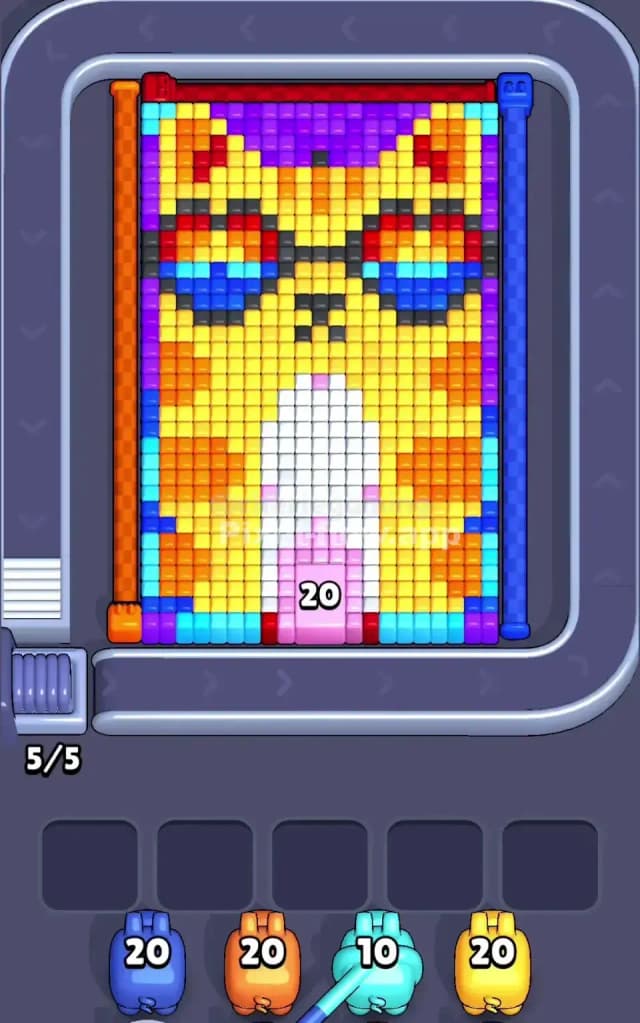
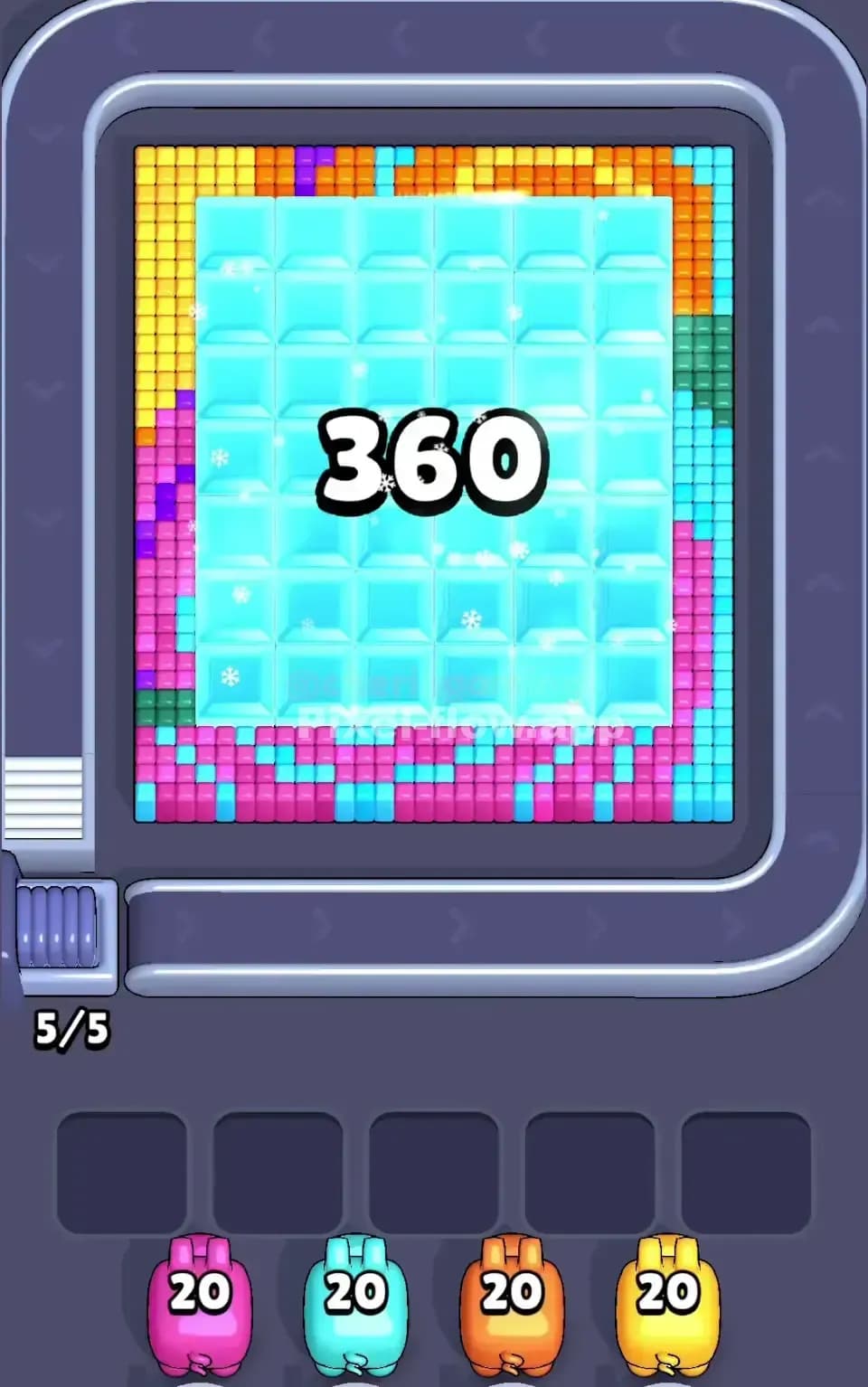
Pixel Flow Level 392 presents a deceptively simple-looking puzzle wrapped in a sea of cyan cubes. The board is dominated by a massive light blue voxel field that occupies the center and most of the visible play area, creating an almost hypnotic wall of matching color. However, don't let that fool you—hidden beneath and around this cyan expanse are smaller pockets of yellow, magenta, orange, and teal cubes that form the real challenge. The color distribution on Pixel Flow Level 392 is strategically asymmetrical, with the yellow and magenta sections compressed into tight corridors along the edges, while the cyan takes up roughly 70% of the board. This creates an interesting dynamic where you'll need to think carefully about which pigs to deploy and when, since the queue at the bottom shows you're working with exactly four pigs: a magenta pig with 20 ammo, a cyan pig with 20 ammo, an orange pig with 20 ammo, and a yellow pig with 20 ammo.
The Win Condition and Deterministic Nature
Your goal on Pixel Flow Level 392 is straightforward: clear every single voxel cube from the board. The satisfying part? The game is entirely deterministic—each pig will always shoot in the same order with the same ammo count, which means success comes down to pure planning rather than luck. You're not fighting randomness; you're fighting your own sequencing decisions. Once you understand the exact ammo counts and the exact cube positions, Pixel Flow Level 392 becomes a logic puzzle rather than a reflex challenge. This is both liberating and slightly intimidating, because it means every failure teaches you something concrete about what went wrong.
Why Pixel Flow Level 392 Feels So Tricky
The Cyan Bottleneck and Waiting Slot Pressure
The biggest threat to your success on Pixel Flow Level 392 is the cyan pig itself. With 20 ammo and a board that contains well over 20 cyan cubes, you'll need to use this pig at least twice—and possibly three times if the colored layers beneath don't reveal enough targets on the first pass. The problem? If you burn through your other three pigs (magenta, orange, yellow) without clearing enough supporting cubes, the cyan pig might land in a waiting slot with ammo still remaining but no valid targets visible. Once that happens, you're one step closer to a jam. Pixel Flow Level 392 becomes a race against your own pig queue; you have to sequence deployments so that each colored pig finds enough targets to spend its ammo completely, or you risk watching your waiting slots fill up with stuck pigs.
Awkward Color Pockets and Ammo Mismatches
The second sneaky problem on Pixel Flow Level 392 is the scattered distribution of magenta and orange cubes. They're not centralized in one easy-to-hit region; instead, they're fragmented around the edges and corners of the board. This means when your magenta pig drops, it might only find 15 or 16 visible targets instead of the full 20, forcing it to sit in a waiting slot and hoping you can expose more magenta cubes later. Similarly, the orange cubes on Pixel Flow Level 392 are compressed into a small zone, so if you deploy the orange pig too early before the board is partially cleared, it'll waste ammo hitting the same few cubes while ignoring the bigger cyan mass. The third subtle trap is that yellow is extremely sparse—you might only see 8–10 yellow cubes on the initial board state, which means your yellow pig almost certainly won't spend all 20 ammo on the first turn. This forces you to plan for the yellow pig's return, and that takes up valuable waiting slots if you're not careful.
The Moment It Clicked
Honestly, when I first tackled Pixel Flow Level 392, I was frustrated. I kept deploying pigs in queue order (magenta, cyan, orange, yellow) and watched helplessly as the cyan and yellow pigs got stuck with ammo remaining. But then I realized: I didn't have to deploy in queue order. I could let pigs wait and come back to them later. Once I stopped thinking of the waiting slots as a failure state and started thinking of them as temporary storage, Pixel Flow Level 392 suddenly became manageable. The relief was real—it went from feeling like a lose-condition minefield to a satisfying puzzle where every decision mattered.
Step-by-Step Strategy to Clear Pixel Flow Level 392
Opening: Prioritize the Edges and Keep the Buffer Clear
Start Pixel Flow Level 392 by deploying your magenta pig first, not because it's in the queue, but because magenta is the most constrained color on the board. Your magenta pig has 20 ammo, and there are roughly 15–18 visible magenta cubes at the start. This might seem bad, but here's the key: by shooting magenta early, you'll expose some of the cyan layer beneath, which creates more opportunities for your cyan pig later. After magenta spends its ammo (even if it doesn't use all 20), let it sit in waiting slot one. Don't panic; having one pig in the buffer is healthy at this stage.
Next, deploy your orange pig. The orange cubes on Pixel Flow Level 392 are similarly edge-bound, and clearing them will expose more of the underlying cyan structure. Your orange pig should find roughly 18–20 targets, so it might fully spend its ammo or come close. If it leaves 1–3 ammo unspent, that's acceptable—it'll park in waiting slot two and wait for more orange to appear as you clear cyan.
Mid-Game: Manage Cyan Strategically and Expose Layers
Now comes the critical phase of Pixel Flow Level 392. Your cyan pig is your workhorse—with 20 ammo and a board that's now partially cleared of magenta and orange, it should find plenty of targets. Deploy your cyan pig and let it tear through the visible cyan cubes. You're aiming for it to spend all 20 ammo on this first deployment because the cyan pig is your best tool for exposing the interior layers. If your cyan pig uses all 20 ammo and empties a waiting slot, that's progress.
After cyan, it's tempting to deploy yellow immediately, but pause and assess. Count the visible yellow cubes. If you see fewer than 10, hold the yellow pig in the waiting slots for now. Instead, recycle your magenta or orange pig if they're still waiting—send magenta back out if more magenta cubes are now exposed, or hold for a second cyan deployment if the board still has cyan available. Pixel Flow Level 392 rewards patience over rush.
End-Game: Finish with Yellow and Avoid the Final Jam
When you've cleared most of the magenta, orange, and cyan, and you're staring at scattered yellow cubes across a mostly-empty board, that's when you deploy your yellow pig. By this point, Pixel Flow Level 392 should be nearly solved, and your yellow pig's 20 ammo—even if there are only 8–12 yellow cubes left—will feel generous. Your yellow pig should clean up whatever remains.
The final checkpoint on Pixel Flow Level 392 is ensuring you have at least one empty waiting slot before deploying your last pig. If you have zero empty slots and you deploy a pig with ammo remaining and no targets, you've lost. Avoid that by recycling or fully emptying at least one pig before the final push.
The Logic Behind This Pixel Flow Level 392 Plan
Ammo Counting and Waiting Slot Economics
The strategy for Pixel Flow Level 392 works because it respects the mathematics of the game. You have 80 total ammo (4 pigs × 20 each) and roughly 75–80 total cubes on the board. That means you should have just enough ammo to clear everything, but only if you spend every single shot. By prioritizing edge colors first and letting pigs wait when appropriate, you ensure that every pig finds targets for its ammo. You're not reacting randomly; you're executing a plan based on cube counts and ammo values.
Staying Calm and Planning Ahead
The psychological key to Pixel Flow Level 392 is confidence. Watch your queue, count the ammo above each waiting pig, and always think two or three pigs ahead. Ask yourself: "If I deploy this pig now, will it find enough targets? If not, where will it wait, and can I afford to lose a slot?" By treating Pixel Flow Level 392 as a logic puzzle with a known solution, you transform it from a frustrating endurance test into a satisfying challenge where every decision is justified. That's when the level clicks, and you clear it with style.