Pixel Flow Level 394 Solution Walkthrough | Pixel Flow 394

How to solve Pixel Flow level 394? Get instant solution for Pixel Flow 394 with our step by step solution & video walkthrough.

Share Pixel Flow Level 394 Guide:
Pixel Flow Level 394 Gameplay
Pixel Flow Level 394 Solution 1
Pixel Flow Level 394 Solution 2
Pixel Flow Level 394 Solution 3

Pixel Flow Level 394 Overview

The Board Layout and Dominant Colors

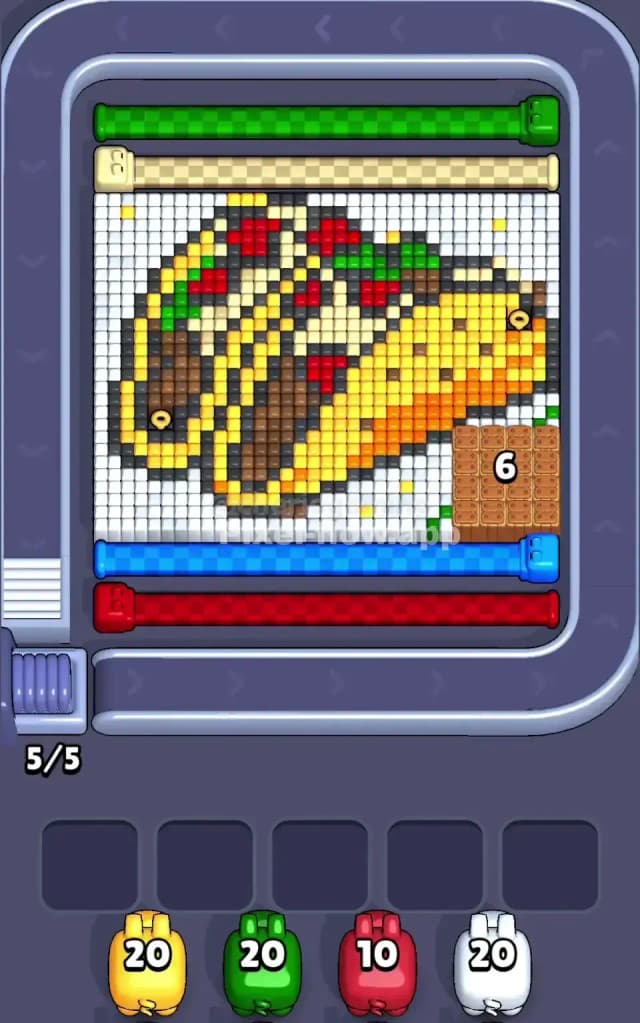
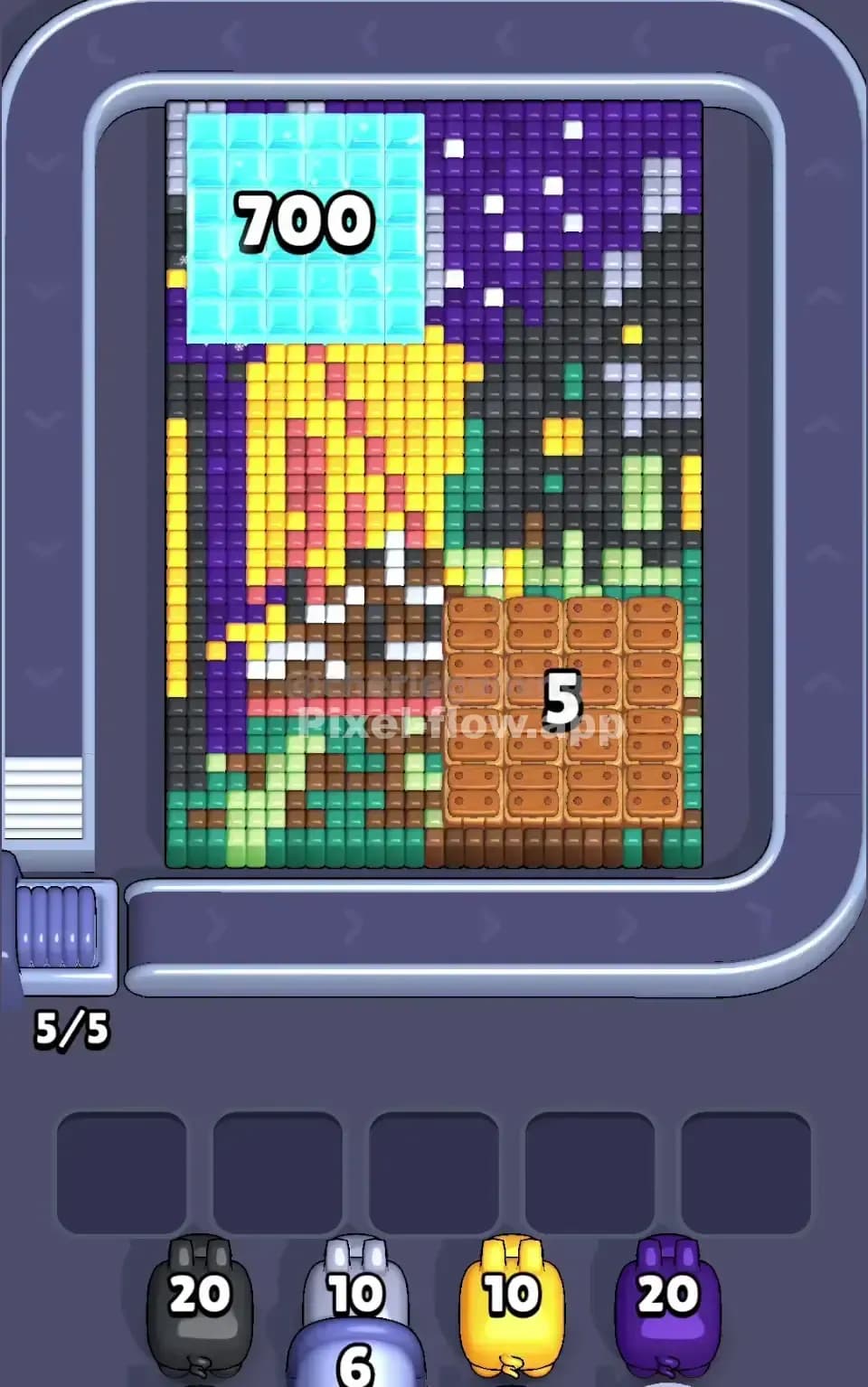
Pixel Flow Level 394 is a visually dense level that presents a layered voxel picture with a striking composition. The board is dominated by cyan cubes in the upper left quadrant, yellow cubes forming a large diagonal mass in the center-left, deep purple and dark gray cubes occupying the right side and upper regions, and a substantial brown cube formation anchoring the lower right. Green and teal accents appear scattered throughout the middle and bottom layers, creating color bridges between major sections. The level also features what appears to be a decorative element or hidden layer marker (the "700" display and "5" indicator), which hints at the complexity you're about to navigate. What makes this board tricky is that no single color dominates the entire playfield—you're dealing with a genuinely mixed palette that requires careful sequencing.

Win Condition and Deterministic Pig Order

To beat Pixel Flow Level 394, you must clear every single voxel cube from the board. The good news? Your pig queue is completely deterministic. Looking at your incoming pigs, you have a black pig with 20 ammo, a light blue pig with 10 ammo, a yellow pig with 10 ammo, and a purple pig with 20 ammo—totaling 60 ammo shots across four pigs. Since Pixel Flow Level 394 contains exactly as many cubes as you have ammo, there's zero margin for error. You can't afford to waste a single shot on a cube that doesn't match your active pig's color, and you can't let pigs get stuck in the waiting slots with unspent ammo. The moment all five waiting slots fill up and you still have ammo to burn, you'll fail. This deterministic setup means you need to plan your pig sequence strategically before you even send the first one down the conveyor belt.


Why Pixel Flow Level 394 Feels So Tricky

The Brown Cube Bottleneck

The most obvious problem in Pixel Flow Level 394 is that massive brown formation in the lower right. There are roughly 25–30 brown cubes visible, but here's the catch: you don't have a brown pig in your queue. None. That means those brown cubes are blocking access to deeper layers beneath them, and you cannot remove them directly. You'll need to clear surrounding colors first to expose alternative paths, or those brown blocks will trap you. This bottleneck is the single biggest threat to your run because it forces you to be extremely deliberate about layer exposure. If you don't plan which colors to fire in which order, you'll paint yourself into a corner where a pig lands in the waiting buffer with ammo still left but no valid targets on the board—instant failure.

Cyan-to-Yellow Color Sequencing Trap

The cyan section in the upper left is vibrant and easy to spot, but it's deceptively problematic. Your black pig (20 ammo) will arrive first, and while there are plenty of dark gray and black cubes scattered throughout the right side of the board, the cyan cubes are isolated in that upper-left pocket. If you fire your black pig too early without a clear plan to expose deeper layers, you risk getting it stuck with leftover ammo. Conversely, the yellow pig (10 ammo) has a massive yellow target region in the center-left, but yellow cubes are also intermixed with the purple and brown formations. You need to decide: do you use yellow to chip away at the center-mass, or do you save it for a specific layer-clearing moment? The wrong choice here will cascade into problems later.

Purple's Deceptive Spread and the Gray Mask

Purple occupies a huge portion of the right side and upper-middle, making it seem like your purple pig (20 ammo) will have an easy time. The reality is messier. Dark gray cubes are interspersed throughout the purple region, creating visual confusion about what's actually purple and what's a different color. Additionally, purple appears in multiple disconnected pockets—some at the surface, some buried deeper. If you rush your purple pig without mapping out which purple cubes are exposed first, you'll burn through ammo hitting scattered targets and leave yourself unable to finish deeper pockets. I've personally felt the frustration of firing a pig blindly at what looks like a solid color block, only to realize half the cubes I thought were there are actually a different shade or layer.

The Waiting Slot Pressure

Here's the mental game that makes Pixel Flow Level 394 genuinely stressful: you have exactly five waiting slots, and four pigs in the queue. That means you can only afford one pig to miss its targets and sit idle. If two pigs end up parked in the buffer (both with unspent ammo and no valid targets), you've already lost. This pressure forces you to think two or three moves ahead. You can't just send pigs down and react; you have to anticipate where each pig will find targets and ensure the next pig in line has something to do. The moment you see a pig drop into the waiting area, alarms should go off in your head.


Step-by-Step Strategy to Clear Pixel Flow Level 394

Opening: Establish Board Momentum with the Black Pig

Start by sending your black pig down the conveyor belt first. Your black pig carries 20 ammo, and its primary targets are the dark gray cubes scattered throughout the right side and the black/dark cubes in the central regions. Focus on hitting the dark gray clusters on the right side of the board—these form visual noise and obstruct sight lines to deeper colors. By removing dark gray early, you expose what lies beneath and make it easier to see which colors are actually available next. Don't go crazy trying to hit every black-colored cube; instead, think strategically about which dark cubes, when removed, will open up access to other colors like cyan or yellow. Fire maybe 12–15 shots from your black pig on high-value dark cubes, then let it sit with 5–8 ammo remaining. This keeps a slot available and sets up the next pig to enter without immediately getting bottlenecked.

Mid-Game: Layer Excavation and Cyan Extraction

Once your black pig has established a foundation, send the light blue pig (10 ammo) straight at the cyan pocket in the upper left. Cyan is visually isolated and relatively self-contained, making it a perfect target for a mid-sized pig. The cyan section should consume most or all of your light blue pig's 10 ammo because those 10–12 cyan cubes form a clean, visible cluster. This move accomplishes two things: it clears an entire color zone (reducing visual chaos) and it opens the upper-left area, potentially exposing yellow cubes beneath or adjacent to the cyan formation. After cyan is gone, send the yellow pig (10 ammo) at the large yellow mass in the center-left. The yellow pig will have a field day here—yellow dominates a visible wedge of the board, and your 10 ammo should carve a significant path through it. As you remove yellow, watch for what gets exposed beneath. You'll likely see purple, green, and possibly more brown. The key insight here is that yellow removal is your "revelation phase"—it shows you what's really underneath and lets you plan the final purple sweep.

End-Game: Purple Finisher and Clean Buffer Exit

Your purple pig (20 ammo) arrives last and is your heavyweight finisher. By this point, cyan is gone, yellow is mostly cleared, and dark gray is thinned out. Purple should be your primary target, but you'll also encounter green, teal, and any remaining brown or dark cubes. Fire your purple pig strategically at purple clusters, prioritizing high-density pockets over scattered singles. Since you have 20 ammo and roughly 15–18 purple cubes visible, you'll have a small buffer. Use those final 2–4 shots to clean up any stray green or teal cubes that might otherwise jam you. The critical moment is the very last 2–3 pigs in your queue. Before you send the purple pig down, visually confirm that there are no color groups left completely untouched. If you spot a small cluster of green or teal that's never been targeted, either maneuver the yellow or black pig (if they have ammo left) to graze it, or accept that purple will clean it up as a final duty. Never let a pig drop into the waiting buffer with unspent ammo and zero valid targets—that's how you fail Pixel Flow Level 394 at the finish line.


The Logic Behind This Pixel Flow Level 394 Plan

Ammo Efficiency and Pig Order Exploitation

The strategy above exploits the fact that Pixel Flow Level 394's pig order is fixed and your total ammo exactly matches the cube count. By sending black first, you're not just randomly destroying cubes—you're systematically removing obstructions that would otherwise block sight lines and future pig access. Cyan goes to the light blue pig because it's isolated and sized perfectly for 10 ammo. Yellow goes to the yellow pig for the same reason: color match, visible target, and perfect ammo fit. Purple finishes the job because it's abundant and your purple pig has enough ammo to mop up secondary colors (green, teal) that earlier pigs couldn't touch. This ordering isn't random; it's a deliberate escalation from obstructing layers to primary color zones to the final cleanup phase. You're not fighting the game's structure—you're working with it.

Staying Calm Under Move Pressure and Planning Ahead

The real skill in Pixel Flow Level 394 isn't reflexes; it's mental discipline. Watch the waiting slots constantly. Count how many cubes each pig is likely to hit. Before sending a pig down, ask yourself: "If this pig finishes its targets early, will the next pig have something to shoot at?" If the answer is no, hold off—send the next pig instead, or adjust your current pig's targeting strategy. Planning two or three pigs ahead means you're not surprised by sudden bottlenecks. You'll notice the brown cubes aren't going anywhere, which tells you to deprioritize brown and focus on colors with matching pigs. You'll see that the waiting buffer is your enemy, not your friend, which means every pig needs a full job lined up. By thinking in terms of sequences and layer exposure rather than individual shots, you'll transform Pixel Flow Level 394 from a chaotic puzzle into a logical, solvable challenge. Stay patient, trust the deterministic pig order, and clear Pixel Flow 394 with confidence.