Pixel Flow Level 405 Solution | Pixel Flow 405 Walkthrough
How to beat Pixel Flow Level 405: Video solution & walkthrough. The fastest way to pass Pixel Flow 405.
Is this the wrong level layout?🤔
Pixel Flow randomizes levels for different players. Don't worry, just upload a screenshot of your board, and our AI will find the correct video instantly.
Pixel Flow Level 405 Walkthrough
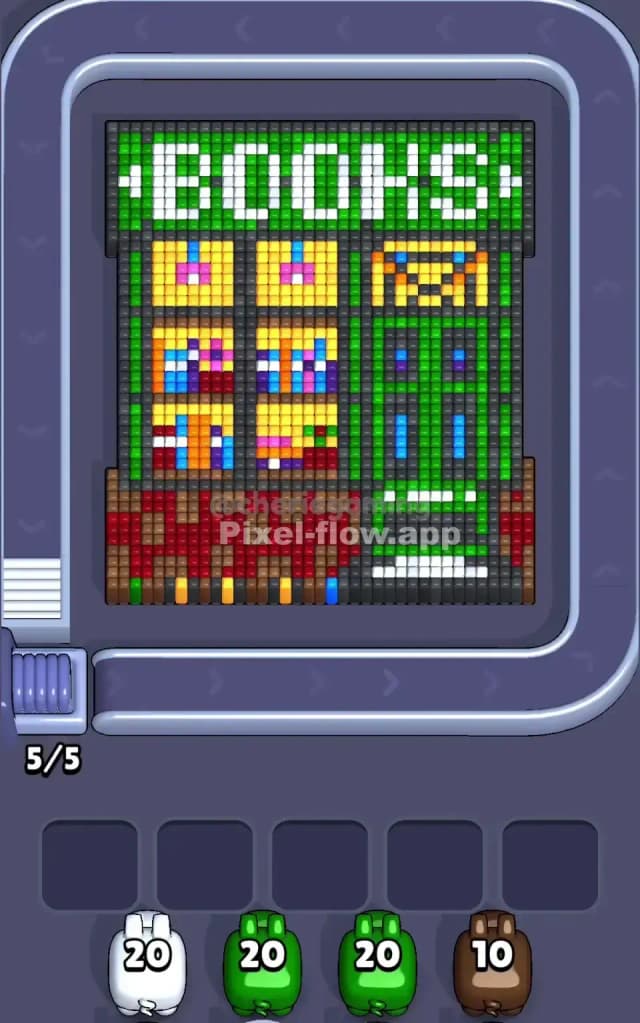
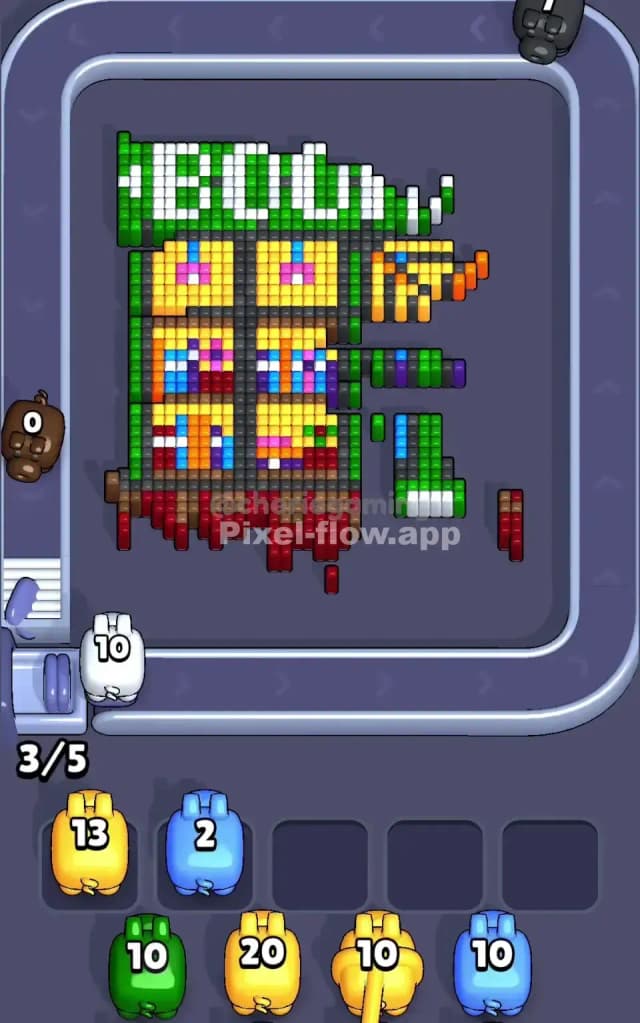
This level features a charming little pixel art bookstore storefront. You've got a prominent green sign at the top spelling out "BOOKS" in white block letters. Below that, the structure is split: the left side is a large yellow window pane displaying colorful books, while the right side is a tall green door with blue glass panels. The base of the building is a mix of dark brown and reddish bricks.
The rule to beat Pixel Flow Level 405 is all about vertical management. The "BOOKS" sign spans the entire top width, acting as a lid over everything below. You have to chip away at that green and white canopy while simultaneously managing the dense brown brickwork at the bottom. Because the colors are so segmented—green on the right, yellow on the left—you can easily clog your waiting slots if you aren't careful about which side of the store you are demolishing.
Is it tough? I'd classify this as a very hard level. The density of the blocks, especially the mixed colors inside the window and the solid door, means you have very little room for error with your ammo count.
Pixel Flow Level 405 Overview
Think of this level as a renovation project where you're tearing down a cozy street corner shop. The scene is distinctly urban but quaint. The "BOOKS" sign is the most obvious feature, screaming in bright white against a forest green background.
The layout is heavily asymmetric.
- The Left Side: This is the "window" zone. It's dominated by bright yellow frames holding small, multi-colored clusters of pixels (blue, pink, purple) that represent books on shelves.
- The Right Side: This is the "entrance" zone. It’s a solid vertical slab of green (the door frame) with tall, thin blue windows.
- The Bottom: A foundation of red and brown bricks runs across the entire width, but it's thicker on the left side under the window.
This asymmetry is dangerous. If you focus too much on the yellow window frames on the left, you might ignore the green door on the right, leaving you with no valid targets for green pigs later on. Conversely, the brown pigs are useless against the upper "BOOKS" sign but critical for the bottom foundation.
Step by step solution walkthrough for Pixel Flow Level 405
First Color Zone to Erase in Pixel Flow Level 405
I start by shaving off the Green sections, specifically prioritizing the vertical green door on the right side and the background of the "BOOKS" sign.
Here is the narrative logic: The green is the most pervasive "outer shell" color here. It frames the sign at the top and forms the entire door structure on the right. By clearing the green door first, you expose the layers behind it and, more importantly, you clear a massive chunk of the board's right side. If you try to clear the yellow windows first, you'll often find your yellow pigs hitting the green door frame by accident or just running out of valid yellow targets because the "BOOKS" sign is blocking the upper window panes. Clear the green to open the shop up.
How to pass Pixel Flow Level 405 without power ups or boosters
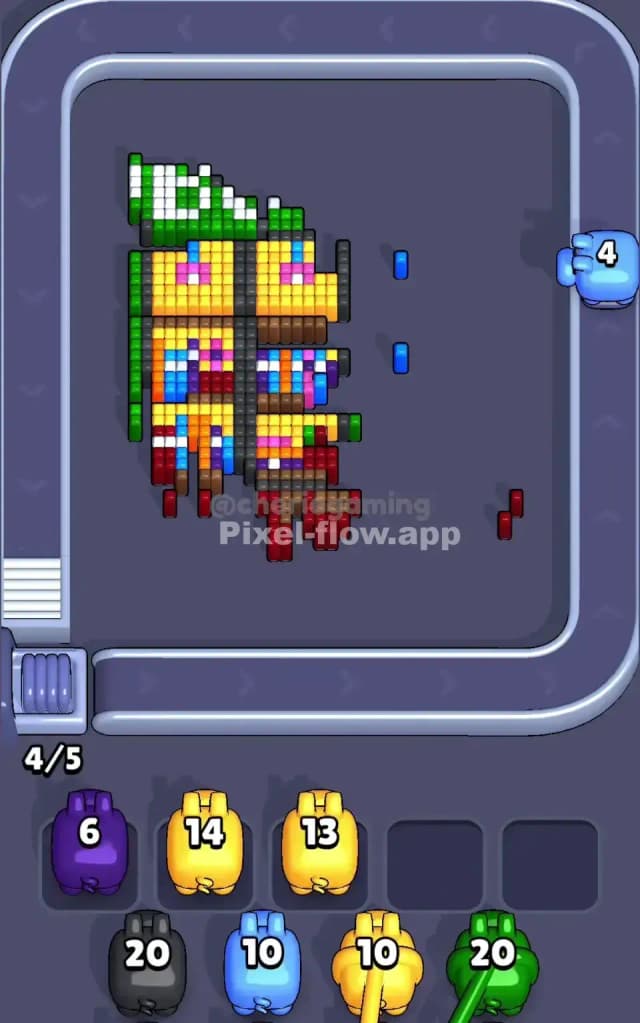
Mid-way through, the "BOOKS" sign will be illegible—likely just a few floating white pixels—and the green door will be gone. You will be left with a stubborn chunk of Yellow window frames on the left and a messy foundation of Red and Brown bricks at the bottom.
This is the danger zone. You will see waiting slots filling up with Brown or Red pigs because you are trying to clear the Yellow windows.
- Stop ignoring the floor. Use your Brown and Red pigs immediately when they appear to clear the bottom foundation rows. Do not let them sit in the waiting slots hoping for a "better shot." The bottom rows are dense and block access to lower internal layers.
- The White Pixel Trap: The white letters "BOOKS" often leave straggler pixels floating in the air after the green background is gone. These are dangerous. Prioritize White pigs to clear this top debris. If you don't, they will block shots from hitting the yellow window panes below them.
- Color Switching: Once the green door is gone, the right side is empty. All your fire must concentrate on the left. If you get a pig color that only exists deep inside the window (like pink or purple), but the yellow frame is still up, hold that pig only if you have a Yellow pig coming up immediately to break the glass. Otherwise, you might have to discard it to keep the belt moving.
Last Details You Clean Up in Pixel Flow Level 405
The final few moves are almost always the "books" themselves. You'll have stripped away the green sign, the yellow window frames, and the brown floor. What remains are floating clusters of Blue, Pink, and Purple pixels—the contents of the bookshelf.
These are tricky because they are small targets. You need to be precise. Don't spam the fire button here. Watch the rotation. Ensure your Blue pig lines up exactly with that tiny blue book remnant before firing. Often, a single Purple pixel hides behind a Yellow frame remnant; ensure the frame is fully gone before wasting a Purple pig's ammo. Clean up the little books, and the level is yours.