Pixel Flow Level 406 Solution | Pixel Flow 406 Walkthrough
How to beat Pixel Flow Level 406: Video solution & walkthrough. The fastest way to pass Pixel Flow 406.
Is this the wrong level layout?🤔
Pixel Flow randomizes levels for different players. Don't worry, just upload a screenshot of your board, and our AI will find the correct video instantly.
Pixel Flow Level 406 Walkthrough
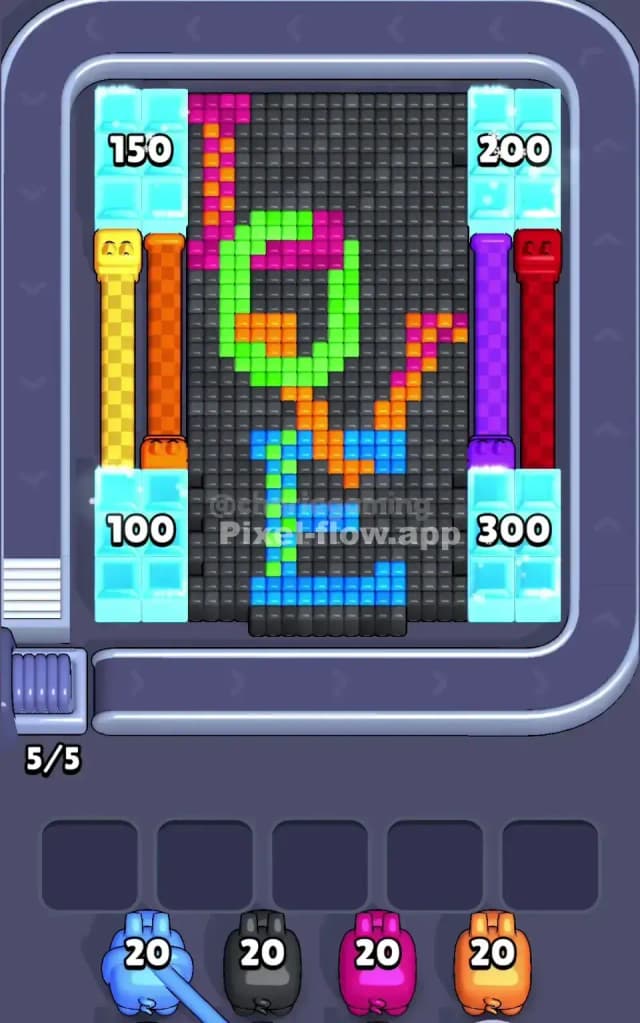
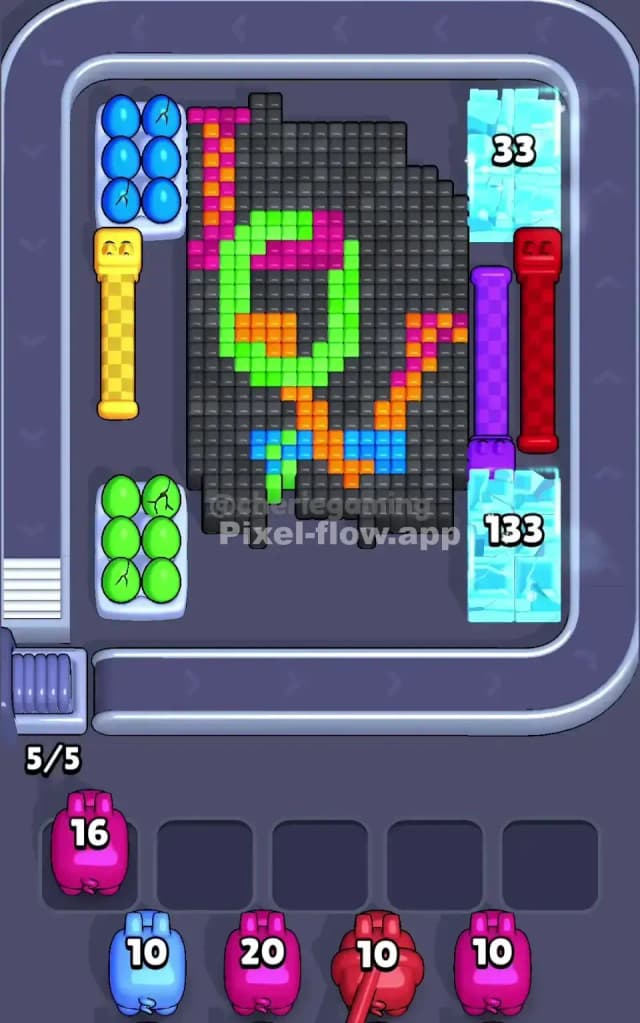
This level features the word "LOVE" spelled out vertically in vibrant, disjointed pixel blocks. The letters are intertwined with a dark grey background layer that acts as a cage, preventing easy access to the colors beneath. To beat Pixel Flow Level 406, you must peel back the grey layer systematically to expose the letters L, O, V, and E, while managing your slot space carefully. Is it tough? Yes. This is a very hard level because the grey blocks are everywhere and require constant attention.
Pixel Flow Level 406 Overview
The artwork here is a stylized typographic poster. The letters are stacked vertically: a pink and orange 'L' at the top left, a big green 'O' with an orange center, a blue and orange 'V' shape, and a blue 'E' at the bottom. The colors feel retro and neon against the dark grey "noise" that surrounds them.
The board is heavily asymmetric in color distribution but symmetric in obstacles. You have four ice-blocked corners with high HP counts (150, 200, 100, 300). While these look scary, they are secondary. The real threat is the massive amount of Dark Grey covering the entire board.
- The Trap: The grey layer isn't just a background; it's a blocker. It covers parts of the 'L' and 'V', and completely surrounds the 'O'. If you ignore the grey pigs, you will clog your slots with colored pigs that have nothing to shoot at.
- The Verticality: Because the word is spelled top-to-bottom, clearing the top 'L' and 'O' often requires clearing the bottom 'E' first to drop the blocks down, or vice versa depending on the layer depth.
Step by step solution walkthrough for Pixel Flow Level 406
First Color Zone to Erase in Pixel Flow Level 406
Start with Dark Grey immediately.
Narratively, you are "cleaning the canvas" before painting. Logically, the grey blocks are the primary obstruction. Look at the 'O' and the 'V'. They are partially submerged in grey pixels.
If you pick a colored pig first (like Blue or Green), it might shoot 3-4 blocks and then sit in your waiting slot with 16 ammo left because the rest of its targets are buried under grey. That is a death sentence in Pixel Flow Level 406. Prioritize every Black/Grey pig you see on the conveyor belt. Clearing the grey exposes the "flesh" of the letters, allowing your colored pigs to actually finish their jobs.
How to pass Pixel Flow Level 406 without power ups or boosters
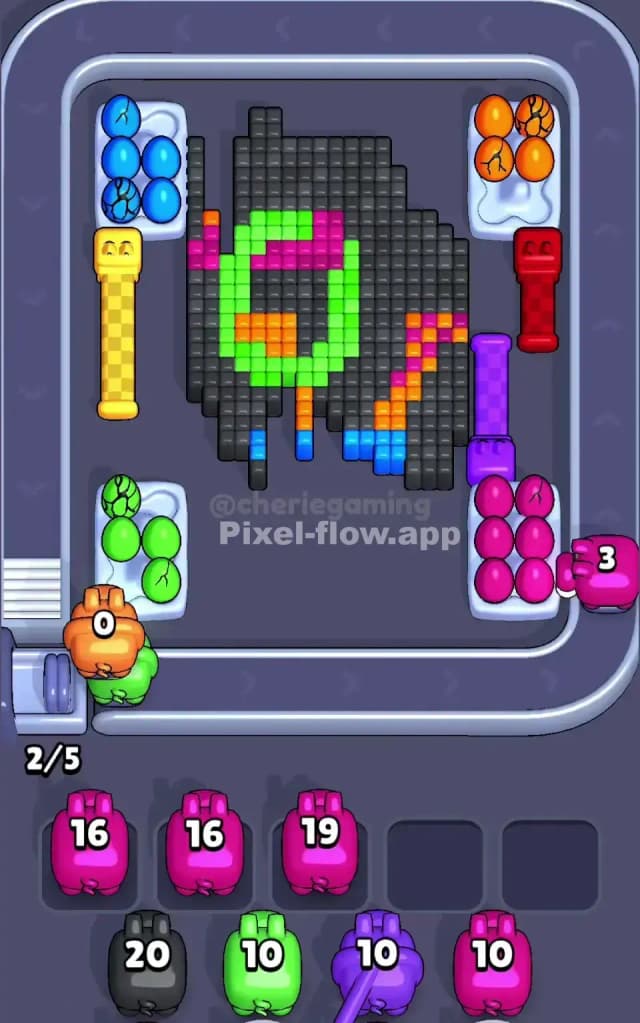
Once you've stripped away about 50% of the grey layer, the board looks messy. You'll see half-eaten letters and a lot of exposed blue at the bottom.
- Focus on the Blue 'E' and 'V': The blue blocks are concentrated at the bottom. They act as a foundation. Clearing the blue blocks often causes the blocks above them to shift or become more accessible. Once the grey is thinned out, grab Blue pigs. They usually have clear shots at the 'E'.
- The Green 'O' Ring: After the blue is managed, the Green 'O' is your next biggest obstacle. It’s a large, hollow circle. Green pigs are safe to pick once the grey surrounding the 'O' is gone.
- The Pink/Orange Stragglers: The 'L' and parts of the 'V' use Pink and Orange. These are dangerous colors. They are scattered in thin lines rather than big blocks. Do not pick a Pink or Orange pig unless you can count at least 5-10 visible targets. If you pick them too early, they will clog your slots.
The No-Booster Rule: If you refuse to use items, your slot management must be perfect. Never have more than 3 pigs in your waiting slots. If you have 3 slots full, stop looking at the colors on the board and look only for the specific color pig that clears a slot. If the belt doesn't offer it, you have to wait or take a sacrificial pig that matches a different large group to clear space.
Last Details You Clean Up in Pixel Flow Level 406
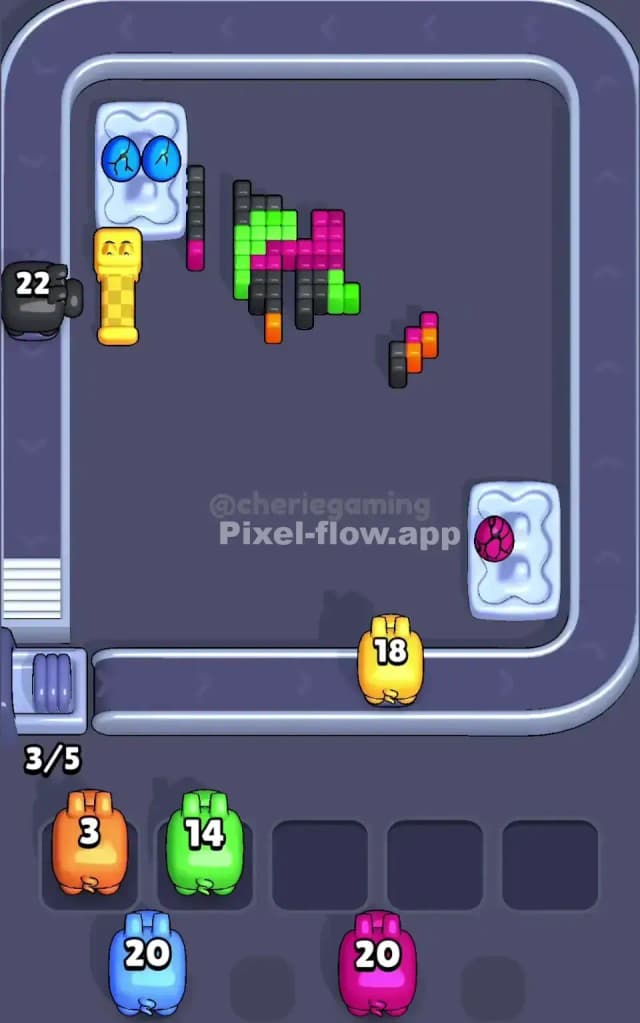
The end game usually involves the Ice Blocks in the corners and the final scraps of the Orange center of the 'O'.
- The Ice Corners: By the time the main word "LOVE" is destroyed, the ambient damage or specific targeting should have cracked the ice blocks (100, 150, 200, 300). You don't need to focus them early, but in the final phase, you might need specific colors just to chip away that last 50 HP on a corner block.
- The Hidden Orange: Often, a few orange blocks hide right in the center of where the 'O' used to be, or mixed into the 'V'. Save an Orange pig for the very end. It feels satisfying to have one pig wipe out the final few pixels to clear the board.