Pixel Flow Level 414 Solution | Pixel Flow 414 Walkthrough
How to beat Pixel Flow Level 414: Video solution & walkthrough. The fastest way to pass Pixel Flow 414.
Is this the wrong level layout?🤔
Pixel Flow randomizes levels for different players. Don't worry, just upload a screenshot of your board, and our AI will find the correct video instantly.
Pixel Flow Level 414 Walkthrough
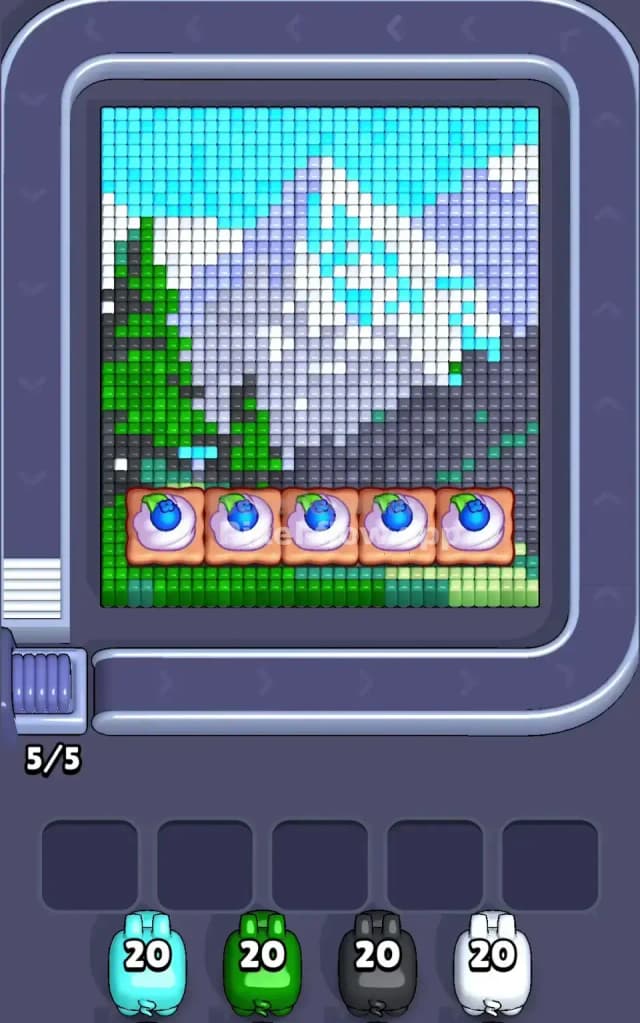
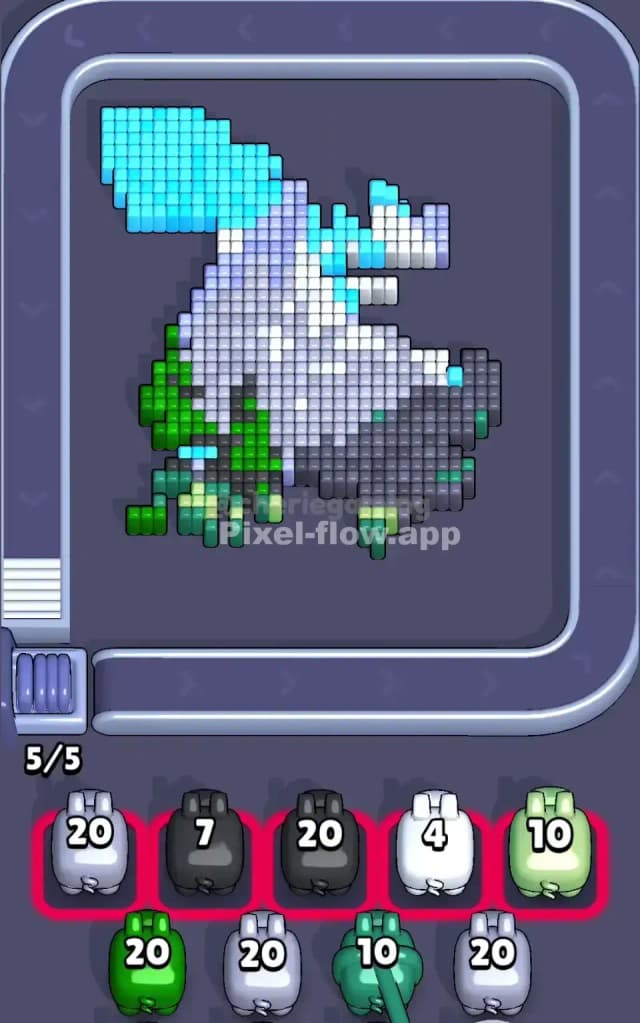
This level features a classic alpine scene: a jagged, snowy mountain peak rising above a forest and rocky foothills. The color palette is distinct, separating the board into three vertical zones: Dark Green pine trees on the left, a White and Light Grey mountain in the center, and Dark Grey rocks on the right. High above sits a block of Cyan sky.
The rules are standard but strict. You must match the pig’s color to the pixel blocks. However, Pixel Flow Level 414 is a very hard level because of the density of the center mountain and a strange row of "blueberry tart" obstacles that block the lower-middle section initially. You have to peel this image like an onion, layer by layer, or your waiting slots will clog instantly.
Pixel Flow Level 414 Overview
Think of this board as a pyramid. The base is wide and cluttered, while the top is open sky. On the far left, you have a heavy vertical strip of Dark Green representing a pine forest. This area is thick. It hides the left flank of the mountain.
On the far right, the terrain shifts to jagged Dark Grey rocks. These act as the opposing bookend to the trees.
The center is the tricky part. It is a massive mix of White snow and Light Grey shadows forming the mountain peak. At the very start, a peculiar line of five "pastry" icons sits across the lower middle, obscuring the base of the mountain. You cannot shoot these pastries directly. You must clear the colors around and underneath them—specifically the Light Green grass strip at the very bottom and the Dark Green/Grey flanks—to clear the path to the main picture.
Step by step solution walkthrough for Pixel Flow Level 414
First Color Zone to Erase in Pixel Flow Level 414
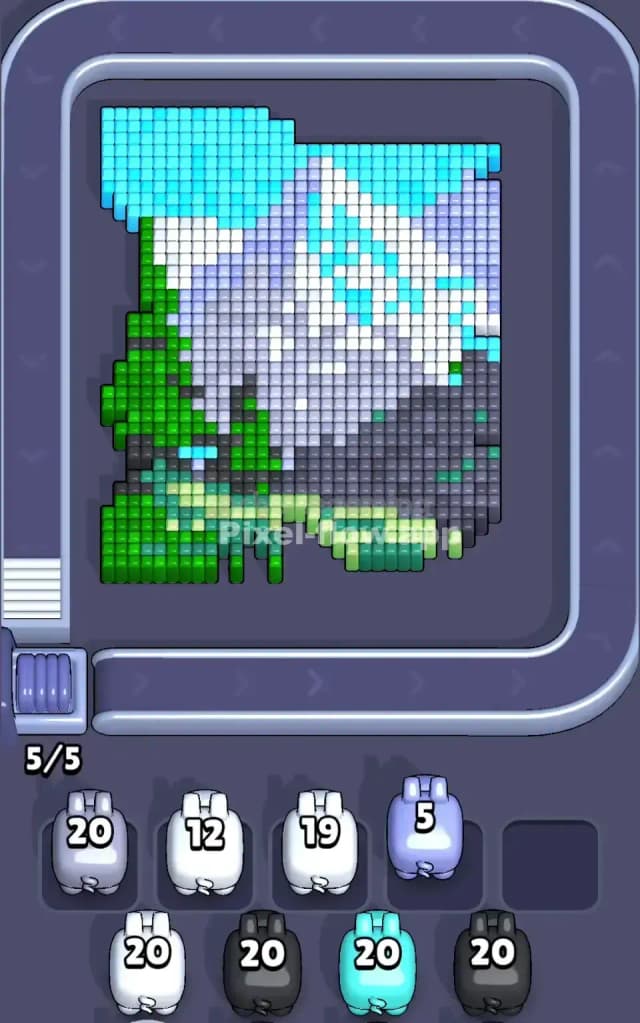
I start by attacking the Dark Green vertical column on the left side.
Here is the logic: The Dark Green area is a solid, contiguous block that stands in the foreground. It doesn't mix much with other colors, which means when a Green Pig comes down the belt, you can unload its entire ammo clip without needing to swap pigs. This is crucial for keeping your waiting slots empty early on.
If you don't get green pigs, targeting the Dark Grey rocks on the right is the second-best opener. Both sides act as "curtains" hiding the main mountain. Do not try to peck away at the Cyan sky or the White mountain tip yet; those layers are too deep or too scattered. Clear the heavy sides first to widen your target area.
How to pass Pixel Flow Level 414 without power ups or boosters
Once the trees and rocks are thinned out, you hit the mid-game slump. This is where most players lose. The board will look messy. The "pastry" line should be gone by now, revealing the confusing mix of pixels in the mountain.
The danger here is the similarity between the White snow and the Light Grey mountain shading. They look almost identical at a glance.
You must be disciplined. When a White Pig arrives, pause. Look closely. Do not just spam taps on the mountain. Verify you are hitting White pixels and not Light Grey ones. If you misfire, you waste ammo. If you hesitate too long with a pig that has no targets, it drops into your slot.
In this phase, ignore the Cyan sky completely unless a Cyan Pig forces your hand. Your priority is to dismantle the mountain from the bottom up. Clear the Light Green strip at the absolute bottom if any remains, then chew through the Grey/White mix in the center. If your slots fill up with 4 pigs, stop looking for perfect shots and just dump the ammo of the pig that has the most available targets, even if it’s not the one you wanted to use. Survival is more important than efficiency here.
Last Details You Clean Up in Pixel Flow Level 414
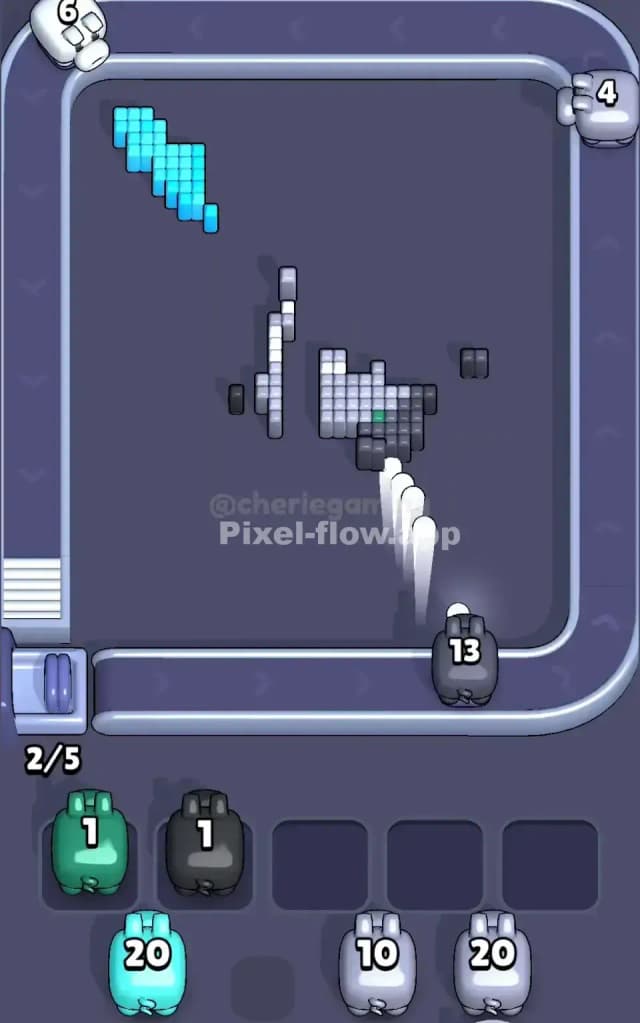
As you enter the final phase, the majestic mountain will look like Swiss cheese. The last few moves almost always involve the Cyan sky.
Because the sky was behind the mountain and trees, stray Cyan blocks often hide in the top-left or top-right corners, tucked behind where the mountain peak used to be. Do not celebrate until you check those corners. The final pig is often a Cyan one that needs to clean up a ragged line of blue pixels at the very top of the frame. Ensure you save a slot for that final blue cleaner, or you might choke with only ten pixels left on the screen.