Pixel Flow Level 415 Solution | Pixel Flow 415 Walkthrough
How to beat Pixel Flow Level 415: Video solution & walkthrough. The fastest way to pass Pixel Flow 415.
Is this the wrong level layout?🤔
Pixel Flow randomizes levels for different players. Don't worry, just upload a screenshot of your board, and our AI will find the correct video instantly.
Pixel Flow Level 415 Walkthrough
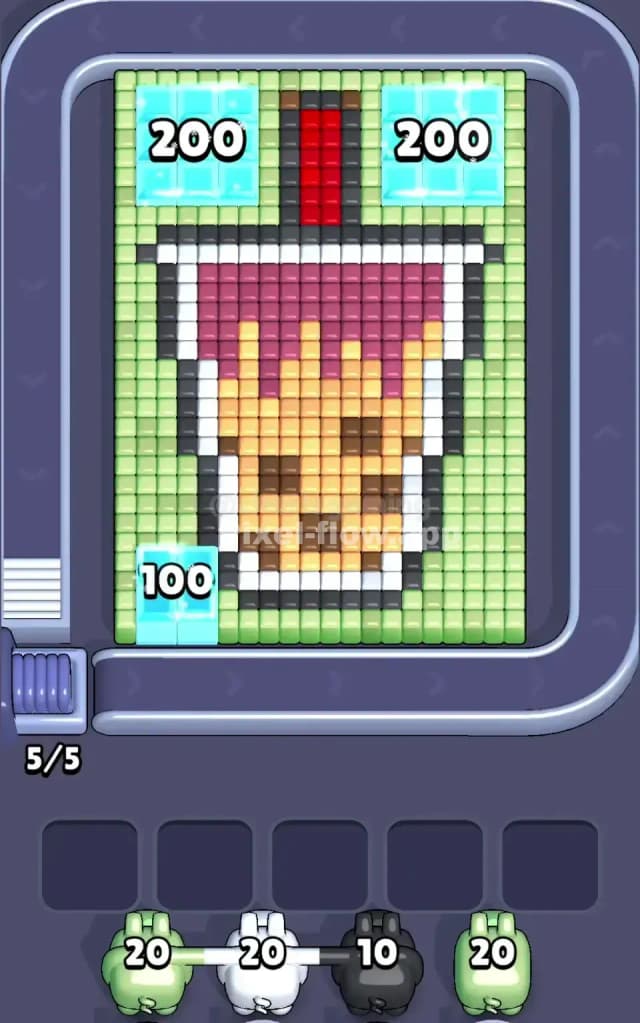
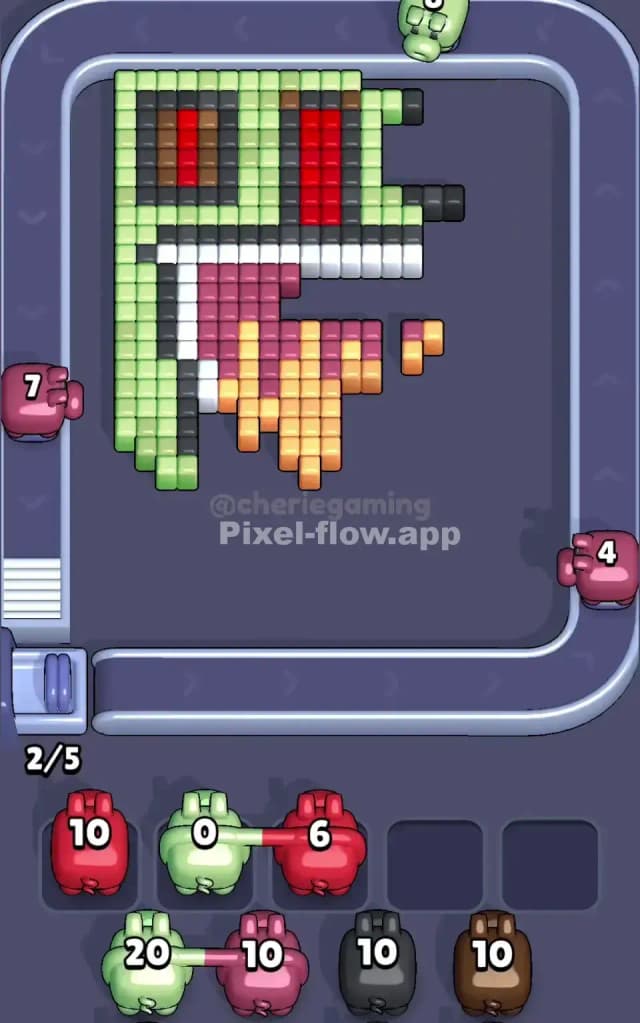
This level features a delicious-looking cup of Boba Tea (Bubble Tea). The main colors here are light green for the background, black for the cup outline, white for the cup's highlights and rim, pink for the top liquid layer, tan/orange for the tea, and dark brown for the tapioca pearls.
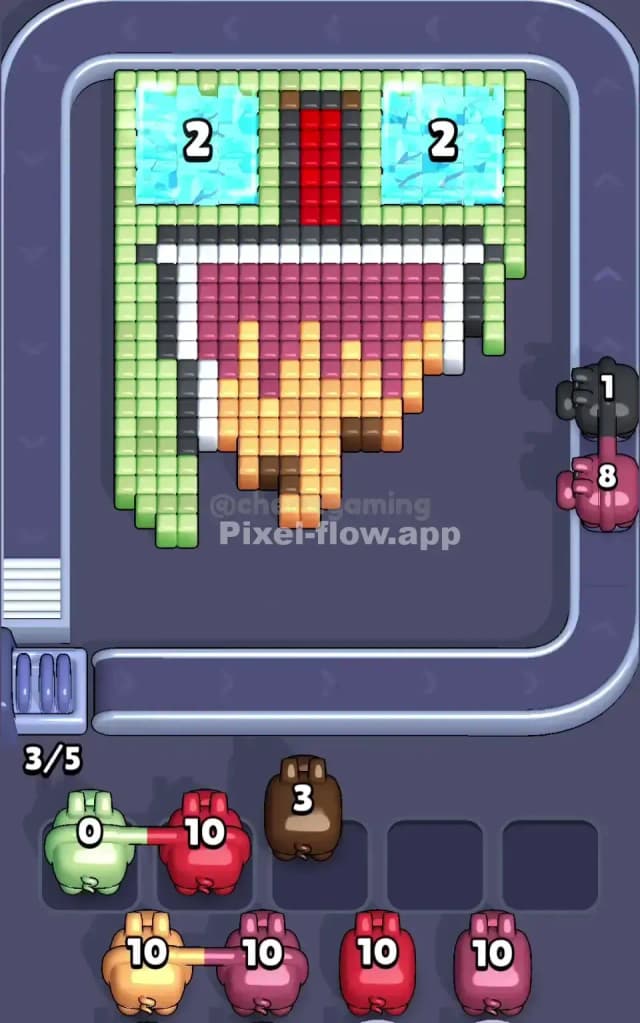
To beat Pixel Flow Level 415, you need to peel away the massive light green background first. This exposes the cup's outline (black) and the straw (red), allowing you to eventually reach the tasty tea colors inside. The main challenge here is the sheer volume of green blocks and the frozen ice blocks blocking the top and bottom corners. Is it a very hard level? No, but it requires patience to clear the wrapper before eating the candy.
Pixel Flow Level 415 Overview
Imagine a classic plastic takeout cup filled with bubble tea. The background is a flat, uniform sheet of light green pixels that completely encases the cup, almost like a placemat or a green screen.
The cup itself is centered. It has a distinct black outline forming the cup shape and the lid. A thick red straw pokes out the top center. Inside the cup, the liquid is a gradient: pinkish-purple at the top fading into a tan/orange tea color at the bottom. Scattered throughout the tan section are dark brown squares representing the boba pearls.
The layout is symmetrical, but the obstacles are not perfectly even.
- Top Left & Right: There are large Ice Blocks with "200" health sitting on top of the green background. These block shots to anything behind them until cleared.
- Bottom Left: Another Ice Block with "100" health sits near the bottom corner.
These ice blocks are the main annoyance. They don't require a specific color to break, just raw damage, but they shield the green background pixels behind them, preventing you from fully clearing the "wrapper" early on.
Step by step solution walkthrough for Pixel Flow Level 415
First Color Zone to Erase in Pixel Flow Level 415
Start with Light Green.
There is no other logical starting point. The light green pixels form a thick border around the entire cup. You cannot reach the black outline, the white rim, or the colorful tea inside until this green layer is significantly reduced.
- Prioritize Green Pigs: Whenever a light green pig appears on the conveyor belt, use it immediately. The vertical columns on the left and right are pure green. Clearing these opens up the board.
- Chip Away at Ice: You will likely get pigs (like white or black) that don't have many targets yet because the green is blocking them. Use these pigs to hit the Ice Blocks (200 HP and 100 HP). You have to destroy these ice blocks eventually to clear the green pixels hidden underneath them. Don't let a pig sit in your waiting slot if it can dump 20 ammo into an ice block.
How to pass Pixel Flow Level 415 without power ups or boosters
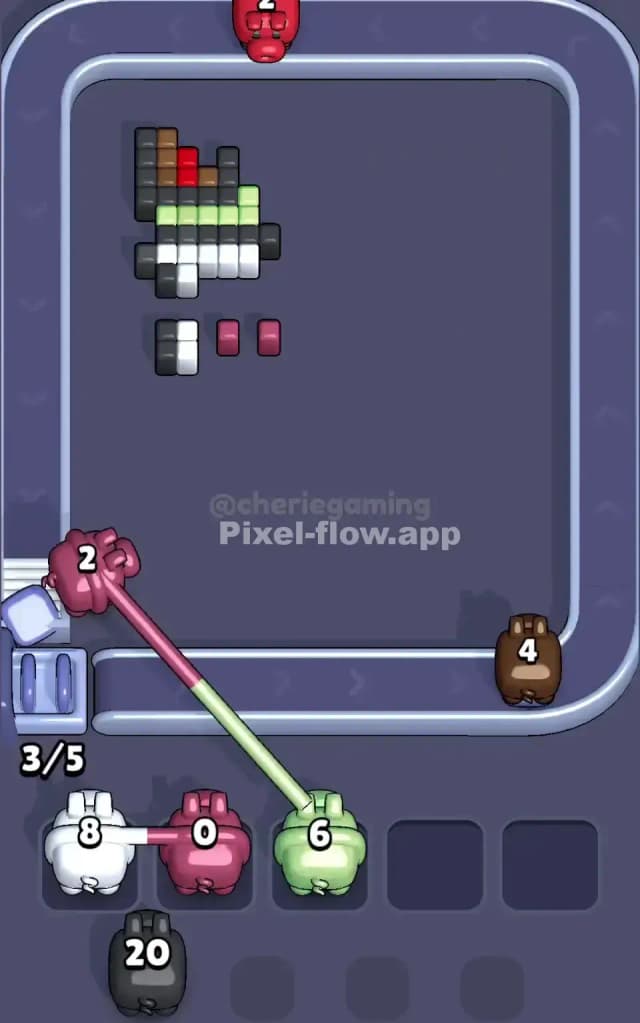
Once the green background is mostly gone, the level looks like a floating wireframe cup. The black outline is now the most prominent feature, followed by the white rim of the lid.
- The Black Outline Trap: The black pixels form a container. If you don't clear the black outline, you often can't reach the colored liquid pixels "inside" the cup effectively. Prioritize black pigs as soon as the green layer exposes the cup's edges.
- The White Rim: The white pixels form the lid and reflections on the cup. These are usually on the top layer alongside the black. Clear these to expose the pink and tan liquid underneath.
- The "Straw" Problem: The red straw at the top is often accessible early, but it's narrow. If a red pig comes early, use it, but don't clog your slots waiting for the straw to be exposed. It's a small target.
Mid-Game Strategy: At this point, you should have stripped the green background and the black/white shell. Now you are staring at the "liquid."
- Pink vs. Tan: The pink liquid is at the top, and the tan liquid is at the bottom. These layers are often thick. You need high-ammo pigs to chew through them.
- Brown Pearls: The dark brown boba pearls are embedded inside the tan liquid. You usually cannot hit the brown pixels until you have cleared the tan pixels covering them. Do not hoard brown pigs. If a brown pig arrives and you see no brown targets, check if it can hit an Ice Block. If not, you might have to let it wait, but be careful not to fill all 5 slots.
Last Details You Clean Up in Pixel Flow Level 415
The end of Pixel Flow Level 415 is usually a cleanup operation of the "liquid" and pearls.
- Hidden Greens: Check the corners where the Ice Blocks used to be. Sometimes a single green pixel hides there, preventing the level from ending.
- The Pearls: The last thing to go is usually the dark brown boba pearls. They are the deepest layer. Once the tan tea is drunk (cleared), the brown squares are exposed.
- Final Flush: Save your brown pigs for the very end. You will need them to snipe the specific brown pixels that were buried deep in the tea. If you wasted your brown pigs hitting ice blocks earlier, you might struggle here, so try to use high-ammo colors (Green/Tan) for ice breaking instead.