Pixel Flow Level 416 Solution Walkthrough | Pixel Flow 416
How to solve Pixel Flow level 416? Get instant solution for Pixel Flow 416 with our step by step solution & video walkthrough.


Pixel Flow Level 416 Overview
The Board Layout and Starting Setup
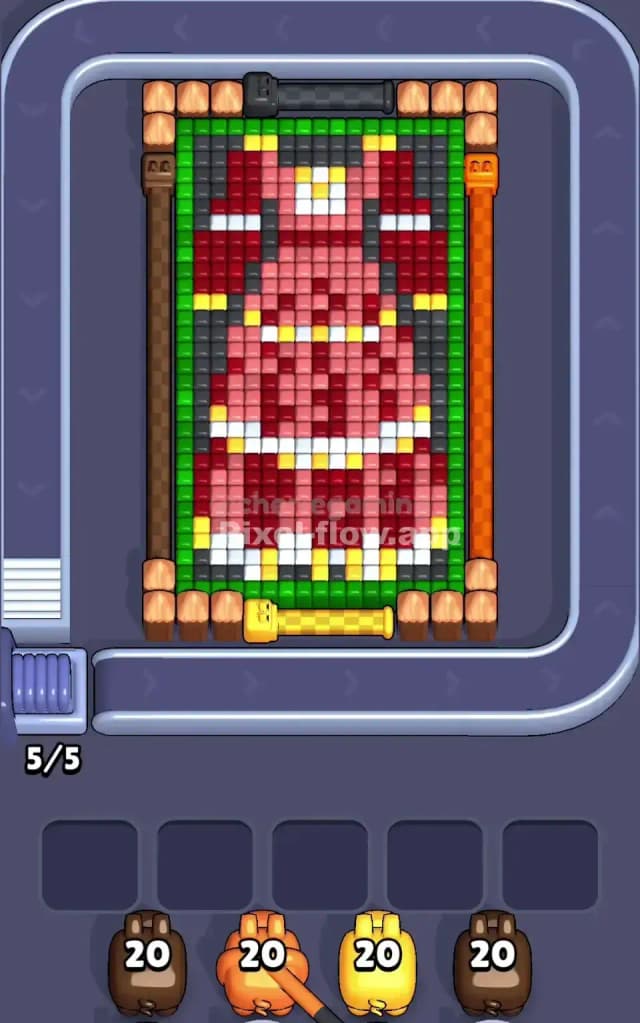
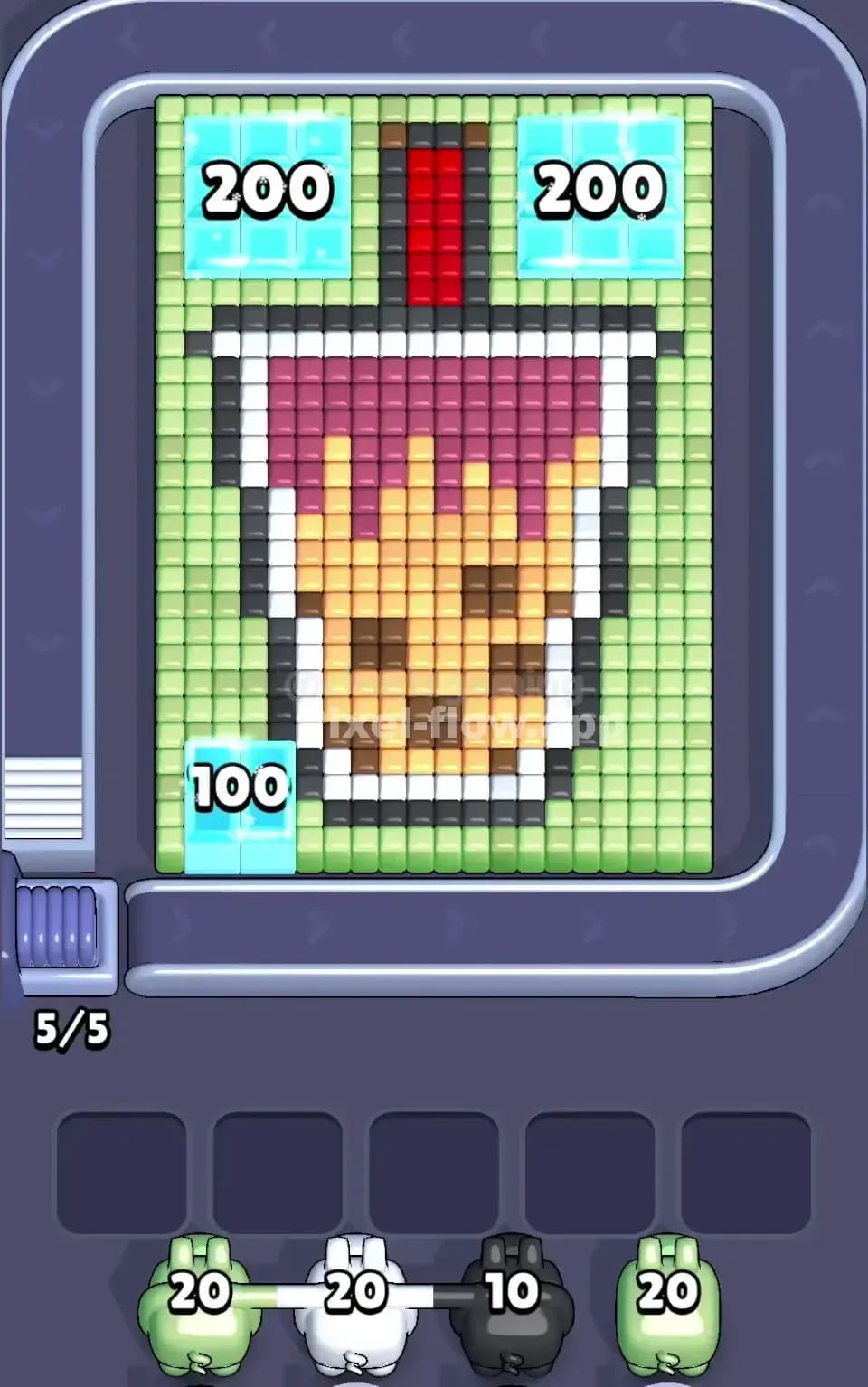
Pixel Flow Level 416 presents you with a charming pixel-art ice cream cone as the centerpiece, framed by a bright green background that fills most of the outer regions. The cone itself is built in layers: a deep brown and tan base forms the waffle cone structure, while warm peachy-orange and golden tones create the middle scoop, and a rich magenta-pink layer sits atop as the crowning ice cream. There's also a bright red accent near the top of the composition, and crisp white and dark gray outlines separate the different sections. This layered structure means you're not just clearing one flat puzzle—you're peeling back colors to reveal what lies beneath, and that's where Pixel Flow Level 416 gets interesting.
Your pig queue shows you're starting with two lime-green pigs (20 ammo each), one white pig (20 ammo), one dark gray/black pig (10 ammo), and another lime-green pig (20 ammo). That's a total of 90 cubes to eliminate. The waiting slots below show "5/5," meaning all five slots are currently empty and ready to catch any pigs that run out of targets. You'll also notice those cyan-colored voxels in the upper corners labeled "200" and "100"—these are visual displays of ammo pools or bonus zones, not obstacles to clear, so don't get distracted by them.
Win Condition and Deterministic Nature
To clear Pixel Flow Level 416, you need to eliminate every single voxel cube on the board. The good news is that every pig's ammo count is fixed, and the order in which pigs enter the conveyor belt is predetermined—there's no randomness here. Once you understand the pig sequence and plan your moves, you're essentially solving a logical puzzle rather than gambling on luck. Each destroyed cube of matching color drains exactly one ammo from the active pig, and when that pig runs dry, it automatically shuffles down to the waiting slots so the next pig can fire away. Your job is to orchestrate this sequence so that by the time the last pig has fired its last shot, the board is completely empty.
Why Pixel Flow Level 416 Feels So Tricky
The Green Bottleneck Problem
Here's what'll probably frustrate you most about Pixel Flow Level 416: there are a lot of lime-green cubes, and you've got three green pigs in your queue (two with 20 ammo, one with 20 ammo). The outer frame and much of the background are green, which means green pigs will have plenty of targets early on. That sounds great until you realize that once you've cleared the obvious green border, the remaining green cubes might be scattered or buried beneath other colors. If your first green pig uses up all 20 ammo on the frame but can't quite finish the job, it'll drop into a waiting slot while still having potential targets—yet you can't bring it back without processing other pigs first. This waiting-slot gridlock is the real threat in Pixel Flow Level 416. You could end up with three pigs in the buffer all waiting for their color to be exposed, and if you've locked up the wrong pigs at the wrong time, you'll hit the failure condition where no pig can make progress.
The Layering Trap
The magenta and orange cubes are trapped in the middle layers, hidden behind the green and white outer shells. If you don't clear green and white strategically, you'll never get a clear shot at magenta or orange. But here's the twist: your white pig (20 ammo) might not have quite enough ammo to clear all the white outlines and interior squares in one go, especially if some white cubes are separated by other colors. If your white pig runs dry before all white targets are exposed, it drifts into a waiting slot. Now you're stuck because the orange and magenta pigs that come later desperately need the white layer gone. This is where Pixel Flow Level 416 punishes careless ordering.
The Dark Gray Wildcard
That dark gray pig with only 10 ammo is peculiar. There aren't that many dark gray cubes visible on the board—mostly just the thin outline squares framing the cone. If you're not careful, this pig will finish its ammo early, drop into the buffer, and waste a slot while all five pigs are still in the queue. The real sting is that you have to use this pig at some point because it's locked into the sequence—you can't skip it—so you need to time its entry precisely so it doesn't clog the waiting area before you've even gotten to the color-critical pigs.
When Pixel Flow Level 416 Clicked for Me
I'll be honest: my first two attempts felt chaotic. I was just mashing the button, assuming the pig order didn't matter much, and I ended up with four pigs stuck in the waiting slots while two pink cubes sat mockingly on the board with no pig able to touch them. That's when it hit me—this isn't about speed or reflexes. Pixel Flow Level 416 demands that you think ahead, count ammo silently, and visualize which colors are actually exposed after each move. Once I sat back and traced through the probable sequence on paper, the level transformed from frustrating to satisfying.
Step-by-Step Strategy to Clear Pixel Flow Level 416
Opening: Establish Control and Preserve Buffer Space
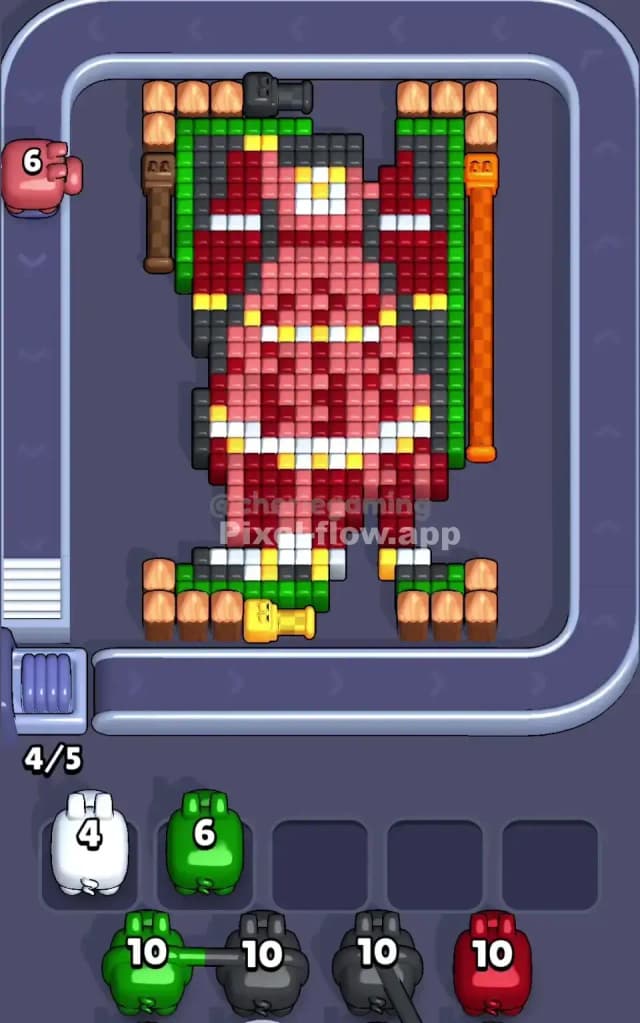
Start by releasing your first lime-green pig. This one's your workhorse, and it should target the outer green frame aggressively. Don't worry about being too conservative—you've got 20 ammo, and there's plenty of green on the perimeter. Fire away at all the lime-green cubes you can see: the entire top and side borders, and as much of the background as the pig's angle allows. The goal here isn't to finish green completely; it's to tear away enough of the frame that you expose the white outline and start revealing the inner layers. Your first green pig will probably end with 8–12 ammo remaining since the outer frame is thick but not infinite. When it runs dry, it'll drop into waiting slot one. That's fine—you've still got four empty slots, so you're not in danger yet.
Mid-Game: Layer Clearing and Pig Sequencing
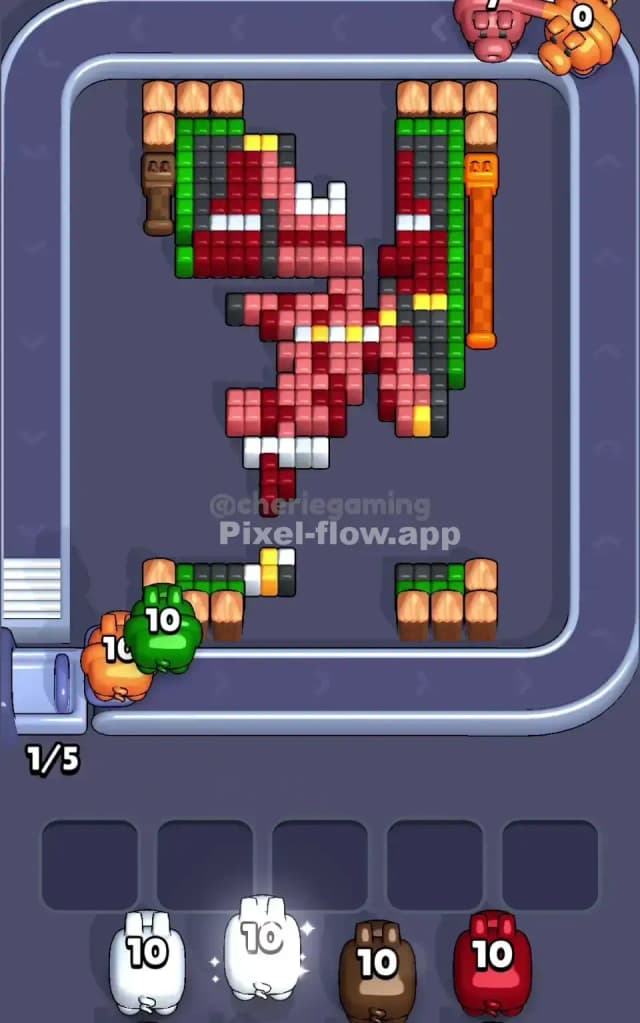
Now your white pig (20 ammo) takes the stage. This is where patience pays off in Pixel Flow Level 416. The white outlines and interior squares are scattered around the cone's perimeter and internal structure. Your white pig should methodically blast away at all visible white cubes. The white pieces are strategic because they're the skeleton of the image—clearing them exposes the magenta, orange, and brown layers underneath. You'll burn through maybe 12–15 ammo on white, leaving the pig with 5–8 rounds when it taps out and joins the waiting buffer.
Here's the critical move: as soon as white starts to thin out, send in your second lime-green pig. Yes, you've still got the first green pig hanging out in the buffer, but this second green pig isn't meant to finish green entirely. Instead, it's meant to clean up isolated green patches that became visible after white started disappearing. This requires you to watch the board actively and anticipate what's now reachable. The second green pig might have 15–18 ammo left when it seats itself in the buffer beside pig number one.
Next comes the dark gray pig with 10 ammo. By now, the outer frame is mostly dismantled, and those thin dark gray outline squares are fully exposed. Aim for them ruthlessly. This pig should empty in one or two firing sequences, leaving you with just 2–3 filled waiting slots. The beauty of this timing is that you've now cleared away the "noise" and have clear sight lines to the core colors: magenta, orange, brown, and any lingering cyan.
End-Game: Finishing With Precision
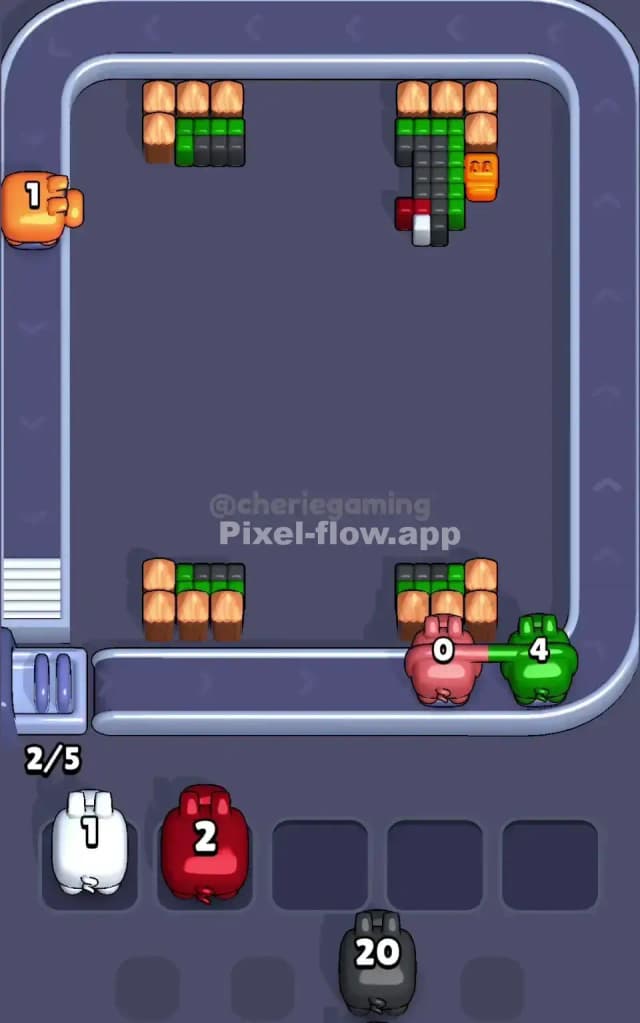
Your third green pig (20 ammo) is your final pig. By this stage, Pixel Flow Level 416's board should be mostly a canyon of magenta, orange, and brown, with scattered green bits still clinging to the interior edges. This final green pig should demolish every remaining lime-green cube it can find. It'll likely end with 8–12 ammo and will drop into the buffer.
Now here's where timing becomes everything: after all five pigs are in the waiting buffer, the conveyor belt is empty, and the game will start cycling through the buffer, pulling out pigs one at a time. Each pig that still has ammo will fire at its matching color until either the board is clear or all pigs are out of ammo. In an ideal Pixel Flow Level 416 clear, you'll watch the buffer cycle through, and each remaining pig will find valid targets and spend its remaining ammo cleanly. The magenta, orange, and brown interior should fall away in rapid succession once the outer layers are gone, revealing deeper nesting until the board is virgin and empty.
The Logic Behind This Pixel Flow Level 416 Plan
How Ammo and Waiting Slots Work Together
The secret to solving Pixel Flow Level 416 is recognizing that the waiting slots are your pressure valve, not your dumping ground. Each pig you send to the buffer should have exhausted its ammo, not just run out of targets. Here's why: if a pig sits in the buffer with ammo still in the tank, it's taking up real estate that could be used to manage future pigs. More importantly, if you cram all five pigs into the buffer and they've still got ammo combined, the game cycles through them, and if none can find a target (because all remaining colors are hidden), you're locked in failure. This Pixel Flow Level 416 strategy avoids that by deliberately layering your clears so outer colors are stripped before inner colors are needed.
The Power of Planning Two or Three Pigs Ahead
Instead of reacting to what each pig does in isolation, you need to mentally simulate the next two or three pig turns before you press the shoot button on the current one. Ask yourself: "After this green pig empties its current magazine, what color will be most exposed?" The answer tells you whether the next pig in queue will have good targets or be forced into the buffer early. For Pixel Flow Level 416, this foresight transforms you from a button-masher into a strategist. You're not fighting the level; you're conducting an orchestra where each pig is an instrument with a fixed part to play.
Staying Calm and Counting Cubes
When you're mid-run on Pixel Flow Level 416, keep a mental count of how many cubes of each color remain visible. This sounds tedious, but it takes only a second: glance at the board after each pig fires, and roughly estimate "I see maybe 8–10 more green, maybe 5–6 magenta, 3–4 orange." Knowing these rough numbers prevents the shock of watching a pig run dry with targets still on screen. It also lets you know when you're entering the danger zone where the waiting buffer is filling up faster than pigs are clearing cubes. If you see four pigs stacked in the buffer with visible cubes on the board, you know you've mis-sequenced and need to recalibrate on your next attempt.
The beautiful thing about Pixel Flow Level 416 is that once you've solved it once, you've really solved it. The pig sequence is identical every run, and the board is deterministic. So your victory isn't luck—it's proof that you understood the puzzle's architecture and executed a clean plan. That's the satisfaction Pixel Flow Level 416 delivers.