Pixel Flow Level 420 Solution | Pixel Flow 420 Walkthrough
How to beat Pixel Flow Level 420: Video solution & walkthrough. The fastest way to pass Pixel Flow 420.
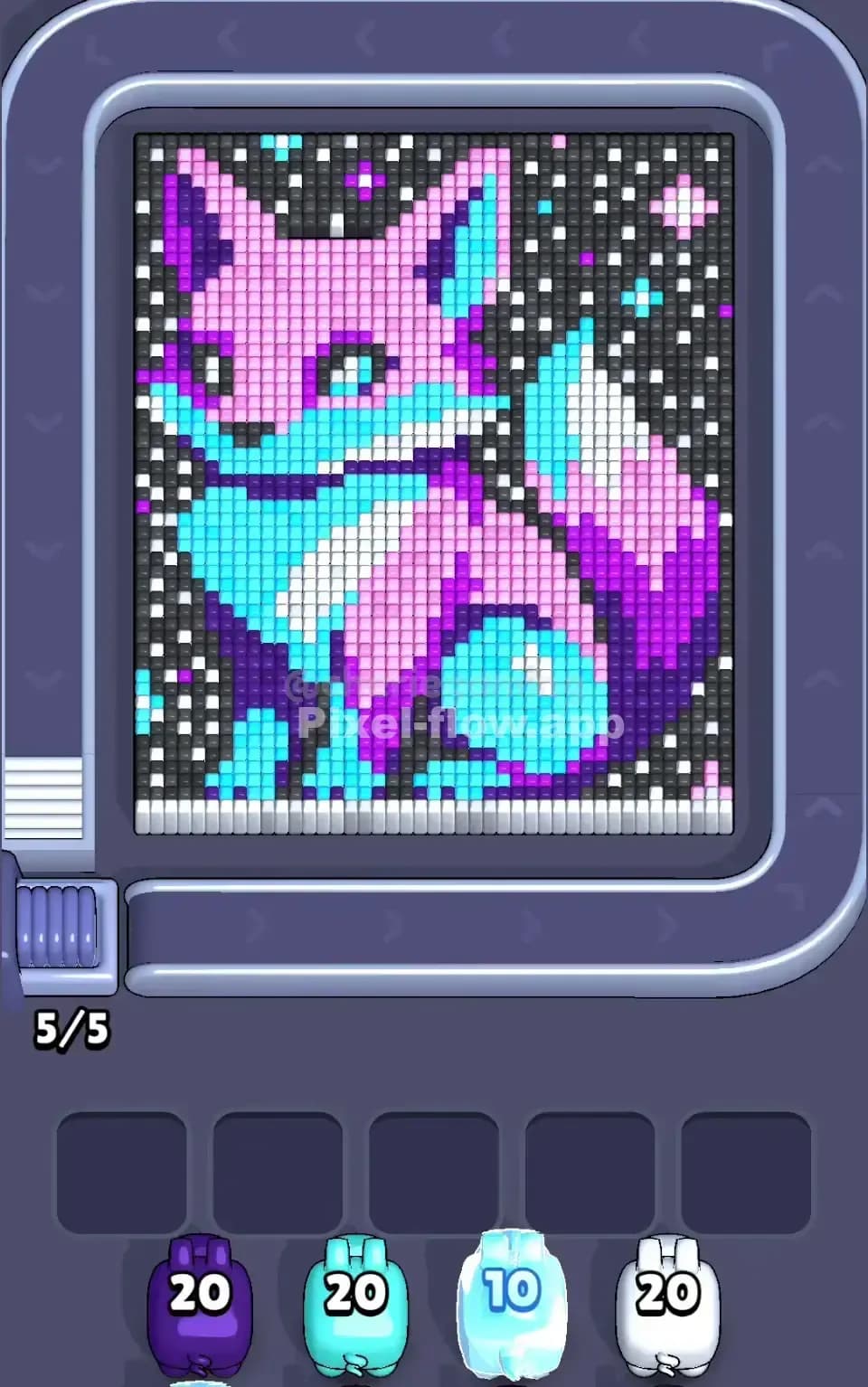
Is this the wrong level layout?🤔
Pixel Flow randomizes levels for different players. Don't worry, just upload a screenshot of your board, and our AI will find the correct video instantly.



Pixel Flow Level 420 Walkthrough
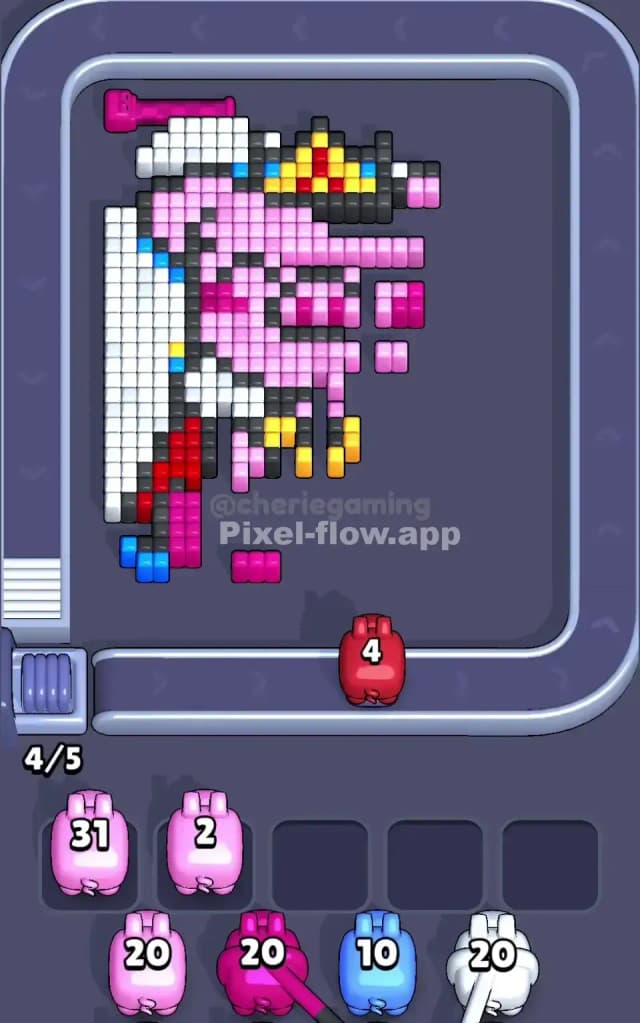
This level features a massive "Queen Pig" portrait, complete with a jeweled crown and a royal dress. The central figure is dominated by pink pixels for the skin, but the real challenge lies in the massive borders. You have a heavy White background wrapping the entire figure, Black outlines defining the cartoon style, and critical accessories in Yellow, Red, and Blue.
The defining mechanic of Pixel Flow Level 420 is the presence of three obstacle blocks with massive HP counts: a 250 block on the left, a 200 block on the right, and a smaller 30 block tucked away on the mid-right. To beat Pixel Flow Level 420, you must manage your queue slots aggressively to grind down these high-number blocks while peeling away the white background. Because of the sheer amount of ammo required to break those ice blocks, this is a very hard level.
Pixel Flow Level 420 Overview
Think of this board as a fortress you have to siege. In the center sits the Queen Pig. She is smiling, looking harmless, but she is protected by thick layers of pixels. Her face is a solid block of light Pink. She wears a crown made of Black, Yellow, and Red pixels at the very top. Her dress at the bottom mirrors these colors with added Blue accents.
The board is heavily asymmetrical regarding the obstacles. The left side is defended by that massive 250 HP Ice Block. The right side is slightly weaker, with a 200 HP Ice Block and a smaller 30 HP block above it. These blocks physically obstruct your shots. Until they are gone, your pigs on the conveyor belt cannot reach the pixels behind or below them. The background is a stark White field that encases the pig completely. This white layer is thickest on the left vertical column and the top left corner, acting as a shield for the inner artwork.
Step by step solution walkthrough for Pixel Flow Level 420
First Color Zone to Erase in Pixel Flow Level 420
Your priority target must be the White background pixels.
Here is the logic: The White zone is the only color accessible from almost every angle at the start. It wraps around the crown, down the sides, and fills the bottom corners. More importantly, the conveyor belt in Pixel Flow Level 420 will throw White pigs at you early (like the one with 20 ammo seen in the queue).
If you ignore the white background to try and snipe the Pink face or the Yellow crown, you will fail. You need to clear the White columns on the far left and far right immediately. Doing this exposes the edges of the 250 and 200 ice blocks. You cannot destroy those blocks effectively if you don't clear the "trash" pixels surrounding them first. Clear the perimeter. Open the firing lines.
How to pass Pixel Flow Level 420 without power ups or boosters
The mid-game of Pixel Flow Level 420 is dangerous. You will reach a point where the White background is mostly gone, but the Queen Pig is still largely intact, and those massive ice blocks are only half-destroyed.
This is where the "Slot Trap" kills runs. You have 5 slots at the bottom. The game will send you specific colors like Red or Blue that might only have 2 or 3 valid targets left on the board, but the pig carries 20 ammo.
Do not accept a pig if you cannot spend at least 50% of its ammo immediately.
If a Red pig comes down the belt with 10 ammo, but you only see 2 Red pixels on the Queen’s dress exposed, let it pass if possible. If you click it, that pig will sit in your slot, useless, blocking you from getting the Pink pigs you desperately need to clear the face.
Focus on the Pink zones next. The Queen’s face is a huge reservoir for ammo. Once the White is gone, use the large Pink surface area to rapidly cycle through Pink pigs. This keeps your slots empty and keeps the game moving. Do not get distracted by the small jewelry details yet.
Last Details You Clean Up in Pixel Flow Level 420
As you enter the final phase, the board usually looks like a floating wireframe. The Pink face will be gone, leaving only the Black outlines and the colorful accessories.
Be very careful with the Crown and the Dress Hem.
- The Crown: The Yellow and Red pixels here are often blocked by the Black outline. You might have a Yellow pig ready, but it can't shoot because a single Black pixel is in the way. Prioritize Black pigs in the late game to "unlock" these inner colors.
- The Dress Hem: The bottom of the board features a checkered pattern of Blue, Red, and Black. These are often the last pixels to vanish because they are low on the screen and often obscured by the larger face chunks earlier in the level.
Save your low-ammo pigs (Red/Blue/Yellow) for this exact moment. You don't want a 50-ammo pig for three remaining blue pixels. You want the small ones. Clear the Black outlines, then pop the final jewels to finish Pixel Flow 420.