Pixel Flow Level 419 Solution Walkthrough | Pixel Flow 419
How to solve Pixel Flow level 419? Get instant solution for Pixel Flow 419 with our step by step solution & video walkthrough.


Pixel Flow Level 419 Overview
The Board Layout and Dominant Colors
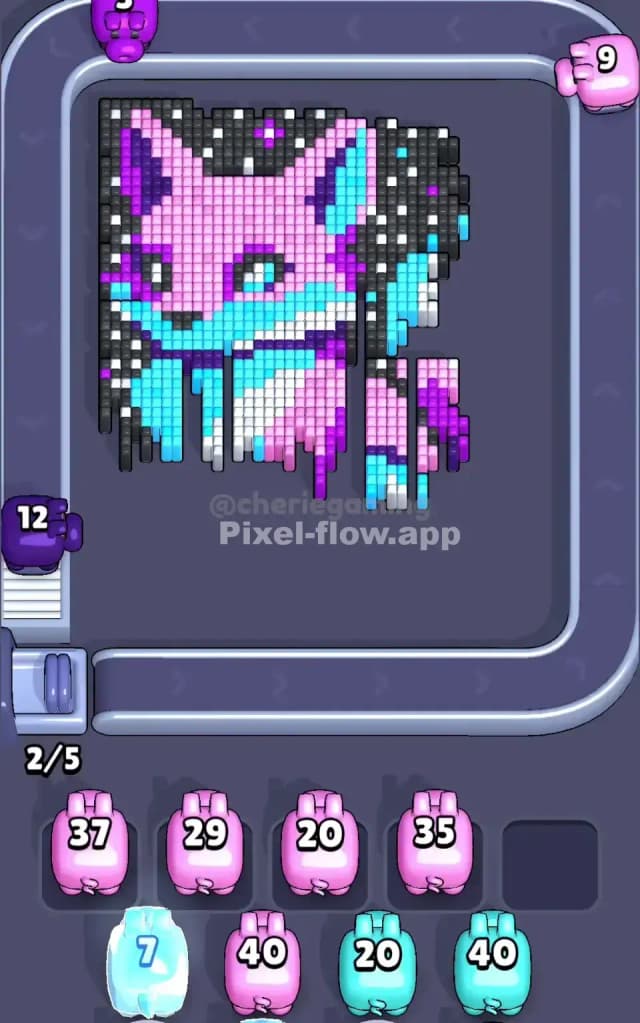
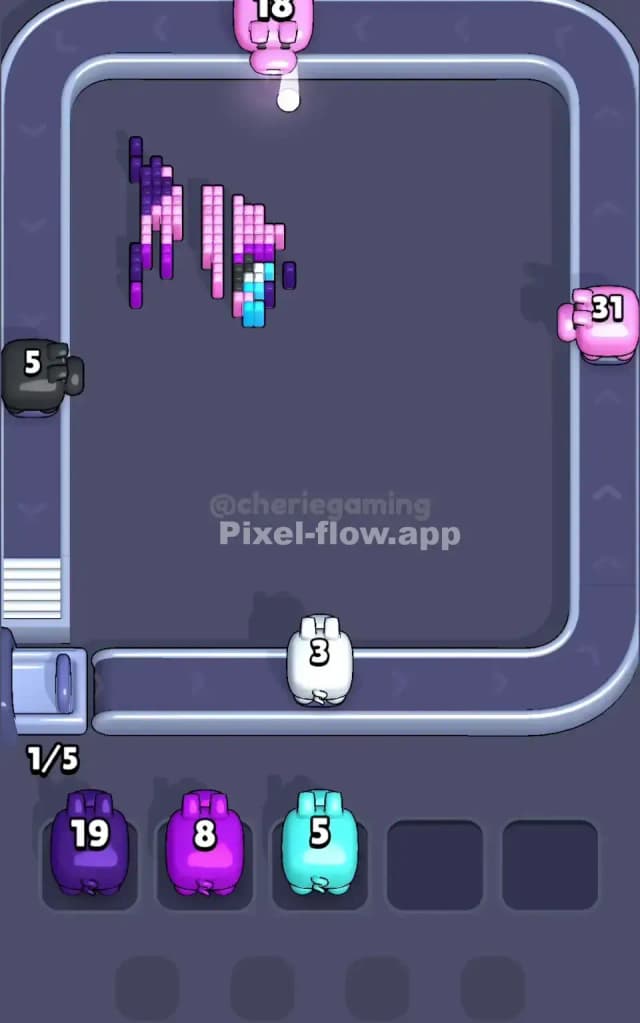
Pixel Flow Level 419 presents a vibrant pixel art character—a stylized fox or wolf face—composed of pink, cyan, purple, and black voxel cubes layered across multiple depths. The character's face dominates the center, with the pink forming the main facial features, cyan creating accent details around the snout and ears, and purple adding depth and shadows throughout. Black cubes fill the background, creating contrast and adding significant visual complexity. The layered nature of this design means you're not simply clearing colors on a flat surface; you're peeling away voxel layers to expose hidden colors underneath, which is the true heart of Pixel Flow Level 419's puzzle design.
The Win Condition and Deterministic Nature
To clear Pixel Flow Level 419, you must eliminate every single cube on the board. Your four incoming pigs arrive in a fixed sequence with predetermined ammo counts: a purple pig with 20 ammo, a cyan pig with 20 ammo, a light cyan pig with 10 ammo, and a white pig with 20 ammo. Because each pig shoots cubes of its matching color and spends exactly one ammo per cube destroyed, the math is deterministic—you have exactly 70 shots to clear the board. There's no room for wasted ammo or miscalculation. The real challenge isn't guessing; it's understanding the order and timing needed to expose all cubes and spend every bit of ammo without jamming your five waiting slots.
Why Pixel Flow Level 419 Feels So Tricky
The Black Cube Bottleneck
The biggest threat to your success in Pixel Flow Level 419 is the overwhelming presence of black cubes scattered across the board. Black isn't represented in your pig lineup, so you can never directly destroy black voxels. Instead, black cubes sit as permanent fixtures on the background, blocking sightlines and preventing you from accessing colored cubes that lie behind them. This creates a brutal constraint: you must completely clear pink, cyan, and purple cubes around and between the black obstacles before you can finish the level. If you're not careful about sequencing, you'll find yourself with pigs still holding ammo but unable to find valid targets because all remaining cubes are black—and that's when those stuck pigs tumble into your waiting slots and lock you into failure.
The Pink-to-Cyan Transition Problem
Pixel Flow Level 419 has a particularly nasty color distribution problem in the middle game. Pink dominates the facial features, especially in the center and upper regions, while cyan is scattered in smaller patches throughout the design. Your pig order forces you to start by burning purple ammo first, but once you move to pink, you'll quickly realize that the pink cubes aren't evenly exposed. Some pink is accessible immediately; other pink sits behind cyan or black, unreachable until you've cleared those layers. Misjudging when to switch from purple to cyan—or vice versa—means one of your pigs gets stranded with ammo it can't spend, and boom, you've wasted a waiting slot on a useless pig.
The Light Cyan Wildcard
The light cyan pig carries only 10 ammo, the smallest allotment in Pixel Flow Level 419, and light cyan cubes are oddly placed throughout the design. They're not plentiful enough to justify a 20-ammo pig, yet they're scattered enough that you can't simply ignore them until the end. If you try to park the light cyan pig early because you can't find targets, you're burning a waiting slot prematurely. If you try to save it for the endgame, you risk running out of other colored ammo before reaching those light cyan cubes. This pig creates genuine tension, and honestly, I found Pixel Flow Level 419 clicked for me only after I stopped treating light cyan as an afterthought and started planning exactly when those 10 shots would land.
The Endgame Jam Risk
Even if you navigate the mid-game smoothly, Pixel Flow Level 419 can betray you in the final stretch. With three or four pigs already in the waiting slots, introducing a fifth pig—especially one that can't find immediate targets—locks you into permanent failure. The psychological pressure is real: you're watching your buffer fill up, knowing that one wrong move or one pig with no valid targets means restarting. I remember staring at Pixel Flow Level 419 with two pigs left in the queue and only one free waiting slot, sweat dripping, realizing I'd miscounted the remaining cyan cubes and was about to jam hard.
Step-by-Step Strategy to Clear Pixel Flow Level 419
Opening: Establish Control and Preserve Buffer Space
Start Pixel Flow Level 419 by sending your purple pig (20 ammo) onto the board. Purple serves as your opener because it's the most expendable; if you make a minor error, the purple pig's 20 ammo provides enough cushion to recover. Focus on the purple accent cubes scattered across the design, especially those in the upper and lower corners. Don't be greedy—your goal isn't to deplete purple completely, but to clear enough purple cubes to expose the pink and cyan layers beneath them. Aim for 12–14 purple cubes destroyed, leaving 6–8 purple ammo unspent. This restraint keeps your first pig in the waiting slots briefly but alive and flexible.
Watch your waiting buffer closely. After the purple pig parks, you have four empty slots remaining. This buffer is your insurance policy throughout Pixel Flow Level 419. Never allow more than one pig to idle in the slots at any given time until the final moves. If a second pig enters the waiting area before you've cleared space, you're surrendering control.
Mid-Game: Sequence Pigs for Ammo Precision
Once purple is parked, send the cyan pig (20 ammo) onto the board. This is where Pixel Flow Level 419 gets surgical. Cyan cubes form the snout, ears, and smaller accent details throughout the face. Your cyan pig has abundant ammo, so focus on clearing all easily accessible cyan cubes and any cyan that blocks access to pink or purple layers. You're looking to burn roughly 15–18 cyan ammo in this phase, leaving 2–5 shots in reserve for the endgame. Why reserve ammo? Because hidden cyan cubes may lurk beneath black or other colors, and you'll want flexibility to hunt them down later.
After cyan parks, introduce the light cyan pig (10 ammo). This is the critical juncture in Pixel Flow Level 419. Light cyan cubes are sparse, so hunt them methodically. Most of your 10 shots will connect, but pace yourself. If you exhaust light cyan ammo before finding all light cyan cubes, that pig jams. Conversely, if you can't find targets, it also jams. The sweet spot is spending 8–10 ammo without strain, which typically means you've either cleared all light cyan or identified exactly where the last few sit (so you can return to them after exposing more layers).
Between each pig cycle, pause and visually scan Pixel Flow Level 419 for newly exposed cubes. The voxel layers create surprising reversals—clearing one cube can cascade and unlock two more beneath it. Keep count mentally: How many pink cubes remain visible? How many cyan? This awareness lets you predict whether your next pig will find targets or jam.
End-Game: Close Out Cleanly Without Jamming
The white pig (20 ammo) is your final asset in Pixel Flow Level 419. By this stage, your board should be nearly bare, with scattered pink, cyan, and black remaining. White cubes are rare, so most of your final 20 ammo will go toward mopping up stray pink or cyan that resisted earlier phases. Conserve and spend white ammo only on genuine white cubes; use any remaining white ammo on the last few colors to avoid leaving white with unspent shots.
The true final move in Pixel Flow Level 419 is silent: confirm that all cubes are destroyed and that no pigs remain in the waiting queue with ammo remaining. If you've followed the strategy correctly, the white pig will tumble into the waiting area as the last voxel falls, and you'll see the victory screen. If even one cube persists or one pig holds ammo, you've miscounted somewhere—but that's a learning moment, not a failure.
The Logic Behind This Pixel Flow Level 419 Plan
Exploiting Determinism and Patience
Pixel Flow Level 419 isn't a reflex test; it's a logic puzzle wrapped in a pixel art skin. Because your pig order and ammo counts are fixed, the level is fully deterministic. This means every clear of Pixel Flow Level 419 uses the same four pigs in the same sequence. Your job is to decode which ammo goes where. The strategy above doesn't guess—it observes. By deliberately underutilizing each pig's ammo in early phases, you create flexibility for later phases when the board is more exposed and your targeting options expand. It's patience disguised as restraint.
The Waiting Slot Economy
The five waiting slots are your economy in Pixel Flow Level 419. Treat them like a currency. Each pig you park costs one slot. Once a pig parks, that slot is locked until the pig finds a target and spends ammo. A pig with ammo remaining but no valid targets becomes a permanent prisoner in that slot, instantly failing Pixel Flow Level 419. By maintaining a buffer of at least two empty slots throughout the mid-game, you protect yourself against bad luck or miscounting. If a pig jams unexpectedly, you have room to recover with the next pig rather than cascading into total failure.
Staying Calm and Counting Ahead
Here's my personal truth about Pixel Flow Level 419: panic kills runs faster than bad strategy. When you're down to the final pig and your board is nearly clear, the urge to rush is overwhelming. Resist it. Take a breath. Count the remaining cubes, verify your incoming pig's ammo, and trace the logic one more time. I've cleared Pixel Flow Level 419 by breathing, counting, and remembering that determinism means the puzzle is always solvable—I just need to find the path. Watch the queue constantly. Know exactly which pig is coming and what color it will shoot. Plan two or three pigs ahead, not just the next move. This foresight is the difference between victory and a heartbreaking jam in the final seconds.