Pixel Flow Level 418 Solution | Pixel Flow 418 Walkthrough
How to beat Pixel Flow Level 418: Video solution & walkthrough. The fastest way to pass Pixel Flow 418.
Is this the wrong level layout?🤔
Pixel Flow randomizes levels for different players. Don't worry, just upload a screenshot of your board, and our AI will find the correct video instantly.
Pixel Flow Level 418 Walkthrough
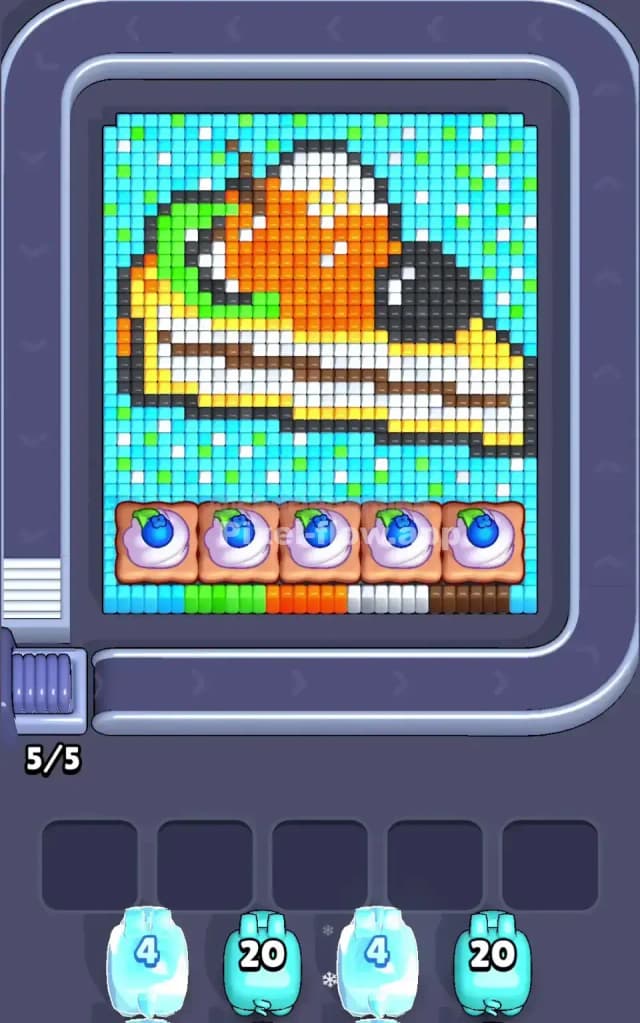
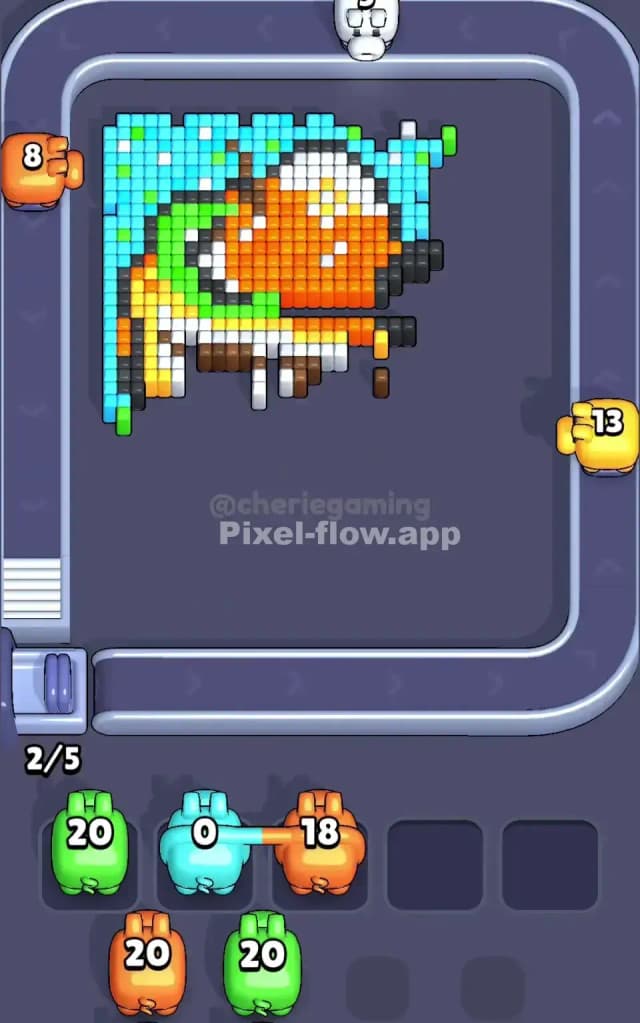
This level features a delicious-looking slice of pixel art cake. You'll see layers of orange fruit on top, creamy white frosting, yellow sponge cake, and a dark crust, all set against a speckled blue background. The core challenge here is managing the sheer volume of background noise. The light blue pixels are everywhere, but they are mixed with random green specks that break your firing lines.
The rule to beat Pixel Flow Level 418 is strict layer management. You cannot just spam pigs. You must clear the massive blue/green background first to expose the "cake" itself. If you try to attack the orange or white center too early, your pigs will run out of targets and clog your waiting slots. Is this a very hard level? No, but it is tedious. It requires patience to clear the clutter before eating the cake.
Pixel Flow Level 418 Overview
Imagine a slice of carrot cake or maybe orange cheesecake sitting on a blue tablecloth. The artwork is centered, but the background is the real enemy here. It's a field of light blue interrupted by random green pixels.
The cake itself is built in distinct horizontal stripes:
- Top: A large orange dome (the fruit glaze).
- Middle: A thick white stripe (cream cheese frosting).
- Bottom: A yellow layer with a dark brown crust line.
- Left Edge: A weird green vertical strip that looks like a garnish or maybe a lime wedge.
The asymmetry is important. The left side has that heavy green vertical block. The right side is mostly empty blue space until you hit the cake. This means your Green pigs will be very busy on the left, while your Blue pigs need to sweep the entire perimeter.
Step by step solution walkthrough for Pixel Flow Level 418
First Color Zone to Erase in Pixel Flow Level 418
Start with the Light Blue background.
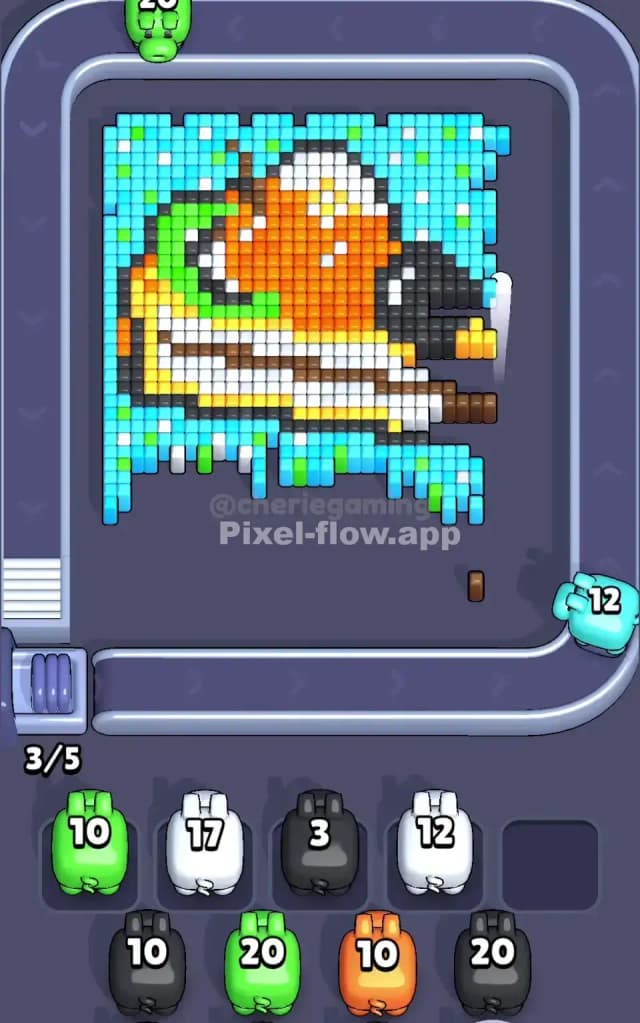
Narratively, you are clearing the table before you eat. Logically, look at the board. The blue pixels wrap around everything. If you don't clear them, they act as a shield, preventing you from reaching the inner layers. However, be careful! The blue is speckled with green.
- Prioritize Blue Pigs (High Ammo): You will see pigs with 20 ammo. Use these first. They will chew through the top, right, and bottom borders.
- The Green Garnish: Once the blue starts thinning out, you will notice a solid vertical chunk of green on the left side of the cake. This is the second priority. Erasing this green strip opens up the left flank of the cake, allowing you to access the yellow and white layers from the side.
Don't touch the orange or brown pigs yet. They have nowhere to shoot because the outer layers are blocking the core.
How to pass Pixel Flow Level 418 without power ups or boosters
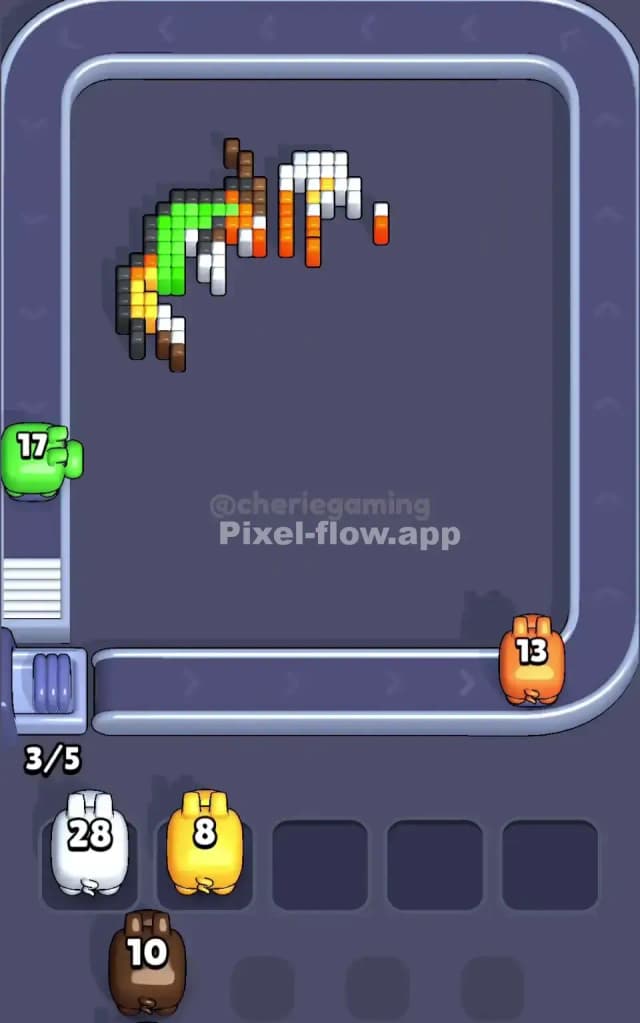
At the halfway point, your board should look like a floating slice of cake with jagged edges. The blue background is mostly gone. The green garnish on the left is removed. Now you are staring at the actual food.
This is the dangerous part where slots get clogged.
- The Brown Trap: The dark brown pixels form a thin, jagged line near the bottom and right. Do not drop a high-ammo Brown pig yet. You likely only have a few brown pixels exposed. If you drop a 20-ammo brown pig, it will break 3 blocks and then sit in your slot forever. Wait until the yellow layer is significantly reduced.
- Yellow vs. White: You need to alternate here. The yellow sponge layer and white frosting layer are intertwined. Clear a bit of yellow to expose more white, then clear the white to expose the bottom of the orange.
- Orange is the Finale: The big orange blob is the thickest part of the level. Save your high-ammo Orange pigs for when the top half of the cake is fully exposed. If you try to shoot orange while the white frosting is still protecting it, you'll waste the pig.
Last Details You Clean Up in Pixel Flow Level 418
The end game is usually messy. You will likely have:
- A few stray White blocks from the frosting layer that were hiding behind the orange top.
- The final Dark Brown pixels at the very bottom right corner.
- Sometimes, a single Green pixel hides in the top left corner, leftover from the background noise.
Scan the corners. Pixel Flow 418 loves to hide a single pixel behind the main image. Ensure you have a clear line of sight before dropping your final pigs to clean up the crumbs. Once the heavy orange section is gone, the rest falls quickly.