Pixel Flow Level 426 Solution | Pixel Flow 426 Walkthrough
How to beat Pixel Flow Level 426: Video solution & walkthrough. The fastest way to pass Pixel Flow 426.
Is this the wrong level layout?🤔
Pixel Flow randomizes levels for different players. Don't worry, just upload a screenshot of your board, and our AI will find the correct video instantly.
Pixel Flow Level 426 Walkthrough
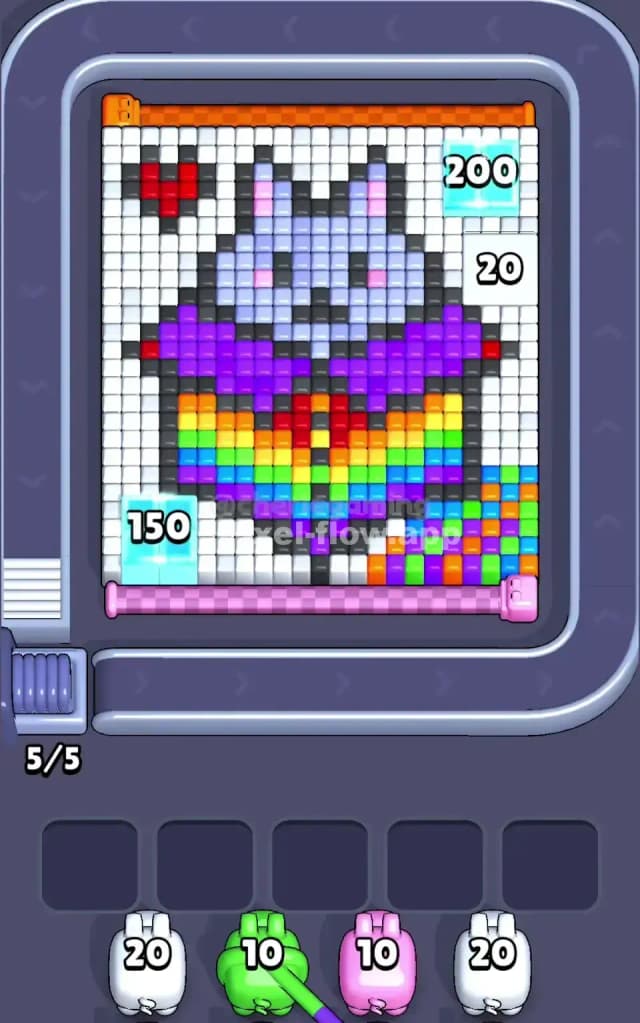
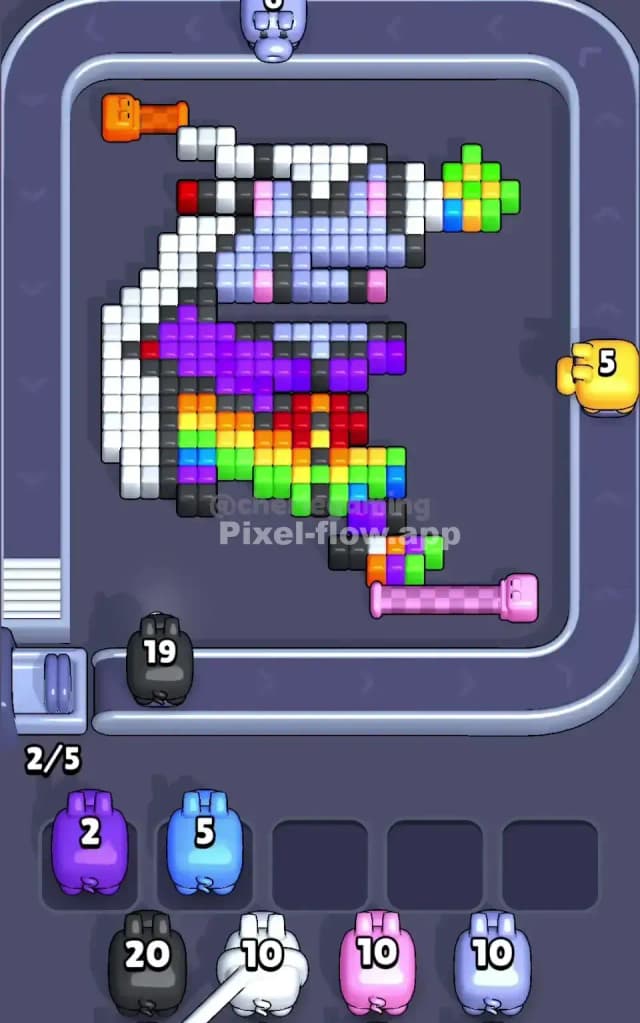
This is a tough one. You are looking at a pixel art scene of a grey cat popping out of a rainbow-striped gift box, surrounded by a massive field of white background tiles. The real challenge here isn't just the colors; it's the high-HP Ice Blocks guarding the corners. You have a 150 HP block on the bottom left and a massive 200 HP block on the top right.
Because of the sheer number of pixels required to break those ice blocks and clear the white background, Pixel Flow Level 426 is a very hard level. You need perfect ammo management, or your waiting slots will clog up instantly.
Pixel Flow Level 426 Overview
The image is cute, but the board layout is hostile. The central figure is a "Surprise Kitty"—a blue-grey cat head emerging from a present. The box itself is wrapped in a purple bow, and the body of the box is a literal rainbow layer cake: horizontal stripes of red, orange, yellow, green, and blue.
The background is a stark, solid wall of white pixels. This white area is huge. It covers about 60% of the playable surface.
There is significant asymmetry here. The top left corner features a floating red heart, isolated from the main image. The bottom right corner is a chaotic mess of multi-colored "confetti" pixels—orange, purple, blue, and green blocks jumbled together. This corner is dangerous because it forces you to use specific colors in a small area while you are trying to focus on the main cat image. The Ice Blocks act as bookends, freezing the bottom-left and top-right progress until you chip them down.
Step by step solution walkthrough for Pixel Flow Level 426
First Color Zone to Erase in Pixel Flow Level 426
Ignore the rainbow box for a second. You must attack the White background first.
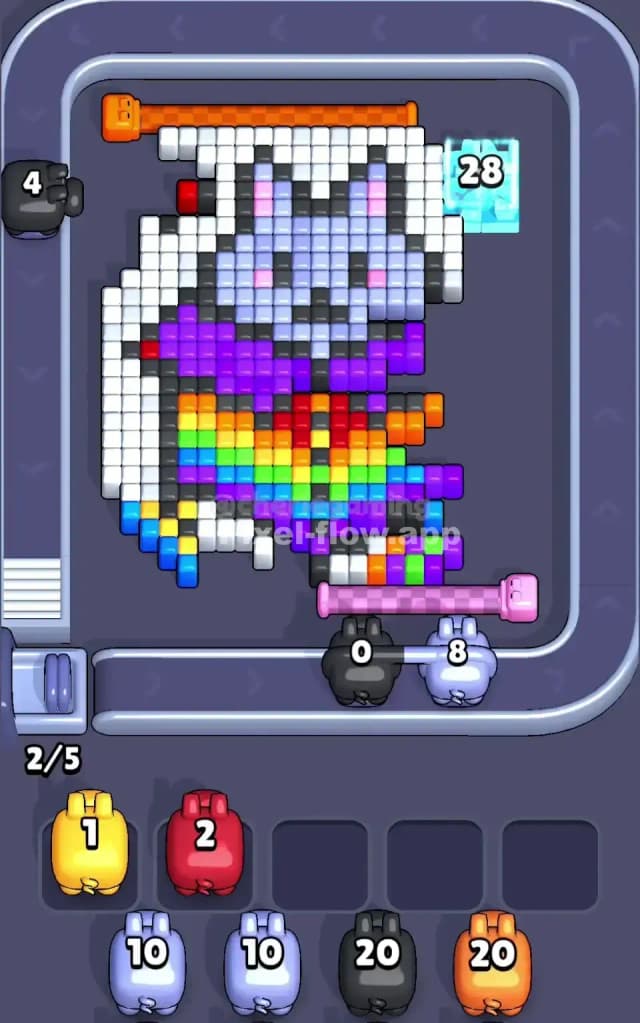
Narratively, think of this as unwrapping the gift. Logically, the white pixels are the "outermost" layer. They surround everything. If you look at your pig queue, you will likely see White pigs with high ammo counts (like 20). If you try to save these for later, they will clog your conveyor belt. You have hundreds of white pixels to clear. Prioritize every single White pig immediately. Clearing the white background exposes the edges of the cat and the box, and more importantly, it starts chipping away at the perimeters of those high-HP Ice Blocks.
If you don't clear the white zone early, your colored pigs (Red, Blue, Green) won't have clear shots at the inner layers, and you will lose because your five waiting slots will fill up with useless animals.
How to pass Pixel Flow Level 426 without power ups or boosters
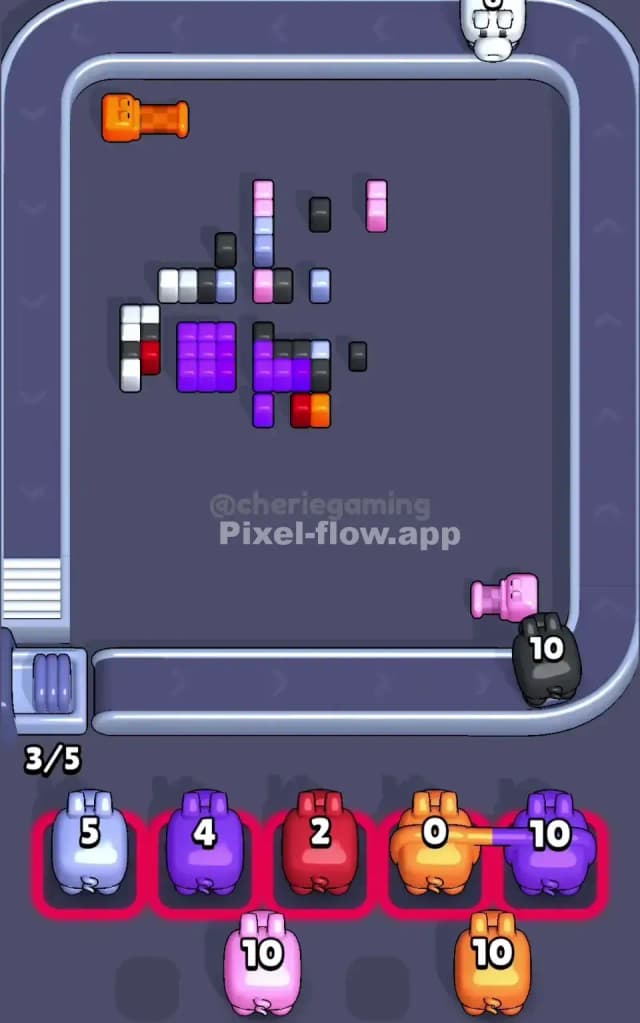
Once the sea of white is gone, the level gets tricky. The picture will look half-destroyed. You’ll have the cat's head exposed and the rainbow stripes of the box visible. Here is where the "no power-up" run gets dangerous.
You have to manage the vertical stripes of the rainbow box carefully. The game feeds you pigs in a semi-random order. You might get a Green pig when the Green row is still blocked by a Yellow or Red row above it.
- Watch the Bottom Right Corner: That messy pile of confetti pixels in the bottom right is a trap. It contains single blocks of Orange, Purple, and Green. If an Orange pig comes down the belt and the only Orange pixels left are buried in that corner, use the pig. Do not let it slide into a waiting slot if it can clear even 3 pixels.
- The Ice Block Grind: The 200 HP block in the top right is a nightmare. Without boosters, you can't one-shot it. You have to rely on collateral damage. Position your pigs so they clear pixels touching the ice. Every cleared neighbor counts.
- Ammo Waste is Okay: In this specific level, if a Black pig has 20 ammo but there are only 5 Black pixels on the cat's nose visible, use it anyway. Do not hold out for "perfect value." The board is too crowded. You need to keep the belt moving to find the Pink pigs for the ears and the Red pigs for the heart.
Last Details You Clean Up in Pixel Flow Level 426
The end game of Pixel Flow 426 is usually a hunt for stragglers.
- The Red Heart: People often forget the small red heart in the top left. It requires a Red pig, but Red is also needed for the middle of the rainbow box. Ensure you don't waste your last Red pig on the box if the heart is still floating there untouched.
- The Cat’s Ears: The inner ears are Pink. These are small targets, usually requiring just one or two bursts of ammo. If a Pink pig clogs a slot early in the game, it sits there forever. Try to clear the Grey/Blue of the cat's head quickly to expose these Pink zones so you can dismiss the Pink pigs.
- The Final Grey Blocks: The cat's face is a large block of greyish-blue. These are often the last pixels to fall, simply because there are so many of them and they are centrally located, protected by the outer layers.
Keep your slots empty. Hit the white hard. Don't ignore the messy corner. That is how you win Level 426.