Pixel Flow Level 428 Solution | Pixel Flow 428 Walkthrough
How to beat Pixel Flow Level 428: Video solution & walkthrough. The fastest way to pass Pixel Flow 428.
Is this the wrong level layout?🤔
Pixel Flow randomizes levels for different players. Don't worry, just upload a screenshot of your board, and our AI will find the correct video instantly.
Pixel Flow Level 428 Walkthrough
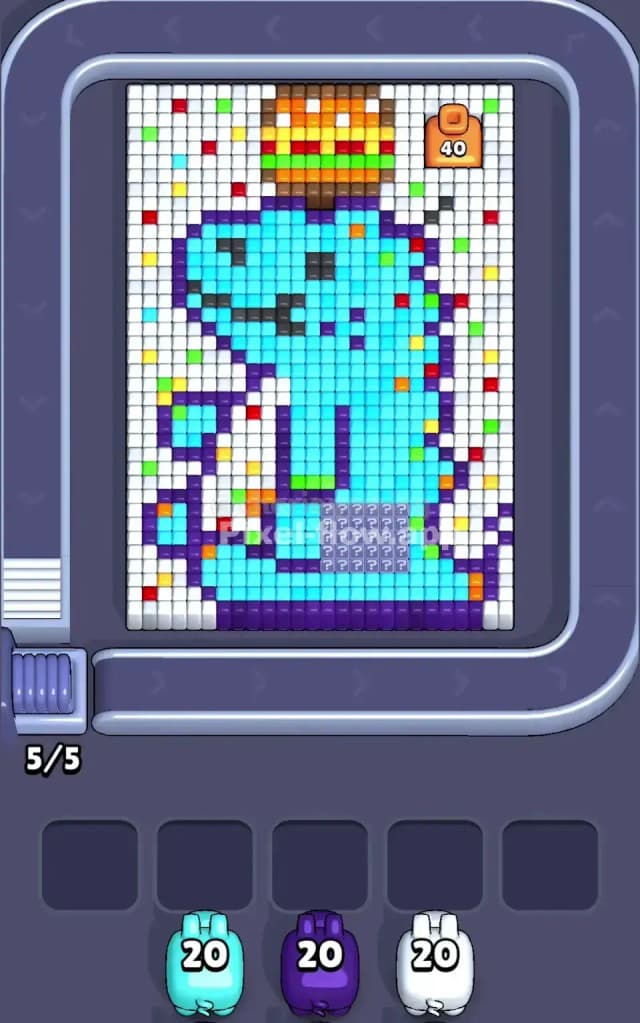
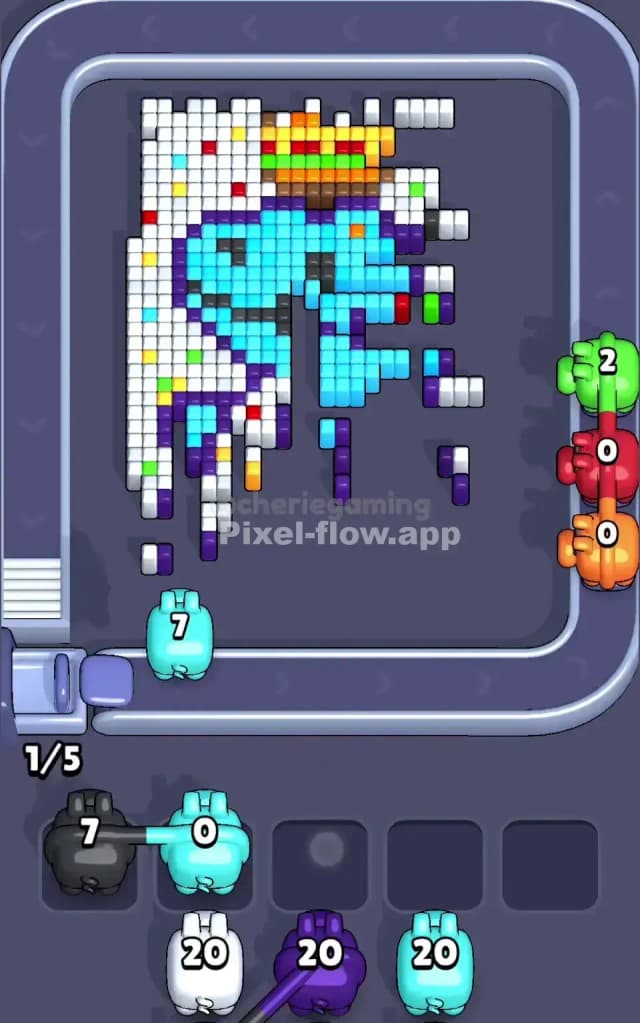
This level features a quirky scene: a light blue dinosaur balancing a cheeseburger on its head. The background is a white field scattered with colorful confetti dots. Be warned: this is a very hard level. The difficulty comes from the "confetti" scattered in the white background. These tiny, single-block colors break up your pigs' shooting rhythm. You can easily clog your slots with pigs trying to snipe one red dot while a massive wall of white blocks your progress.
Pixel Flow Level 428 Overview
The artwork centers on a chubby, pixelated T-Rex. He is primarily Light Blue with a thick Dark Purple outline. Perched precariously on his flat head is a classic burger: brown bun, green lettuce, yellow cheese, and a reddish patty.
The real trouble is the background. It isn't just empty space. It is a solid wall of White blocks, speckled with single pixels of red, yellow, green, and blue confetti.
The board is asymmetrical in a dangerous way. The dinosaur's body is heavy on the right and center, but the left side is a mix of white background and the dinosaur's tail. The confetti is random. A red pig might only have one target on the far left, then nothing else until you clear three layers of white. That gap is where players lose.
Step by step solution walkthrough for Pixel Flow Level 428
First Color Zone to Erase in Pixel Flow Level 428
Ignore the cute dinosaur. Attack the White background first.
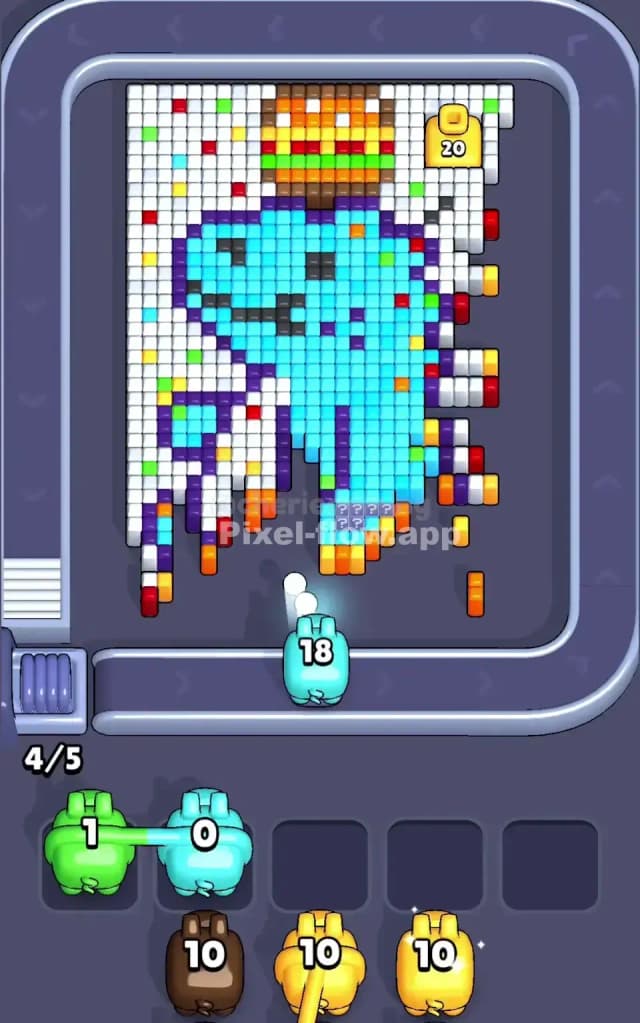
Narratively, you need to clear the "air" around the dinosaur so you can actually reach him. Logically, the white blocks are the most numerous and they obstruct everything else. If you try to snipe the confetti or the burger first, you will fail. The white pigs usually come with high ammo counts (20+). Let them rip through the left and right columns. This exposes the "confetti" pixels buried inside the white layers and, crucially, exposes the Dark Purple outline of the dino.
Do not pick a colored pig (red, green, yellow) unless you see an immediate, clear path to at least 5-10 blocks of that color. If you pick a Red pig to hit one confetti dot, he sits in your slot forever.
How to pass Pixel Flow Level 428 without power ups or boosters
The mid-game is the danger zone. Once the outer white layer is gone, the board looks messy. You have the dinosaur's blue body exposed, but it's surrounded by the purple outline.
- Prioritize the Outline (Purple): The purple blocks form a "shell" around the blue body. You cannot clear the massive blue center efficiently until the purple shell is cracked. If a Purple pig appears, grab it. It will trace the shape of the dinosaur, clearing the edges.
- Burger Management: The burger on top is a trap. It has many colors (Brown, Green, Yellow) stacked in small stripes. Do not fixate on it. Only send a "burger color" pig if the conveyor belt forces you to, or if you have a free slot. Focusing on the burger too early clogs your slots because the burger layers are thin.
- The Confetti Trap: You will see single blocks of red or yellow floating in space. Do not panic. Wait. Let the conveyor belt cycle. Often, a "White" pig or a "Blue" pig is a better play to clear large chunks, which might cause those single floating blocks to drop or shift into better positions.
- Blue is Safe: The dinosaur's body is a huge, safe target. When in doubt, a Light Blue pig is almost always a good play because the target area is massive and contiguous. It clears space fast.
Last Details You Clean Up in Pixel Flow Level 428
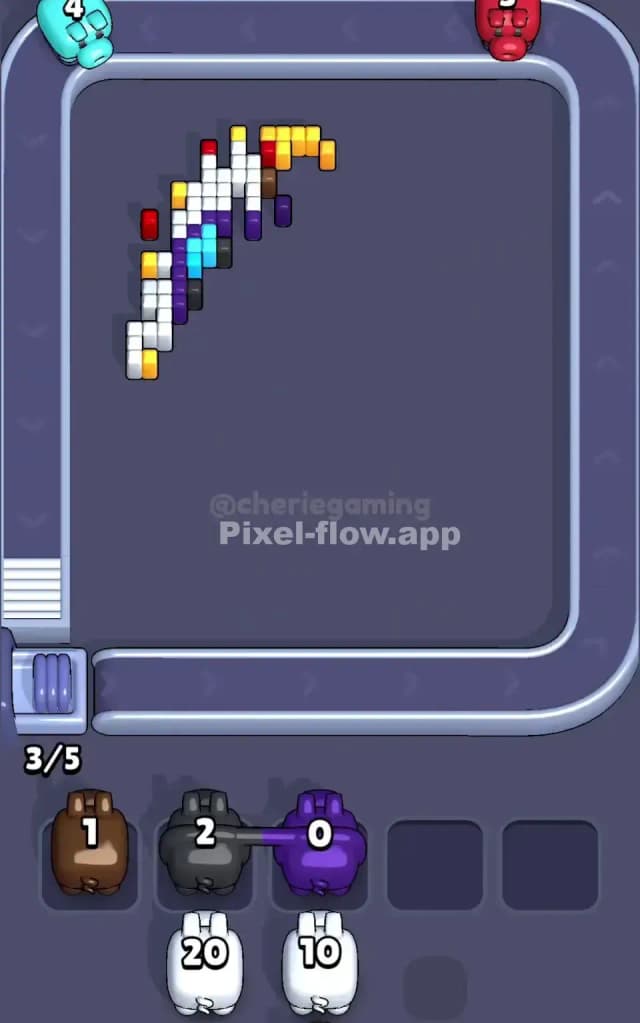
In the final moves, the dinosaur is usually headless or legless. You are left with:
- The Burger Remnants: Often a stray strip of green lettuce or yellow cheese floats at the top.
- Confetti Stragglers: A single red pixel hiding behind the dinosaur’s tail.
- Internal Detail: The dinosaur has dark blue eyes and spots. These are often the very last blocks to go.
Watch your slots. If you have 3 slots filled with pigs that have 1 ammo left but no targets, you are in trouble. Save the "Grey" or "Black" pigs (for the eyes/details) until the very end when those specific blocks are actually exposed. Don't hoard them early.