Pixel Flow Level 432 Solution Walkthrough | Pixel Flow 432
How to solve Pixel Flow level 432? Get instant solution for Pixel Flow 432 with our step by step solution & video walkthrough.


Pixel Flow Level 432 Overview
The Board Layout and Visual Challenge
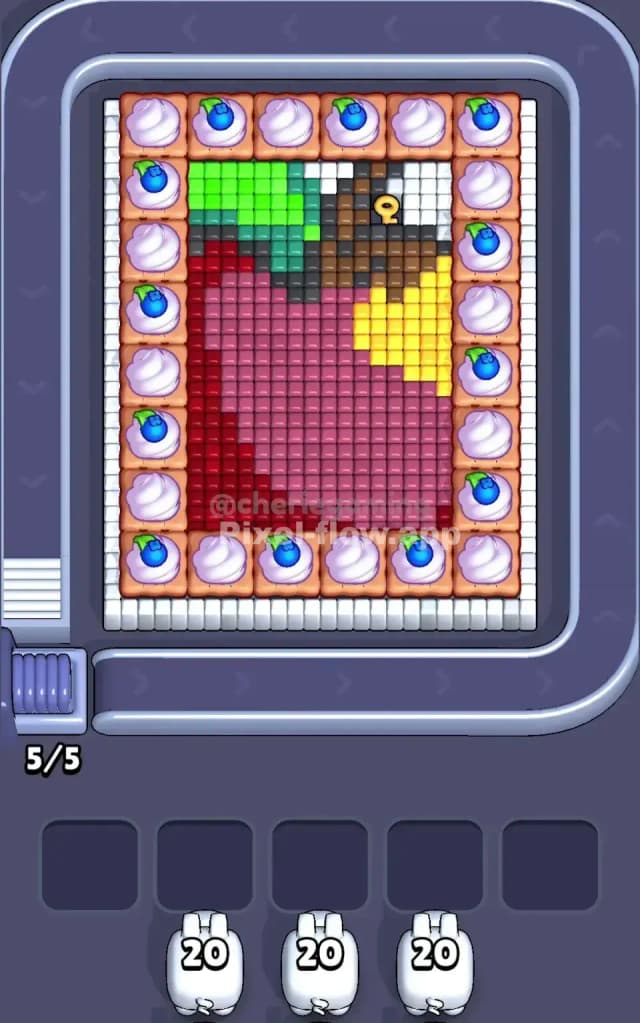
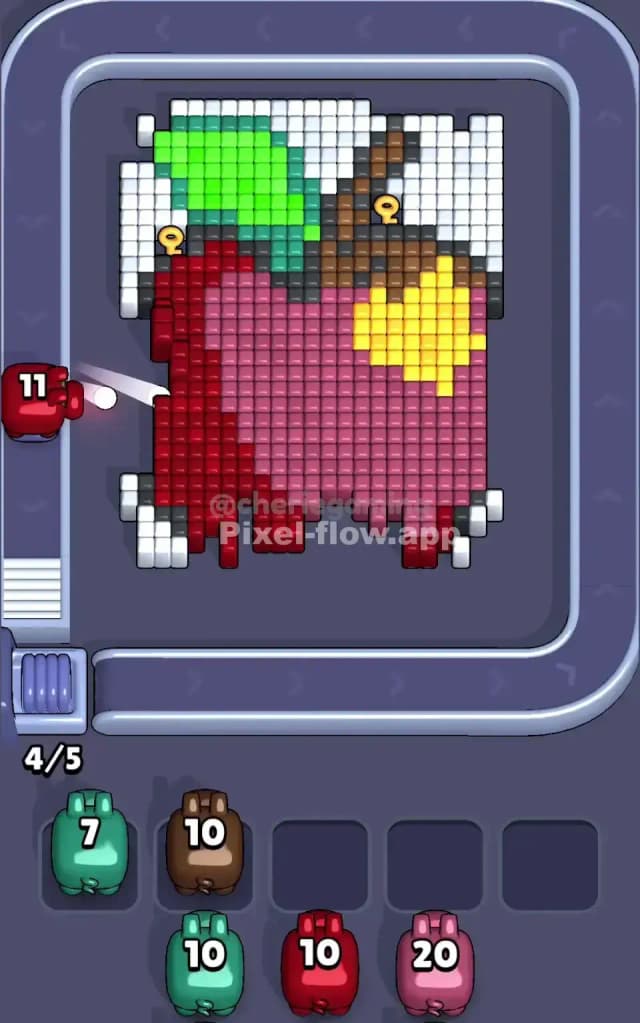
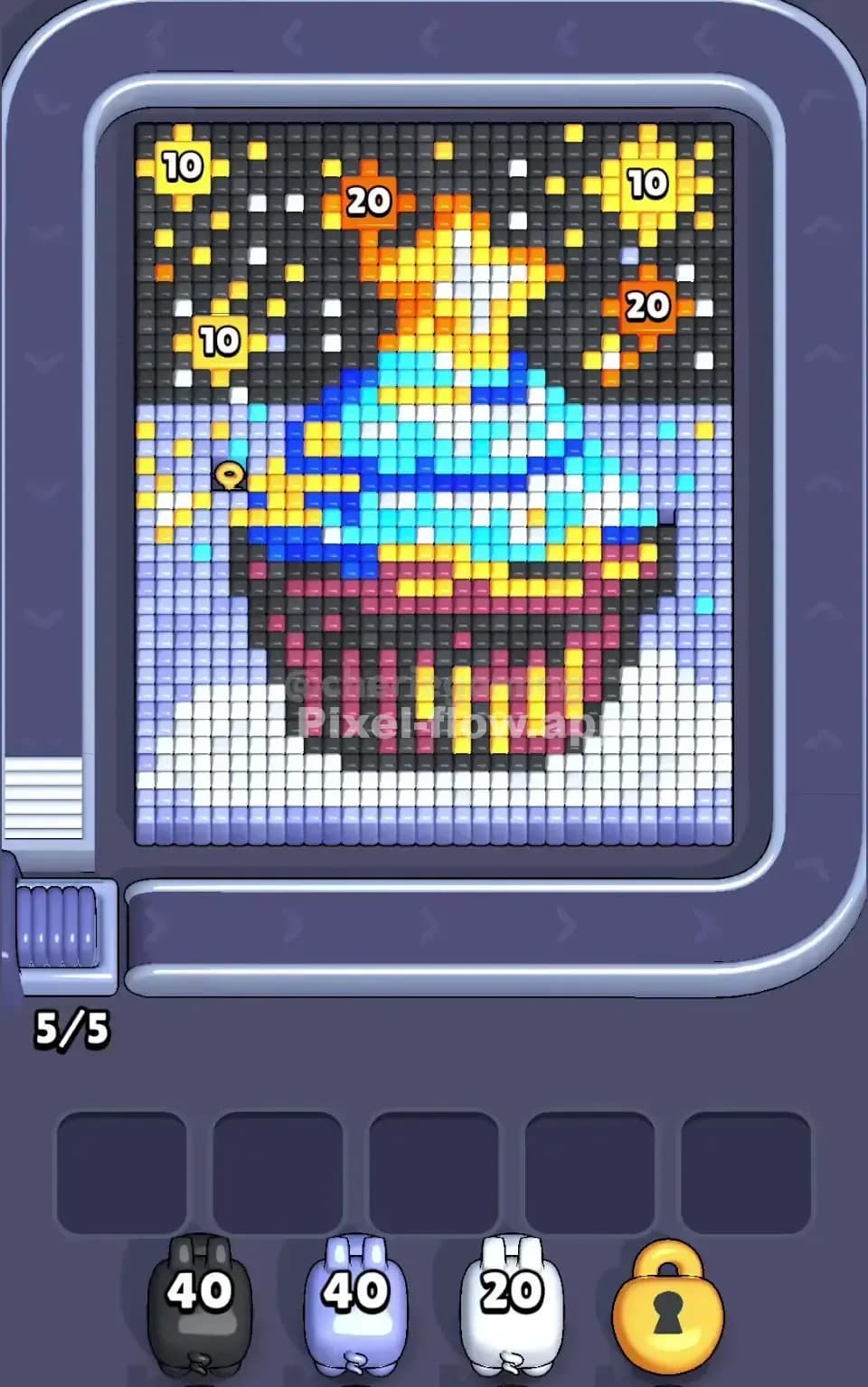
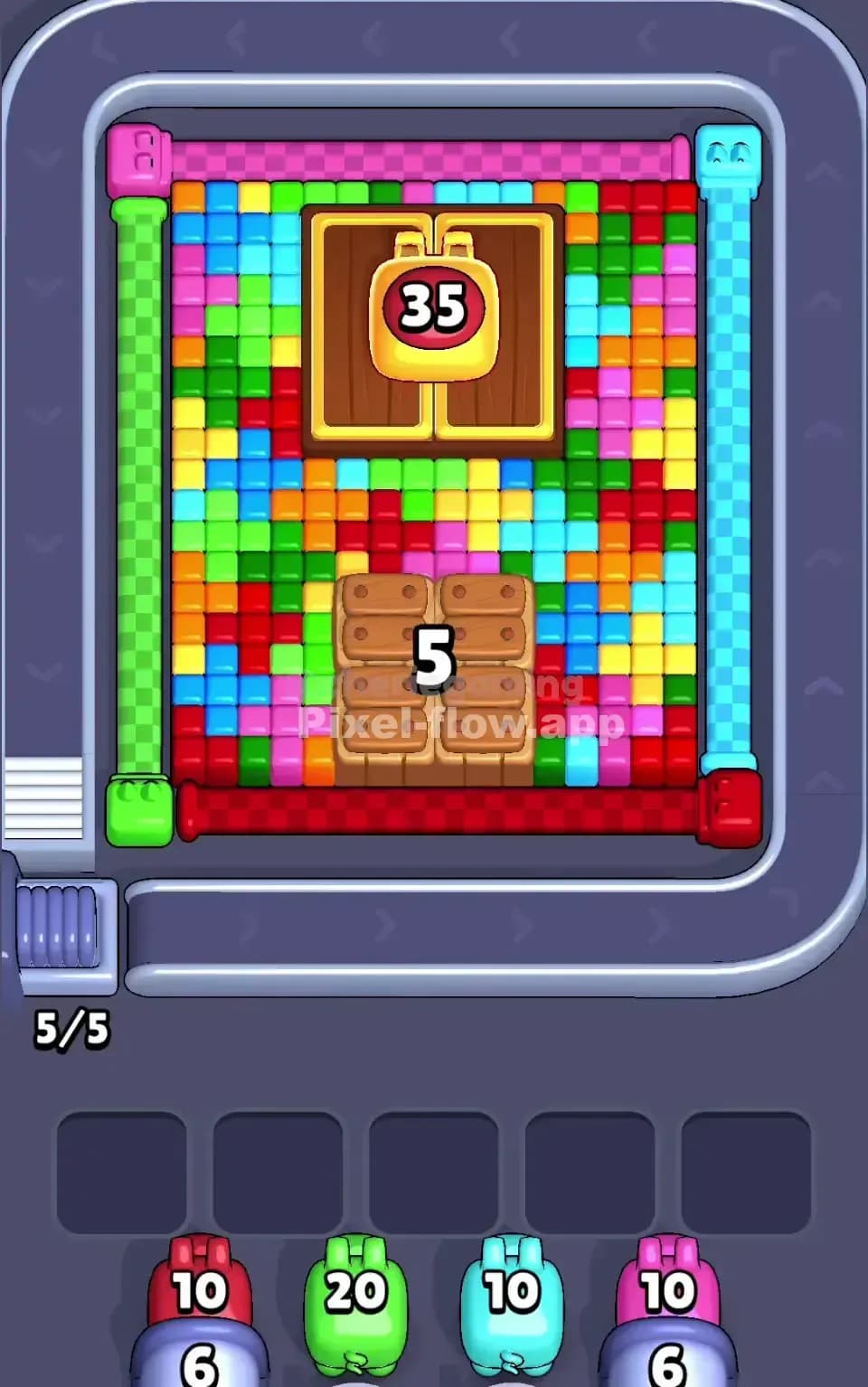
Pixel Flow Level 432 presents a striking pixel art scene dominated by warm reds and burgundies forming the main subject, with strategically placed green, yellow, and white accent layers. The board is a densely packed 8×8 grid of voxel cubes, and the image reads like a layered masterpiece—what you see on top is only the beginning. The red tones occupy the majority of the visible surface, creating an intimidating wall of cubes that initially feels endless. Nestled within this landscape are patches of bright green in the upper-left region, a bold yellow shape to the right-center, and white cubes scattered throughout as highlights and detail work. These color pockets are your visual clues to the puzzle's hidden architecture.
Win Condition and Deterministic Mechanics
Your mission in Pixel Flow Level 432 is straightforward: clear every single cube from the board by strategically deploying color-matched pigs from the queue. You'll notice three pigs in the active queue at the start, each displaying their ammo count (20 shots per pig visible here). The level is won once all voxels vanish and your waiting slots remain empty—no stuck pigs, no leftover cubes. Here's the critical insight: every pig's ammo count is fixed, every pig's color is predetermined, and the queue order never changes. This isn't luck; it's pure logic. Your job is to sequence these pigs so their ammo perfectly aligns with the cube count of each color, preventing any pig from running out of targets and jamming your buffer.
Why Pixel Flow Level 432 Feels So Tricky
The Red Wall Bottleneck
The single biggest hurdle in Pixel Flow Level 432 is the sheer volume of red cubes dominating the board. Red represents easily 50–60% of the visible grid, and that's before you've even exposed what's underneath. Early in the level, you won't have a red pig in your immediate queue, which means you'll be chipping away at green, yellow, and white first, gradually exposing the burgundy layers beneath. This creates a psychological and tactical pressure: you're making progress, but the red threat looms larger each turn. The real danger emerges when your red pig finally arrives and discovers that all 20 ammo shots are still insufficient, or when you miscalculate which cubes are truly red versus a similar-looking shade. One wrong assessment, and your red pig sits in a waiting slot with ammo left over, clogging your buffer.
Awkward Color Distribution and Hidden Layers
Pixel Flow Level 432 hides subtle traps in its color distribution. The green cluster in the upper-left looks self-contained and manageable, but it's surrounded by red cubes on nearly every side. Clearing green exposes a maze of smaller details and potentially opens up secondary red layers you hadn't anticipated. The yellow shape, while visually obvious, sits partially behind white cubes and red borders, making it unclear how many yellow voxels truly exist. If your yellow pig arrives with 20 ammo but only 15 yellow cubes are exposed (the rest hidden), you're locked—yellow's sitting in waiting with 5 shots wasted, and no way to spend them. White is perhaps the sneakiest offender; scattered throughout as accents and shading, white cubes blend into the background. Count wrong, and your white pig becomes a hostage in your buffer.
Personal Friction and the Breakthrough Moment
I'll be honest—Pixel Flow Level 432 frustrated me for my first 8–10 attempts. I kept charging in with my first red pig, dumping ammo into the obvious surface layer, only to discover I'd miscounted or missed hidden cubes deeper down. The turning point came when I stopped playing reactively and started mapping the board like a strategist. I grabbed a mental note of every visible color cluster, estimated cube counts by region, and then—crucially—watched which pig was actually coming next. That shift from "spam until it works" to "measure twice, shoot once" completely changed my approach. Suddenly, Pixel Flow Level 432 clicked.
Step-by-Step Strategy to Clear Pixel Flow Level 432
Opening: Establish Your Buffer Safety
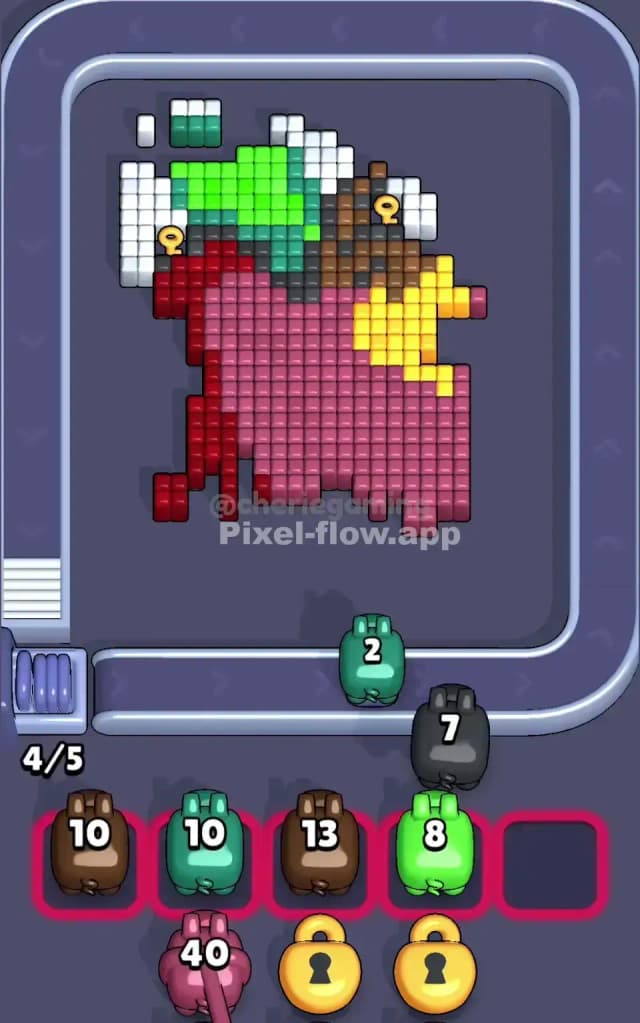
Start Pixel Flow Level 432 with a clear goal: keep at least two waiting slots empty for the first five turns. This gives you breathing room if a pig unexpectedly gets stuck. Look at your incoming queue and identify which color is not prominently visible on the board right now. In this level, that's likely your initial white pig—white cubes are scattered as details, so your first white deployment will only partially empty its ammo. Don't panic. Use your early turns to target the green cluster aggressively. Green occupies a defined, countable region, so if you have a green pig at 20 ammo and can verify roughly 18–20 green cubes exist, deploy that pig with confidence. The goal isn't to clear green entirely in one shot; it's to spend ammo that exactly matches visible cubes, so pigs don't get stranded. As you clear green, you'll expose red and deeper layers, reducing the guesswork for your mid-game moves.
Mid-Game: Sequence Pigs with Surgical Precision
This is where Pixel Flow Level 432 separates casual players from strategists. Once you've opened green, your board state is radically different. New cubes are exposed; old ones are gone. Before deploying your next pig, pause and reassess. Count the yellow voxels you can now see—if it's fewer than 20, your yellow pig will jam. Scan for every red cube and be honest about the total. If you spot 35+ reds visible but your incoming red pig only has 20 ammo, you know you'll need a second red pig later, so plan your buffer accordingly. Here's the tactical nugget: use your mid-game pigs to expose the interior layers without committing your big hitters. If you have a second green pig or a white pig with moderate ammo, deploy them to surgical precision—target isolated clusters that are clearly blocking access to deeper regions. This "reveal phase" is as important as direct elimination. As you progress through Pixel Flow Level 432, you're essentially solving a jigsaw puzzle where each pig's shots act as your puzzle-solving tool. By turn 10–15, the board should be half-cleared, your waiting slots should still have room, and you should have a rough map of the remaining cube counts by color.
End-Game: The Final Ammo Lockdown
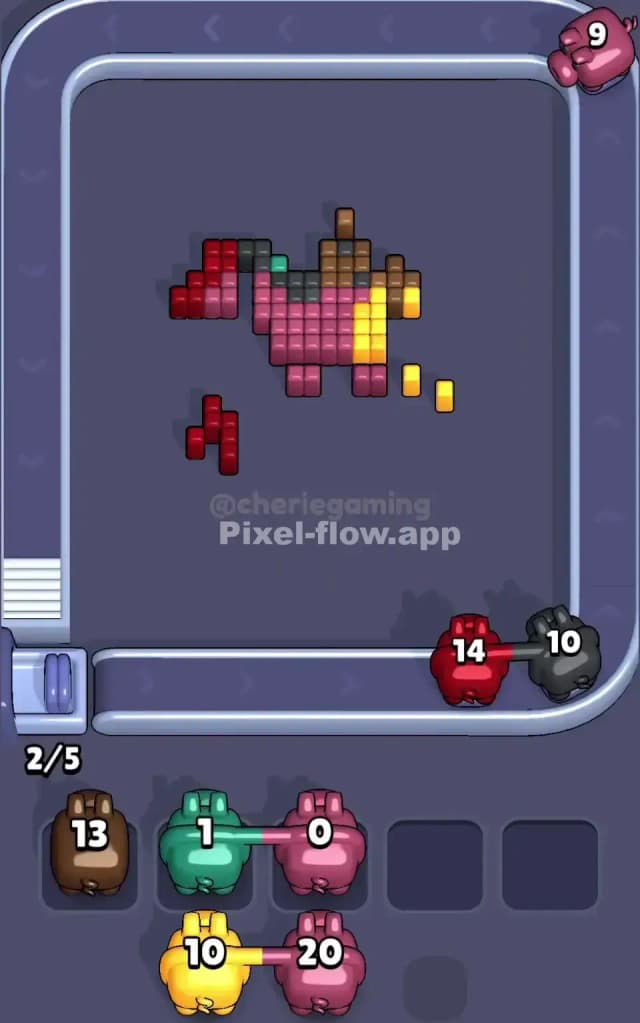
The last stretch of Pixel Flow Level 432 is where precision becomes obsessive. You're down to 2–3 colors, your waiting slots are starting to fill, and every pig counts. Here's your mantra: Never deploy a pig unless you're 95% certain its ammo matches the visible cube count. If you see 18 red cubes but your incoming red pig has 20 ammo, delay. Send in a white pig first to expose hidden reds, then bring the red pig back when you've confirmed the full count. For Pixel Flow Level 432, this means your final 5–7 pigs must flow perfectly, with zero waste and zero jams. The last color (likely red or a secondary shade) should arrive at a moment when your board is nearly clear and your waiting slots are empty. This isn't luck—it's the payoff of your earlier precision. Close Pixel Flow Level 432 by clearing the final 3–5 cubes with your last pig, watching it drop perfectly into an empty board.
The Logic Behind This Pixel Flow Level 432 Plan
Exploiting Determinism Over Randomness
The beauty of Pixel Flow Level 432 is that it rewards knowledge over hope. Every pig has the same ammo count every time you play. The queue never shuffles. The board never changes between attempts. This means your strategy can be perfected. By mapping colors, counting cubes, and planning pig order, you're essentially reverse-engineering the level's solution. The plan above works because it frontloads observation and restraint: you're not trying to clear reds immediately, even though reds dominate. Instead, you're clearing greens and whites first, exposing hidden layers, and gathering intelligence. This intelligence then allows your mid-game and end-game pigs to move with surgical confidence. You're not gambling; you're executing a predetermined sequence that you've verified.
Staying Calm and Counting Ammo Under Pressure
Pixel Flow Level 432 throws psychological pressure at you—that red wall feels urgent, that clock ticks (if you're playing timed), and your waiting slots fill up fast. But the secret is to treat ammo like currency. Every shot your pig fires is an investment, and every cube destroyed is a return. Before each pig deploys, pause. Count the visible cubes of that color. If your count is within 2–3 of the pig's ammo, go ahead. If there's doubt, delay and prep with another color first. This mental discipline transforms Pixel Flow Level 432 from a frantic race into a measured strategy session. You'll find that pigs sitting in your waiting slots for an extra turn are far preferable to pigs jamming permanently. By respecting the ammo economy and staying calm, you'll guide yourself toward victory without panic. The level rewards patience, and that's what separates a three-star clear of Pixel Flow Level 432 from a failed run.