Pixel Flow Level 433 Solution | Pixel Flow 433 Walkthrough
How to beat Pixel Flow Level 433: Video solution & walkthrough. The fastest way to pass Pixel Flow 433.
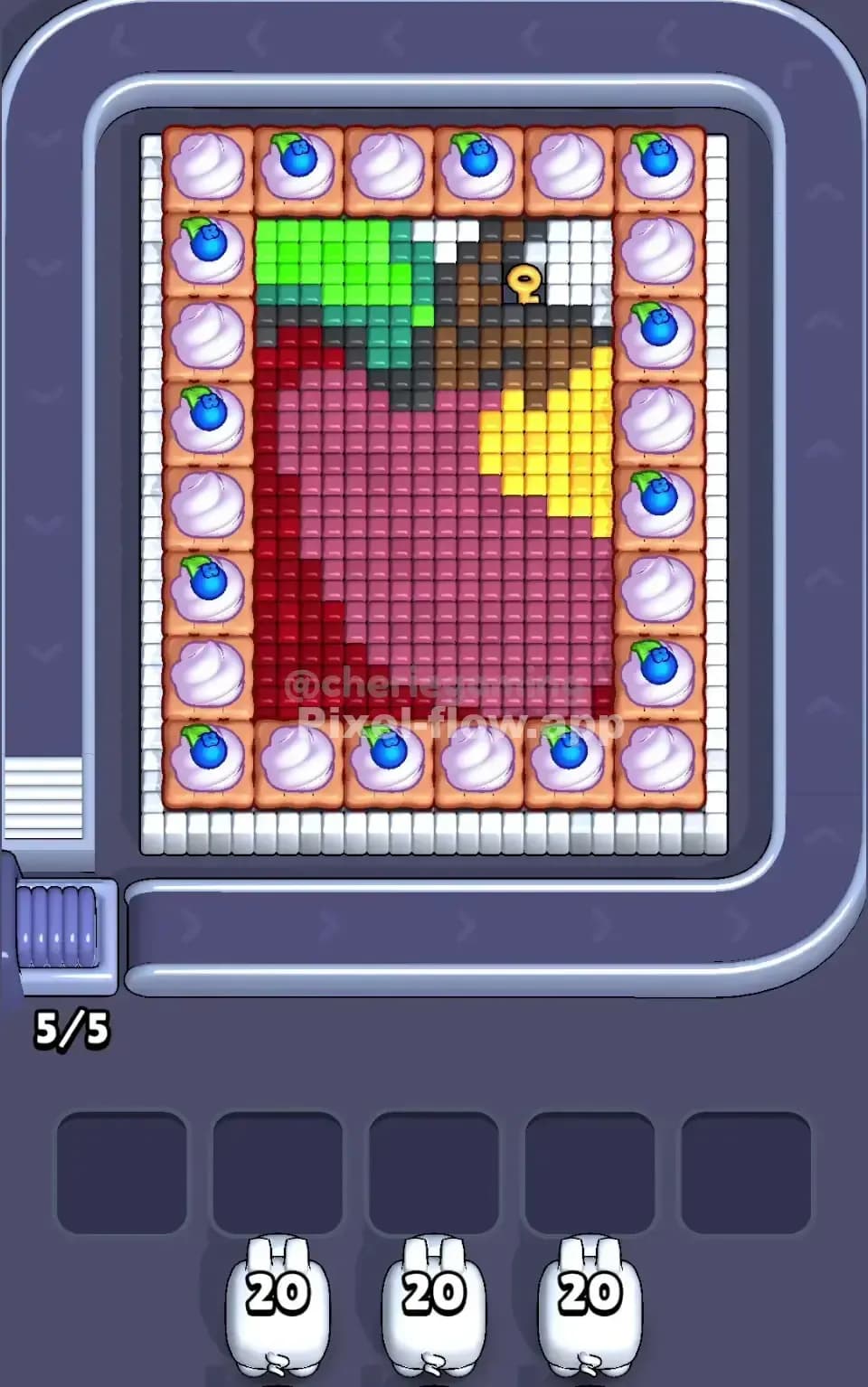
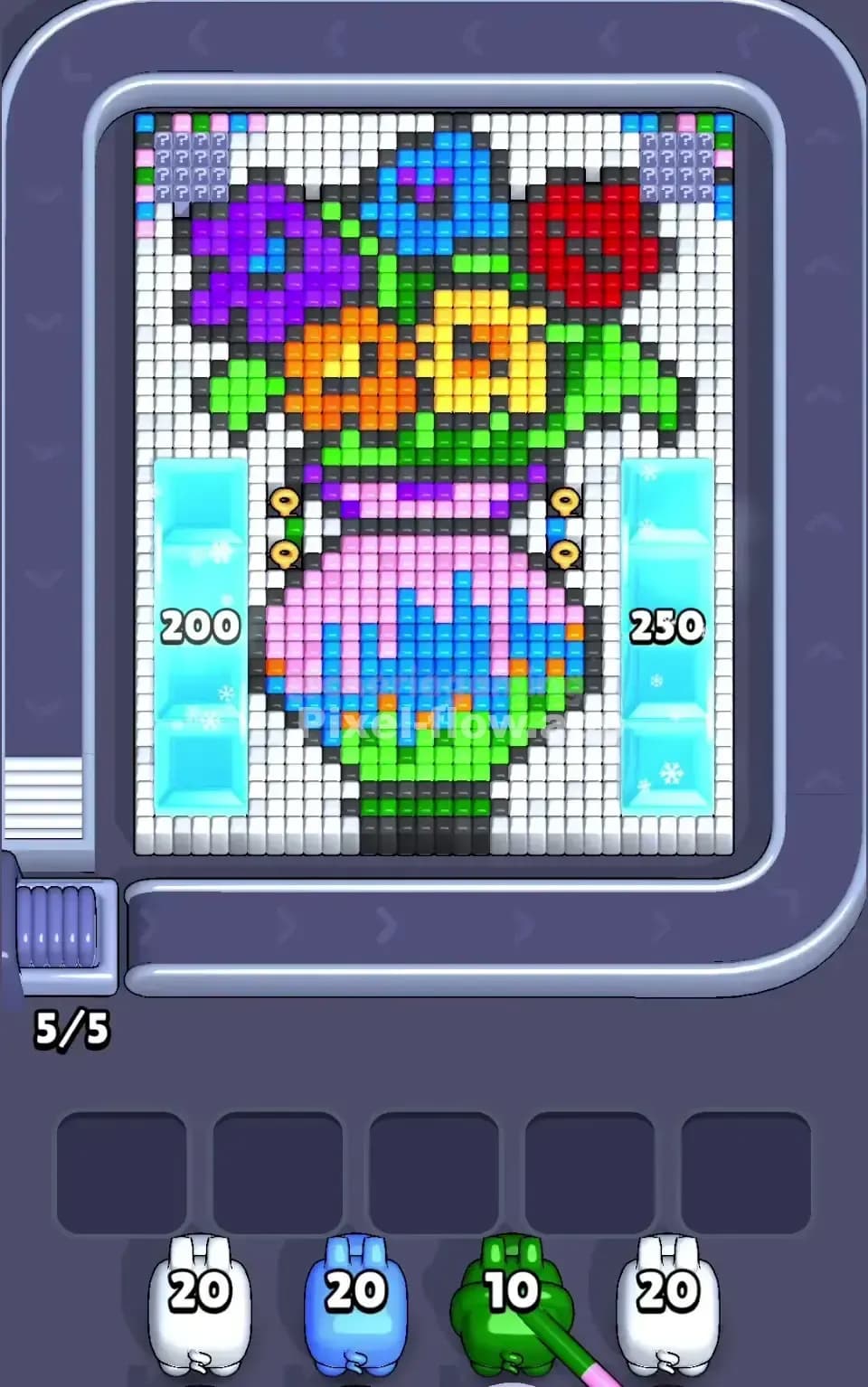
Is this the wrong level layout?🤔
Pixel Flow randomizes levels for different players. Don't worry, just upload a screenshot of your board, and our AI will find the correct video instantly.
Pixel Flow Level 433 Walkthrough
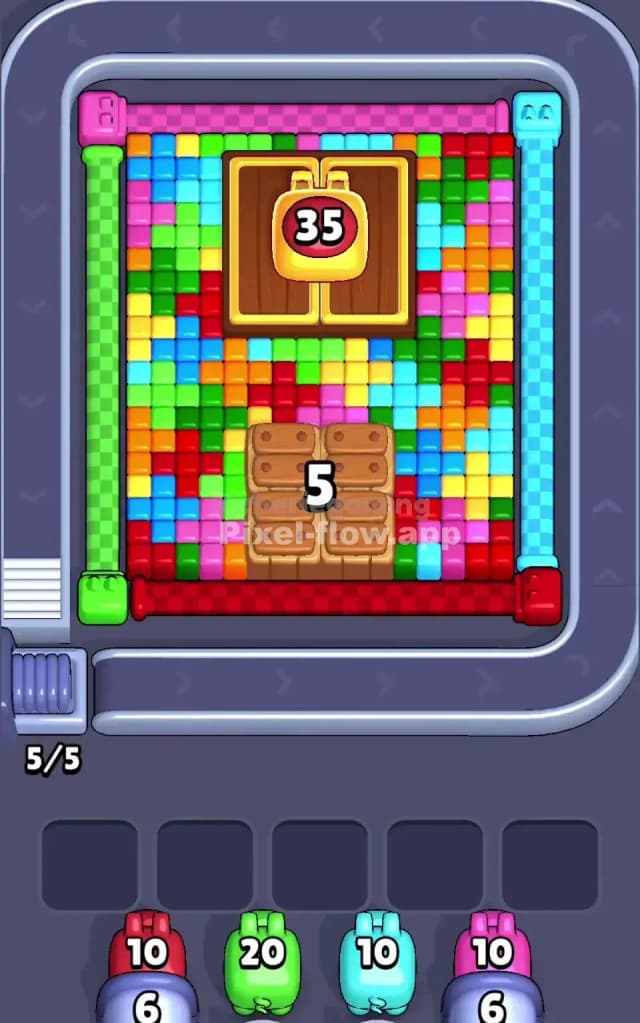
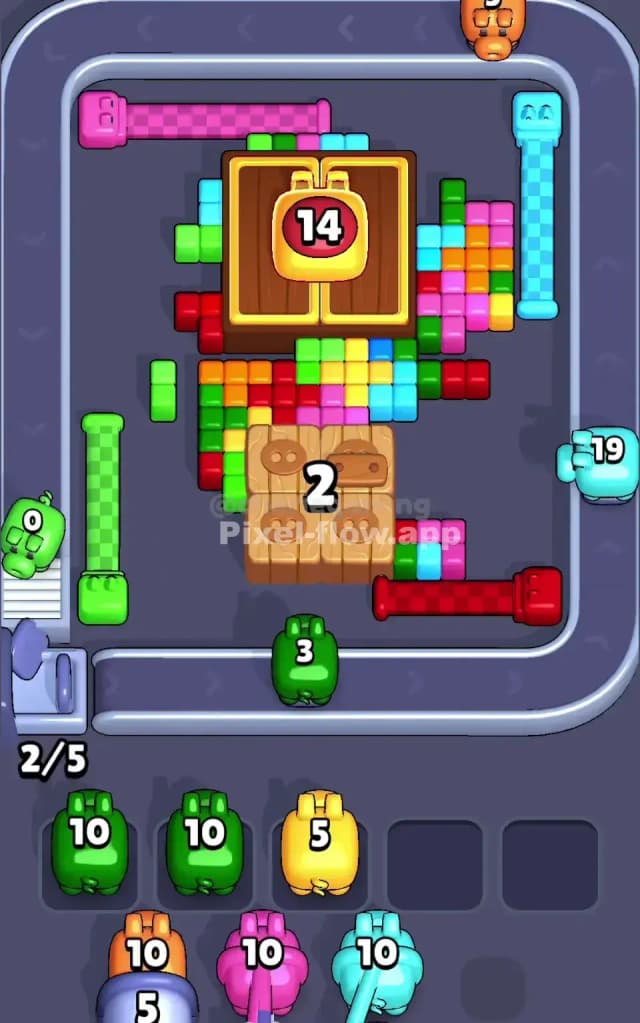
This level is all about cracking a hard shell to get to the prize inside. The board features a giant, colorful rectangle of mixed pixels completely surrounding two central obstacles: a large wooden double-door structure at the top (with a "35" count lock) and a cluster of wooden crates at the bottom (with a "5" count). The colors are incredibly chaotic—red, blue, yellow, green, and pink are scattered everywhere in a "noise" pattern rather than clean blocks. Because of the high lock count on that top door and the sheer density of the noise, this is a very hard level. One bad pig placement clogs your slots fast.
Pixel Flow Level 433 Overview
Imagine a treasure chest buried under a mountain of confetti. That’s this level. The "treasure" is the hidden layer under the "35" lock at the top center. Surrounding it is a chaotic mess of pixels.
There is no discernible picture at first glance—it's just a dense wall of multicolored noise. However, there is structure to the chaos:
- The Wooden Barriers: The top barrier is massive. It requires 35 hits. This means you aren't opening it early. Ignore it for the first half of the game. The bottom barrier is smaller (5 hits), covering the lower middle section.
- The Pipes: You have four pipes framing the board.
- Left: Green pipe (vertical).
- Right: Blue pipe (vertical).
- Top: Pink pipe (horizontal).
- Bottom: Red pipe (horizontal).
- The Danger Zone: The corners are the most dangerous. Specifically, the bottom-left and bottom-right corners often trap single pixels that are hard to reach if you clear the center too quickly. The mix of colors is fairly even, but looking closely, there are heavy clusters of Green on the left side (near the green pipe) and Blue on the right side (near the blue pipe).
Step by step solution walkthrough for Pixel Flow Level 433
First Color Zone to Erase in Pixel Flow Level 433
I start by shaving off the Blue zones on the right or the Green zones on the left.
Here is why: logical efficiency. The Green pipe is strictly on the left, and the Blue pipe is strictly on the right. If you look at the board, there are heavy vertical strips of Green pixels hugging that left wall. By deploying Green pigs early, you clear a massive chunk of the board immediately adjacent to their spawn point. This prevents "stragglers"—isolated pixels that force you to waste a whole pig later. Same logic applies to the Blue on the right.
Do not start with Red or Pink if you can avoid it. Their pipes are horizontal (top and bottom), and their targets are more scattered throughout the center mix. Clearing the sides first creates a "funnel" that makes hitting the center easier later.
How to pass Pixel Flow Level 433 without power ups or boosters
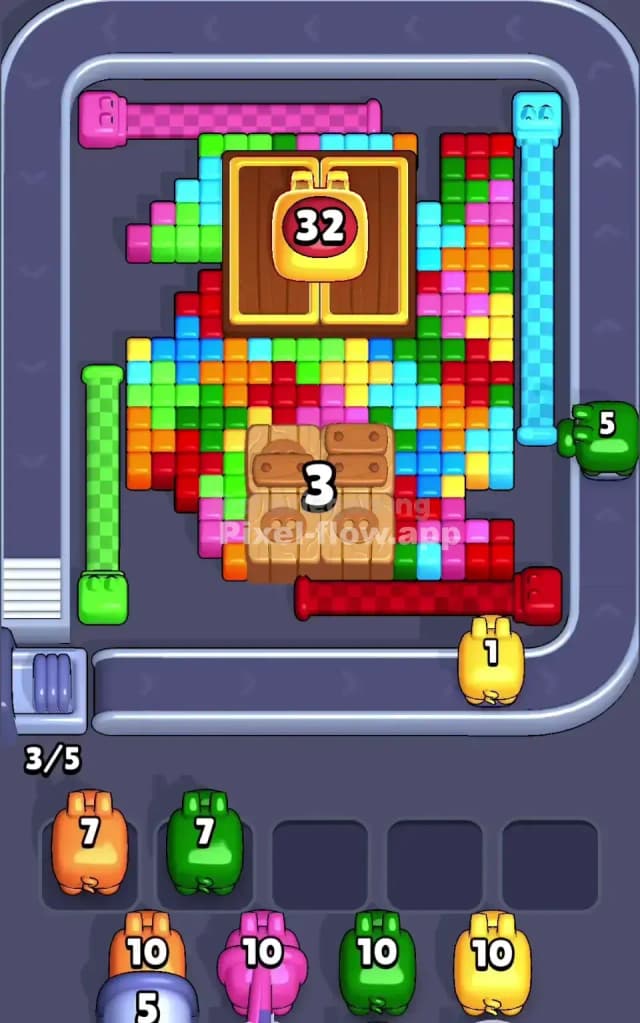
Once you’ve peeled the left (Green) and right (Blue) sides, the board looks like an hourglass. You have a messy center protected by that annoying bottom crate stack (the "5" count box).
- Break the Bottom Box: You need to prioritize pigs that hit the wooden crates at the bottom. Since the crates are in the center, look for pigs that shoot straight down the middle or side-sweeping pigs that can clip the edges. You need to get rid of that "5" count box to expose the pixels underneath.
- The "Waiting Slot" Trap: This is where you lose. The middle of the board is a confetti mess. You will get a Yellow pig, but maybe only see three Yellow blocks available. Check the queue. If a Red pig is coming next and you have a huge Red cluster, take the hit on the Yellow pig (let it drop to a slot) to get to the Red one.
- Unlock the Top Door: As you chip away at the center, that "35" counter on the top door drops. You don't need to focus on it; it happens naturally as you clear the surrounding noise. Once it opens, it usually reveals a dense block of a single color (often Gold/Yellow or similar). Save your high-ammo pigs for this moment. Do not waste a 20-ammo pig on 3 stray blocks when the door is about to open.
Last Details You Clean Up in Pixel Flow Level 433
The end game is terrifyingly precise. You usually have the "35" door open, revealing the final layer, but you might have random pixels stuck in the top-left or top-right corners, tucked behind the pipe exits.
- Watch the Pink Pipe: The top horizontal pipe is Pink. Often, a few Pink pixels get stranded in the very top row, right next to the pipe itself. These are hard to see. Ensure you don't use your last Pink pig on the center until you are sure the top row is clear.
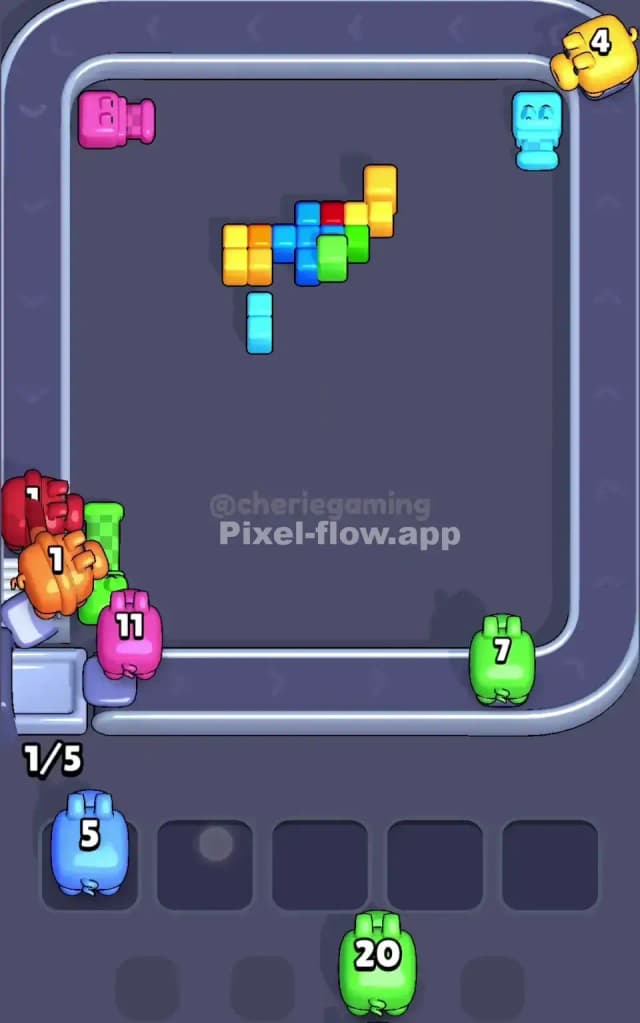
- The Final Layer: Under the big door, there is usually a clean, solid shape. It’s a relief after the chaotic noise of the outer layer. Just make sure you haven't clogged your 5 slots with useless colors before you get there. If you have 4 slots filled, play extremely conservatively. Only deploy a pig if it can empty at least 80% of its ammo.