Pixel Flow Level 439 Solution Walkthrough | Pixel Flow 439
How to solve Pixel Flow level 439? Get instant solution for Pixel Flow 439 with our step by step solution & video walkthrough.


Pixel Flow Level 439 Overview
The Board Layout and Visual Challenge
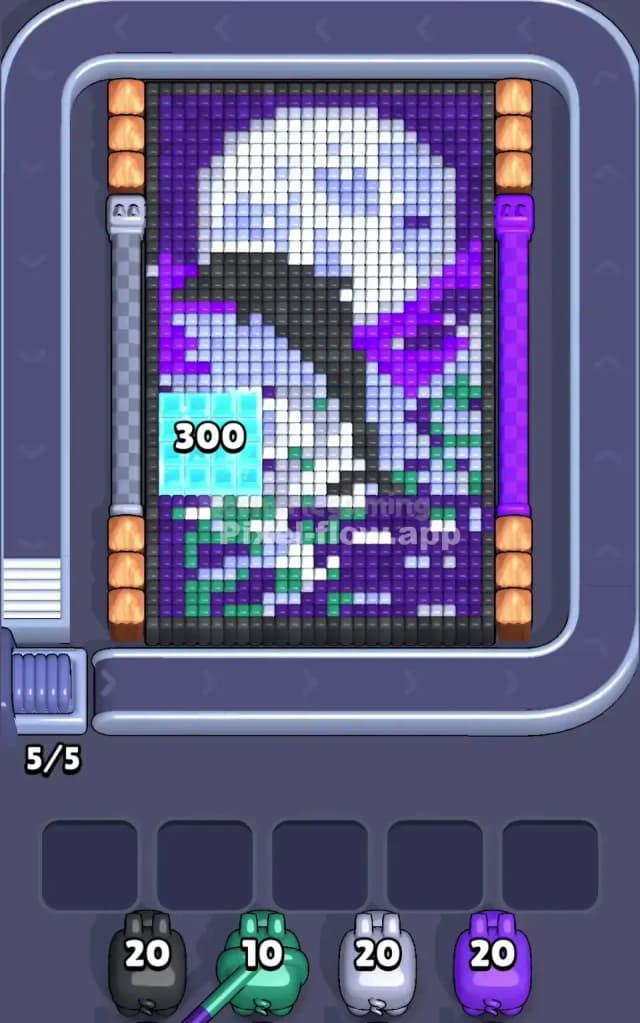
Pixel Flow Level 439 presents you with a striking voxel portrait that spans multiple color layers, making it one of the more visually complex puzzles you'll encounter. The main subject—a detailed face rendered in white and light blue tones—sits prominently in the upper half of the board, surrounded by a rich purple backdrop that dominates much of the playfield. Below and around this central figure, you'll notice deep magenta and teal accents that create visual depth and, more importantly, signal where hidden cubes are lurking. The board composition tells you immediately that you're dealing with a multi-layered challenge: what you see on the surface isn't the whole story, and you'll need to systematically dismantle each color zone to expose what lies beneath.
Win Condition and Deterministic Gameplay
Your goal in Pixel Flow Level 439 is straightforward but demanding: clear every single voxel cube from the board before you run out of moves or jam your waiting slots. The beauty of Pixel Flow 439 is that every pig's ammo count is fixed and predetermined, which means there's no luck involved—only strategy. You know exactly how many white, cyan, gray, magenta, and teal cubes each incoming pig can destroy, and that knowledge is your greatest weapon. Unlike games that throw random variables at you, Pixel Flow Level 439 rewards careful planning and mental arithmetic, allowing you to map out a winning sequence if you study the board and your pig queue with discipline.
Why Pixel Flow Level 439 Feels So Tricky
The Purple Bottleneck
The elephant in the room for Pixel Flow Level 439 is the sheer volume of purple cubes covering the board. Purple dominates the visual real estate, and while you do have a purple pig waiting in your queue, the problem isn't that you lack the tool—it's that purple's distribution is scattered and sometimes hidden behind other colors. This creates a devilish catch-22: you can't always target all the purple cubes early because they're blocked by the white face and other surface colors, yet if you don't manage purple carefully, you'll end up with a purple pig stuck in your waiting slots with ammo remaining but no valid targets. That's a classic jam scenario in Pixel Flow 439, and it's exactly what trips up most players on their first few attempts.
Awkward Color Patches and Hidden Depth
Pixel Flow Level 439 hides some genuinely awkward color pockets that don't align neatly with your pig sequence. The cyan and teal cubes, for instance, aren't evenly distributed—there's a small cyan section on the left side and then teal scattered across the lower portion of the board. Your cyan pig has a fixed ammo count, and if those cubes aren't positioned contiguously or if they're tucked behind other colors, you might burn through ammo without clearing the zone, leaving you unable to expose what's underneath. Similarly, the gray cubes form a dark band across the middle, and their position relative to the purple backdrop means you have to be careful about the sequencing—attack gray too early and you haven't set up your board correctly; attack it too late and you've already wasted moves on less efficient color chains.
The Personal "Click" Moment
I'll be honest: Pixel Flow Level 439 frustrated me on my first ten attempts because I was playing reactively, just firing pigs whenever I had a valid match without thinking two moves ahead. The level felt impossible until I realized I was wasting the white pig's ammo on scattered cubes instead of saving it for a more efficient sequence. Once I started mapping out the board layer by layer and planning my pig order like a chess match, everything clicked into place. That shift from "What can I do now?" to "What needs to happen in what order?" is what transforms Pixel Flow Level 439 from a frustrating grind into a satisfying puzzle.
Step-by-Step Strategy to Clear Pixel Flow Level 439
Opening: Exposing the First Layer
Start Pixel Flow Level 439 by sending in your gray pig with 20 ammo as your opening move. Gray forms a cohesive band across the mid-board, and clearing it immediately gives you two critical advantages: first, you expose the purple and teal layers beneath, and second, you keep your waiting slots empty (you've only used one slot out of five). After gray, deploy your cyan pig with 10 ammo to handle the smaller cyan patches on the left side and any exposed cyan cubes from the gray removal. This conservative opener leaves you with three free waiting slots and sets up your board for the more complex sequences ahead. Don't rush to use your white or purple pigs yet—the white face needs other colors cleared around it first, and purple will be more efficient once the board's less congested.
Mid-Game: Layering and Strategic Parking
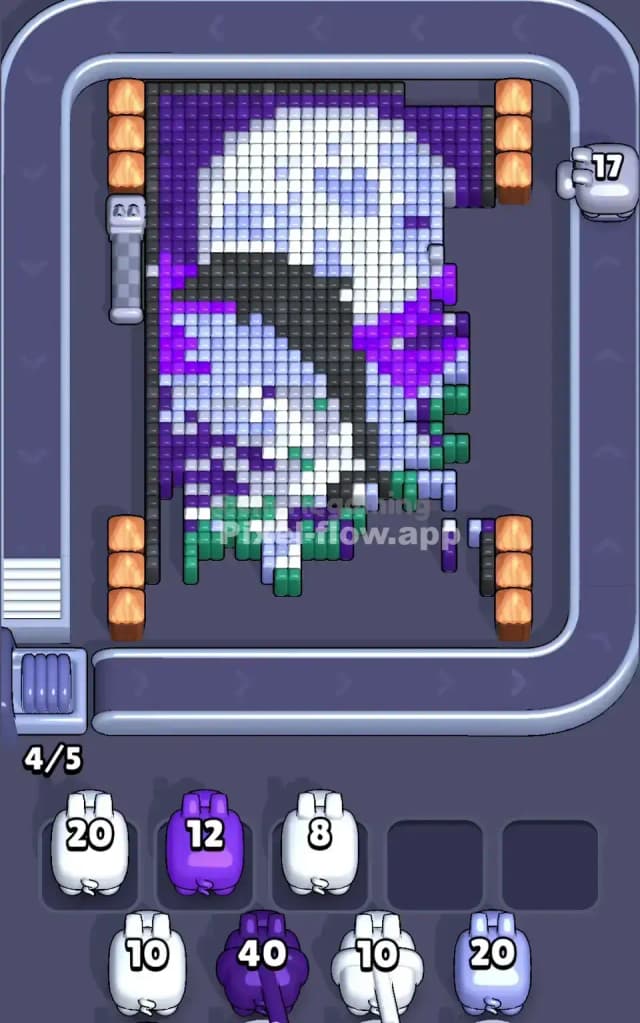
Once you've cleared gray and cyan, your second white pig with 20 ammo should tackle the white portions of the main portrait, working systematically from top to bottom. As you do this, you'll expose deeper purple and teal, so keep a mental tally of how many targets are appearing. Before you commit your primary magenta pig, pause and count: does your magenta pig's ammo align with the magenta cubes you can see? If you have 20 magenta ammo but only 15 visible targets, you're about to create a stuck pig problem. Instead, sequence your moves to expose more magenta first by clearing adjacent colors. This is where Pixel Flow Level 439 separates skilled players from frustrated ones—you're not just reacting to available matches, you're orchestrating a sequence that keeps your ammo-to-target ratio healthy throughout the mid-game.
When a pig is running low on ammo but you can't safely fire it yet, park it in a waiting slot deliberately. You have five slots; using two or three strategically gives you breathing room and lets you load fresh pigs with full ammo counts ahead of your partially-spent ones. This approach prevents the catastrophic "all five slots filled with stuck pigs" scenario that ends Pixel Flow Level 439 runs.
End-Game: The Cleanup and Final Sequence
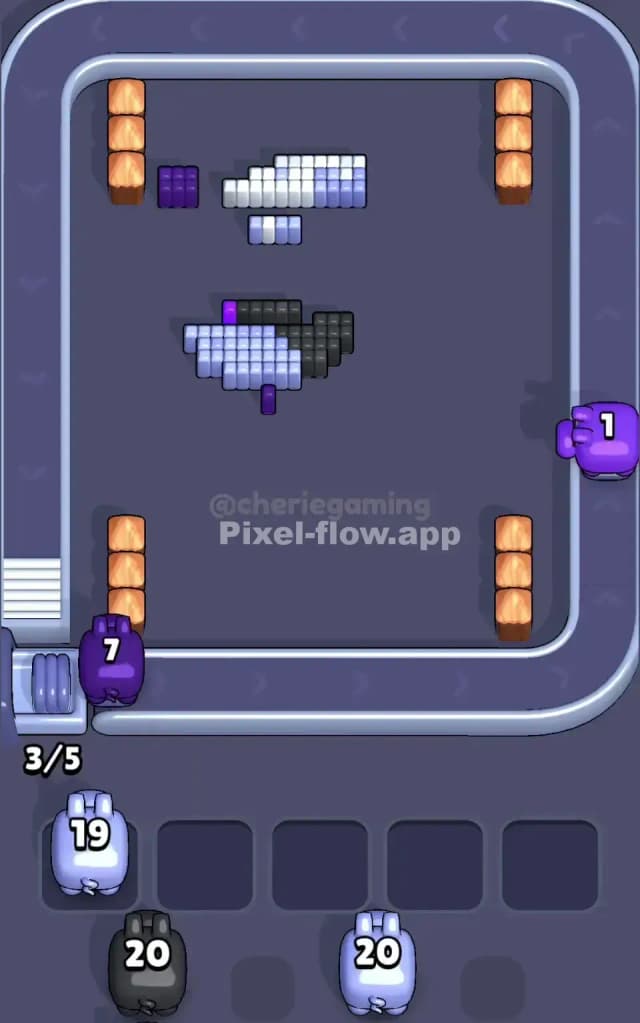
As you near the end of Pixel Flow Level 439, your remaining colors are usually the hardest to reach. Prioritize teal and any remaining purple aggressively, because these colors tend to occupy deep layers and will jam you if you're not methodical. Deploy your purple pig with 20 ammo when you've exposed enough purple targets to safely spend most or all of its ammo in a few precise shots. Save your final white pig for any white cubes still clinging to hard-to-reach corners. In the last few moves of Pixel Flow Level 439, you're essentially solving a smaller version of the same puzzle: one or two colors remain, and you need to sequence your remaining pigs so that each one's ammo is nearly or completely spent by the time it finishes its turn.
The final satisfaction of clearing Pixel Flow Level 439 comes when you fire a pig with exactly 3 ammo left and it destroys exactly 3 cubes—no waste, no jam, just clean completion.
The Logic Behind This Pixel Flow Level 439 Plan
Why This Sequence Works
The strategy for Pixel Flow Level 439 isn't arbitrary; it's built on exploiting the core game mechanics. By clearing gray and cyan early, you expose deeper layers without risking a jam (both those pigs have ammo counts that align well with their visible cube distributions). By strategically parking partially-spent pigs, you avoid filling your waiting slots prematurely, which means you always have room to load fresh pigs when you need them. By counting ammo versus targets constantly, you avoid the most common failure mode: a pig with 15 ammo remaining and no valid targets, slowly watching your other slots fill up until you're locked out.
The genius of this Pixel Flow Level 439 approach is that it treats the waiting slot buffer as a resource to manage, not a problem to panic about. You're in control.
Staying Calm and Thinking Ahead
Pixel Flow Level 439 tests your mental stamina as much as your logic. The board's busy, the colors are numerous, and it's easy to fire a pig on impulse without considering the downstream effects. Slow down. Before each move, glance at your upcoming pig queue and ask yourself: "If I fire this pig now, what will the board look like in two moves?" Count your ammo. Count your targets. Make sure they align. In the rare moment when you're unsure, use a waiting slot to buy yourself time—there's no penalty for a pig sitting in the buffer while you plan. That deliberate approach transforms Pixel Flow Level 439 from a chaotic race into a controlled, methodical puzzle you can absolutely conquer.