
Pixel Flow Level 445 Solution | Pixel Flow 445 Walkthrough
How to beat Pixel Flow Level 445: Video solution & walkthrough. The fastest way to pass Pixel Flow 445.
Is this the wrong level layout?🤔
Pixel Flow randomizes levels for different players. Don't worry, just upload a screenshot of your board, and our AI will find the correct video instantly.
Pixel Flow Level 445 Walkthrough
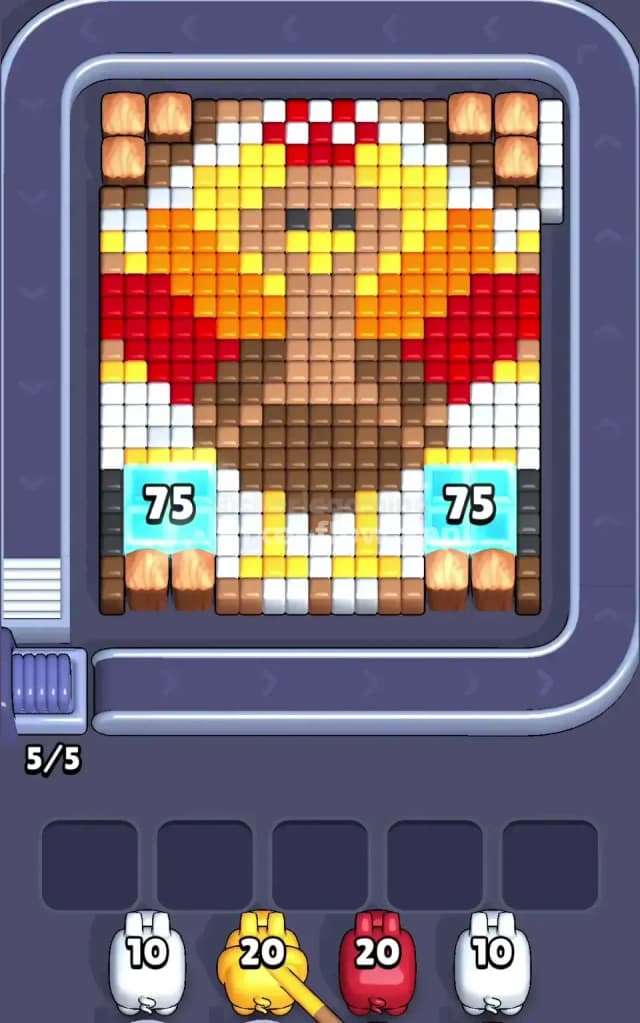
This level features a pixel art Turkey, likely themed for Thanksgiving, standing tall with its plumage fanned out. The puzzle requires you to strip away layers of feathers to reach the core body, but there is a massive obstacle right at the bottom. Two large Ice Blocks with 75 HP each sit on the left and right flanks. You beat Pixel Flow Level 445 by managing your pig slots carefully while chipping away at these massive health sponges. Because of the high HP on those ice blocks and the layered feather pattern, this is a very hard level.
Pixel Flow Level 445 Overview
The artwork depicts a classic Thanksgiving Turkey. It has a central brown body, a yellow and orange fan of tail feathers, and distinct red wings on either side. White blocks act as the highlights and background spacing. The turkey wears a small red and white hat or crest on top.
The board layout is mostly symmetrical, which usually makes things easier, but the danger here is vertical. The two "75 HP" Ice Blocks located at the bottom left and bottom right corners act as gatekeepers. They block access to the lower layers of the turkey's body. Until those ice blocks are destroyed, any pig shooting at that column will waste ammo hitting the ice instead of the colors behind or above it.
The color distribution is:
- Center: Brown body, yellow/orange face.
- Sides: Red wings, white accents.
- Corners: Light wood/crate blocks protecting the top corners.
- Bottom: The critical Ice Blocks (Blue).
Step by step solution walkthrough for Pixel Flow Level 445
First Color Zone to Erase in Pixel Flow Level 445
Focus immediately on the White and Yellow pigs. The white blocks are scattered heavily on the outer edges and the top "hat" area. Clearing the white first is the safest play because it opens up the board without getting stuck on the ice blocks too early.
The logic here is space management. You have 5 slots. If you grab a Blue pig now to hit the ice, it will sit in your slot for a long time because 75 HP takes forever to drain. Instead, grab White and Yellow pigs to clear the upper feathers. This exposes the Brown and Red layers underneath. You want to clear the "easy" ammo (low quantity colors) so your slots are free when the heavy hitters (Blue and Brown) arrive.
How to pass Pixel Flow Level 445 without power ups or boosters
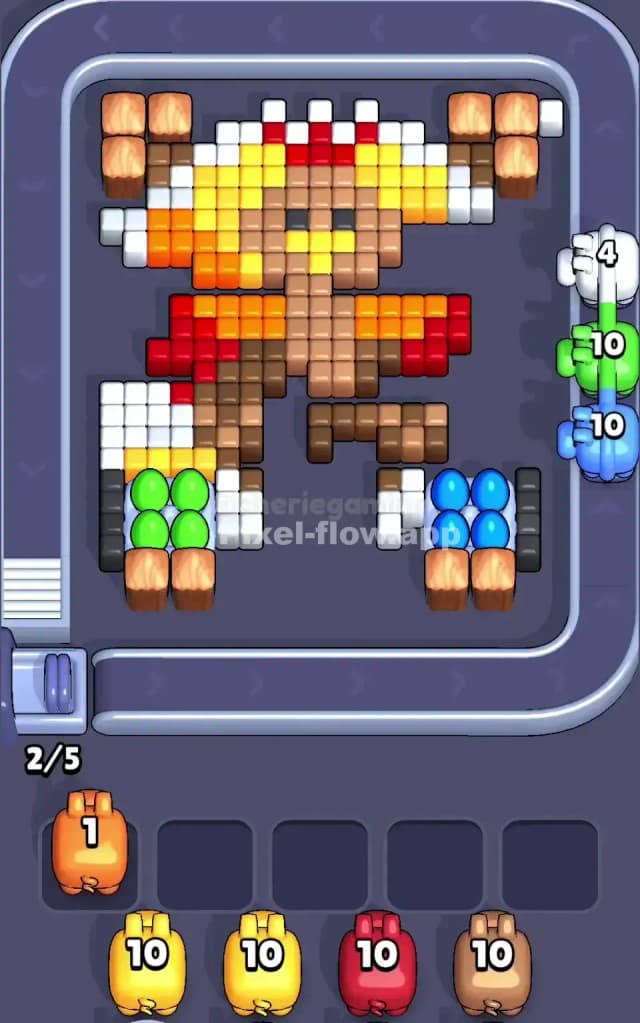
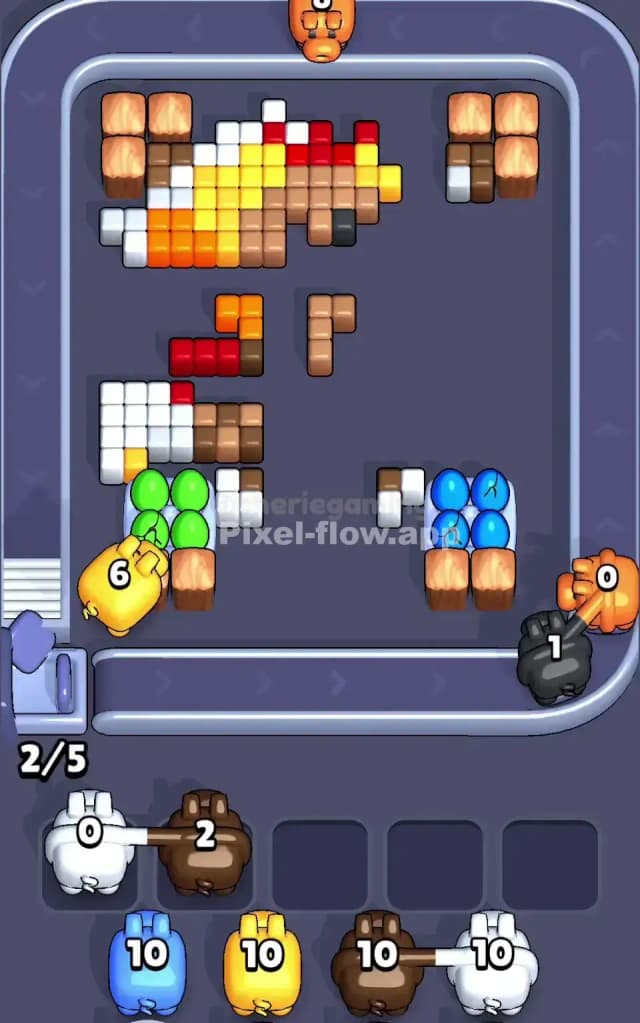
Once the top half of the turkey is shredded—feathers gone, head exposed—you will hit the mid-game grind. At this point, the board looks messy. The turkey's head might be half-gone, and the red wings are likely exposed.
Now you must deal with the Ice Blocks.
- Prioritize Blue Pigs: Whenever a Blue pig appears, verify it has a clear line of sight to one of the ice blocks. Do not let Blue pigs pass by if you have an open slot. You need every single shot to chip down that "75".
- The Red Wing Trap: The Red blocks are clustered in the middle-left and middle-right. They often block the view of the Brown body. Clear Red aggressively to open up the center.
- Slot Management: If you have 3 slots filled with pigs slowly shooting at the Ice Blocks, do not pick up a new color unless you can clear it instantly. For example, if a Brown pig comes along and you see only 2 Brown blocks exposed, don't pick it up yet. Wait until you reveal more Brown so the pig doesn't get stuck in your last slot.
The key to surviving without boosters is patience with the Ice. Let the Blue pigs work in the background while you actively match Red and Orange to clear the rest of the turkey.
Last Details You Clean Up in Pixel Flow Level 445
In the final phase, the 75 HP blocks will finally shatter. This is often the most dangerous moment. Why? Because you likely have leftover pigs in your slots that were "waiting" for the ice to break to hit the blocks behind it.
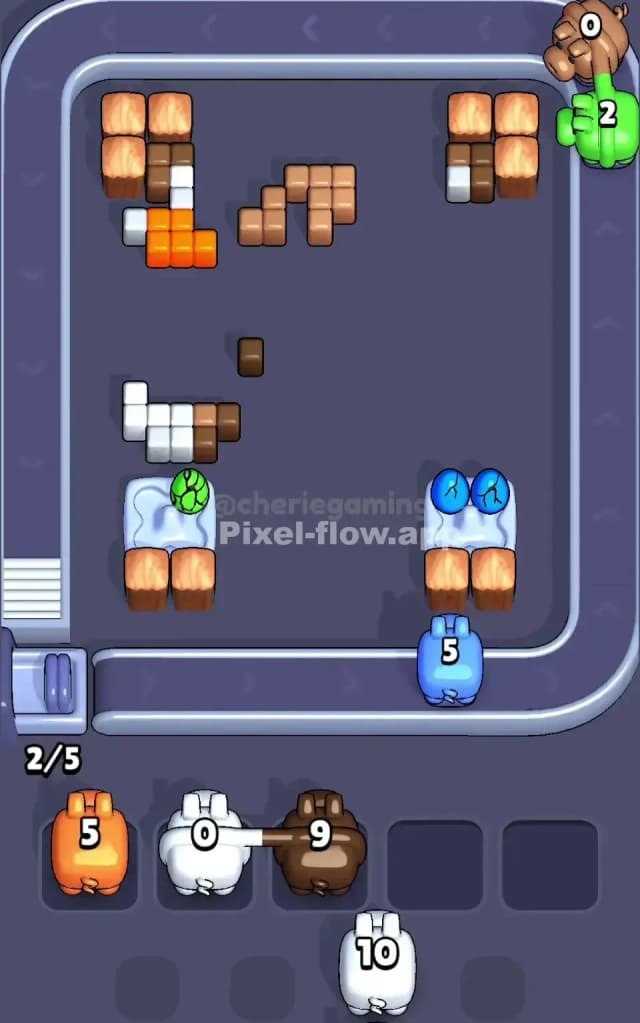
Suddenly, the bottom corners open up. You will likely find hidden Brown or Wood blocks tucked behind where the ice used to be.
- Check the corners: The bottom-left and bottom-right corners often hide single white or brown pixels that were invisible behind the ice.
- The Beak: Watch out for the small orange/black detail of the beak or eyes. Sometimes these specific colors are rare, and if you miss the specific pig for them, you have to cycle through the conveyor belt again.
Finish off the heavy Brown body blocks last. Once the ice is gone, the brown pigs will tear through the center rapidly. Keep your slots clear for that final rush.