Pixel Flow Level 451 Solution | Pixel Flow 451 Walkthrough
How to beat Pixel Flow Level 451: Video solution & walkthrough. The fastest way to pass Pixel Flow 451.
Is this the wrong level layout?🤔
Pixel Flow randomizes levels for different players. Don't worry, just upload a screenshot of your board, and our AI will find the correct video instantly.
Pixel Flow Level 451 Walkthrough
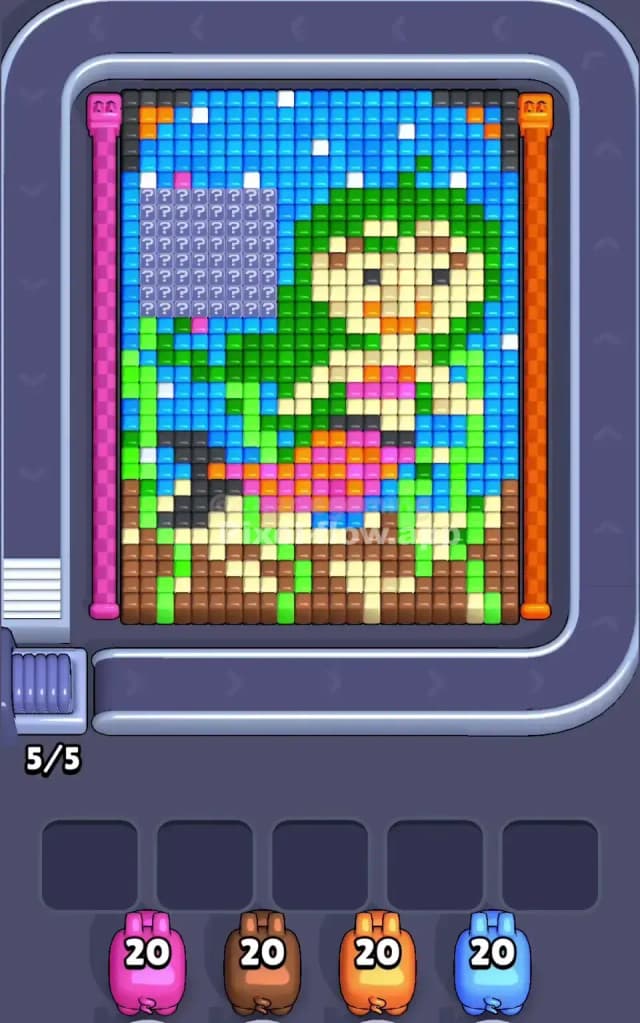
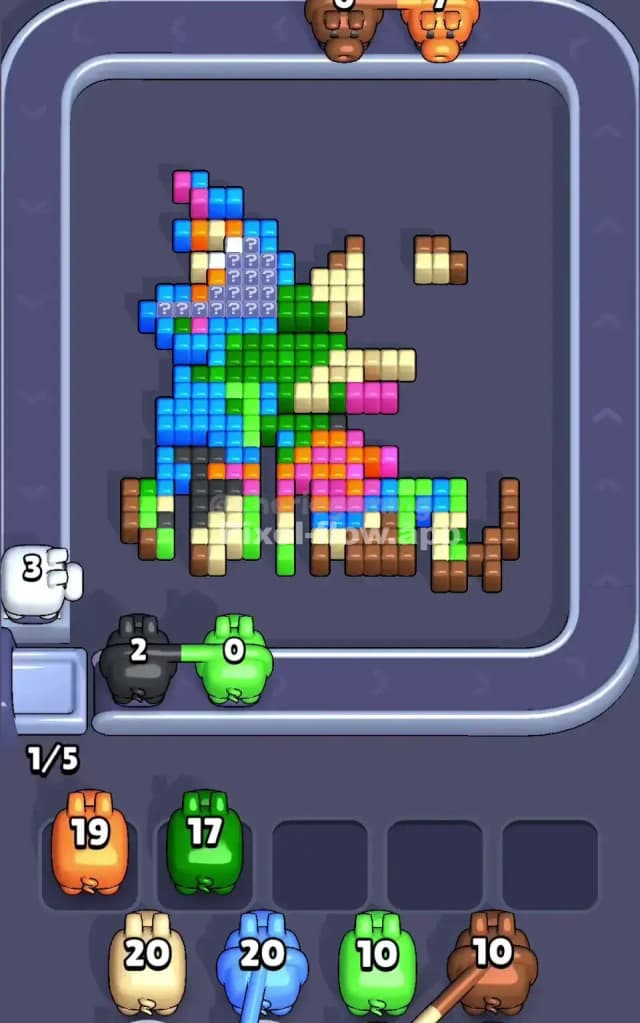
The board for Pixel Flow Level 451 features a cute mermaid character sitting on a rocky seabed. The main challenge here is the heavy use of background blue and the large, obstructing block of grey "Mystery" cubes in the top left. These mystery blocks hide the colors underneath until adjacent blocks are cleared or specific triggers occur, making early planning difficult.
To beat this level, you must peel away the massive blue water background first to expose the mermaid's green hair and the brown rocks below. Prioritize clearing the edges to isolate the central figure. Is this a hard level? Yes. It is a very hard level because the ammo counts are tight, and the mystery block can ruin your rhythm if you don't clear the surrounding blue quickly enough.
Pixel Flow Level 451 Overview
The scene depicts a mermaid with vibrant green hair and a pink-and-orange tail resting on a brown seabed. The background is a deep ocean blue speckled with white bubbles or stars.
The layout is highly asymmetrical. The right side is open and easy to access, mostly blue water and green hair. The left side is the danger zone. It contains a dense 9x9-ish grid of grey question mark blocks (Mystery Blocks). These blocks sit right on top of the water and hair layers. Until you clear the visible blue around them, you won't know exactly what color pig you need next, which clogs your waiting slots.
The color distribution is distinct:
- Blue: Dominates the top, left, and right edges.
- Brown: Anchors the bottom of the screen.
- Green: Concentrated in the center (hair) and scattered near the bottom (seaweed).
- Pink/Orange: forming the mermaid's body and tail in the absolute center.
Step by step solution walkthrough for Pixel Flow Level 451
First Color Zone to Erase in Pixel Flow Level 451
Start immediately with Blue.
The blue layer is the "wrapper" for the entire image. It surrounds the mermaid and, crucially, borders the mystery block section on the top and left. You likely won't have a choice—the conveyor will feed you blue pigs early. Do not waste them. Aim for the top right corner and the vertical strips on the far right.
Why Blue? Because clearing the blue pixels adjacent to the mystery block is the only way to effectively reveal what's underneath or clear the path to the inner layers. If you try to force the Brown at the bottom too early without clearing the Blue "sky/water" above it, you risk having leftover blue pixels that become unreachable later when the board shape gets weird.
How to pass Pixel Flow Level 451 without power ups or boosters
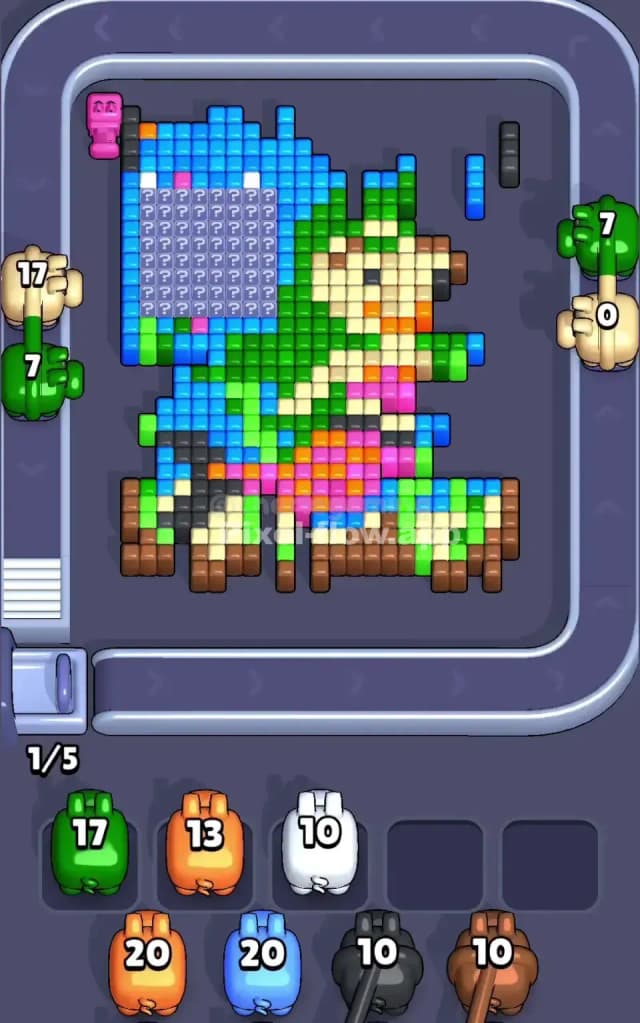
Once the heavy blue background is roughly 50% gone, the board looks messy. You will have a jagged outline of the mermaid. At this mid-stage, follow this priority list:
- Brown: The seabed at the bottom is thick and easy to hit. Use brown pigs to clear the bottom rows. This often destabilizes the columns above, helping physics (if applicable) or simply clearing a huge amount of screen real estate.
- Green: The mermaid's hair is a massive target. Once the blue is peeled back, the green hair is an easy "dump" for green ammo. Be careful, though—some green is mixed with the brown seaweed at the bottom. Don't ignore the bottom corners.
- The Mystery Block Trap: By now, the mystery blocks should be exposed. Do not pull a pig from the conveyor unless you are sure it matches a revealed color. If a mystery block turns out to be Pink and you have a full slot of Blue pigs, you are in trouble. Play slow here. Only grab a pig if you see a clear target.
If your slots fill up with colors you can't use (like Pink/Orange) before the center is exposed, you will lose. Keep one slot open at all times for "trash" or waiting pigs.
Last Details You Clean Up in Pixel Flow Level 451
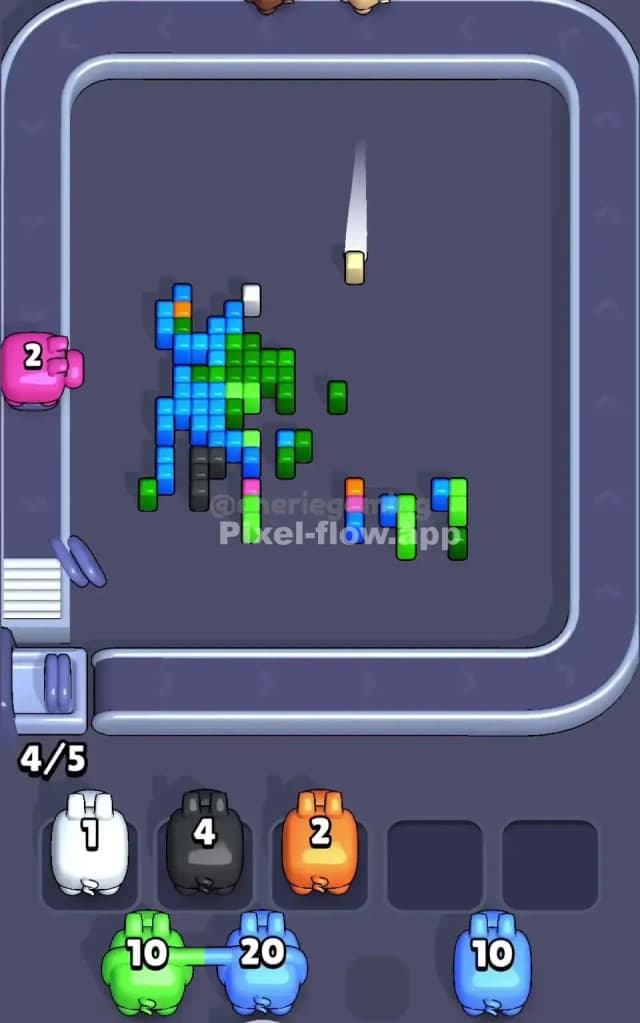
As you reach the end, the picture is usually just the mermaid's core body—the Pink top and Orange tail—and straggling white pixels.
The final few moves are dangerous. Often, a single white bubble pixel remains hidden in the top corners, or a stray brown pixel hides near the mermaid's tail.
Save your White ammo. White pixels are scattered singly rather than in blocks. You will likely get a White pig with 20 ammo, but only 4 targets visible. Don't panic. Let him sit in a slot until you reveal the deep layers where the last white eyes or pearls might be hiding. The very last shot is usually the mermaid's face or tail scales. Keep an eye on the ammo count; don't use a fresh 20-ammo pig on a single remaining block if a nearly-empty pig is available in your waiting slots.