Pixel Flow Level 466 Solution | Pixel Flow 466 Walkthrough
How to beat Pixel Flow Level 466: Video solution & walkthrough. The fastest way to pass Pixel Flow 466.
Is this the wrong level layout?🤔
Pixel Flow randomizes levels for different players. Don't worry, just upload a screenshot of your board, and our AI will find the correct video instantly.
Pixel Flow Level 466 Walkthrough
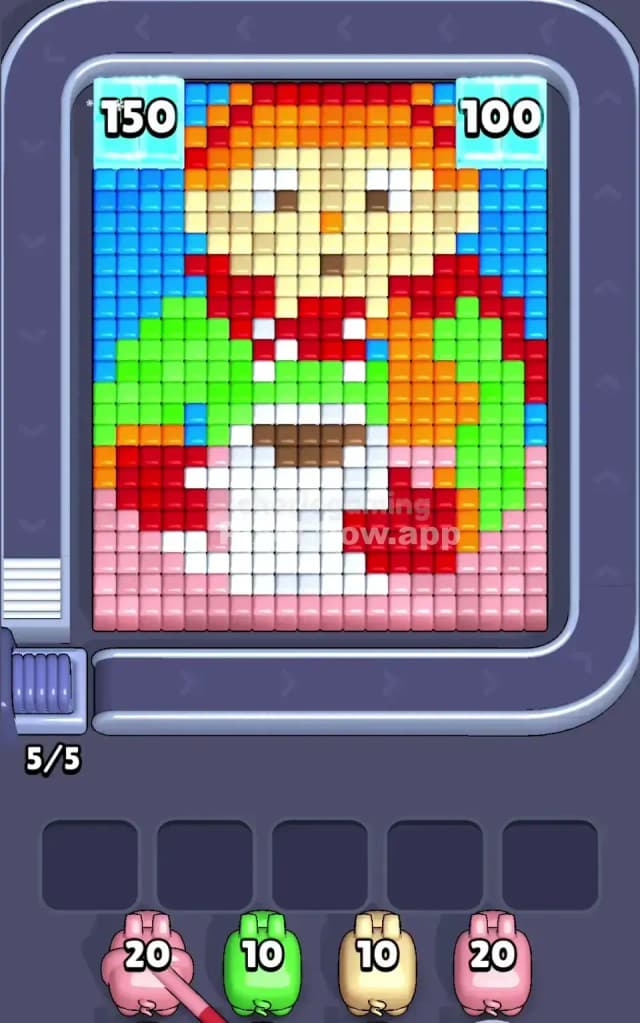
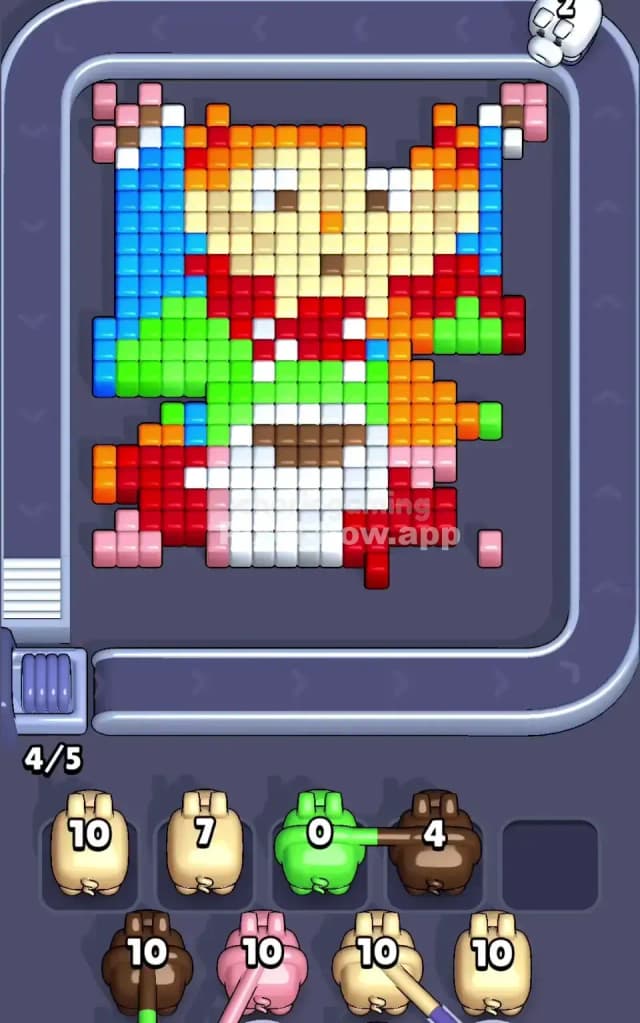
This level features a cozy character holding a steaming mug, likely coffee or hot chocolate. You are dealing with a distinct foreground and background split: a massive block of pink pixels dominates the bottom half, while blue pixels frame the top. Your goal is to strip away these outer "wallpaper" layers to reveal the green shirt, red scarf, and eventually the white mug in the center.
The rules are standard but unforgiving. You must match the pig color to the pixel color. If you accept a pig from the conveyor belt that doesn't have a clear shot at its color, it sits in your waiting slots. Fill all five slots with useless pigs, and you fail. This is not a very hard level, but the dense layering of the green and red sections can trap you if you ignore the background colors for too long.
Pixel Flow Level 466 Overview
Think of this image as a portrait of someone warming up on a cold day. The character has bright orange hair and is wrapped in a green jacket with a thick red scarf. They are holding a giant white mug directly in the center of their chest. Inside that mug is a patch of brown liquid—this is your deepest layer.
The background is split horizontally. The bottom half is a solid field of pink, perhaps a table or a blanket. The top half is a bright blue sky or wall.
The board is asymmetrical in a tricky way. The red scarf wraps around the neck but also appears as cuffs or gloves on the sides. The green jacket is bulky on the left but gets interrupted by orange pixels (maybe a hand or sleeve detail) on the right. This means a Green pig might clear the left side efficiently but leave stragglers on the right. The white mug acts as a central shield; nothing behind it can be touched until you chip away the white porcelain pixels.
Step by step solution walkthrough for Pixel Flow Level 466
First Color Zone to Erase in Pixel Flow Level 466
You must start with the Pink zone at the bottom.
This is the most critical strategic move for two reasons. First, narratively, it sits "in front" of the bottom of the character. You cannot access the lower parts of the white mug or the red cuffs until this pink layer is gone. Second, and more importantly for your ammo management, the pink area is huge, continuous, and flat.
When you see a Pink pig on the belt, grab it immediately. Because the pink zone is so large and uninterrupted, a single Pink pig can unload almost its entire ammo clip in one go. This keeps your waiting slots empty. If you try to start with Blue (top background), you run into trouble because the blue pixels are split into two separate columns on the left and right of the head. A Blue pig might clear the left column and then get stuck with leftover ammo because the right column is blocked by the head, clogging a slot. Clear the Pink first to open up the bottom edge of the entire puzzle.
How to pass Pixel Flow Level 466 without power ups or boosters
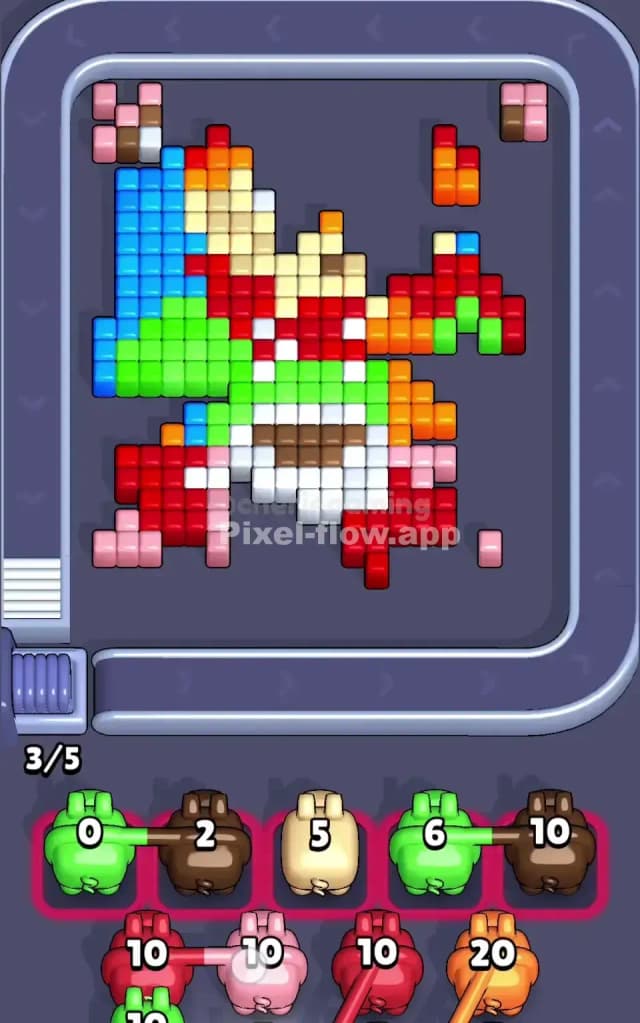
Once the pink floor is gone, the board looks chaotic. You have the blue background hanging at the top, and the character's torso is exposed. This is the danger zone where people lose.
At this stage, your priority shifts to Green and Red.
You will see Green pigs and Red pigs coming down the line. You need to be careful here. The Green jacket is a large layer, but it is often blocked by the Red scarf. If you take a Green pig too early, it might only shoot three pixels and then sit in your slot, blocking you. Look closely at the layering. The Red scarf sits on top of the Green shirt in the neck area.
Prioritize the Red pigs first to remove the scarf and gloves. This exposes the underlying Green shirt pixels. Once the red is cleared, the Green pigs become high-value assets that can clear huge chunks of the board.
Ignore the Brown and Beige pigs for now. The brown pixels are strictly for the coffee liquid (deepest layer) and maybe some eye details. The beige is the face skin. If you accept a Brown pig while the white mug is still solid, that pig will sit uselessly in your tray for twenty moves. Let it pass on the conveyor belt unless you have absolutely no other move. You want to keep your slots open for Blue pigs to clear the top corners and White pigs to start cracking the mug.
Last Details You Clean Up in Pixel Flow Level 466
The end game of Pixel Flow Level 466 is all about the face and the drink.
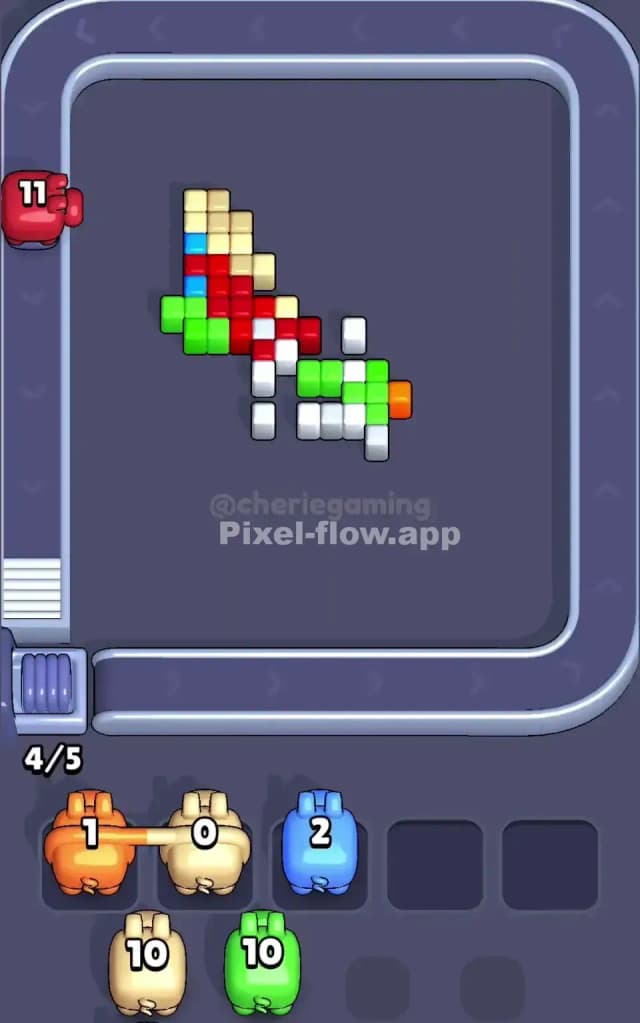
By now, the pink floor, blue sky, green shirt, and red scarf should be history. You are left with a floating head and a white mug.
Your focus is the White pixels. The mug is a thick block. You need White pigs to shatter the porcelain to finally reveal the Brown coffee inside. This is usually the very last color you clear.
Simultaneously, you will be clearing the Beige face and Orange hair. The hair is usually the topmost layer of the head, so Orange pigs are safe to take late in the game. The tricky part is the eyes—often a mix of white and brown. Do not confuse the white of the eyes with the white of the mug. They are separate clusters.
Your final moves will likely involve a Brown pig. It will take one shot at the coffee liquid, one shot at an eye pixel, and the level will end. If you managed your slots well by ignoring Brown pigs earlier, you’ll have plenty of space to bring one in now to finish the job.