Pixel Flow Level 468 Solution Walkthrough | Pixel Flow 468
How to solve Pixel Flow level 468? Get instant solution for Pixel Flow 468 with our step by step solution & video walkthrough.


Pixel Flow Level 468 Overview
Understanding the Board Layout and Challenge
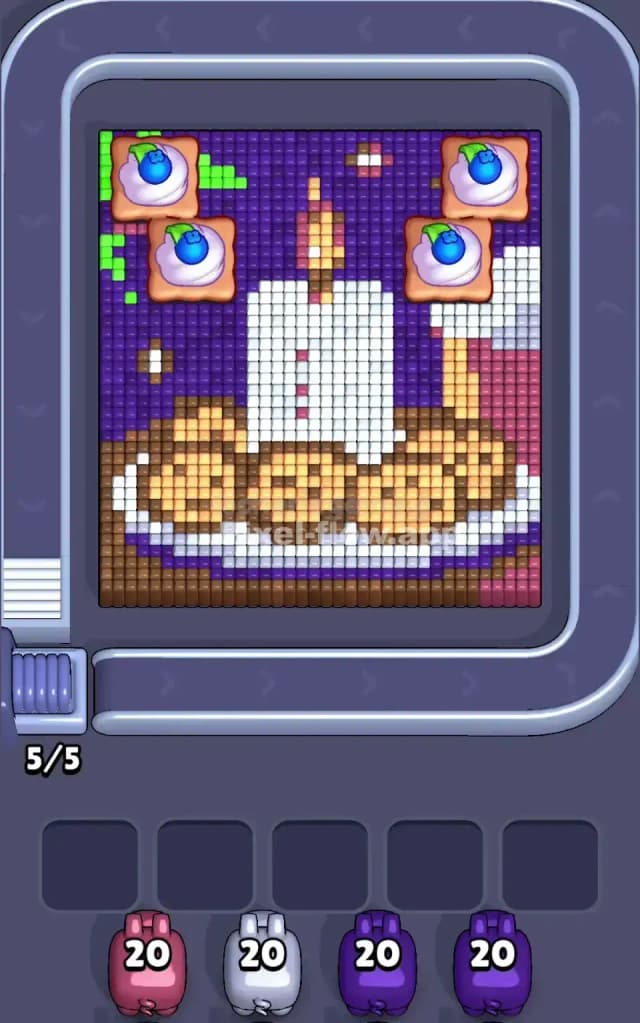
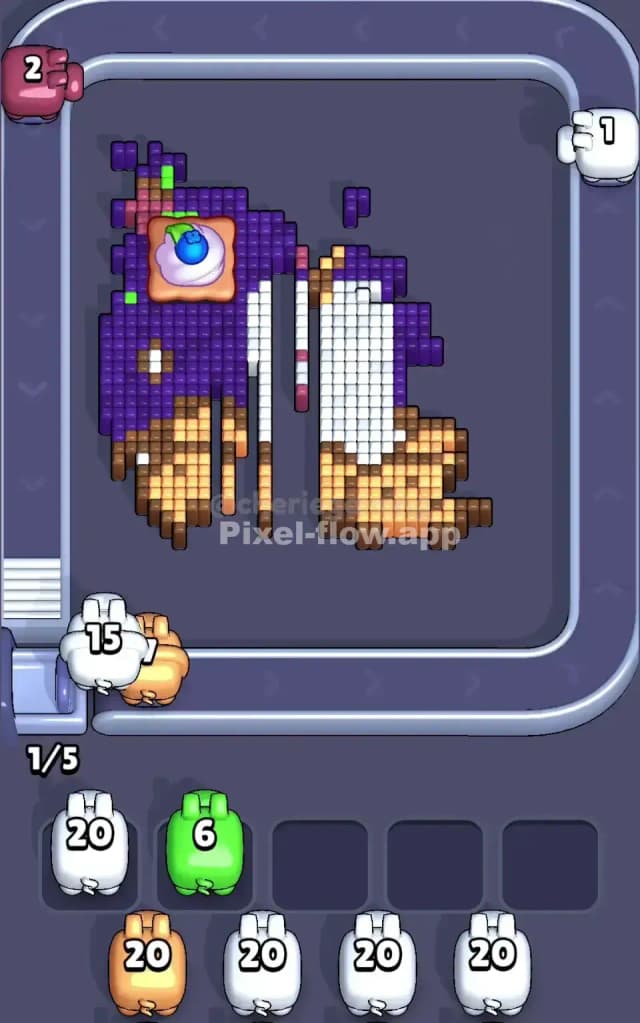
Pixel Flow Level 468 presents a striking multi-layered voxel artwork dominated by purple, brown, tan, and white blocks, anchored by a large blue eye design in the upper-left region. The composition is deceptively intricate—you're looking at a stacked picture where the surface layer hides deeper colors beneath, and your pigs must systematically dismantle it all. The white blocks form a substantial central void or barrier that runs through the middle of the board, which immediately signals that you'll need careful sequencing to navigate around and through this obstruction. What makes this level visually interesting is the contrast between the warmer tones (browns and tans) anchoring the bottom portion and the cooler purples dominating the upper half, along with accent colors tucked into corners. Your pig queue at the bottom shows eight waiting pigs: three with 20 ammo, one with 17 ammo, one with 13 ammo, one green pig with just 1 ammo, two brown pigs with 20 ammo each, and two white pigs with 20 ammo each. That green pig with 1 ammo is immediately suspicious—it's either a surgical tool for a specific spot or a trap if you're not careful.
The Win Condition and Deterministic Nature
To clear Pixel Flow Level 468, you must eliminate every single voxel cube on the board by matching pig colors to cube colors. Each pig automatically fires its matching-colored cubes as it moves down the conveyor, spending exactly 1 ammo per cube destroyed. The entire pig queue and ammo counts are completely deterministic—you can't randomize outcomes, so every run with the same strategy will behave identically. This is both a blessing and a curse: it means trial-and-error becomes learning, but it also means one small mistake early on cascades into failure by the time you reach the end. Your goal is to orchestrate the pig sequence so that every pig's ammo is fully spent on valid targets before any pig gets stuck in the waiting slots with leftover ammo.
Why Pixel Flow Level 468 Feels So Tricky
The Waiting Slot Bottleneck and Ammo Mismatch
The most brutal aspect of Pixel Flow Level 468 is how easily you can flood your five waiting slots with frustrated pigs that still have ammo but can't find targets. Notice that you have three white pigs with 20 ammo each—that's 60 ammo worth of white cubes you need to expose and eliminate. However, if you trigger a white pig too early and only white cubes are visible on, say, the surface layer, it burns through its ammo instantly and parks itself in a waiting slot, completely useless. Then the next white pig arrives and faces the same problem, and suddenly your waiting area is clogged with white pigs staring at a board with no white cubes left. This is a catastrophic jam, and Pixel Flow Level 468 will punish you mercilessly for it. The white-dominated section in the center and around the edges means you're juggling a huge white ammo pool, and misordering even two white pigs can spell disaster.
Awkward Color Patches and Exposure Layers
Beyond the waiting slot trap, Pixel Flow Level 468 hides several color patches in awkward spots that don't align neatly with the conveyor's natural flow. The purple-heavy upper region and the brown-tan lower zone don't transition smoothly—there's a layering issue where you might clear one purple patch, only to discover that the next purple layer is buried three voxels deep under white blocks you haven't touched yet. The tan and brown cubes form a foundation that you can't access until you've cleared enough of the middle section, which means your brown pigs might arrive too early or too late depending on your sequencing. Additionally, that single green pig with 1 ammo screams "precision target," but finding that one green cube among a board full of other colors without accidentally clearing other blocks first is genuinely nerve-wracking.
Personal Checkpoint and Emotional Arc
Honestly, Pixel Flow Level 468 frustrated me on my first three attempts because I kept assuming I could fire pigs in any order and compensate with the waiting slots. I'd rush the purple pig early, feel confident, then watch in horror as my brown pigs arrived to an exposed board with no brown targets visible, immediately locking themselves into the waiting area. The breakthrough came when I stopped reacting and started planning: I sketched out a mental map of which colors lay beneath which layers and forced myself to predict where each pig should fire. Once I stopped treating the board as a puzzle to solve and started treating it as a lock-and-key mechanism, Pixel Flow Level 468 clicked. The difficulty isn't unfair—it's just punishing carelessness.
Step-by-Step Strategy to Clear Pixel Flow Level 468
Opening: Establish Control and Preserve Buffer Space
When you begin Pixel Flow Level 468, resist the urge to fire your first pig immediately. Take a breath and study the board: identify which colors are most exposed and which are clearly buried. Your opening move should target a color with moderate ammo (not your 20-ammo pigs) and moderate visibility—this is where one of your 17 or 13-ammo pigs earns its keep. I recommend starting with the purple pig (17 ammo), since purple dominates the upper region and will immediately unlock access to deeper layers beneath. Fire this pig, watch it clear purple cubes, and ensure at least 4 of your 5 waiting slots remain empty after it parks itself. This gives you room to maneuver without jamming. The goal of your opening move is to expose one new color layer and prove that your sequence is working—you're not trying to solve the puzzle in one move.
Mid-Game: Layer Exposure and Ammo Synchronization
Once you've cleared your first color group, the board shifts slightly, revealing new cubes underneath. This is when Pixel Flow Level 468 demands precision. Now you'll likely see more white blocks exposed, and you must decide: is it time for a white pig yet, or should you clear another color first to expose even more white cubes and ensure your white pig doesn't waste ammo on partial targets? The answer lies in counting: if you see only 5 visible white cubes but your next white pig has 20 ammo, firing it will waste 15 ammo and jam your waiting slots. Instead, introduce the tan or brown pig (20 ammo) to clear the bottom section and unlock a deeper layer. As you continue through the mid-game phase of Pixel Flow Level 468, adopt a two-pigs-ahead mentality: after firing your current pig, look at the next two in the queue and ask whether their colors will have enough targets. If not, adjust the sequence mentally or park the current pig in a waiting slot and skip ahead if the game allows. The white pigs are your last resort—only fire them when you're confident the board is flooded with white cubes from top to bottom.
End-Game: Cleaning the Board and Avoiding the Final Jam
As you approach the end of Pixel Flow Level 468, your waiting slots will likely contain one or two parked pigs, and you're left with the remaining pigs in your queue. This is where execution becomes critical. Your green pig with 1 ammo is probably still waiting—do not fire it until you've isolated exactly one green cube. The last few pigs (often your brown and white reserves) should arrive to a board that's almost entirely visible, with massive patches of their colors exposed. If you've planned correctly, each remaining pig will spend most or all of its ammo before parking. The final danger is reaching a state where only one color remains (say, white), but you have two white pigs with 10 ammo each left in the queue and only 15 white cubes on the board. You'll fill two waiting slots with one ammo still unspent in each pig—automatic failure. Avoid this by front-loading ammo expenditure: your early and mid-game pigs should spend every ounce of ammo, so by the end, remaining pigs are mopping up exactly the amount of cubes that remain.
The Logic Behind This Pixel Flow Level 468 Plan
Exploiting Determinism and Queue Order
The brilliance of Pixel Flow Level 468 is that it forces you to think like a scheduler, not a reflex gamer. Because pig order and ammo are fixed, you can mentally simulate your run before firing a single shot. When you fire pig A with 20 ammo, you know exactly when pig B will arrive and how many targets it will see. This determinism means that every failure is a data point: if pig B jams with 7 ammo remaining, you know the board state at that moment is missing 7 cubes of pig B's color. This knowledge lets you reverse-engineer the solution—work backward from the end state and determine which pigs must fire in which order to ensure full ammo expenditure. Pixel Flow Level 468 rewards this analytical approach far more than twitch reflexes.
Staying Calm and Counting Ammo Under Pressure
The real skill in Pixel Flow Level 468 is resisting panic when a pig parks in the waiting area. Beginners assume they've failed and rage-quit, but intermediate players pause and count: "That brown pig has 8 ammo left. Where are 8 brown cubes on the board right now?" If the answer is nowhere, you know you need to trigger a different color pig to expose brown cubes, or you need to restart. By maintaining a running mental tally of remaining ammo and remaining visible cubes for each color, you can often predict jam scenarios two or three pigs in advance and adjust your approach. Pixel Flow Level 468 isn't impossible—it just demands that you stay methodical and refuse to let frustration dictate your moves. Watch the queue, count ammo, plan ahead, and trust your logic. You've got this.