Pixel Flow Level 47 Solution Walkthrough | Pixel Flow 47

How to solve Pixel Flow level 47? Get instant solution for Pixel Flow 47 with our step by step solution & video walkthrough.

Share Pixel Flow Level 47 Guide:
Pixel Flow Level 47 Gameplay
Pixel Flow Level 47 Solution 1
Pixel Flow Level 47 Solution 2
Pixel Flow Level 47 Solution 3

Pixel Flow Level 47 Overview

The Board Layout and Visual Challenge

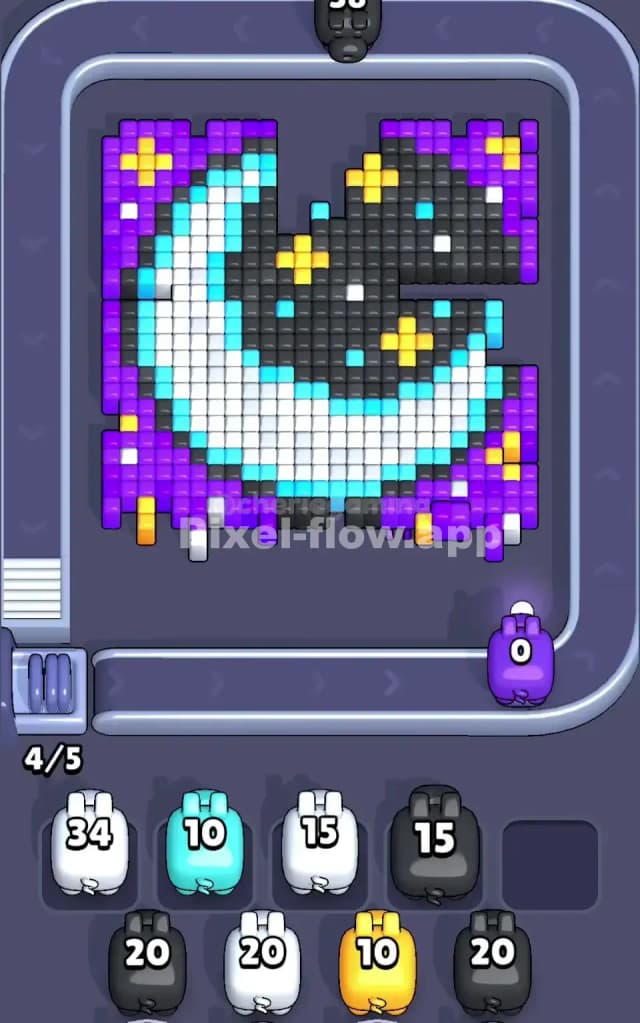
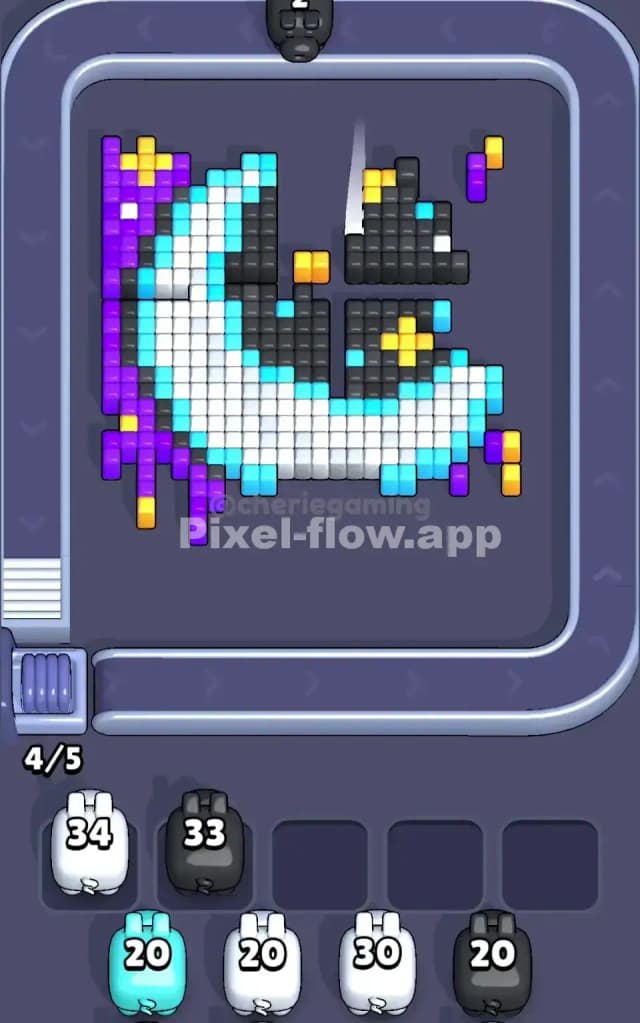
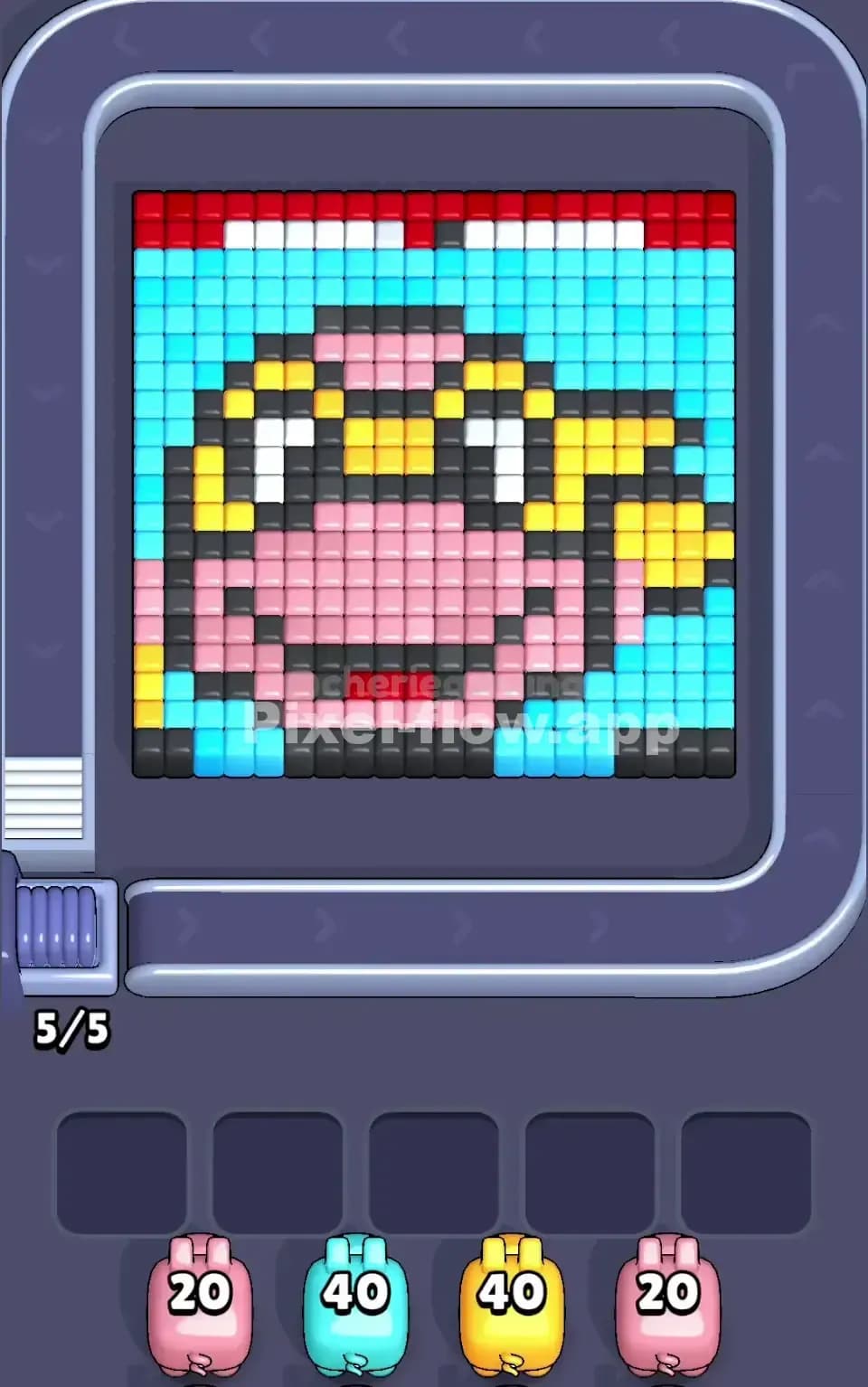
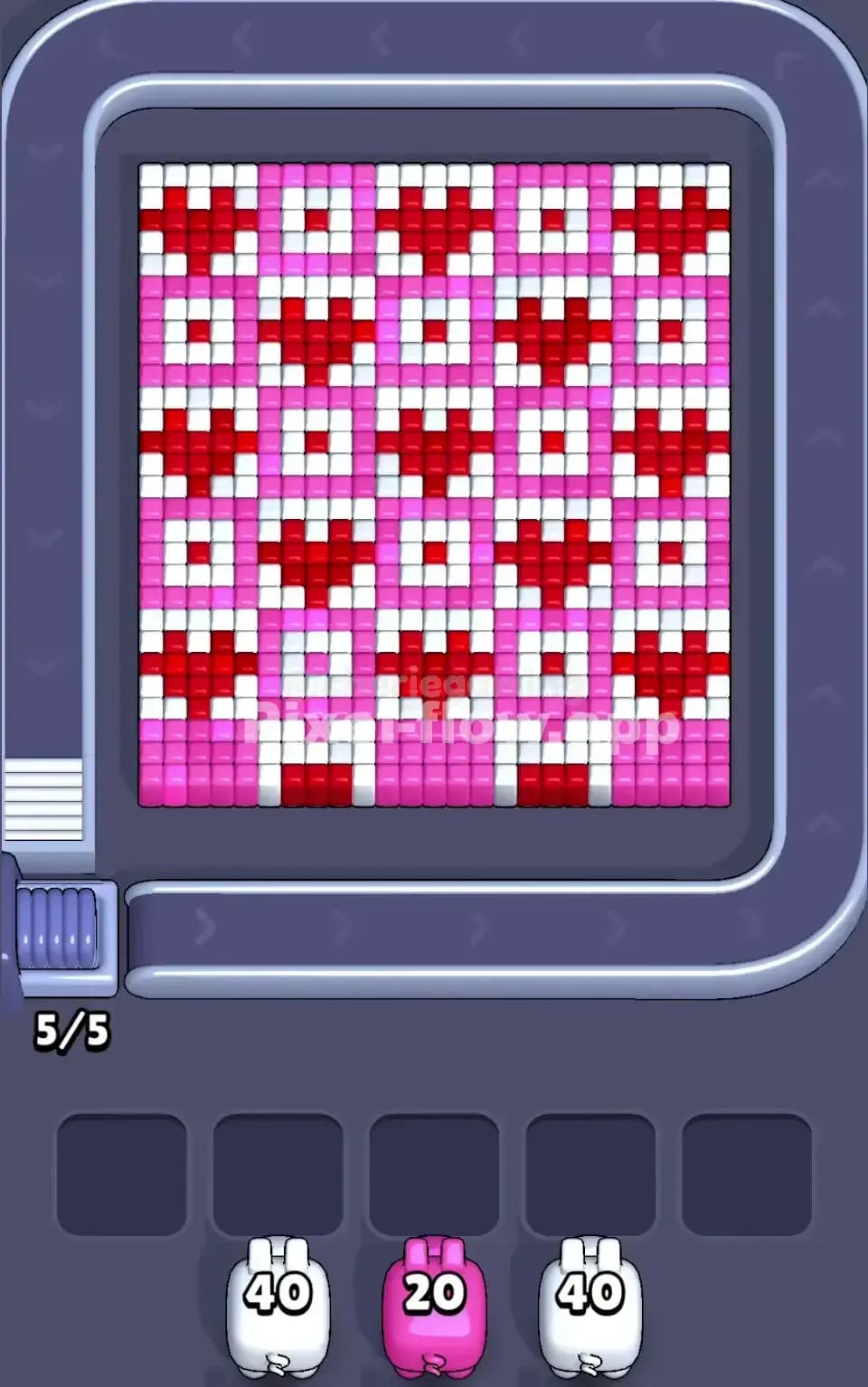
Pixel Flow Level 47 presents a layered voxel image of a cat's face—a charming but deceptively complex puzzle that'll test your patience. The board is dominated by a striking contrast between a bright white and cyan cat silhouette in the center, surrounded by vibrant purple as the primary background color. You'll also notice patches of black, gray, and yellow scattered throughout, along with occasional white accents that act as visual landmarks. The cat's face itself is rendered in white and cyan, making it the obvious focal point, but here's where things get tricky: clearing that center doesn't automatically win the level. You're looking at multiple color layers stacked on top of each other, and the outer purple and supporting colors form a protective shell around what you're trying to expose.

The Win Condition and Deterministic Nature

To conquer Pixel Flow Level 47, you need to clear every single voxel cube on the board. You start with four pigs queued up at the bottom: two gray pigs with 40 ammo each, one cyan pig with 20 ammo, and one orange pig with 20 ammo. Every time a pig shoots a matching-colored cube, it consumes one ammo. The key insight is that this level is 100% deterministic—your pig sequence never changes, and every pig's ammo count is fixed. That means there's no luck involved; success comes purely from understanding the color distribution, planning your pig order strategically, and ensuring you never jam up your five waiting slots with stuck pigs who can't find targets.


Why Pixel Flow Level 47 Feels So Tricky

The Purple Background Stranglehold

The biggest bottleneck in Pixel Flow Level 47 is the sheer volume of purple cubes surrounding the board. Purple acts as a massive outer shell, and you don't have a purple pig in your roster. This means you're completely dependent on your gray pigs to chip away at purple, since gray counts as a neutral color that can shoot any cube on the board. Both your gray pigs carry 40 ammo each, and that might sound like plenty until you realize how many purple cubes are hiding in the background. If you spend your gray ammo recklessly on less critical targets, you'll find yourself with a gray pig sitting in the waiting slots, still holding unused ammo, but with no purple cubes left to shoot. That's a jam. The moment all five waiting slots fill with stuck pigs, you lose instantly.

Color Patch Misalignment and Hidden Layers

Pixel Flow Level 47 hides several nasty surprises beneath its surface layers. The cyan and white patches that form the cat's face look tempting—you have a cyan pig with 20 ammo, so wouldn't it make sense to deploy it early? The problem is that cyan cubes are scattered in multiple layers. Some sit on the surface, but others hide deeper down, only becoming visible once you've cleared overlapping black and gray cubes first. Fire your cyan pig too early, and it'll burn through its 20 ammo on surface cubes while leaving deep cyan layers untouched. That cyan pig then drops into the waiting buffer with nothing left to do, wasting precious slot real estate. Similarly, the yellow patches appear in at least three separate regions of the board, and the orange pig's 20 ammo might not perfectly match the yellow cube count in its firing line. You've got to count carefully before committing to each pig.

When the Level Clicked for Me

Honestly, Pixel Flow Level 47 frustrated me for a solid ten attempts. I kept throwing pigs at the board in whatever order felt convenient, and every time I'd end up with two or three stuck pigs and no way to recover. The turning point came when I stopped rushing and actually counted the cubes. I grabbed a mental note of every purple zone, marked where cyan was hiding behind black, and realized that my gray pigs needed to be surgical—targeting purple only, not wandering into other colors. Once I shifted from reactive play to proactive planning, the level became almost meditative. I'm not exaggerating when I say Pixel Flow Level 47 teaches you more about patience and foresight than any previous level in the game.


Step-by-Step Strategy to Clear Pixel Flow Level 47

Opening: Deploy Gray Strategically and Preserve Slots

Your first move in Pixel Flow Level 47 should be to send in your first gray pig, but with extreme restraint. Don't just tap and hold until it empties; instead, shoot only the purple cubes you can see on the outer edges and corners. The reason is simple: your gray pigs are your cleanup crew for the entire board, and you need to ration them. Focus the first gray pig on clearing the left and right purple borders, paying special attention to the purple patches near the top corners. After your first gray pig depletes to around 10–15 ammo remaining, let it fire into the purple on the far left side, then send it down into the waiting buffer. This costs you one slot, but it frees up queue space and keeps your pig count sustainable.

Never fill more than two waiting slots in the opening phase. If you do, you're already losing flexibility. Your goal is to get through the opening with at least three empty slots remaining so you have room to maneuver mid-game.

Mid-Game: Expose Layers and Sequence Smart

Now deploy your second gray pig, but this time focus on the central black and dark gray cubes that are blocking access to the inner cyan and white. Pixel Flow Level 47's true structure only reveals itself once you clear these middle layers. Shoot the black cubes surrounding the cat's face first, working methodically from one side to the other. This is where your pig order becomes critical: as you expose cyan beneath the black, you're setting up your cyan pig for success. Your cyan pig should only fire once you've cleared enough black to reveal a full line of cyan targets.

Once your second gray pig is down to about 5–8 ammo, park it in the waiting buffer. Don't drain it completely; sometimes it's smarter to leave a pig with leftover ammo sitting safely rather than force it to shoot and potentially create a jam. Now send in your cyan pig. Target the newly exposed cyan layers methodically, working from top to bottom. This pig has 20 ammo, so count your cyan cubes as it shoots. If you've done the black removal correctly, your cyan pig should run out of ammo just as the cyan patches are cleared. If it still has ammo at the end, you've made a mistake, and that cyan pig will sit stuck in the waiting buffer.

End-Game: Yellow and Orange Finesse

Here's where Pixel Flow Level 47 either rewards your planning or punishes your mistakes. By now, you should have exposed the yellow patches hiding in the middle and lower regions of the board. Before you deploy your orange pig (which shoots yellow), take a breath and count every visible yellow cube. Your orange pig has exactly 20 ammo. If there are more than 20 yellow cubes visible, you have a problem: some yellow is still hidden behind other layers. In that case, you need to use your remaining gray ammo to clear whatever's blocking the yellow before sending orange in.

Fire your orange pig into the yellow zones and monitor its ammo count obsessively. Once orange is depleted, it'll settle into the waiting buffer. At this point, you should have only one or two pigs left, and the board should be nearly empty. If you still see uncovered cubes, check the queue—you might have one more gray pig or a pig that didn't fully deplete. Clear those remaining cubes with whatever ammo is left, and you'll watch the entire board dissolve into victory.


The Logic Behind This Pixel Flow Level 47 Plan

Why Deterministic Order Beats Instinct

Pixel Flow Level 47 rewards forward-thinking players because the pig sequence never changes. Your gray pigs arrive first, cyan follows, and orange arrives last. This isn't random; it's a constraint that forces you to think in layers. By sending gray pigs early to clear black and purple, you're not just making progress—you're exposing targets for your specialized pigs (cyan and orange) that arrive later. The logic is elegant: use your generalists early to set up your specialists for success. Too many players treat Pixel Flow Level 47 like a puzzle where you can brute-force any order, but that mindset guarantees failure. The level is actually teaching you to respect the queue and work with it, not against it.

The Waiting Buffer Is Your Safety Net, Not a Dump

Too many players panic-fill the waiting slots, treating them like a garbage disposal. In reality, parking a half-spent pig in the buffer is a tactical choice. If you have three waiting slots full and one of them holds a gray pig with 5 ammo, that's fine—that pig is waiting for you to expose more purple cubes that it can target later. The problem occurs when all five slots are full and every pig in there is completely stuck (no matching targets on the board). To avoid this in Pixel Flow Level 47, you must count targets before deploying each pig. Ask yourself: "Does this pig have enough ammo to destroy all matching cubes I can see, plus any I expect to expose?" If the answer is yes, deploy it. If it's no, use gray to expose more targets first.

Stay calm under pressure—Pixel Flow Level 47 doesn't reward speed. Watch the queue, count ammo on every pig, and plan two or three pigs ahead. This methodical approach transforms what feels like chaos into a solvable puzzle. You've got this.