Pixel Flow Level 474 Solution | Pixel Flow 474 Walkthrough
How to beat Pixel Flow Level 474: Video solution & walkthrough. The fastest way to pass Pixel Flow 474.
Is this the wrong level layout?🤔
Pixel Flow randomizes levels for different players. Don't worry, just upload a screenshot of your board, and our AI will find the correct video instantly.
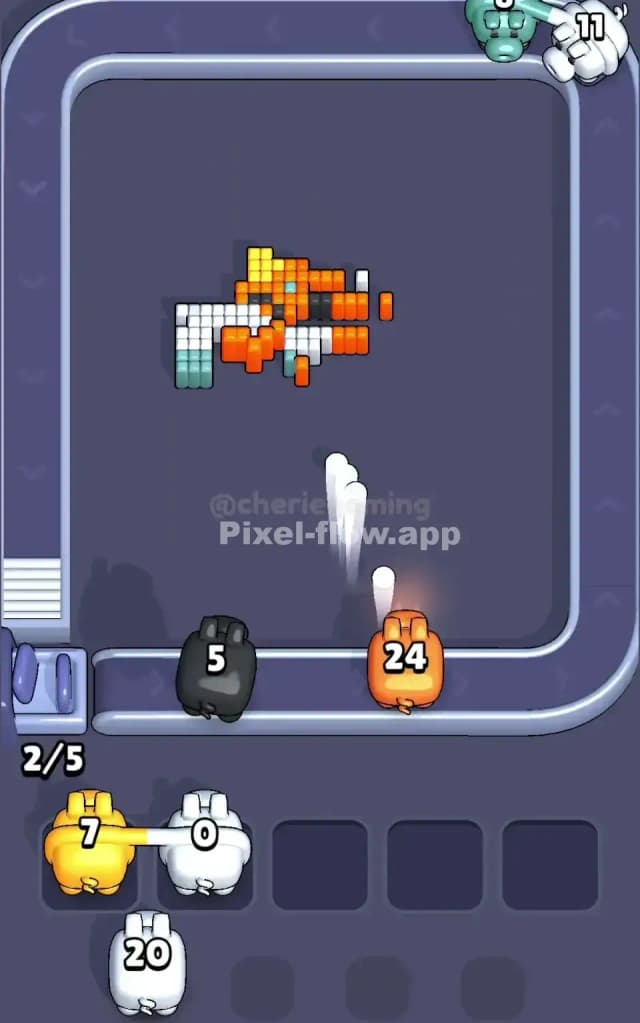
Pixel Flow Level 474 Walkthrough
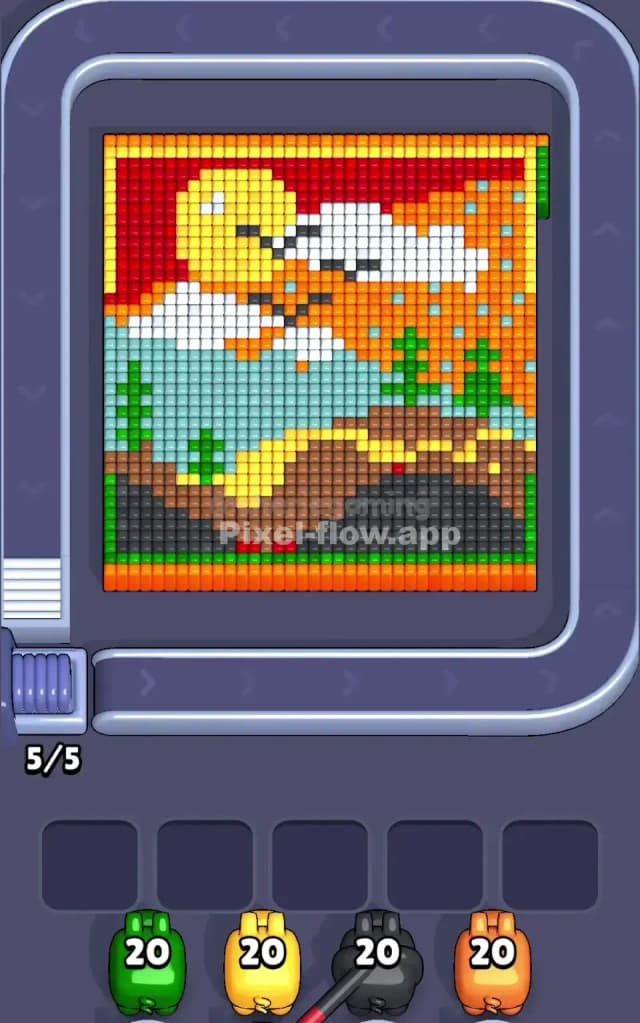
This level features a beautiful voxel landscape of a sun setting over mountains. You’ll be dealing with a yellow sun, white clouds, red/orange sky gradients, light blue mountains, green trees, and dark grey/brown rocky terrain.
The core rule for beating Pixel Flow Level 474 is layer management. You have limited slots for your pigs. If you pull a pig (like a Green one for the trees) but the trees are blocked by a layer of blue mountain or brown rock, that pig will sit in your slot, uselessly clogging your queue. Is this a very hard level? No. It's moderate difficulty because the color zones are large and distinct, reducing the chance of misclicks, but the layering can still trap you if you aren't paying attention to depth.
Pixel Flow Level 474 Overview
The artwork depicts a serene mountain range at sunset. The Sun (yellow) hangs high in the top left, partially obscured by White Clouds. The sky transitions from a deep Red on the far left to Orange on the right, suggesting dusk. Below the skyline, you have Light Blue mountains that dominate the middle left.
The lower half is earthier. There are steep Brown cliffs and a Dark Grey base layer. Scattered throughout the scene, especially on the mid-right and far left, are patches of Green pine trees.
What makes this level tricky is the asymmetry. The left side is "sky-heavy" (lots of red/yellow), while the right side is "earth-heavy" (lots of orange/brown). The bottom border is a thick strip of Orange, which connects visually to the sky but acts as a physical barrier for the bottom rows. You need to be careful with that Orange specifically, as it spans the entire bottom width and can block access to the dark grey rocks below it.
Step by step solution walkthrough for Pixel Flow Level 474
First Color Zone to Erase in Pixel Flow Level 474
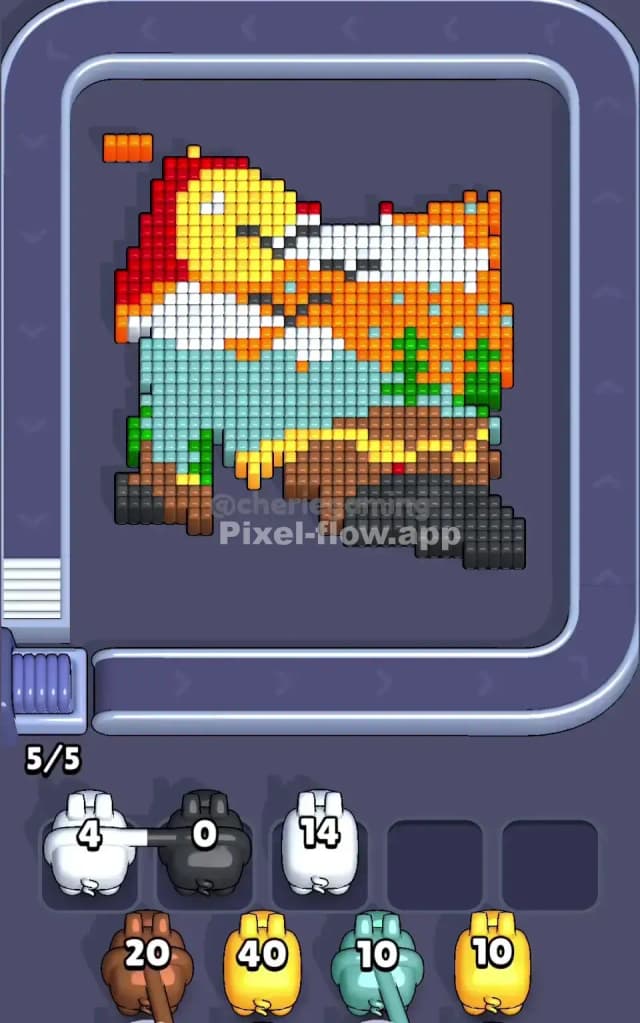
I start by shaving off the Orange border at the bottom and right side.
Here is why: The orange border is the outermost layer. It literally wraps around the bottom and right edge of the painting. If you try to clear the dark grey rocks at the bottom or the green trees on the right, your pigs will just bounce off the orange blocks.
Prioritize the Orange pigs first to strip away that "frame." Once the frame is gone, the internal layers (the brown cliffs and the red sky) become much more accessible. Narrative-wise, you are "unboxing" the painting before you start working on the art itself.
How to pass Pixel Flow Level 474 without power ups or boosters
Around the mid-point, your board will look a bit chaotic. The clean orange frame is gone, and you’ve likely eaten away most of the Red sky on the left.
Now you face the danger zone: The Light Blue mountain vs. the Green trees.
- The Trap: The green trees often sit on top of or mixed in with the blue mountains and brown cliffs. It is tempting to grab a Green pig whenever you see a tree. Don't.
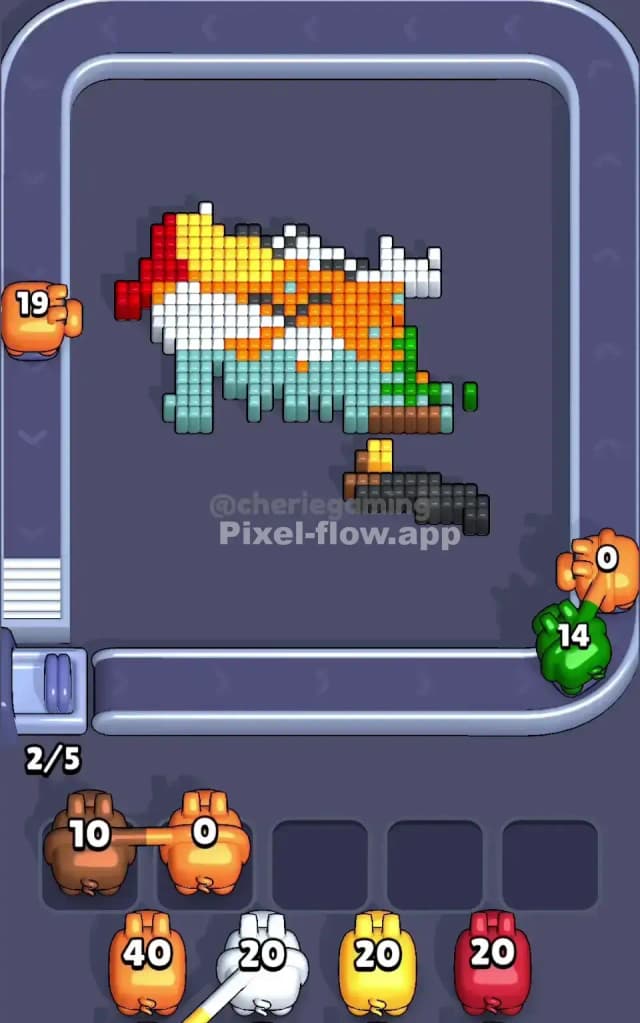
- The Strategy: Focus on the Brown and Dark Grey first. These colors form the heavy base of the image. By clearing the heavy bottom layers, you prevent "overhangs" where a floating piece of brown rock blocks a shot at a green tree behind it.
- Ammo Management: You will notice pigs coming out with 20 or 40 ammo. If you see a White pig (for clouds), check if you have enough exposed white clouds to use up at least 15-20 shots. If only 3 white blocks are visible, let that pig loop around. Do not put it in your slot. Wait until you have cleared enough Red/Orange sky to reveal a big chunk of cloud so the pig clears its queue instantly.
Last Details You Clean Up in Pixel Flow Level 474
As you reach the end, you will likely be left with the "core" of the image. Usually, the Yellow sun and the Light Blue center of the mountain are the last to go because they are buried deep in the middle of the voxel stack.
Be careful with the final Green pixels. There are often one or two rogue green blocks hiding behind the brown cliffs on the right side. If you waste your Green pig early on the left-side trees, you might get stuck waiting for a new Green pig while your slots fill up with useless colors. Save a Green pig in your slot only when you are sure you can clear the entire tree layer, or keep the queue clear enough to cycle through until the right color appears. Finally, blast the remaining Yellow sun to finish the masterpiece.