Pixel Flow Level 475 Solution Walkthrough | Pixel Flow 475

How to solve Pixel Flow level 475? Get instant solution for Pixel Flow 475 with our step by step solution & video walkthrough.

Share Pixel Flow Level 475 Guide:
Pixel Flow Level 475 Gameplay
Pixel Flow Level 475 Solution 1
Pixel Flow Level 475 Solution 2
Pixel Flow Level 475 Solution 3

Pixel Flow Level 475 Overview

The Board Layout and Color Palette

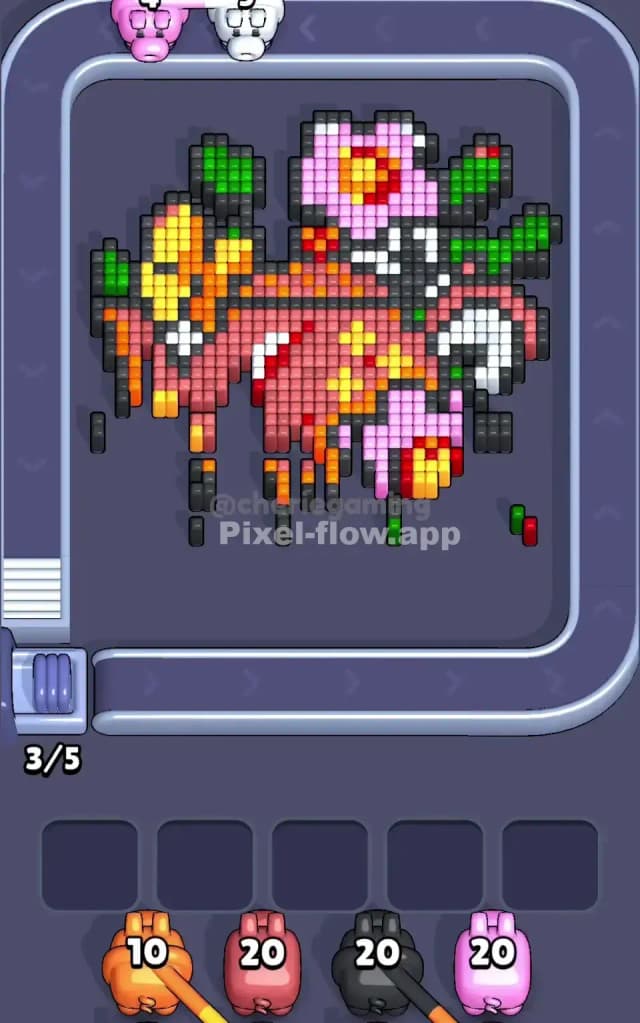
Pixel Flow Level 475 presents a vibrant and intricate pixel art design featuring a stylized creature or character surrounded by a lush, floral-themed background. The dominant colors you'll encounter are green, pink, red, yellow, orange, and white, arranged in a carefully layered composition that demands precise sequencing to dismantle. The creature itself occupies the central region with rich reds and oranges, while the surrounding foliage and flowers use greens, pinks, and yellows to create visual depth. What makes Pixel Flow 475 particularly challenging is how these colors are interwoven—you won't simply clear one color block and move on; instead, you'll need to strategically peel away outer layers to access the colors hiding beneath. The board feels densely packed, and there's little room for wasted moves or careless pig placement.

The Win Condition and Deterministic Nature

Your goal in Pixel Flow Level 475 is straightforward: clear every single voxel cube from the board by matching them with the color-coded pigs coming down the conveyor belt. The four pigs waiting at the bottom are your tools, each carrying a fixed ammunition count (in this case, you're looking at values like 20, 20, 20, and 20 for the green and gray pigs, with the red pig also holding 20). Because every pig's ammo is predetermined and every cube's color is fixed, Pixel Flow 475 is entirely deterministic—there's no luck involved, only strategy. When you dispatch a pig onto the board, it will automatically shoot and destroy all cubes of its matching color, consuming one ammo point per cube destroyed. Success hinges on planning your pig order so that you expose the right colors at the right time and never trap yourself with pigs sitting in the waiting slots while you're unable to deploy them.


Why Pixel Flow Level 475 Feels So Tricky

The Green Wall and Color Saturation Problem

The biggest bottleneck in Pixel Flow Level 475 is managing the sheer volume of green cubes distributed across the outer and inner layers of the board. You have two green pigs, each with 20 ammo, giving you 40 total green-cube eliminations. While 40 sounds generous, the green pixels are scattered throughout—some are clustered in the upper-left and upper-right corners, but others are buried deeper within the composition. The real trap is deploying green too early before you've exposed all the green cubes you need to hit. If you send a green pig down and it wastes ammo on accessible cubes while leaving deeper greens untouched, you'll eventually fill your waiting slots with a green pig that has nowhere left to aim, forcing a failure. The temptation to "just clear the obvious green" is exactly what derails most players attempting Pixel Flow Level 475.

Color Patches and Irregular Distributions

Another subtle threat in Pixel Flow Level 475 is how the secondary colors—pink, red, yellow, and orange—are pocketed in non-obvious spots. The red pig sits in your queue with 20 ammo, but red cubes aren't evenly distributed; there's a thick band of red in the creature's body, but pinks and reds also appear in the flower sections. If you misjudge which colors are truly "outer layer" versus "protected by green," you might fire off your red pig prematurely, leaving it stranded in the waiting slots when deeper red cubes emerge from beneath cleared green sections. Yellow and orange follow a similar pattern, creating multiple false "endpoints" that can trick you into thinking you're making progress when you're actually setting yourself up for a jam.

The Personal Moment When It Clicks

I'll be honest: Pixel Flow Level 475 had me frustrated for a solid dozen attempts. I kept trying to power through by deploying pigs in sequence without really thinking about layer order, and I'd consistently end up with a gray or green pig sitting in the buffer, unable to shoot anything, while I still had cubes on the board in colors I'd already "finished." The moment it clicked was when I stopped thinking about "clearing colors" and started thinking about "exposing layers." Once I accepted that I needed to use one green pig to unblock the central creature section—revealing deeper reds and yellows underneath—before using my second green pig on the peripheral stuff, the puzzle suddenly made sense. Pixel Flow Level 475 isn't about brute force; it's about patience and foresight.


Step-by-Step Strategy to Clear Pixel Flow Level 475

Opening: Start with Strategic Color Exposure

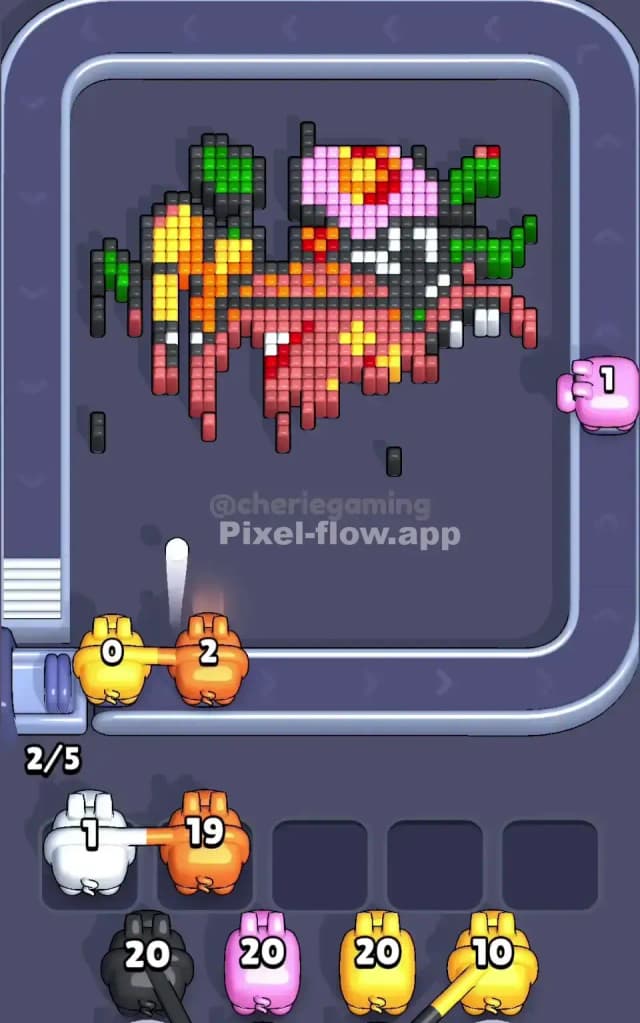
Your first move in Pixel Flow Level 475 should be to deploy one of your green pigs, but with a specific target in mind: the upper-left or upper-right corner clusters that form the "safe" outer layer. This initial green pig will have 20 ammo, which is plenty to clear one peripheral section without eating into the central or lower layers. Why green first? Because green acts as the gateway color in Pixel Flow Level 475—it's the primary protective layer wrapping the more complex interior. By committing one green pig early and watching it succeed, you free up one waiting slot and confirm that your sequencing logic is on track. The key is restraint: let that first green pig exhaust itself on accessible greens, then immediately watch what new colors become visible before deploying your next pig. You should always maintain at least two empty waiting slots throughout Pixel Flow Level 475 to give yourself flexibility if a pig runs out of ammo sooner than expected.

Mid-Game: Layer Peeling and Ammo Counting

Once your first green pig has done its job, you're ready for the mid-game phase of Pixel Flow Level 475, where timing becomes critical. Look at what the first green pig exposed—you'll likely see reds, yellows, and possibly some whites or pinks that were hidden before. Now comes the hard part: deciding whether to deploy your second green pig immediately or pivot to another color. Here's the logic: if the freshly exposed colors are few and scattered, go ahead and deploy your gray pig (the 20-ammo pig) to tackle grays or whatever the gray pig targets in your specific Pixel Flow Level 475 configuration. However, if you can see that large sections of green still remain in the central area, hold off and send your second green pig down instead. The goal is to keep the waiting slots flowing smoothly, never allowing a pig to sit idle while you're still destroying cubes of its color elsewhere. During this phase, actively count ammo consumption: if your first green pig used 18 of its 20 ammo, you know the remaining 2 will get wasted on the next green pig deployment, so account for that in your overall color-destruction budget for Pixel Flow Level 475. This is where many players fail—they don't mentally track whether their remaining pigs have enough ammo to finish the job.

End-Game: The Final Color Sequence and Buffer Dump

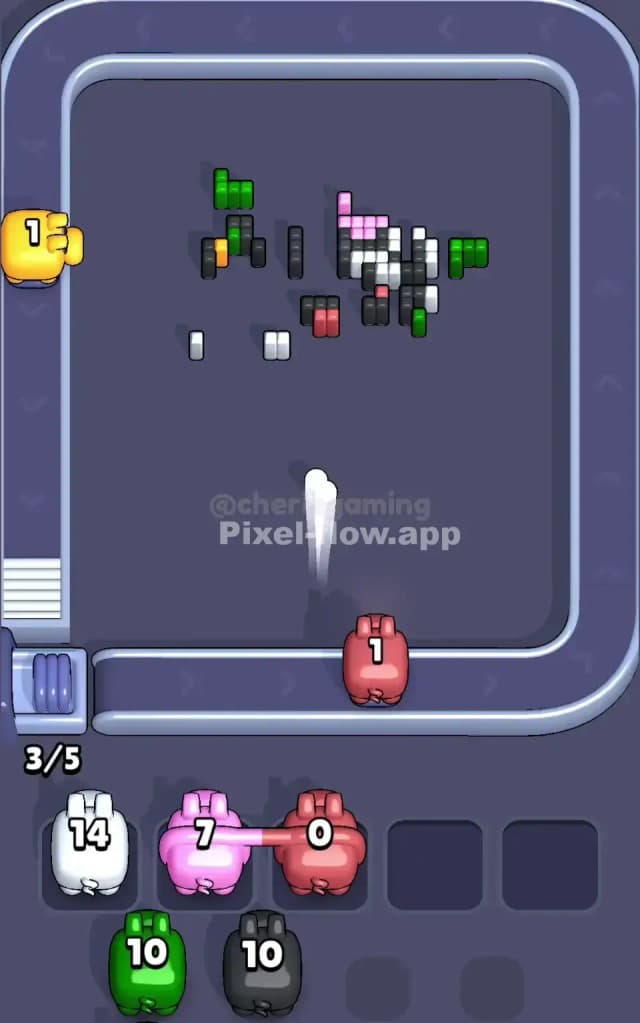
As you near the bottom of Pixel Flow Level 475, your waiting slots will fill and empty rapidly, and your remaining pig queue will shrink. The endgame is all about finishing the last two or three colors without getting stuck. If you've planned well, you'll have maybe a pink and yellow pig left (or whatever the final colors are in your Pixel Flow Level 475 draw), and they should align almost perfectly with the remaining cubes on the board. Deploy them in color order—reds first, then yellows, then whites—and watch the board collapse cleanly. The moment of victory in Pixel Flow Level 475 arrives when the final cube is destroyed and the waiting slots sit empty. If, instead, a pig lands in a waiting slot with ammo remaining and no valid targets, you've failed Pixel Flow Level 475, so the final sequence is where your earlier planning either pays off or costs you the level.


The Logic Behind This Pixel Flow Level 475 Plan

Exploiting Determinism Over Randomness

The core insight that makes Pixel Flow Level 475 solvable is accepting that you're not gambling or reacting—you're executing a predetermined sequence with perfect information. Every pig's ammo is fixed, every cube's color is visible from the start, and the waiting slots follow an ironclad rule: if you can't shoot, you sit. The strategy exploits this by forcing you to commit to a pig order that respects layer dependencies. Pixel Flow Level 475 doesn't care if you feel like deploying the red pig next; it cares that the red cubes you need to destroy are either visible or will become visible once you've cleared the right protective layer. By mapping out which color must yield to which, you transform Pixel Flow Level 475 from a chaotic puzzle into a linear, solvable sequence. The math is simple: 40 green, 20 gray, 20 red, 20 pink (or whatever the actual counts are for your Pixel Flow Level 475 configuration). If the total ammo matches or exceeds the total cubes, you can clear it—as long as you execute the layer-peeling sequence correctly.

Staying Calm and Planning Ahead

The psychological challenge of Pixel Flow Level 475 is resisting the urge to "just send the next pig." Instead, pause between deployments and ask yourself: What color will I need to clear next? Are there any cubes of that color visible right now, or do I need to expose them first? Does my current pig have enough ammo to finish every instance of its color? This deliberate, methodical approach is the only way to confidently clear Pixel Flow Level 475 without hitting a deadlock. Watch the queue, count your remaining ammo across all pigs, and plan two or three pigs ahead. When you do this successfully, Pixel Flow Level 475 becomes less a test of reflexes and more a test of foresight—and foresight is something any player can develop with practice. The reward is the satisfaction of watching a complex, colorful puzzle dissolve in perfect sequence, knowing that every move was intentional and necessary.