Pixel Flow Level 493 Solution | Pixel Flow 493 Walkthrough
How to beat Pixel Flow Level 493: Video solution & walkthrough. The fastest way to pass Pixel Flow 493.
Is this the wrong level layout?🤔
Pixel Flow randomizes levels for different players. Don't worry, just upload a screenshot of your board, and our AI will find the correct video instantly.
Pixel Flow Level 493 Walkthrough
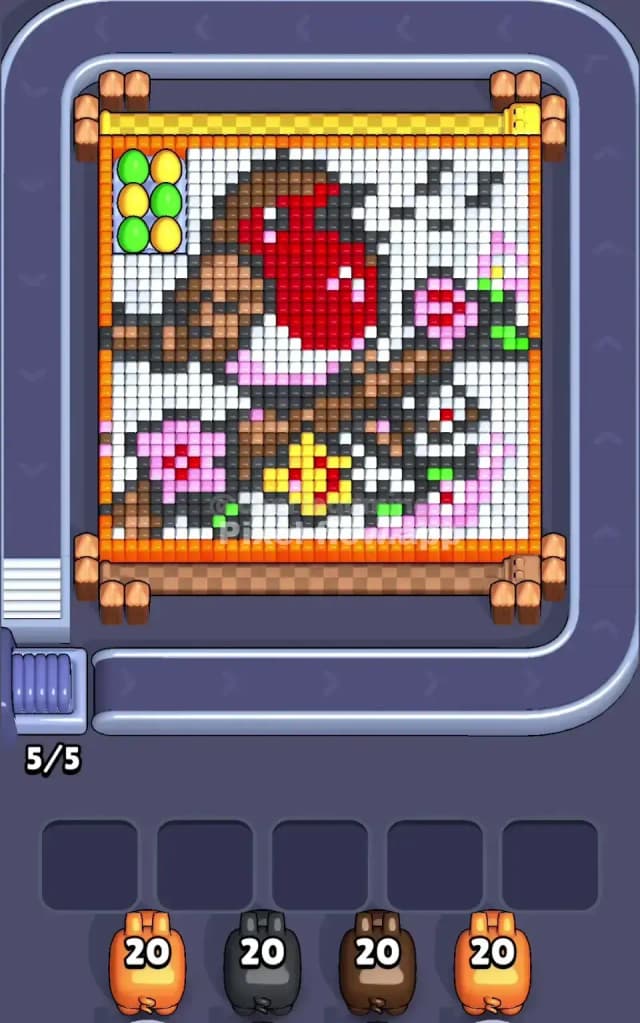
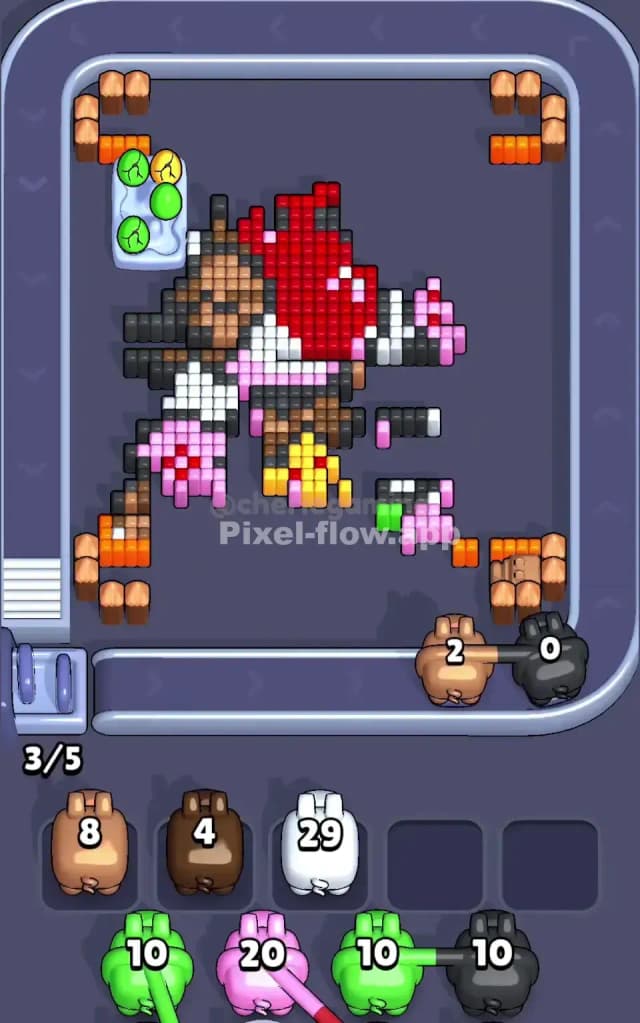
This level features a colorful robin perched on a branch surrounded by pink flowers. The red chest of the bird dominates the upper center, while white background blocks and brown branches fill out the rest. The key to beating Pixel Flow Level 493 is prioritizing the removal of the massive white background layer first to expose the deeper colors of the bird and flowers. Because the white layer is so thick and spread out, it is easy to clog your slots with specialized colors (like red or pink) before they have targets. I would judge this as a very hard level due to the specific layering of the white blocks blocking almost everything else.
Pixel Flow Level 493 Overview
The scene is a classic nature close-up: a robin with a bright red breast sitting on a brown branch. The background is almost entirely white, simulating open sky or a blank canvas. There are splashes of pink cherry blossoms on the left and right, and some yellow details near the bottom.
The asymmetry here is subtle but dangerous. The top left corner has a distinct patch of green and yellow eggs (or maybe just leaves/buds) sitting in a nest-like structure. This area is deceptively separate from the main bird. The bottom right is heavily cluttered with pink flowers intermixed with white background. The real threat, however, is the sheer volume of white. It covers the brown branches and the edges of the red breast. Until you chip away that white "frame," the actual subject of the painting—the bird—is largely inaccessible.
Step by step solution walkthrough for Pixel Flow Level 493
First Color Zone to Erase in Pixel Flow Level 493
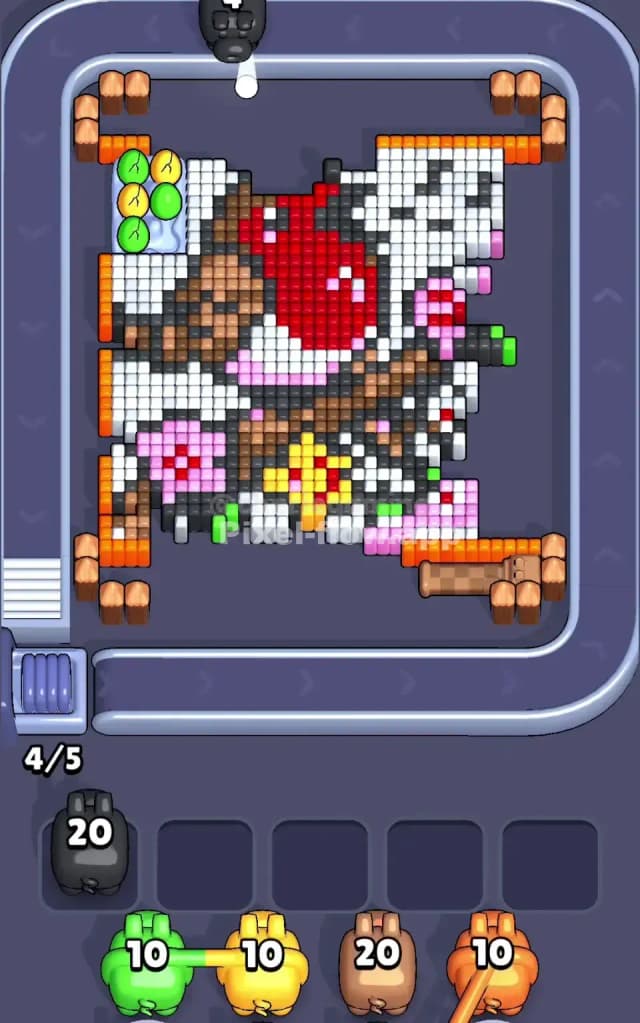
I start by shaving off the white background, specifically aiming for the large chunks on the right side and bottom right corner.
Here is the logic: The white layer acts as a "lid" over the brown branches and pink flowers. If you grab a Red pig early, it will sit uselessly in your slot because the red chest is partially buried. If you grab a Brown pig, it has nowhere to shoot. White is the only color that guarantees you can empty a pig's ammo immediately. Focus on the white blocks near the pink flowers first; clearing these opens up two colors at once (Pink and White), giving you more flexibility in the mid-game.
How to pass Pixel Flow Level 493 without power ups or boosters
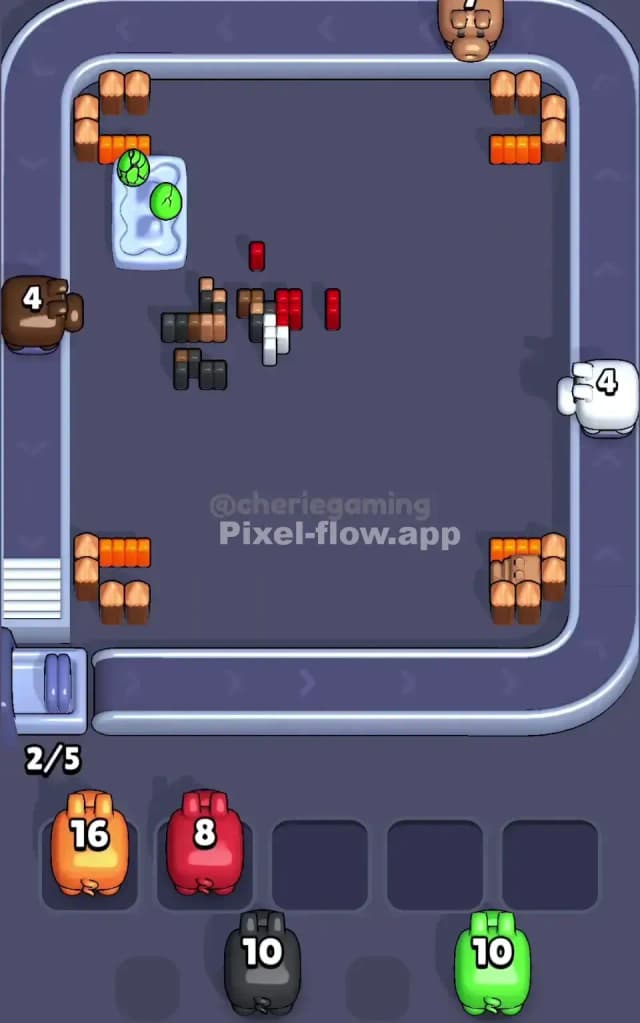
Once the initial white layer is thinned out, the board looks messy. You will have the red bird chest floating in the middle, disconnected from the brown branch fragments below. At this stage, your waiting slots are your life.
Refuse to pick up Green or Yellow pigs yet. They are traps. The green/yellow nest in the top left is isolated. Instead, look for Brown and Pink.
You need to clear the branch (Brown) to get to the bottom layer of the bird. Often, the game will send you a stream of Red pigs when the red chest is still blocked by a single layer of Brown or White pixels. Do not take the bait. Let the Red pigs pass until you have a clear line of sight to the bird's chest. If you fill your slots with Red pigs while the chest is blocked, you lose. Prioritize Brown to clear the perch, then Pink to clear the side distractions. Only then is the Red chest safe to attack.
Last Details You Clean Up in Pixel Flow Level 493
The end game usually leaves you with the Green and Yellow nest in the top left corner and the deepest layer of the Red chest.
The nest is tricky because it sits high up. You might have ignored it the whole game. Now, you need specific small-ammo pigs to snipe those few pixels. Watch out for the very last single voxels of Black or Dark Grey that outline the bird's beak and eye. These often hide behind the very last red blocks. Save a Black pig in your waiting slot if you see one, because waiting for one to spawn at the very end can force you to waste moves. Kill the bird's red chest, then mop up the corner nest to finish.