Pixel Flow Level 492 Solution Walkthrough | Pixel Flow 492

How to solve Pixel Flow level 492? Get instant solution for Pixel Flow 492 with our step by step solution & video walkthrough.

Share Pixel Flow Level 492 Guide:
Pixel Flow Level 492 Gameplay

Pixel Flow Level 492 Overview

The Starting Board and Color Layout

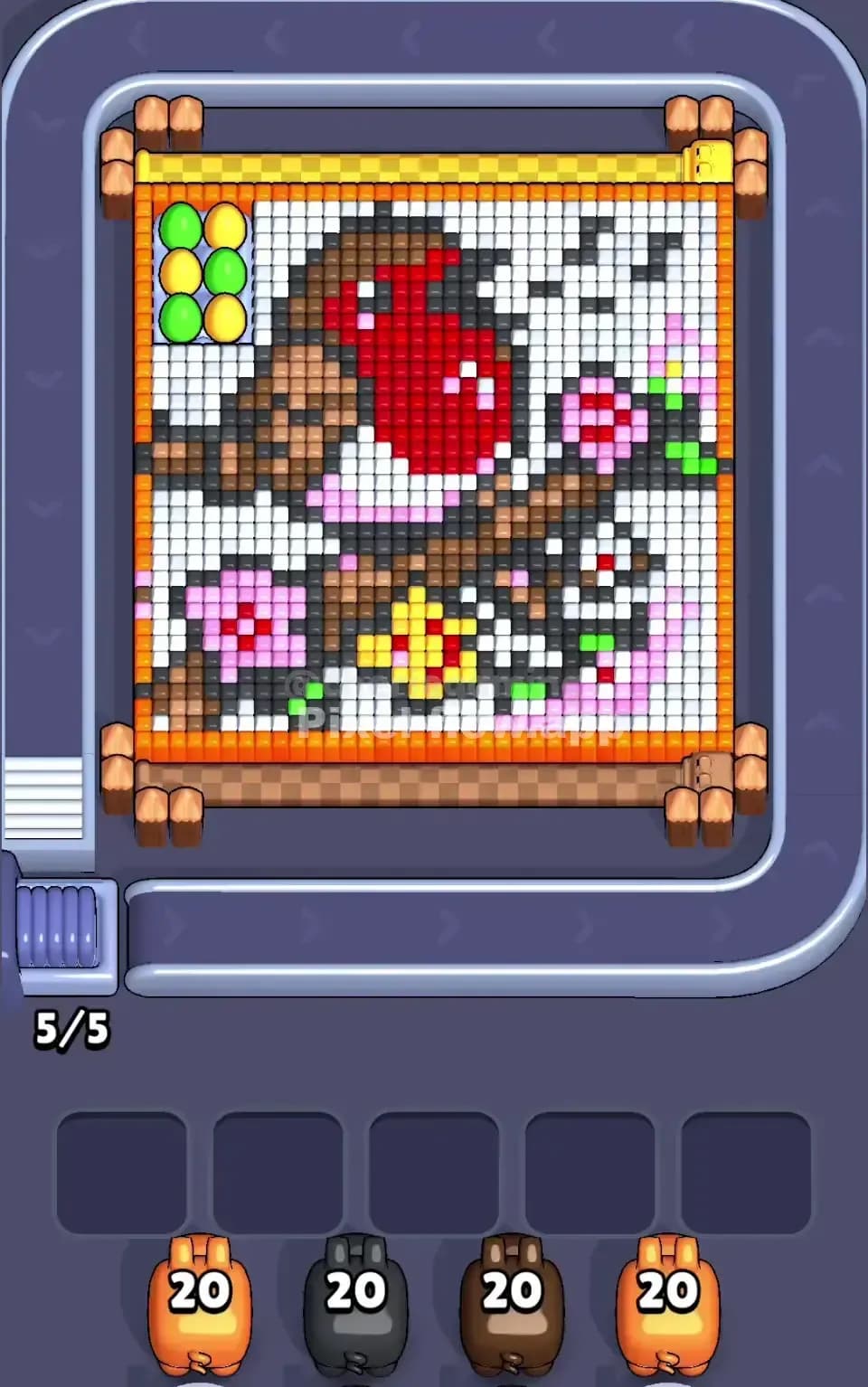
Pixel Flow Level 492 presents a vibrant, multi-layered voxel puzzle featuring what appears to be a stylized portrait or face rendered in bright, contrasting colors. The board is dominated by cyan, magenta, purple, blue, white, and dark gray blocks arranged in an intricate pattern across multiple depth layers. You'll notice the cyan and magenta blocks form large clusters around the upper and middle sections, while blue cubes create a striking diagonal or curved feature through the center. White and black blocks serve as accent points, creating visual texture and separation between color regions. The starting queue shows a pink pig with 36 ammo, followed by a purple pig with 40 ammo, a white pig with 20 ammo, and a cyan pig with 40 ammo—giving you a total of 136 actions to clear the board. Your goal in Pixel Flow Level 492 is straightforward: eliminate every single cube on the board by strategically releasing pigs in the correct sequence, managing their ammo expenditure, and keeping your five waiting slots from clogging up.

Understanding the Win Condition and Determinism

The beauty of Pixel Flow Level 492, like all Pixel Flow puzzles, is that success comes from understanding the deterministic nature of the system. Every pig has a fixed ammo count, and each matching cube you destroy costs exactly one ammo. You're not dealing with random mechanics or hidden information—you're solving a precise puzzle where the right sequence exists, and your job is to find it. The board won't change unless you make a move, and the pig order is locked in from the start. This means you can plan several moves ahead, count your remaining cubes by color, and predict where bottlenecks will form before they trap you. Clearing Pixel Flow Level 492 requires you to expose deeper layers of the voxel image, which means sometimes you'll need to clear certain colors first to reveal others hiding beneath them.

Why Pixel Flow Level 492 Feels So Tricky

The Ammo-to-Cube Mismatch Problem

The primary challenge in Pixel Flow Level 492 stems from an imbalance between ammo availability and visible cube counts at critical moments. When you first load the level, you can see roughly 80–90 cubes on the surface, but your first four pigs have a combined 136 ammo. This surplus seems generous until you realize that many of those cubes are hidden in deeper layers—cubes that won't appear until you clear the blocks in front of them. The pink pig kicks off with 36 ammo, but early on, you might only see 20–25 pink cubes. If you fire the pink pig too early, you'll rapidly empty its ammo without clearing enough board real estate to expose new colors. This forces the pink pig to drop into a waiting slot before you're ready, consuming valuable buffer space and leaving you with fewer slots to manage the remaining three pigs. I found myself restarting Pixel Flow Level 492 several times because I triggered the pink pig too eagerly, only to watch the purple and white pigs fill up my waiting slots while the cyan pig had nowhere to go.

The Purple and Blue Interlock

Another subtle but devastating trap in Pixel Flow Level 492 is how purple and blue cubes interweave throughout the board. The purple blocks form a large central mass, while blue cubes scatter across the design in a way that doesn't always feel intuitive. If you're not careful with the purple pig's 40 ammo, you can easily overshoot and clear all visible purple cubes while leaving blue blocks still embedded in the center. When that happens, your white and cyan pigs arrive with no new targets exposed, and you're suddenly stuck parking them without making progress. I realized this trap the hard way—I had the purple pig blow through its ammo, only to find the blue pig faced a board where most remaining blue cubes were still buried. That's when I understood that Pixel Flow Level 492 demands you think in layers, not just in colors.

The Final Color Crunch and Waiting Slot Pressure

By the time you're in the late stages of Pixel Flow Level 492, the waiting slots become your worst enemy. You might have three pigs left to deploy, but only two empty slots available because previous pigs got "stuck"—meaning they ran out of valid targets even though they still had ammo left. This happened to me when I miscalculated the white pig's path; it ran out of white cubes to hit before exhausting its ammo, forcing it to drop into a slot. Suddenly, my final pigs arrived to a board that was mostly clear but still had scattered cubes of colors I'd already committed. The pressure is immense because you can't undo a pig placement, and the level will only fail if all five waiting slots fill up. The clicking moment for Pixel Flow Level 492 came when I realized I had to plan not just which pig to fire, but also predict where and when each pig would get stuck, and ensure I always had a path forward for the remaining pigs.

Step-by-Step Strategy to Clear Pixel Flow Level 492

Opening: Start With the Pink Pig, But Strategically

Begin Pixel Flow Level 492 by holding your trigger finger on the pink pig and observing the board carefully before you commit. Count the visible pink cubes—you should see roughly 25–30 on the surface layer. Release the pink pig, but don't aim it at every pink cube indiscriminately; instead, target the pink blocks that appear to be blocking access to deeper colors, especially those that might be concealing cyan or magenta regions. This selective approach prevents you from burning through all 36 ammo on surface-level cubes. Once the pink pig has spent about 15–20 ammo and cleared some strategic positions, watch what new blocks appear underneath. You should see additional pink cubes revealed, along with hints of deeper colors. The goal is to keep at least three or four waiting slots completely empty at this stage, so you have room to maneuver as pigs arrive. If the pink pig still has ammo remaining after exposing the next layer, let it drop into a waiting slot—don't force it to destroy more cubes if doing so won't expose anything useful.

Mid-Game: Sequence the Purple and White Pigs to Expose Layers

Once the pink pig is parked, fire the purple pig with a clear objective: clear the large purple mass in the center and upper regions while being mindful of blue blocks mixed within. The purple pig has 40 ammo, so you have decent flexibility, but don't go crazy. Target purple blocks that are adjacent to white, cyan, or blue areas, so you're actively peeling back layers. After the purple pig expends maybe 20–25 ammo, you'll start seeing white blocks come into view. This is the moment to deploy the white pig, which carries only 20 ammo. The white pig in Pixel Flow Level 492 is your precision tool—it doesn't have the raw ammo of other pigs, so every shot matters. Use the white pig to clear white blocks that are sitting on top of cyan or remaining colored blocks, working methodically from top to bottom. The white pig should finish its ammo around the same time it's exposed most of the remaining board. At this point, you'll likely have the pink and white pigs occupying two of your five waiting slots, leaving you three slots for the purple pig (if it still has ammo) and the cyan pig.

End-Game: Deploy Cyan and Manage the Final Stretch

With three slots remaining, release the purple pig again (assuming it wasn't fully spent earlier) to clean up any remaining purple blocks. The purple pig should finish its job relatively quickly now that the upper layers are gone. Next, fire the cyan pig, which has 40 ammo and should be facing a much-simplified board. The cyan pig in Pixel Flow Level 492 will likely be your cleanup crew, targeting scattered cyan blocks and any leftover colors. As the cyan pig moves through its ammo, watch the board carefully—you want to ensure that every color gets fully cleared before you run out of pigs. If you see any color with remaining cubes but no pig left in the queue, you've made a critical planning error. However, if you've followed the mid-game sequence correctly, the cyan pig should be able to handle the final cyan blocks and any stray colors that got missed. Finish strong by ensuring the cyan pig depletes its full 40 ammo on valid targets, leaving the board completely clear and all five waiting slots empty.

The Logic Behind This Pixel Flow Level 492 Plan

Exploiting Order, Ammo, and the Queue

The strategy for Pixel Flow Level 492 isn't about luck—it's about recognizing that pig order and ammo values form a constraint that you must satisfy like a math equation. The pink pig arrives first with 36 ammo, but pink blocks are scattered across multiple layers, so you use it to expose new areas. The purple pig follows with 40 ammo, and purple forms the visual core of the board, so it makes sense to deploy it second once pink has cracked the surface. The white pig with only 20 ammo is intentionally limited, which tells you it's meant for precision work on the topmost white blocks. Finally, the cyan pig with 40 ammo arrives last, when most of the board is already cleared and you just need to finish what's left. This order isn't random—it's the designer's way of guiding you through the puzzle's natural layer structure. By respecting this order and counting ammo against visible cubes, you avoid the trap of firing pigs out of sequence or depleting them too early.

Planning Ahead and Staying Calm Under Pressure

What separates success from failure in Pixel Flow Level 492 is the discipline to think two or three pigs ahead before you make a move. Before you fire the pink pig, ask yourself: "If I spend 20 of its 36 ammo here, will the purple pig have enough valid targets to keep the waiting slots from filling?" Before you deploy the white pig, count how many white cubes are visible and how many moves you need. Before you trigger the cyan pig, scan the board and confirm that all remaining cubes are cyan or colors that cyan can expose. This proactive mindset prevents panic and last-second jams. I've learned that watching the waiting slots like a hawk is crucial—if you ever see three pigs stacked in the buffer, you're in danger. That's your cue to be extra careful with the remaining pigs, ensuring every single ammo expenditure makes forward progress. Pixel Flow Level 492 rewards patience and deliberation, not hasty clicking. Take a breath, count your targets, and execute the plan with confidence.