Pixel Flow Level 491 Solution | Pixel Flow 491 Walkthrough
How to beat Pixel Flow Level 491: Video solution & walkthrough. The fastest way to pass Pixel Flow 491.
Is this the wrong level layout?🤔
Pixel Flow randomizes levels for different players. Don't worry, just upload a screenshot of your board, and our AI will find the correct video instantly.
Pixel Flow Level 491 Walkthrough
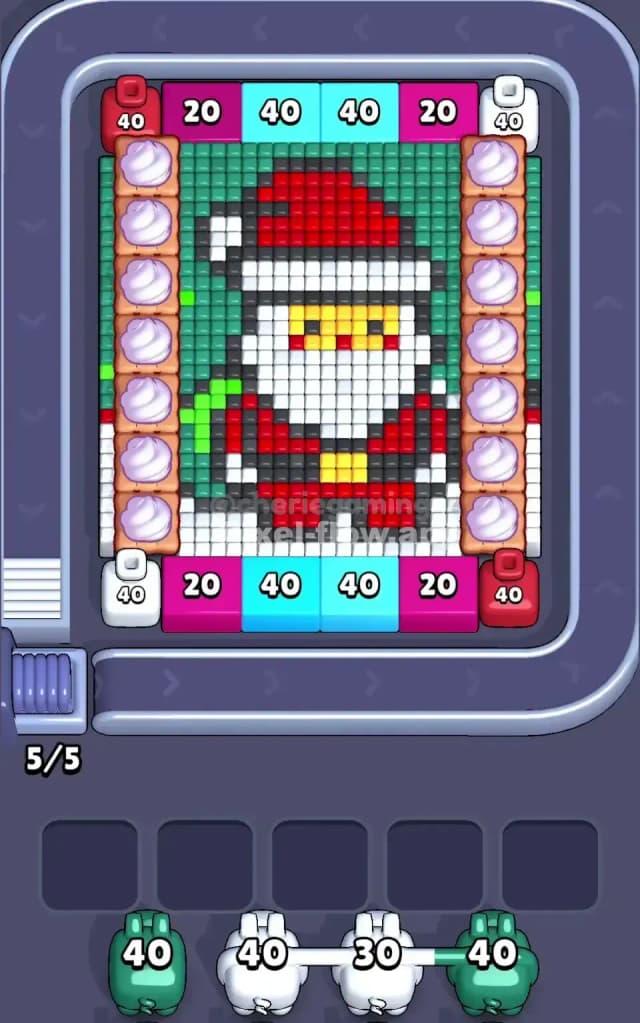
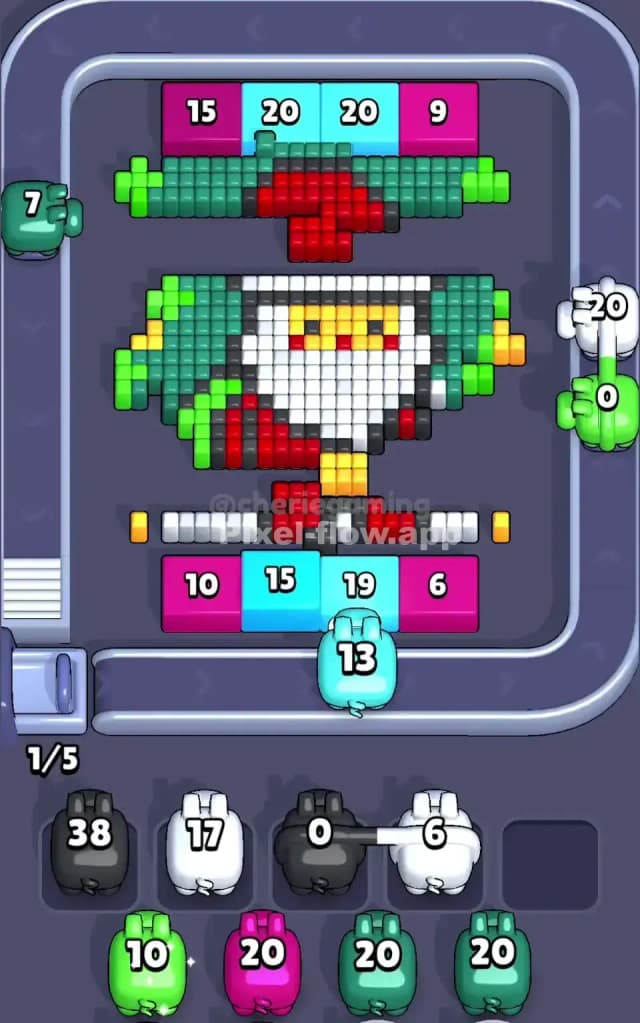
This level brings a festive challenge: a pixelated Santa Claus framed by biscuit towers and heavy industrial blocks. The main colors are exactly what you expect—Red suit, White beard, Green background—but the top and bottom edges introduce a nasty surprise of high-HP blocks in Cyan and Pink.
The sheer density of the layers here, combined with the "ammo sponge" blocks at the borders, makes Pixel Flow Level 491 a very hard level. You have to balance peeling the Santa sticker while chipping away at the heavy blocks that guard the top and bottom lanes.
Pixel Flow Level 491 Overview
Imagine a heavy Christmas card made of voxels. In the center sits Santa, complete with a big white beard, red hat, and a black outline. He is resting on a background of solid green.
However, the "frame" is the real problem.
- The Sides: Two tall columns of biscuit-and-marshmallow treats act as vertical bumpers.
- The Top and Bottom: These are the danger zones. You will see rows of large, numbered blocks (Health 20 or 40) in colors that don't match Santa at all: Cyan and Pink.
- The Trap: Because Cyan and Pink don't appear in the main Santa picture, you might think those pigs are useless. They aren't. They are the only way to destroy the heavy blocks at the very bottom and top of the screen.
The board is symmetrical, but the logic is not. The Green background is "soft" and easy to clear, while the top/bottom rows are "hard" obstacles that take forever to break.
Step by step solution walkthrough for Pixel Flow Level 491
First Color Zone to Erase in Pixel Flow Level 491
Attack the Green Background first.
Logic dictates you must open up the board width. The Green pixels surround Santa entirely and touch the biscuit towers on the sides.
- Why Green? The Green pigs come with high ammo (40). The background is a massive, connected surface. You will rarely waste a shot.
- The Biscuit Effect: In Pixel Flow, clearing the pixels touching a "wall" object often destabilizes it. By stripping away the Green layer, you effectively remove the glue holding the side biscuit towers in place. They will crumble, giving you a cleaner view of the central figure.
If you don't have a Green pig immediately, White is your second best opener. Santa’s beard is a huge, flat target that sits right on top. Clearing it exposes the face and shirt layers underneath.
How to pass Pixel Flow Level 491 without power ups or boosters
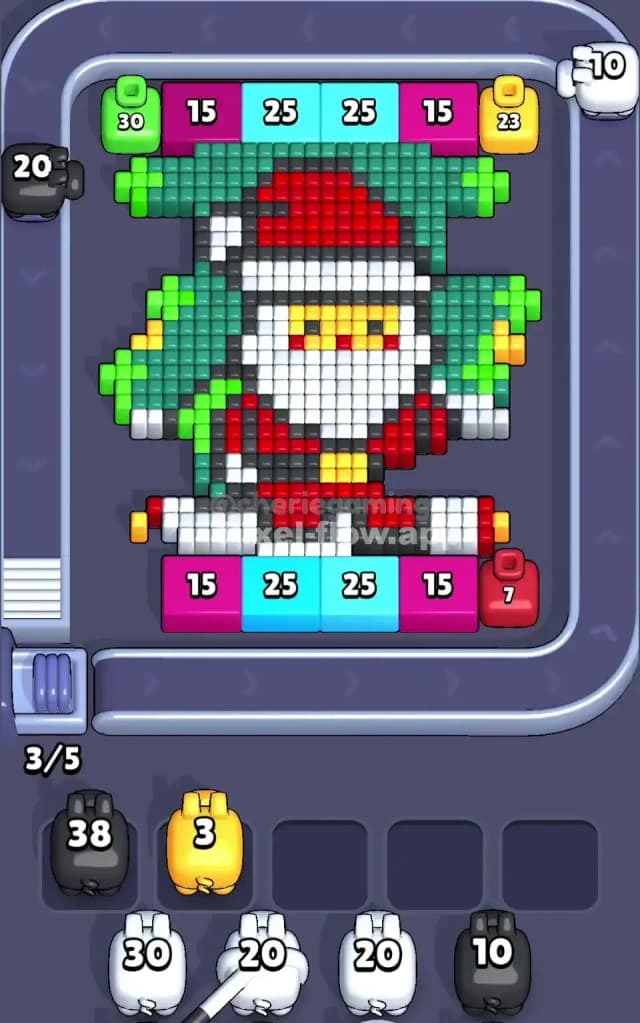
Once the Green background is shaved off, the level enters a messy middle phase. You will see Santa’s Red suit and the high-HP Cyan/Pink blocks remaining.
Manage the Cyan and Pink Pigs Aggressively. This is where most players lose. You will start receiving Cyan and Pink pigs on the belt.
- Do not let these sit in your waiting slots hoping for a "better" time.
- The Cyan and Pink blocks at the bottom of the screen block your shots to the upper layers. You must use these pigs immediately to chip away at the 40 HP and 20 HP blocks.
- If you ignore the bottom row of blocks, they act as a shield. Even if you have a Red pig for Santa's hat, if a Cyan block is physically in the way at the bottom, your geometry gets complicated.
The Red vs. Black Priority. As you clear the White beard, you will expose the Red suit and Black outlines.
- Prioritize Red over Black. The Red suit is a larger block of color.
- Black pixels are usually "wireframes" or thin lines. They are harder to hit efficiently. Clear the big Red chunks first to empty your pig’s ammo bar faster and get it off the board.
Last Details You Clean Up in Pixel Flow Level 491
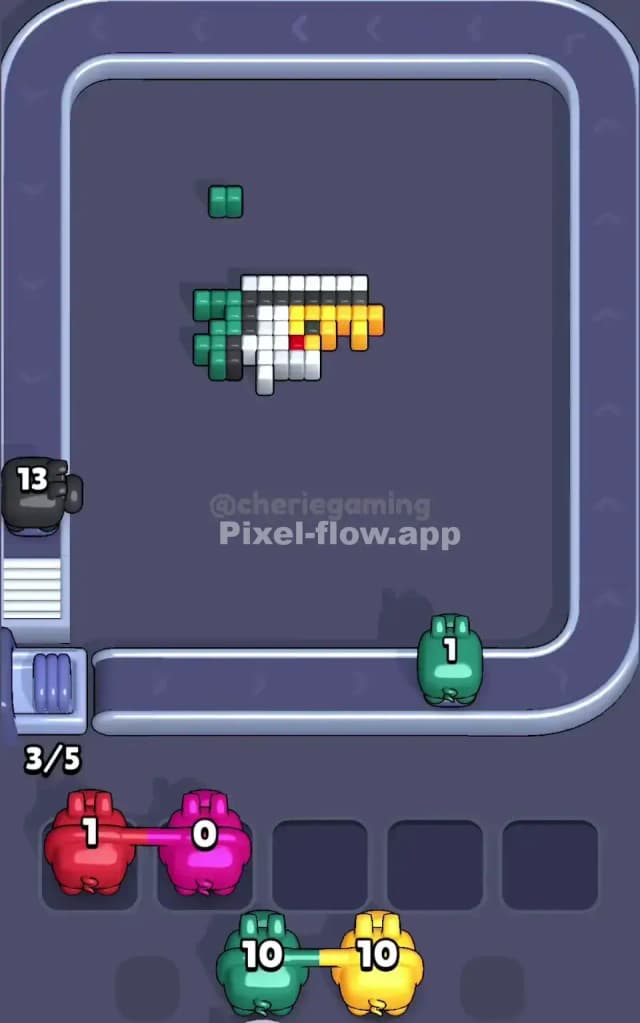
In the final moves, the board usually looks like a skeleton. The big Cyan and Pink blocks should be dust by now.
- Hidden Pixels: Look closely at Santa's face. Under the white beard and red hat, there are often single yellow or skin-tone pixels that were hiding.
- The Black Outline: The very last thing to go is usually the black outline of Santa’s boots or belt. These pixels are scattered and thin.
- Ammo Warning: Be careful with your last few pigs. If you have a Black pig with 40 ammo but only 3 black pixels left, that pig will sit on the board for a long time. Try to clear other colors first so you have empty slots to accommodate that lingering pig.