Pixel Flow Level 490 Solution | Pixel Flow 490 Walkthrough
How to beat Pixel Flow Level 490: Video solution & walkthrough. The fastest way to pass Pixel Flow 490.
Is this the wrong level layout?🤔
Pixel Flow randomizes levels for different players. Don't worry, just upload a screenshot of your board, and our AI will find the correct video instantly.
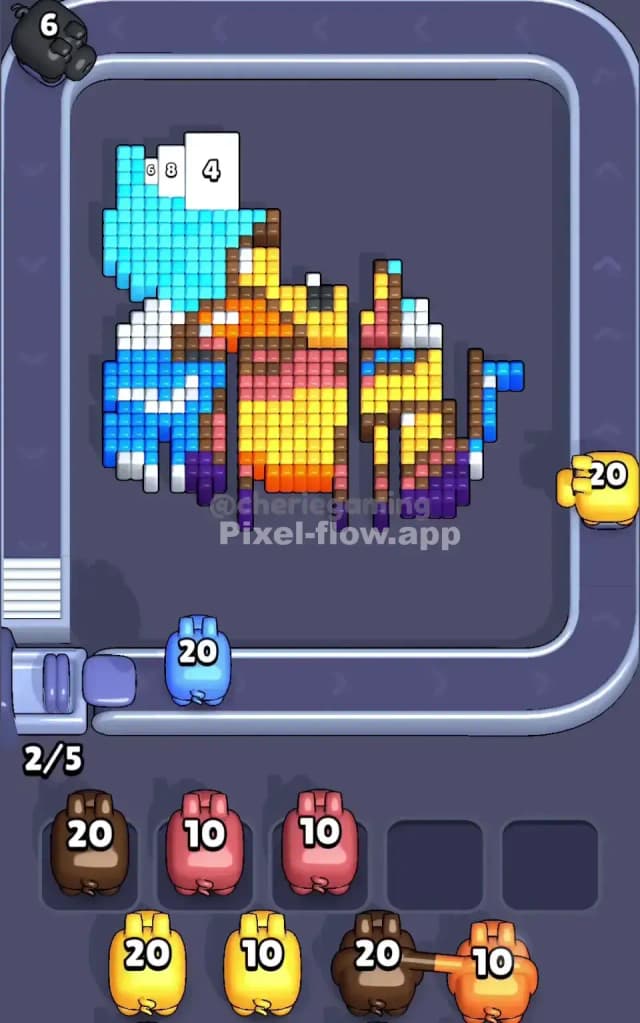

Pixel Flow Level 490 Walkthrough
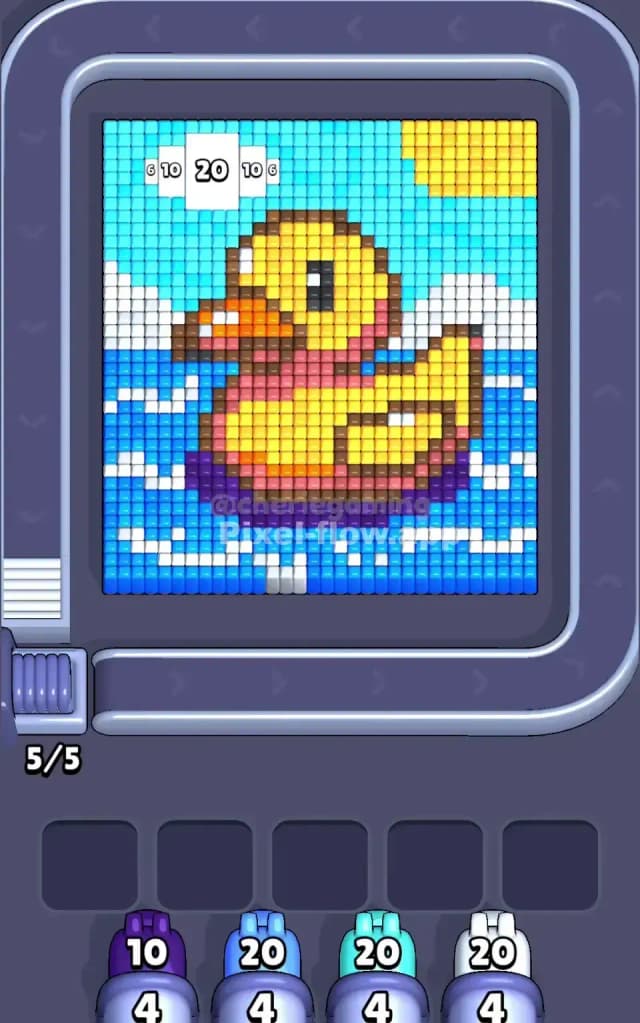
This level features a classic, bright yellow rubber duck floating on water. The main challenge here is dealing with the massive amount of blue water and sky that surrounds the central figure. You have a lot of distinct zones: the deep blue water at the bottom, the lighter cyan sky up top, and the yellow sun in the corner. The rules remain standard: clear outer layers to reveal inner ones, match pig colors to blocks, and don't let your five waiting slots get clogged with unusable pigs.
Is this level hard? No. It is not a very hard level. The color separation is clean, and the layers are distinct, meaning you rarely have to guess which color is blocking another.
Pixel Flow Level 490 Overview
The artwork depicts a cheerful yellow rubber ducky bobbing on waves. The scene is split horizontally. The bottom half is dominated by deep blue water with white wave crests scattered throughout. The top half features a light blue sky with a few white clouds on the left and right edges.
There is a distinct asymmetry here. The top right corner is occupied by a large yellow sun, which is physically separated from the duck but shares the same color palette. This is critical. Yellow pigs can clear both the duck's body and the sun, which gives you flexibility. The duck itself has a dark brown outline and an orange beak, which acts as a barrier to the inner yellow fill. The purple shadow under the duck is another small, isolated zone that can trap you if you aren't careful.
Step by step solution walkthrough for Pixel Flow Level 490
First Color Zone to Erase in Pixel Flow Level 490
I start by targeting the Deep Blue Water at the bottom.
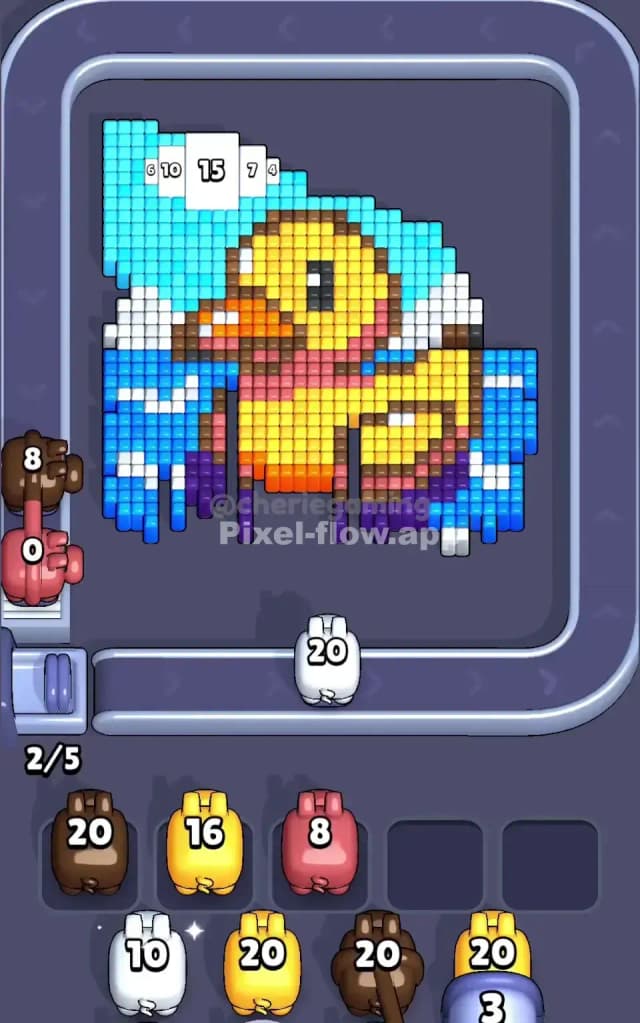
Why? Look at the layering. The water surrounds the bottom half of the duck completely. Until you clear that blue, you cannot access the white wave details or the purple shadow underneath the duck. The blue blocks are plentiful and sit on the outermost layer. Using a high-ammo blue pig here is safe and immediately opens up the board. Clearing the water first also visually isolates the duck, making it easier to see exactly where the brown outline begins and ends.
If you don't have blue pigs immediately, go for the Light Blue Sky. It functions similarly, peeling back the top layer to reveal the white clouds and the top of the duck's head.
How to pass Pixel Flow Level 490 without power ups or boosters
Once the blue water and sky are mostly gone, the board looks like a floating, jagged duck outline. This is the danger zone. You will see scattered white blocks (clouds/waves) and the brown outline of the duck.
- Prioritize the White blocks: The white waves and clouds are often "floating" on the same layer as the duck's outline. Clear these now. They are small clusters, so use low-ammo white pigs if possible. If you leave them, they might block access to the duck's inner layers later.
- Crack the Outline (Brown): You cannot clear the massive yellow body of the duck until the brown outline is breached. Watch for brown pigs. Even a small brown pig is valuable here. You need to break the perimeter.
- The Sun Trap: Don't forget the yellow sun in the top right. It is likely exposed early. If you have a Yellow pig but the duck is still locked behind its brown outline, use the pig on the sun. This prevents the pig from clogging your slot while you wait for the duck to open up.
- The Beak: The orange beak is small. Do not pull an orange pig into your slot unless you see the beak is clearly exposed and reachable. Otherwise, let it ride the belt.
Last Details You Clean Up in Pixel Flow Level 490
The end game usually involves the dense center of the duck. You will likely have cleared the brown outline and the orange beak. What remains is a solid block of Yellow (the body) and potentially the Purple shadow at the waterline if you missed it earlier.
The final few moves are satisfying. You will likely just be feeding high-ammo yellow pigs into the center of the board to melt the duck's body. Watch out for the duck's eye (black/white pixels) buried deep inside the yellow layers. Ensure you have a slot open for a black or white pig to snipe those last few pixels, or you might get stuck with a waiting yellow pig that has no targets left.