Pixel Flow Level 498 Solution | Pixel Flow 498 Walkthrough
How to beat Pixel Flow Level 498: Video solution & walkthrough. The fastest way to pass Pixel Flow 498.
Is this the wrong level layout?🤔
Pixel Flow randomizes levels for different players. Don't worry, just upload a screenshot of your board, and our AI will find the correct video instantly.
Pixel Flow Level 498 Walkthrough
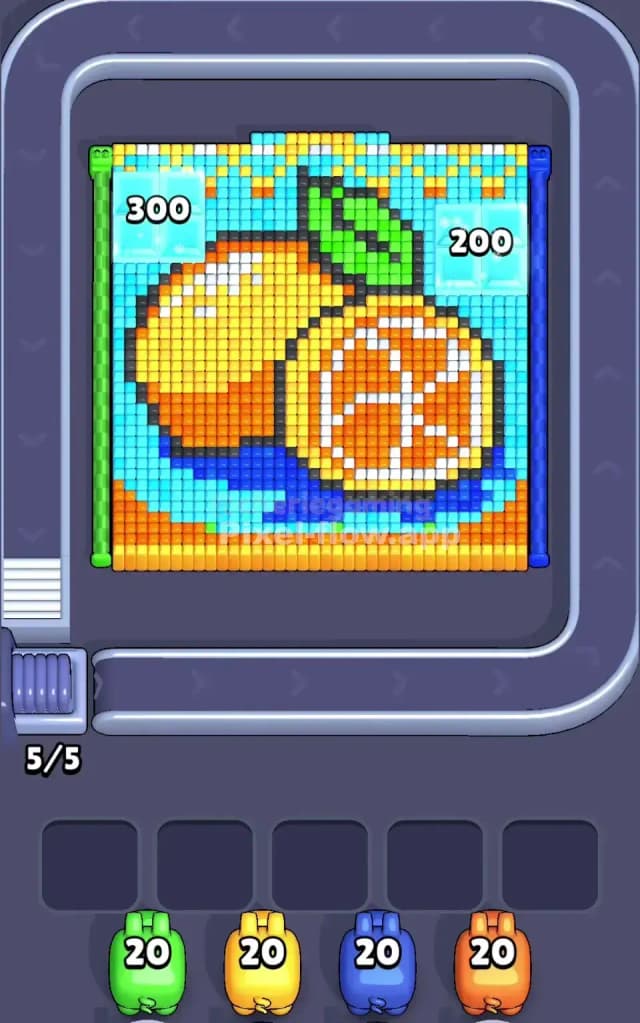
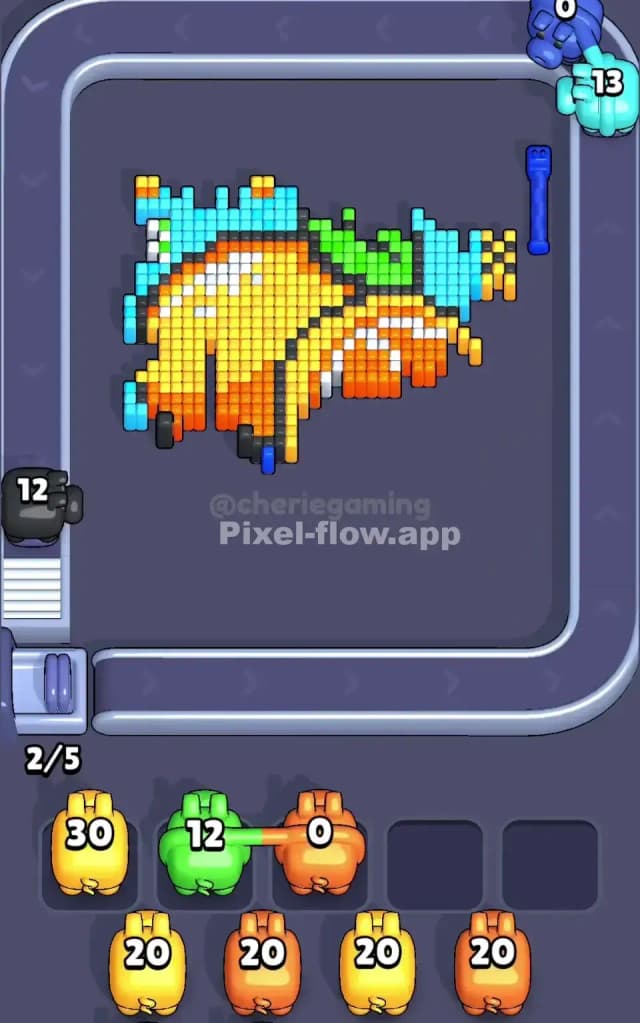
You are looking at a bright, citrus-themed pixel art puzzle featuring two oranges—one whole yellow fruit on the left and a sliced orange half on the right. They sit on a dark blue shadow, all framed by a light blue background. The major gimmick here is the pair of massive Ice Blocks in the top corners: the left one has 300 HP and the right has 200 HP.
The rules are standard: your pigs shoot cubes of their matching color. However, those Ice Blocks are huge damage sponges that protect the pixels behind them. Because you have to chew through 500 total HP of ice while managing your pig queue, the margin for error is razor-thin. If you pull the wrong colors while the ice is still blocking the shot, your waiting slots will jam instantly. This is a very hard level.
Pixel Flow Level 498 Overview
Think of this as a breakfast scene that hates you. The subject is simple fruit, but the layout is a trap. The artwork is dominated by a large Yellow sphere (the whole orange) on the left and a detailed Orange cross-section on the right. A bright Green leaf sits proudly on top.
The asymmetry is critical here. The left side is "heavier" because of the 300 HP Ice Block and the dense block of Yellow pixels. The right side is slightly easier to chip away at because the 200 HP Ice Block breaks faster, and the Sliced Orange contains more color variety (White pith, Orange flesh), allowing you to cycle through different pigs more frequently. The bottom of the board is anchored by a Dark Blue shadow and a floor of mixed orange/yellow tiles. This bottom section is your safe zone; the top is where you will likely lose.
Step by step solution walkthrough for Pixel Flow Level 498
First Color Zone to Erase in Pixel Flow Level 498
Ignore the ice for a second. Your first move must be to clear the Dark Blue shadow and the Green leaf.
Here is why: The Dark Blue shadow is the lowest layer on the board vertically. By clearing it, you don't necessarily "drop" the picture, but you remove a color that is scattered awkwardly at the bottom. It’s an easy win to free up slot space. The Green leaf is also vital. It sits high up, right between the two Ice Blocks. Clearing the Green early prevents those pigs from clogging your bar later when you are desperately trying to break the ice.
Once Green and Dark Blue are thinned out, switch your focus entirely to Yellow. The whole fruit on the left is a massive, solid chunk of yellow voxels. It is the safest "ammo dump" in the level. If you see a Yellow pig, use it. You can almost always fire a Yellow pig without thinking because that fruit is so thick.
How to pass Pixel Flow Level 498 without power ups or boosters
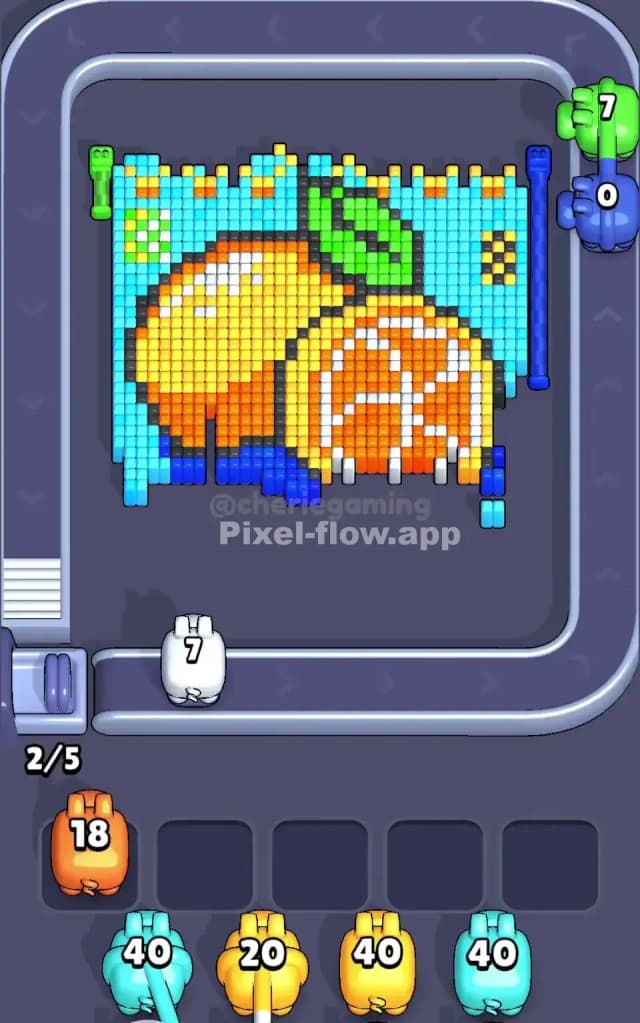
The mid-game is dangerous. At this point, the fruit is half-eaten, and you probably have Light Blue pigs clogging your conveyor belt.
Do not deploy Light Blue pigs yet. This is the primary trap of Level 498. The Light Blue pixels are the background. A huge chunk of that background is physically blocked by the 300 and 200 Ice Blocks. If you put a Light Blue pig in a waiting slot, it will sit there, useless, staring at the ice it cannot shoot through.
Instead, force the game to give you Orange and White pigs. Use them to hollow out the right-side fruit slice. As you clear the inner White pith and Orange flesh, you might expose angles to hit the Ice Blocks or simply exhaust the non-background colors. Your priority list in the mid-game is:
- Yellow (keep shaving the left fruit).
- Orange/White (finish the right fruit).
- Black (the outlines).
- Light Blue (ONLY if you are sure the target isn't behind ice).
If your slots are full and you have a pig that matches the Ice Block color (often they take hits from any color, or specific "null" shots), fire away. But usually, you just have to clear every other available pixel to force the game to let you target the obstruction.
Last Details You Clean Up in Pixel Flow Level 498
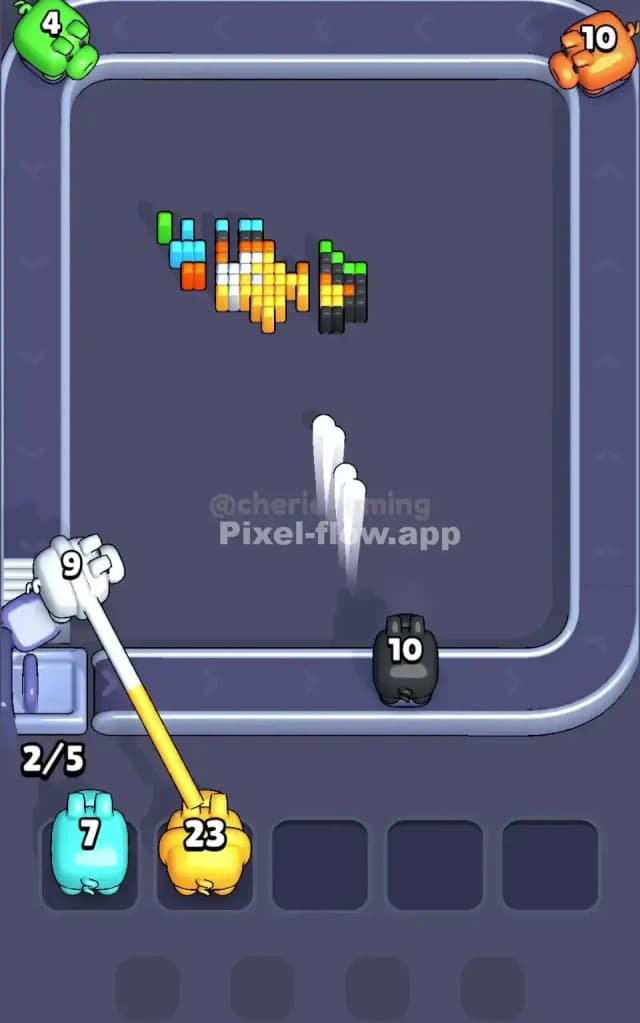
The end game is usually a mess of Black outlines and the stubborn Light Blue background.
Once the Ice Blocks finally shatter (or the game logic removes them because you cleared the foreground), the Light Blue background becomes accessible. You will likely have a few stray Black pixels from the fruit's outline floating in the air. Clear the outlines first. The Black pixels are often the "skeleton" holding the structure together. Snap the skeleton, and the remaining Light Blue background is just a cleanup job. Watch out for single White pixels that might have been hiding inside the sliced orange—they are easy to miss against the bright background.