Pixel Flow Level 509 Solution Walkthrough | Pixel Flow 509
How to solve Pixel Flow level 509? Get instant solution for Pixel Flow 509 with our step by step solution & video walkthrough.

Pixel Flow Level 509 Overview
The Board: A Cute Creature in a Colorful Frame
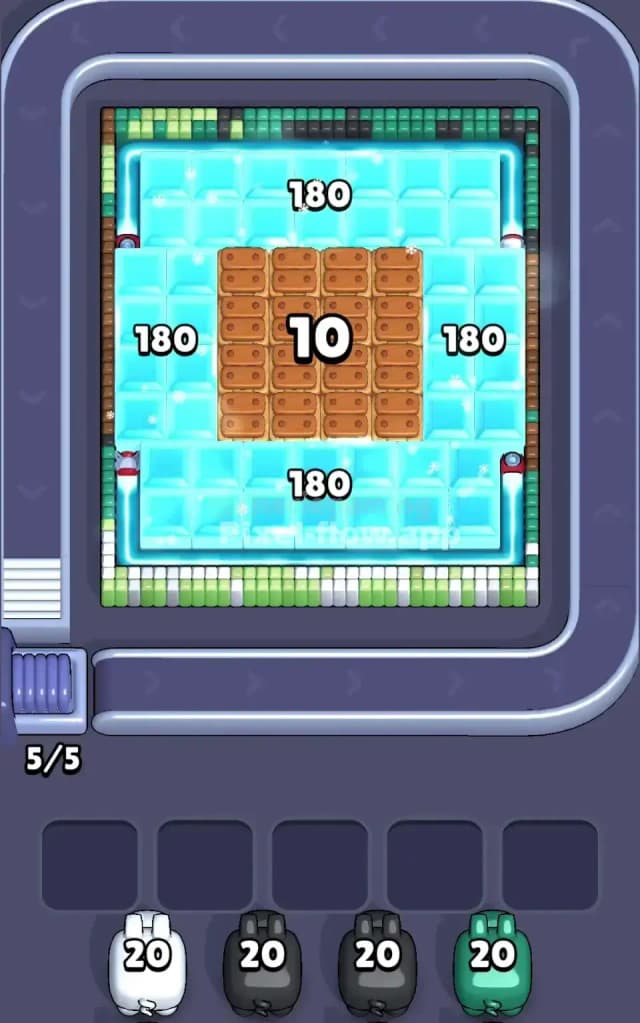
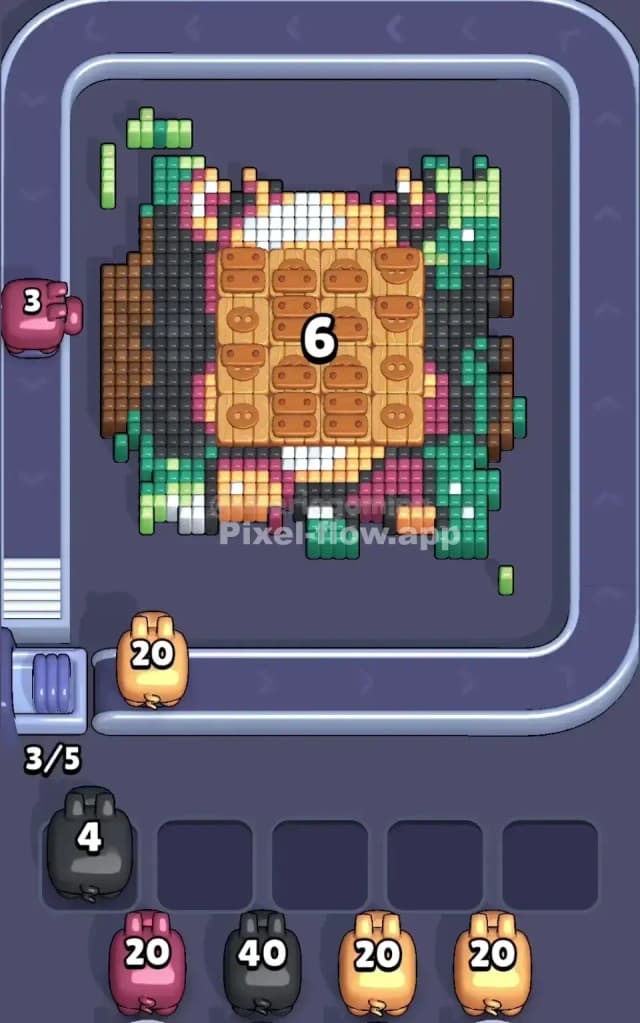
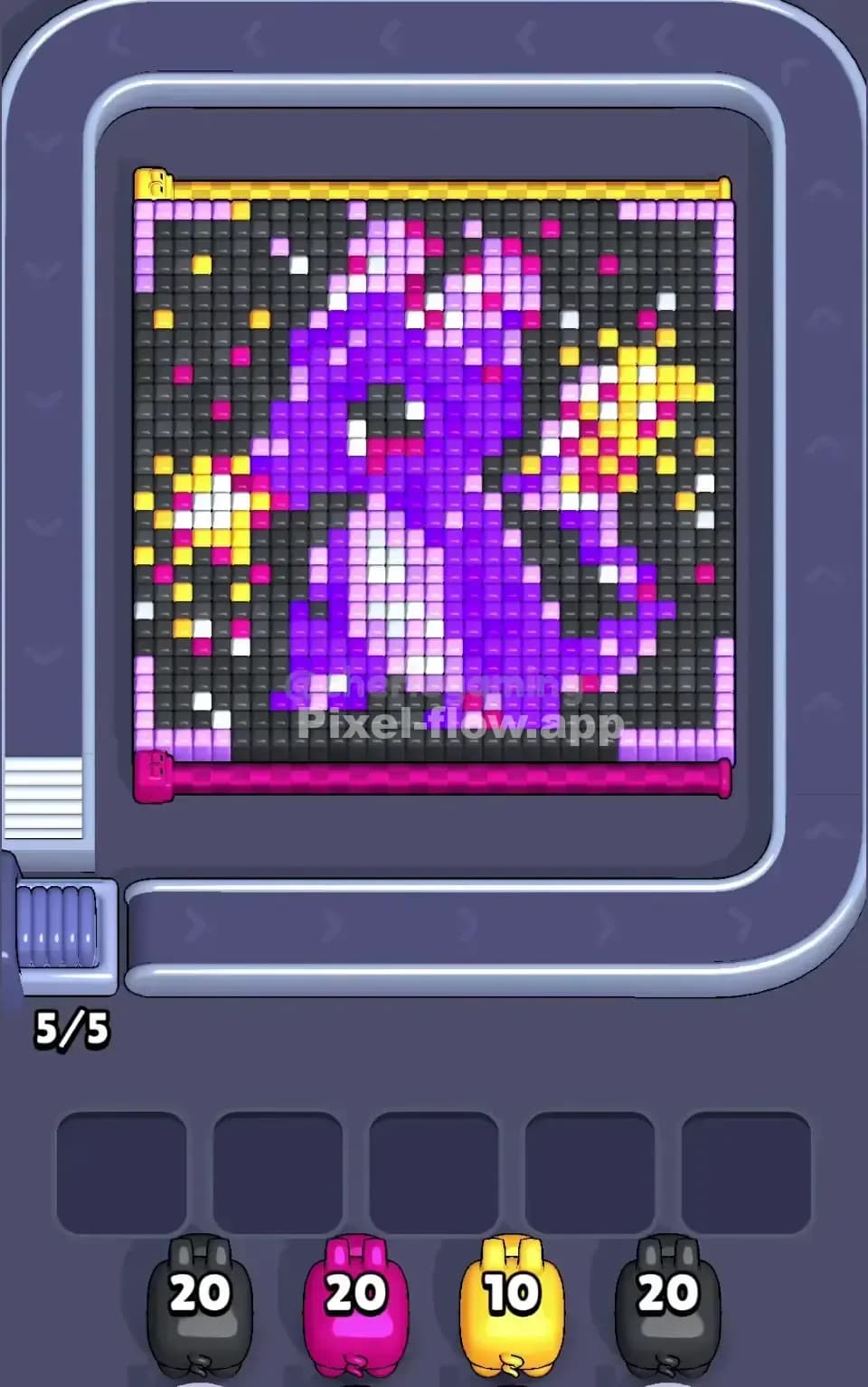
Pixel Flow Level 509 presents you with a charming pixel-art character—a cheerful creature with a round face, big eyes, and a friendly expression—set against a vibrant layered background. The dominant colors are cyan (light blue), which forms the bulk of the sky and outer areas, along with warm cream and pale yellow tones that make up the character's face and body. You'll also see brown accents in the hair and ears, green foliage on the sides (suggesting a natural setting), and a striking red mouth that stands out against the softer palette. White cubes frame the edges, while the character is centered and clearly the focal point. What makes Pixel Flow Level 509 challenging is that these colors are stacked in distinct layers—you won't be able to reach and eliminate the deeper, inner colors until you've cleared the outer shells first.
The Win Condition and Deterministic Nature
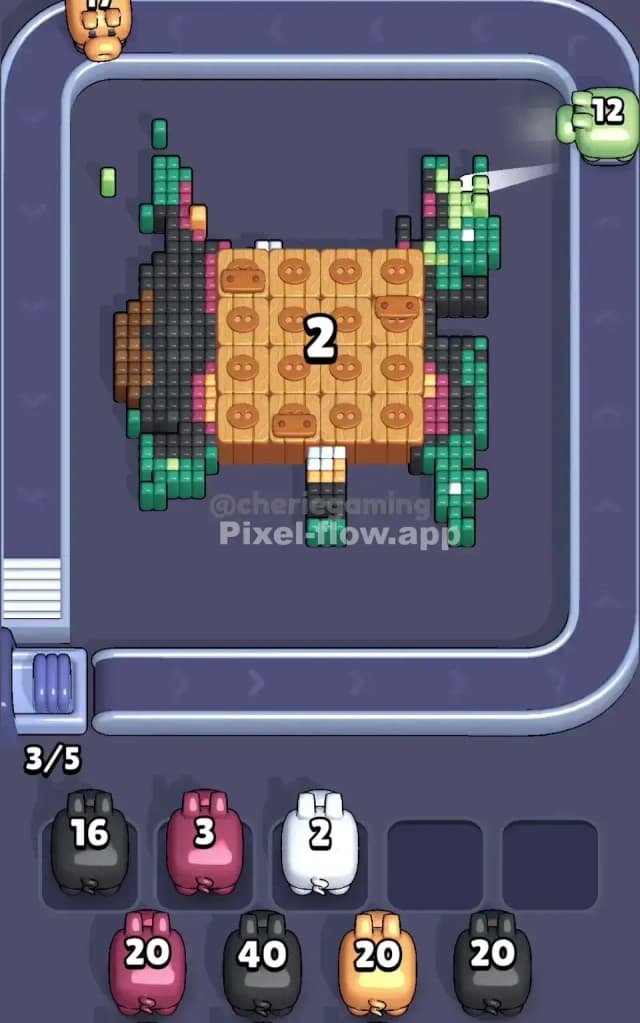
Your goal in Pixel Flow Level 509 is straightforward: clear every single voxel cube from the board. The pigs arrive in a fixed order and each has exactly 20 ammo, meaning every move is deterministic and perfectly reproducible once you know the sequence. The five waiting slots at the bottom can hold stuck pigs—those who've run out of valid targets but still have ammo remaining. If you fill all five slots and can't clear their ammo, you'll lose. This means Pixel Flow Level 509 isn't about luck; it's about planning your pig order so that each one finds exactly enough targets to empty its clip before the next pig arrives.
Why Pixel Flow Level 509 Feels So Tricky
The Cyan Choke Point
The massive cyan background is your biggest bottleneck in Pixel Flow Level 509. There are easily over 100 cyan cubes scattered across the board, and if your cyan pig arrives before you've exposed enough of the character's features, it'll burn through its 20 ammo and still leave you with a half-cleared mess. The cyan layer is so thick that you can't simply blast through it linearly—you need to strategically trigger other colors first, peel back those outer shells, and create a secondary wave of cyan targets that align perfectly with the cyan pig's ammo supply. I found myself repeatedly getting stuck with a cyan pig dropping into the waiting buffer because I'd underestimated how much planning was needed to sequence its arrival.
The Awkward Cream and Yellow Puzzle
The character's face and body are made up of cream and pale yellow tones, and here's where Pixel Flow Level 509 gets sneaky: these colors form two distinct regions that aren't always naturally exposed together. The cream and yellow cubes are tucked behind cyan, meaning you can't target them until you've cleared enough sky. But if you're too aggressive with cyan early on, you'll expose cream and yellow piecemeal, and your dedicated pigs for those colors might not have ammo left when they arrive. I nearly failed Pixel Flow Level 509 because I let a cream pig drop into the buffer with 8 ammo still unused—it simply couldn't find any more cream targets after I'd cleared the face too unevenly.
The Brown and Green Sidebar Threat
The brown (in the hair and ears) and green (flanking the character) cubes form narrow, disconnected patches that require careful sequencing to fully clear. Early missteps mean your brown or green pig arrives to find only 5–8 valid targets instead of all 20, forcing it into the waiting slots. What bothered me most about Pixel Flow Level 509 was realizing that these "fringe" colors needed to be targeted in a specific order—green first on one side, then brown, then green again—to keep the ammo counts synced. It's the kind of spatial puzzle that doesn't reveal itself until you've failed once or twice and started mapping out the exact layer structure.
Step-by-Step Strategy to Clear Pixel Flow Level 509
Opening: Build Your Foundation Without Wasting Slots
Start Pixel Flow Level 509 by sending your blue pigs first—they arrive early in the queue and the blue cubes are plentiful and easy to spot (they're clustered at the edges and corners as decorative frames). Let them each burn through their full 20 ammo without worry; blue is abundant and well-distributed, so neither blue pig will get stuck. This keeps your waiting slots empty and gives you breathing room to plan the rest of the level. While the blue pigs are working, keep an eye on the upcoming queue and start mapping where white, brown, and red sit on the board. Don't launch into cyan yet—that's your trap door if you go too early.
Next, send your red pig. The red mouth is a small, concentrated target, and your pig will burn through maybe 8–12 ammo before it's gone. Park this pig in a waiting slot if it has leftover ammo; don't panic if it doesn't empty completely. You still have at least two free slots, and red is too small to clear everything on its own. The key here is to stay patient and reserve your heavy hitters (cyan) for when you've softened the board.
Mid-Game: Layer Peeling and Strategic Parking
Once red is placed, it's time to tackle the brown in the hair and ears, starting with the upper-left brown section. Send your brown pig and let it work its way through the brown cubes methodically. You'll likely get about 15–18 ammo spent, with 2–4 remaining—and that's okay. Drop it into a waiting slot; we'll come back to it. This move is crucial for Pixel Flow Level 509 because clearing the brown exposes cream and yellow underneath, which sets up your next pigs beautifully.
Now send your green pig to handle the foliage on the left side. Green is another distributed color, and you should be able to get solid use out of your 20 ammo by targeting the left flank thoroughly. If you've sequenced brown first, green will find plenty of cubes to shoot. Aim to empty or nearly empty the green pig's ammo—if it still has 5+ shots left, park it in a waiting slot.
By mid-Pixel Flow Level 509, you should have at most three pigs in the waiting buffer, with at least two slots still free. This is your safety net. Now comes the big moment: cyan. Send your first cyan pig and let it blast through the upper-right and top sections of the sky. Your goal is to spend all 20 ammo clearing accessible cyan cubes without overshooting into areas you haven't prepped. The cyan pig should move naturally through the board; if it empties completely, fantastic. If not, park it and prepare for the second cyan pig.
End-Game: Closing Out Without a Jam
Your second cyan pig arrives next, and this is where precision matters most in Pixel Flow Level 509. By now, you've exposed the cream and yellow layers beneath the initial cyan, so your second cyan pig will find plenty of new targets in those exposed areas. Sequence this pig to sweep through the remaining sky and any cyan cubes adjacent to the newly visible cream and yellow. With smart play, both cyan pigs should empty or come very close.
Now handle cream and yellow in quick succession. These are smaller color pools, and with the face now fully exposed, your dedicated pigs should find exactly the right number of targets. White is the final color—it frames the edges and disappears quickly. Send your white pig last, and it should clean up the remaining border cubes with ease.
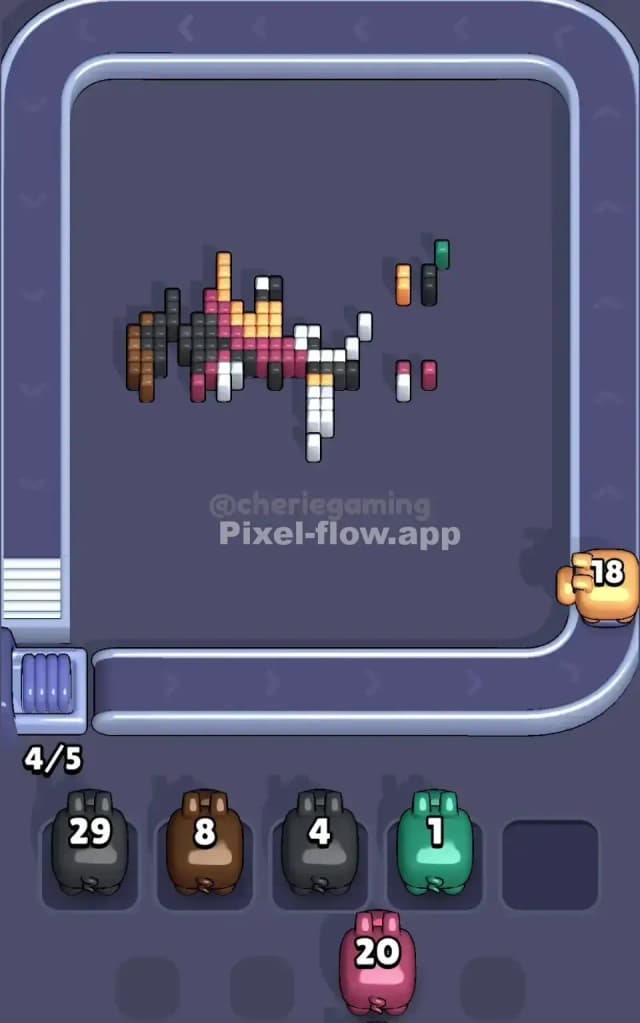
By the end-game phase of Pixel Flow Level 509, you want to have only one pig in the waiting buffer, if any. Count ammo carefully as your last three pigs arrive; if a pig will arrive with no valid targets, you've made a sequencing error earlier. The final pig should always empty completely, leaving you with a clean board and a win.
The Logic Behind This Pixel Flow Level 509 Plan
Exploiting Order, Ammo, and Spatial Structure
The strategy above works because it respects the fundamental rules of Pixel Flow Level 509: pig order is fixed, ammo is deterministic, and waiting slots are finite. By sending blue first, you're not trying to solve the puzzle—you're buying time and keeping your buffer empty. By parking red, brown, and partially spent green in slots, you're reserving space for potential stuck pigs while ensuring that each of those pigs has spent most of its ammo where it counts. Cyan is your heaviest lifter, so you hold it until the board structure is revealed, which maximizes the number of targets available and ensures both cyan pigs have meaningful work to do.
The key insight for Pixel Flow Level 509 is that the board's layer structure—outer sky, middle character, inner details—dictates the optimal pig sequence. You don't fight the layers; you work with them. Clear the outer shells first (blue, red, brown, green), expose the middle (cream and yellow), then sweep the remaining outer color (cyan), and finish with final touches (white).
Staying Calm and Counting Ahead
Pixel Flow Level 509 requires you to watch the pig queue at the bottom and mentally count how many cubes of each color remain on the board. Every time a pig shoots, you're one ammo closer to either completion or a waiting-slot crisis. The pressure builds in the mid-to-late game, but if you've followed the strategy above, you'll have margin for error. Keep at least two waiting slots free at all times, count your remaining cubes before sending each pig, and look two or three pigs ahead. When your fourth pig is on the board, mentally rehearse what the fifth pig will face. This proactive thinking turns Pixel Flow Level 509 from a frustrating guessing game into a satisfying logic puzzle.
You've got this—Pixel Flow Level 509 yields to patience and planning.