Pixel Flow Level 513 Solution | Pixel Flow 513 Walkthrough
How to beat Pixel Flow Level 513: Video solution & walkthrough. The fastest way to pass Pixel Flow 513.
Is this the wrong level layout?🤔
Pixel Flow randomizes levels for different players. Don't worry, just upload a screenshot of your board, and our AI will find the correct video instantly.
Pixel Flow Level 513 Walkthrough
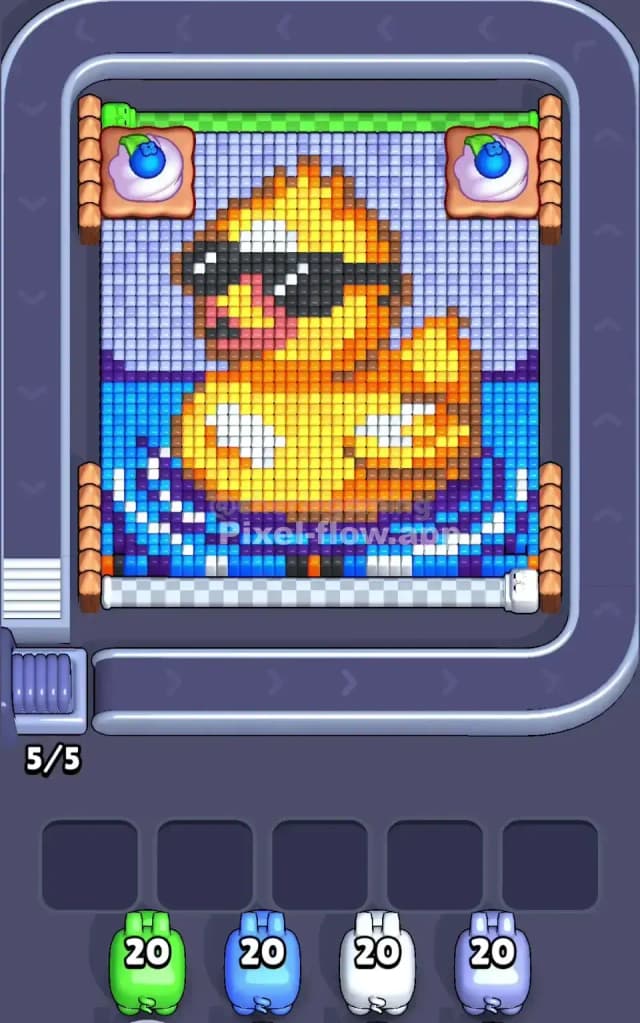
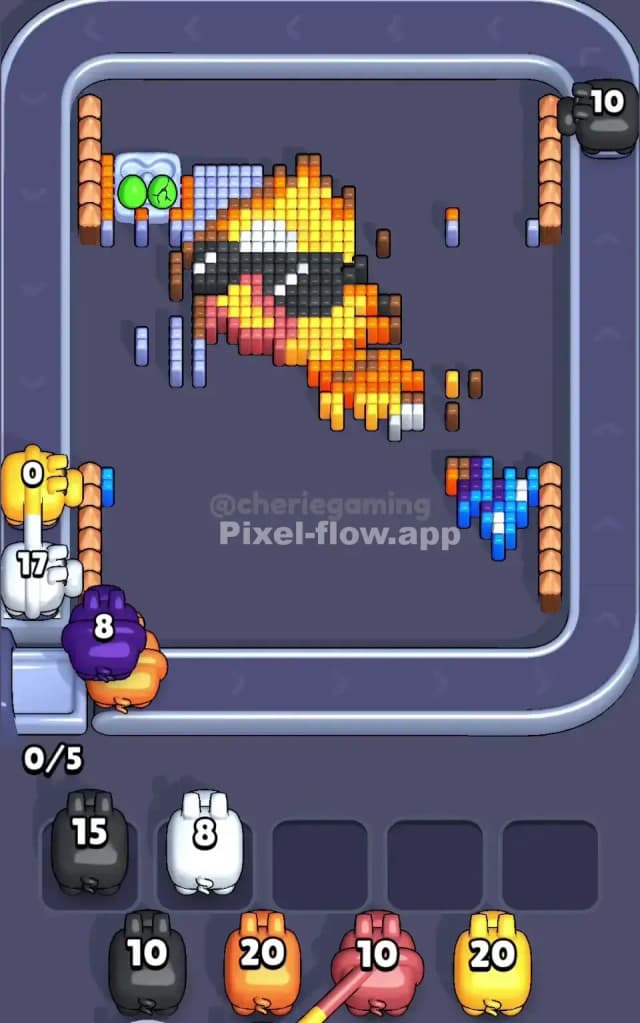
This level features a "Cool Duck" floating in water. The central figure is a classic yellow rubber duck wearing black sunglasses. The duck sits in a pool of blue and purple water with white ripples, and the background is a lighter lavender-blue sky.
The rules for Pixel Flow Level 513 are standard but tight. You have 5 slots in your waiting area. Pigs come down the conveyor belt. If you tap a pig, it shoots blocks of its color. If the pig runs out of ammo, it leaves. If it still has ammo but no targets, it gets stuck in your waiting slot. Fill all 5 slots with useless pigs, and you lose.
Is this a hard level? Yes, it is very hard. The layering is deceptive. The large blocks of blue water at the bottom and the lavender sky at the top hide critical colors needed to clear the duck itself.
Pixel Flow Level 513 Overview
Imagine a rubber duck chilling in a pool on a sunny day. That's the vibe. The artwork is dominated by three main zones:
- The Sky: A huge block of light lavender/periwinkle pixels at the top.
- The Water: A mix of dark blue, cyan, and purple at the bottom, striped with white "ripple" pixels.
- The Duck: A dense core of yellow and orange, with black sunglasses right in the middle.
The asymmetry here is vertical. The top half is almost entirely "background" color (lavender), while the bottom half is a complex mix of water colors. The duck is the "meat" of the sandwich in the middle. The danger lies in the white pixels. White is scattered everywhere—in the sunglasses' reflection, on the duck's wing, and as ripples in the water. This makes white pigs risky; they might clear some ripples but get stuck because the sunglasses' white reflection is buried too deep.
Step by step solution walkthrough for Pixel Flow Level 513
First Color Zone to Erase in Pixel Flow Level 513
Prioritize the Lavender Sky (Light Purple/Blue).
Start at the top. The lavender background is the largest, most accessible single color block. It sits on the top layer and doesn't require digging to find. By clearing this massive chunk first, you expose the top of the duck's head and the upper rim of the sunglasses.
Narratively, you are "draining the sky." Logically, this is about ammo efficiency. The lavender pigs usually come with high ammo counts (20+). If you don't clear the big sky block immediately, those pigs will clog your slots because there are no other lavender targets on the board. Get them out of the way so you can focus on the messy water section.
How to pass Pixel Flow Level 513 without power ups or boosters
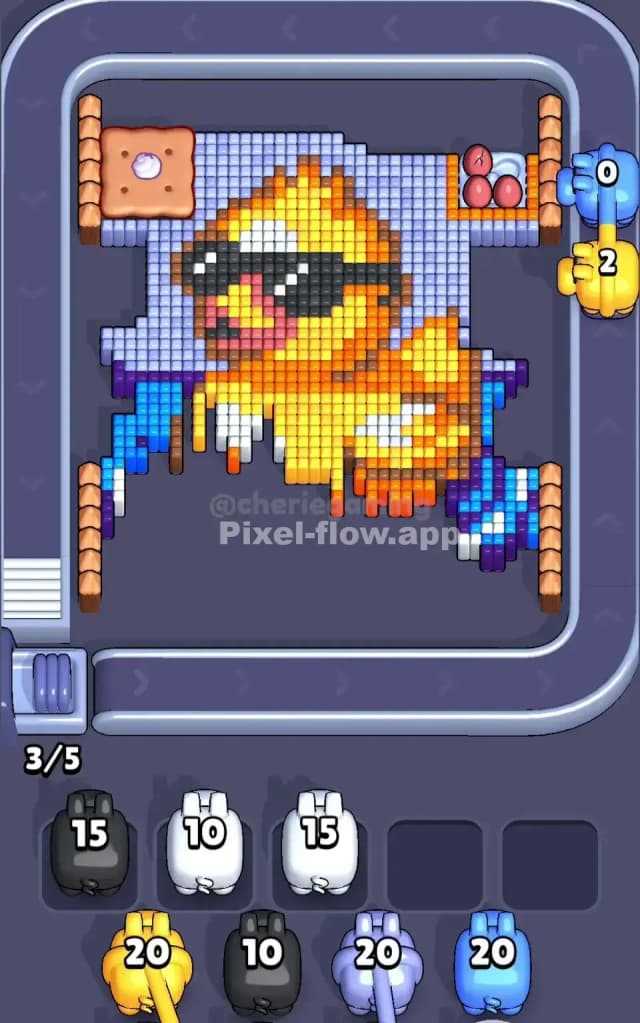
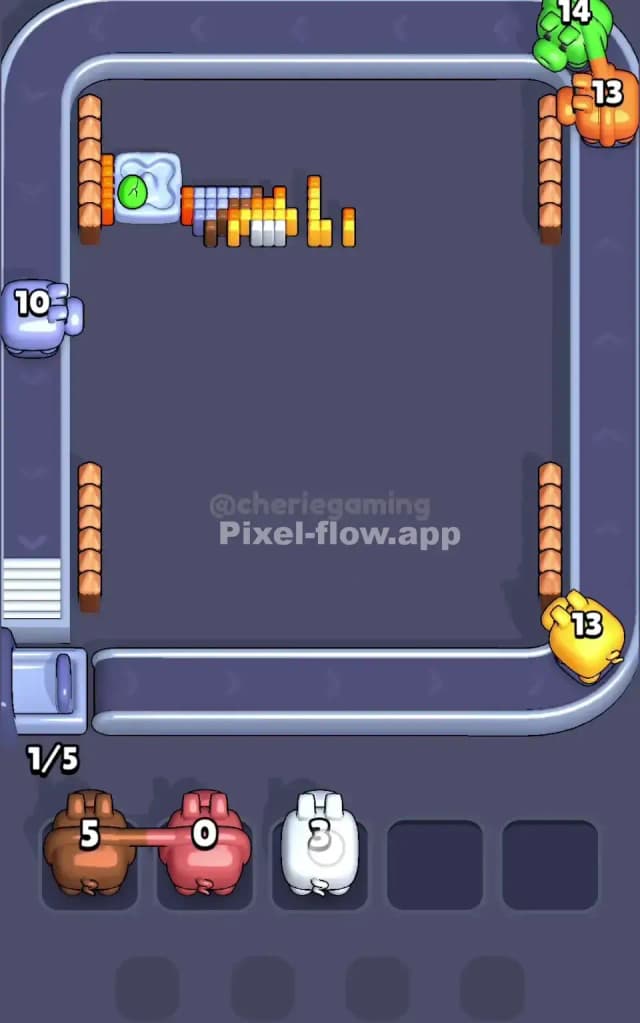
Once the sky is gone, the board looks half-destroyed. You have the duck's head sticking out, but the bottom is still submerged in water. This is the danger zone.
- Attack the Water Layers Carefully: You will see Cyan (light blue), Dark Blue, and Purple pigs. Do not grab them randomly. Look at the water line. The water is layered. You often need to clear the Cyan or Dark Blue rows to expose the bottom of the yellow duck. If a Purple pig comes up, check if the purple pixels are on the surface or buried behind cyan. If buried, let the pig pass.
- The White Pixel Trap: This is the hardest part of Pixel Flow 513. You will see white pigs early. Wait. The white pixels are scattered: some are water ripples (surface), some are wing details (middle layer), and some are glare on the sunglasses (deep layer). If you take a white pig too early, it will shoot the ripples and then get stuck with 10 ammo because the sunglasses are still covered by black pixels. Only take a white pig if you see exposed white blocks in multiple areas (water AND wing).
- The Sunglasses (Black): The black pixels form a solid bar across the duck's face. They are usually buried under the orange/yellow of the face or the side of the head. Do not pick a black pig until you have shaved off the orange pixels on the left or right of the face.
Last Details You Clean Up in Pixel Flow Level 513
In the final moves, you will likely be left with the core of the duck. The water is drained, the sky is gone. You are looking at:
- Yellow/Orange Body: The bulk of the duck.
- Black Sunglasses: A few stubborn blocks.
- Deep White: The glare on the glasses.
The very last thing you usually clear is the white glare on the sunglasses or the final yellow blocks of the beak. Ensure you save a Yellow pig for the end. Often, players clear the orange shading and realize they wasted their last Yellow pig on the body earlier, leaving them with no way to clear the beak underneath. Keep one high-ammo Yellow pig in reserve if possible, or cycle the belt until a fresh one appears before filling your slots with useless colors.