Pixel Flow Level 52 Solution Walkthrough | Pixel Flow 52

How to solve Pixel Flow level 52? Get instant solution for Pixel Flow 52 with our step by step solution & video walkthrough.

Share Pixel Flow Level 52 Guide:
Pixel Flow Level 52 Gameplay
Pixel Flow Level 52 Solution 1
Pixel Flow Level 52 Solution 2
Pixel Flow Level 52 Solution 3

Pixel Flow Level 52 Overview

Board Layout and Color Composition

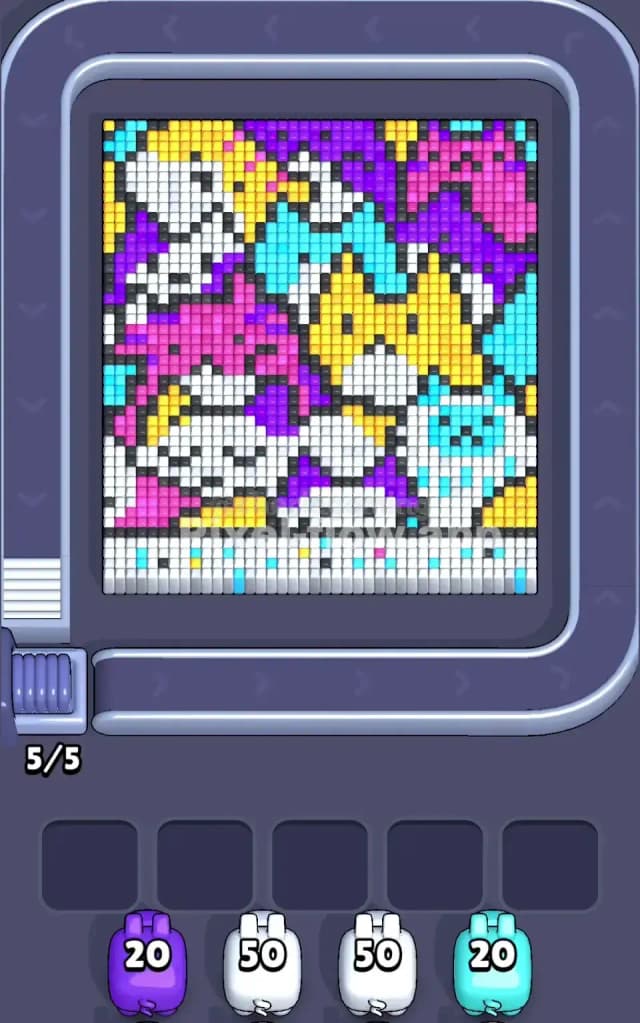
Pixel Flow Level 52 presents a vibrant, multi-layered voxel puzzle that'll test your planning skills right from the start. The board features a dense mix of five primary colors—purple, white, yellow, cyan, and black—arranged in an intricate geometric pattern that spans the entire grid. What makes this level particularly interesting is the way these colors interlock and overlap, creating natural "zones" that'll guide your strategy. The bottom section is dominated by white and light gray cubes, which form the foundation layer you'll need to expose and clear systematically. Above that, you'll find bold blocks of purple, yellow, and cyan scattered throughout the middle and upper regions, with black cubes serving as natural dividers between color patches.

Win Condition and Deterministic Nature

To conquer Pixel Flow Level 52, you'll need to clear every single voxel cube from the board by strategically deploying your color-matched pigs. Your current pig queue shows a purple pig with 20 ammo, two white pigs with 50 ammo each, and a cyan pig with 20 ammo—that's 140 total shots across four pigs. Here's the crucial insight: every pig's ammo count and every cube's position are completely deterministic, meaning there's exactly the right number of matches if you sequence your moves correctly. This isn't luck; it's a logic puzzle wearing a colorful disguise. Your goal is to drain all ammo while exposing deeper layers and never jamming all five waiting slots with pigs that have nowhere left to shoot.


Why Pixel Flow Level 52 Feels So Tricky

The White Cube Bottleneck

The most dangerous trap in Pixel Flow Level 52 is the sheer volume of white cubes scattered across the board. You've got two white pigs, each packing 50 ammo, and they need to find valid white targets throughout the entire puzzle. Here's where it gets scary: white cubes are interspersed with other colors in a way that forces you to be patient. If you rush your purple and cyan pigs and expose white cubes in a chaotic pattern, you might find yourself in a situation where one white pig still has 20+ ammo but can't see a single white cube left on the board. That pig then drops into a waiting slot, and if you've already filled slots with other stuck pigs, you're done for. The white bottleneck is the primary reason Pixel Flow Level 52 demands you think several moves ahead rather than reacting to what's visible right now.

Awkward Color Pockets and Hidden Layers

Scattered throughout Pixel Flow Level 52, you'll notice isolated pockets of purple and cyan cubes surrounded by white or yellow blocks. These pockets create a secondary trap: they tempt you to spend ammo early on colors that seem "done," but they're actually guarding deeper layers you haven't even seen yet. For example, a small purple cluster in the middle-right section might look like a quick win, but clearing it could expose a huge white zone underneath, and your white pigs might be sitting in the waiting slots by then with no way to help. Similarly, the cyan cubes at the bottom corners are sparse enough that your cyan pig could become stranded if you've already cleared most of them without a systematic plan.

The Moment It Clicked for Me

I'll be honest: my first attempt at Pixel Flow Level 52 felt chaotic. I fired pigs almost randomly, watched my waiting slots fill up with stuck pigs around move 8, and hit a dead end with purple ammo still in reserve. The frustration was real. But then I realized something that changed everything—I needed to map out the colors by depth before firing a single shot. I spent a moment analyzing which color patches seemed to overlap others, and suddenly the solution became clear: I needed to treat the white foundation as the final boss, not the first target. Once I committed to clearing purple and cyan strategically to expose and organize the white cubes, and then deploying my white pigs with surgical precision, Pixel Flow Level 52 went from impossible to inevitable. That shift from reactive to deliberate planning is what separates a jam from a clean victory.


Step-by-Step Strategy to Clear Pixel Flow Level 52

Opening: Secure Your Buffer and Target Purple First

Your first move in Pixel Flow Level 52 should be to send the purple pig down the conveyor belt immediately. Purple is your opening key because it's the least numerous color and serves as a useful "scout" to expose what lies beneath. As your purple pig fires and destroys its 20 targets, you'll start revealing white and darker layers underneath, giving you crucial visual information about where your white pigs should focus later. The critical rule here is to never fill more than three waiting slots in your first five moves. This means you'll need to be selective—don't let purple fall into a slot if it still has ammo and there are purple cubes visible. If purple runs dry and drops into slot one, that's fine; you've bought yourself time and information. Watch your waiting slots carefully at this stage; you're building a buffer of safety that you'll need desperately by mid-game.

Mid-Game: Sequence White Strategically and Expose Inner Colors

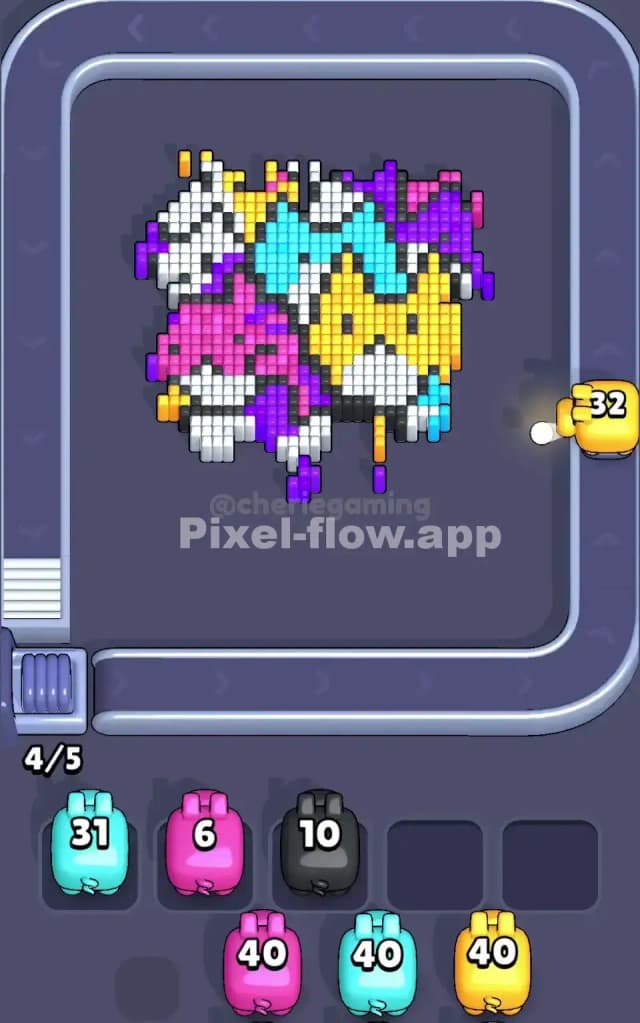
Once purple is parked in a waiting slot (hopefully with empty ammo), send your first white pig down the conveyor belt. Here's where Pixel Flow Level 52 becomes a game of chess: your white pig has 50 shots, and you need to count exactly how many white cubes are visible on the board right now. If you see around 25–30 white cubes, that white pig will empty roughly half its ammo and then drop into another slot—that's acceptable, and it clears the middle layer nicely. While the first white pig is working, watch which new colors it exposes as it clears white cubes around them. Those newly visible colors (yellow patches, cyan pockets) become your targets for the cyan pig. Send cyan down after the first white pig has either emptied or become stuck. The cyan pig's 20 ammo should find ample cyan targets now that the first white pig has rearranged the board. This is also the moment to assess whether you need the second white pig to finish cyan's work or if cyan will naturally empty and leave you with a cleaner board.

End-Game: Empty the Second White Pig and Close Without Jamming

By the time your second white pig reaches the conveyor belt in Pixel Flow Level 52, the board should look dramatically different. Most of the colorful top layers are gone, and you're staring at a mostly white foundation with strategic black dividers. Your second white pig is your closer, and it needs to fire methodically through the remaining white cubes without overstaying its welcome in the waiting slots. The key here is patience—don't force your second white pig to spend all 50 ammo if it's only seeing 20–25 cubes. Let it do its work, clear what it can, and if it drops into a waiting slot with ammo remaining, that's fine as long as you haven't already jammed all five slots. In the final moments of Pixel Flow Level 52, black cubes often remain, but since there's no black pig in your queue, they're not your problem. Count your final move carefully: once all colored pigs have fired or become stuck, Pixel Flow Level 52 is cleared and you've won.


The Logic Behind This Pixel Flow Level 52 Plan

Exploiting Determinism and Ammo Precision

The reason this strategy works for Pixel Flow Level 52 is that it respects the game's deterministic nature. Your four pigs have exactly 140 ammo between them, and (barring any surprise mechanics) there are approximately 140 colored cubes on the board. This isn't a coincidence—Pixel Flow Level 52 is designed so that perfect execution empties every gun. By sequencing pigs in order (purple → white → cyan → white), you're following the natural "reveal" pattern of the board: purple exposes white, white exposes cyan, and the second white finishes what's left. This order minimizes the risk of pigs running out of targets because each wave clears enough obstruction to give the next pig a healthy buffet of valid targets. You're not fighting the puzzle; you're flowing with its logic.

Staying Calm and Reading Two Moves Ahead

The meta-skill that makes Pixel Flow Level 52 manageable is learning to glance ahead before each pig fires. Before sending a pig down, spend three seconds asking yourself: "How many matching cubes can this pig see right now? Will it likely empty its ammo or drop into a slot? If it drops, how many waiting slots will I have left?" This simple habit prevents panic and jamming. Keep a mental tally of ammo spent versus ammo available, and don't be afraid to pause between moves. Pixel Flow Level 52 doesn't have a time limit, so use that to your advantage. Watch the waiting slots like a hawk—if you ever see four pigs stacked in slots 1–4 and a fifth pig approaching, stop and reconsider your strategy for the incoming pig. That moment of calm reflection is often the difference between clearing Pixel Flow Level 52 cleanly and watching the board lock up in defeat. Trust the plan, count the ammo, and you'll find victory on this tricky level.