Pixel Flow Level 51 Solution | Pixel Flow 51 Walkthrough
How to beat Pixel Flow Level 51: Video solution & walkthrough. The fastest way to pass Pixel Flow 51.
Is this the wrong level layout?🤔
Pixel Flow randomizes levels for different players. Don't worry, just upload a screenshot of your board, and our AI will find the correct video instantly.
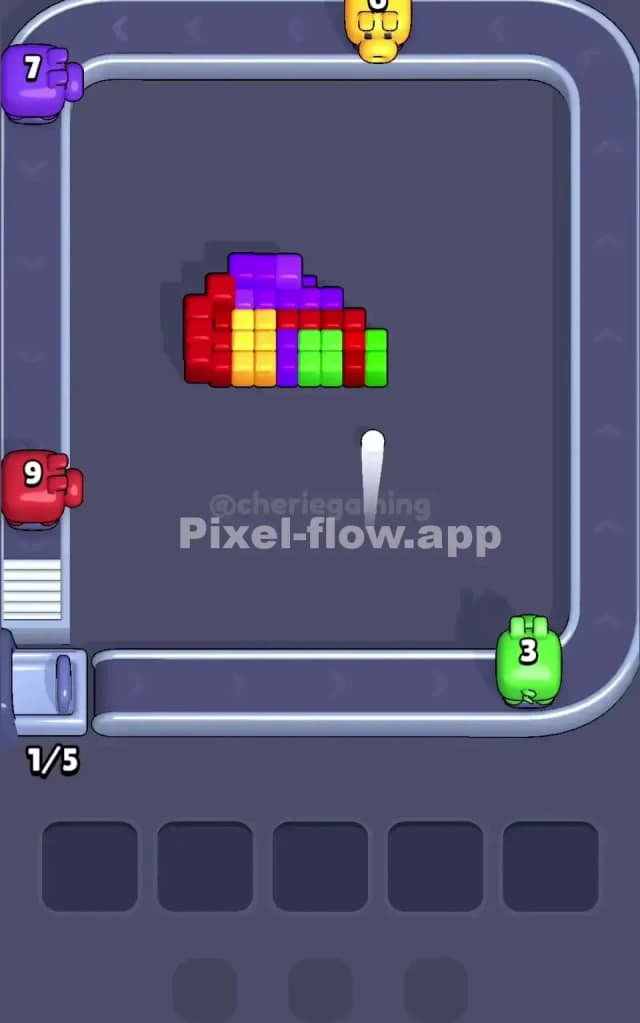
Pixel Flow Level 51 Overview
The Board and Dominant Colors
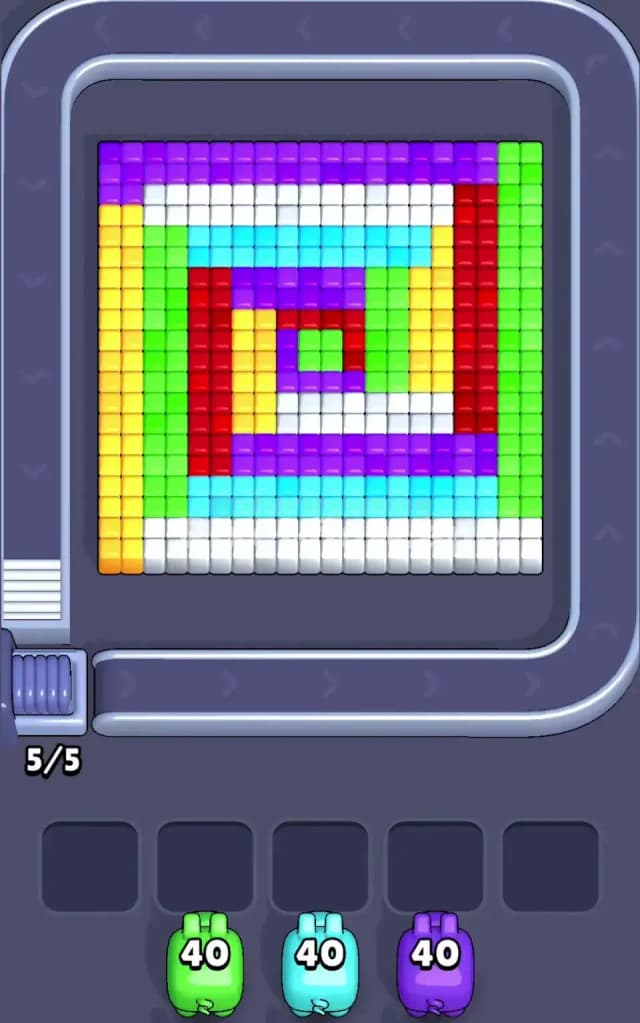
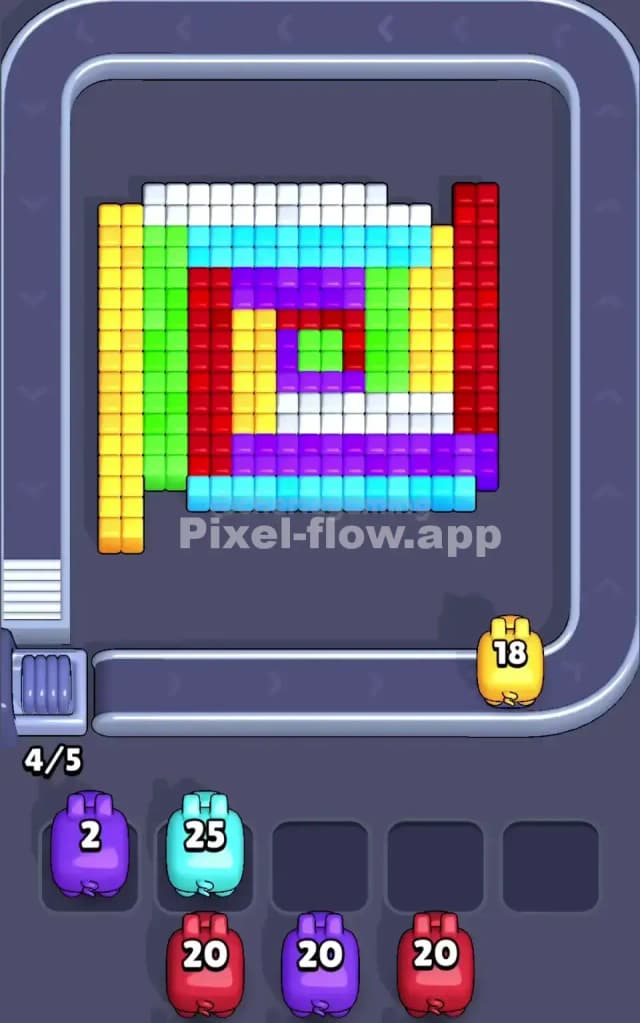
Pixel Flow Level 51 presents a layered voxel artwork that demands careful color sequencing. The board features a striking arrangement with purple dominating the upper portion, a wide band of cyan stretching horizontally through the middle, green occupying the right edge and interior sections, red clustering in concentrated patches, yellow forming vertical and diagonal strips on the left side, and white serving as a neutral filling color throughout multiple layers. The pixel art itself has clear geometric depth—some colors sit on the surface while others hide beneath, waiting to be exposed as you eliminate matching cubes above them. What makes Pixel Flow Level 51 visually complex is how these colors interlock; you can't simply blast away purple without first understanding how it blocks access to the cyan layer below, or how red patches create bottlenecks between yellow and green regions.
The Win Condition and Deterministic Nature
Your goal in Pixel Flow Level 51 is straightforward: clear every single cube from the board. You'll do this by releasing color-coded pigs from the conveyor belt in a fixed order, and each pig automatically shoots cubes matching its color. The game shows you that you're working with exactly three pigs at the start—each with 40 ammo—and this deterministic sequence means there's no randomness or luck involved. You'll see the incoming pig colors queued up on the left side, giving you full visibility into what's coming next. Every cube you destroy costs exactly one ammo from the active pig, so managing that resource and understanding pig order becomes the foundation of beating Pixel Flow Level 51.
Why Pixel Flow Level 51 Feels So Tricky
The Waiting Slot Jam Threat
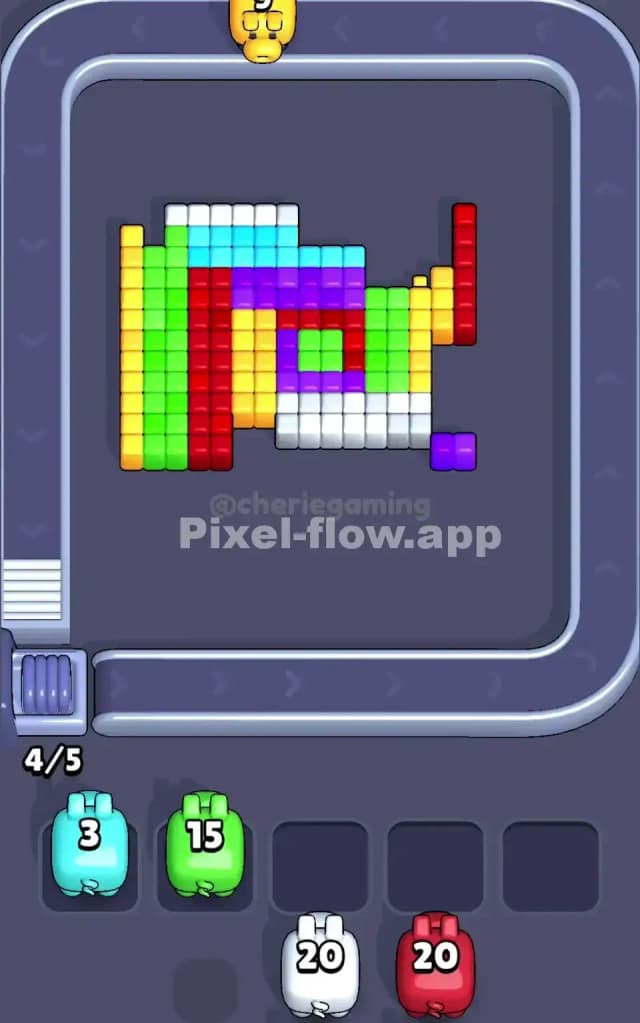
The biggest trap in Pixel Flow Level 51 is filling your five waiting slots with stuck pigs whose ammo won't spend. Picture this: you've released green, cyan, and purple pigs, but after each one fires, they still have leftover ammo because their matching cubes are now buried or simply gone. All five slots fill up, and the next incoming pig can't move—game over. This happens because you didn't plan the sequence carefully enough to ensure each pig exhausts its ammunition before the next one arrives. The pressure of those slots filling creates real urgency, and if you're not methodical about tracking ammo counts, you'll watch helplessly as a pig with 15 remaining shots drops into the buffer with no targets left.
The Color Layering Problem
Pixel Flow Level 51 hides several colors beneath its surface, and this layering creates awkward patches where a pig's targets aren't immediately obvious. For example, purple appears both at the top and in the middle of the pixel art, but they're not continuous—there's white and cyan in between. If you fire your purple pig too early, you'll clear the top layer but leave a scattered purple zone in the middle, and by the time your next opportunity comes, the order of the queue won't allow you to target it again. Similarly, red cubes are split into isolated clusters, so a single red pig with 40 ammo might only find 18 visible targets at first, leaving 22 shots unspent and forcing it into a waiting slot while you scramble to expose the hidden red underneath.
The Personal Frustration Point
I'll be honest—Pixel Flow Level 51 stumped me for a while because I kept treating it like a reflex puzzle. I'd fire pigs without thinking two moves ahead, and within four turns, my buffer was jammed with three half-spent pigs staring at each other. The "click" moment came when I stopped rushing and actually wrote down the ammo counts and visible targets for each color before I made a single move. Once I realized that I could deliberately park a pig in a waiting slot strategically—saving it to mop up deeper layers later—the level went from impossible to solvable. It's less about speed and more about patience and foresight.
Step-by-Step Strategy to Clear Pixel Flow Level 51
Opening: Set Up Your First Three Moves
Start Pixel Flow Level 51 by releasing your first green pig immediately. Green is abundant on the board, especially on the right side and interior, giving you roughly 25–28 visible targets. This opening move accomplishes two things: it uses up a significant chunk of ammo on a color with plenty of surface-level cubes, and it exposes cyan beneath the green exterior. After green fires and drops into a waiting slot (still holding ~12–15 ammo), you'll have 4 empty slots remaining—plenty of breathing room. Next, deploy cyan. You'll see cyan stretches across a wide horizontal band, and the cyan pig has 40 ammo to spend. Fire it until it empties or runs out of targets; cyan should find most or all of its matches early on, because the layer is broad and unobstructed. This keeps your buffer healthy: two pigs sitting, three empty slots. Your third move targets white, which occupies the neutral center and background areas. White might have 30+ visible cubes, so it will likely spend heavily and free up some ammo to prevent choking. After these three opening moves, you should have a much clearer picture of the board's inner structure, and your waiting slots shouldn't be at critical capacity.
Mid-Game: Expose Layers and Sequence Pigs Carefully
Once the opening three pigs are settled, Pixel Flow Level 51 shifts into the tricky middle phase where you must alternate between clearing surface colors and exposing buried layers. At this stage, take a hard look at what's visible: purple should now be more exposed, and red patches should be coming into focus. Here's where you count ruthlessly. If you see 22 purple cubes on the board and the next pig in queue is purple with 40 ammo, you know it'll have 18 shots left over—a problem. Instead, you might hold fire and let it drop into a waiting slot, planning to circle back after you've exposed more purple layers. This feels counterintuitive in Pixel Flow Level 51, but it's correct. While that purple pig waits, deploy yellow next. Yellow occupies the left side and interior diagonals, so it should find abundant targets. Yellow will likely burn through most or all of its ammo, freeing a slot. After yellow, if you've exposed enough purple, fire that waiting purple pig—it should now see the additional cubes you've uncovered and spend more ammo. The key principle is: never let a pig sit empty if you can help it, but always be willing to park a pig if it prevents a jam. Keep two waiting slots free at all times during the mid-game; this gives you flexibility when unexpected color clusters appear.
End-Game: Close the Buffer Cleanly
As you approach Pixel Flow Level 51's finish, your board should be visibly sparse, and your waiting slots should hold only one or two pigs. The last few pigs arriving are typically colors you haven't spent fully yet—perhaps more cyan, more purple, or a stray red. At this point, use waiting-slot pigs as your cleanup crew. A purple pig with 8 remaining ammo is perfect for mopping up scattered purple cubes in the corner. Fire waiting pigs strategically to catch those final isolated cubes before new pigs arrive. The ideal end-game scenario is having your last pig arrive just as you've cleared all non-matching colors, giving it a clean board with only its color remaining. If you've managed your sequence well, that final pig will fire, drop every one of its 40 shots into matching cubes, and the level will vanish—victory. To avoid a last-second jam, count the cubes of the final incoming color as soon as you see them appear. If there are fewer cubes than the pig has ammo, you're safe to fire it; it'll drop into a now-empty board, and you'll win. If there are more cubes than ammo, the pig will empty itself naturally and clear the board as its last act.
The Logic Behind This Pixel Flow Level 51 Plan
Why Pig Order and Ammo Are Your Real Puzzle
The genius of Pixel Flow Level 51 is that the pig order is fixed—you can't shuffle it—but you can control when each pig fires by choosing which waiting slot to fill. This is the secret. Every pig has exactly 40 ammo, and the board has a specific number of each color. Doing the math upfront reveals whether you can win: if all cubes of all colors sum to less than 120 (three pigs × 40 ammo), you'll have ammo left over; if they sum to more than 120, you'll run out. In Pixel Flow Level 51, the math works out, but the distribution is tricky—some colors cluster, some are scattered, and some hide. By intentionally timing pig releases, you ensure that each pig's ammo aligns with its visible targets at the moment it fires, not before. This turns Pixel Flow Level 51 from a chaos puzzle into a logic puzzle where you're essentially scheduling tasks to optimize resource use.
Staying Calm and Thinking Ahead
The pressure in Pixel Flow Level 51 comes from watching that buffer fill, but you can stay in control by adopting a simple habit: before releasing any pig, pause and answer three questions. First, how many cubes of that color can you see right now? Second, does the pig have fewer ammo than cubes, equal ammo, or more ammo? Third, what will happen to your waiting slots if you fire it? If the pig has vastly more ammo than targets, don't fire it immediately—let it wait. If the pig has far fewer ammo than targets, fire it to expose the buried cubes. By keeping these three questions in mind and never releasing a pig without a reason, you'll avoid the panic of a last-minute jam. Pixel Flow Level 51 rewards patience and planning, not reflexes. Watch the queue, count the cubes, and look two pigs ahead. That mindset will carry you through to victory.