Pixel Flow Level 50 Solution | Pixel Flow 50 Walkthrough
How to beat Pixel Flow Level 50: Video solution & walkthrough. The fastest way to pass Pixel Flow 50.
Is this the wrong level layout?🤔
Pixel Flow randomizes levels for different players. Don't worry, just upload a screenshot of your board, and our AI will find the correct video instantly.




Pixel Flow Level 50 Walkthrough
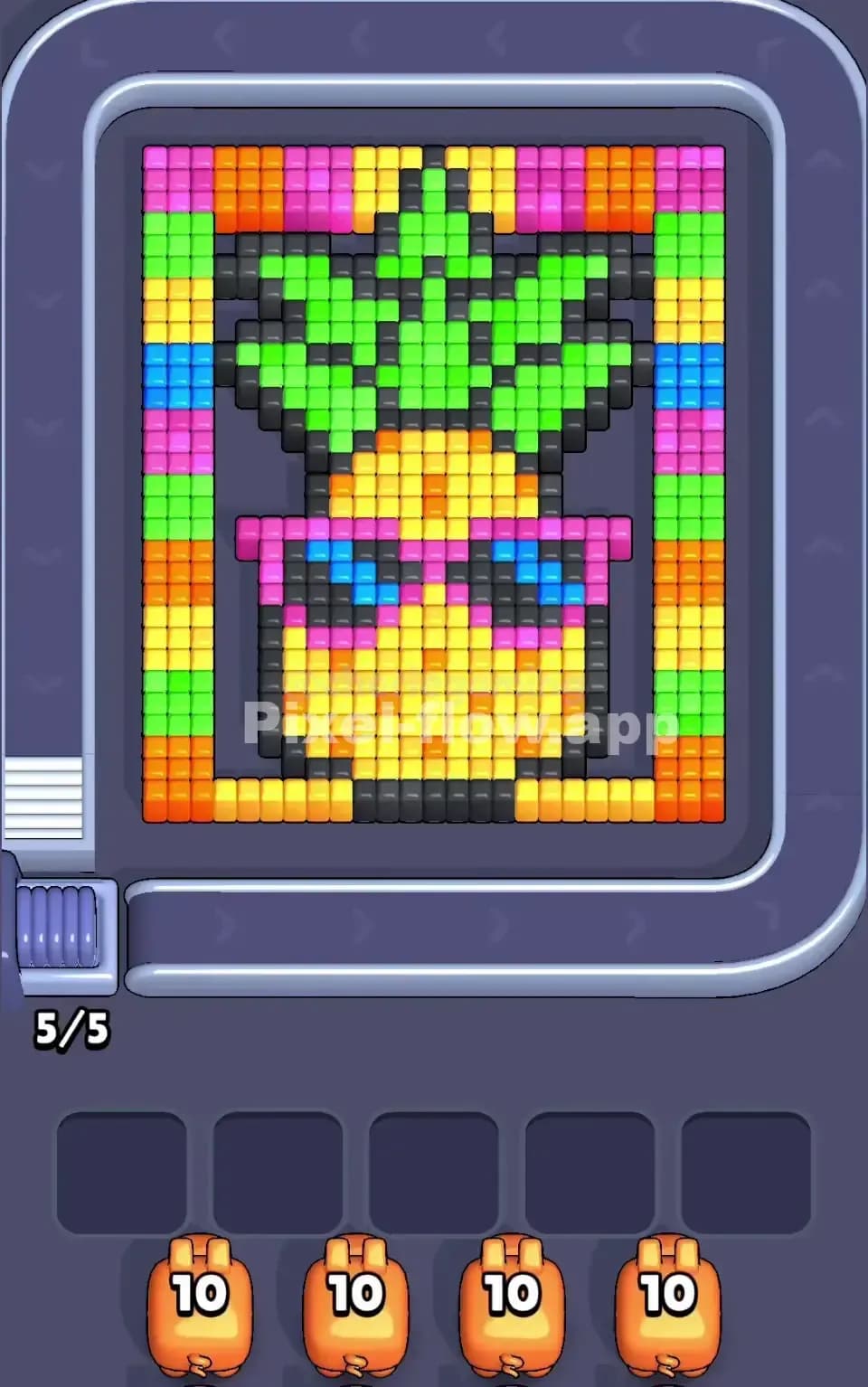
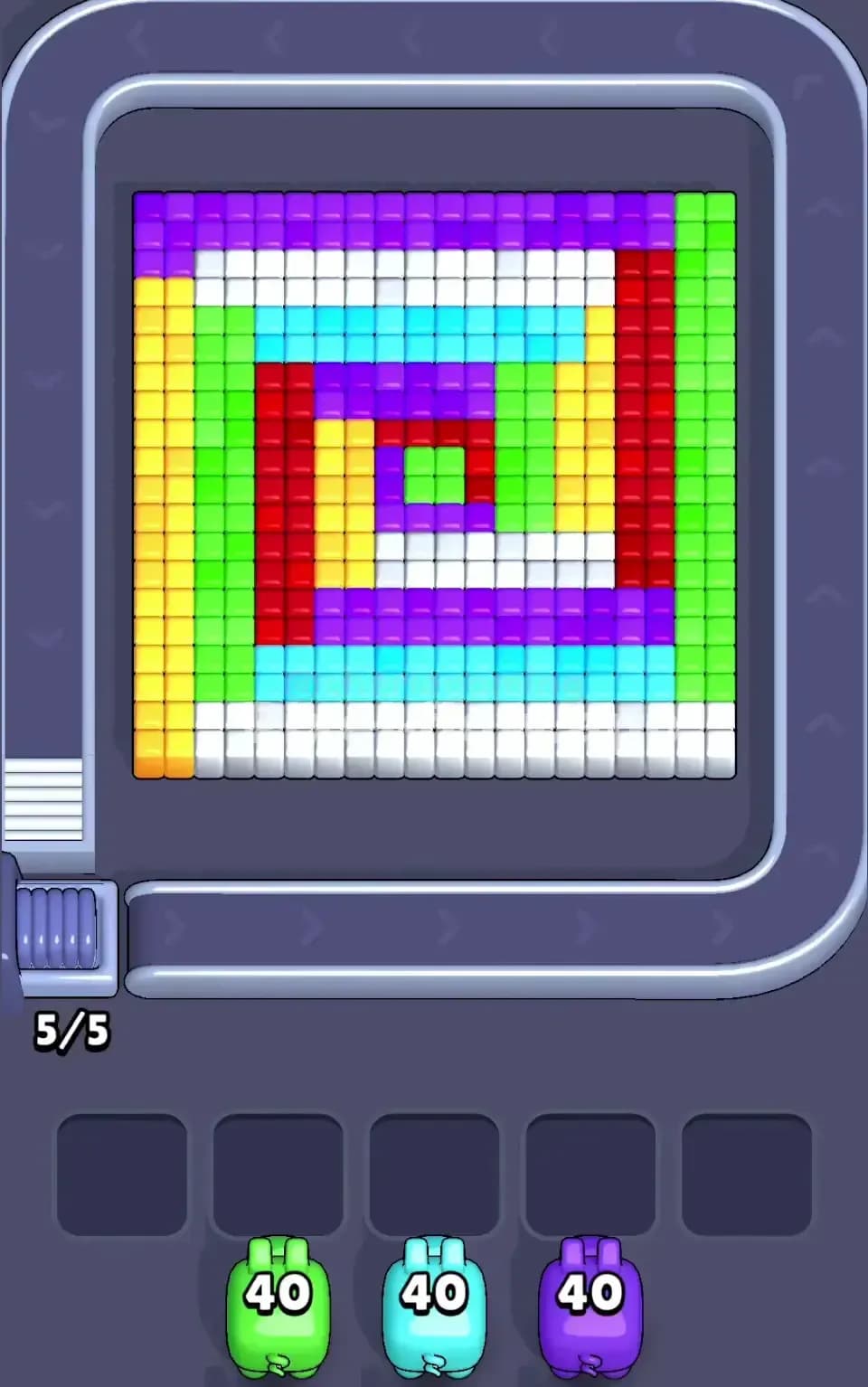
This level is a massive jump in complexity. You are looking at a dense, multicolored "Brick Wall." The board is packed tight with rectangular blocks of Blue, Orange, Pink, Yellow, Green, and Red, all separated by a thin grid of White "mortar."
The rules here are strict: you must peel this wall apart layer by layer. Because the colors are so interlocked, it is easy to get your pig slots clogged with colors you can't reach yet. You need to be aggressive with the white pixels to separate the bricks. Make no mistake, the density and the tricky layering make this a very hard level.
Pixel Flow Level 50 Overview
Imagine a neon masonry wall. The artwork isn't a character or an animal; it’s a structural pattern. You have horizontal "bricks"—usually 3 or 4 pixels wide—stacked from top to bottom.
What makes Pixel Flow Level 50 unique is the White Grid. Every single colored brick is bordered by white pixels.
- The Top: Capped with Blue, Orange, and Pink bricks.
- The Bottom: Sitting on a foundation of pure White pixels.
- The Center: A chaotic mix of primary colors held together by that white mortar.
The asymmetry here is nasty. The bricks aren't perfectly aligned; they are staggered like a real wall. This means a vertical shot might hit a Blue brick, then pass through a White line, then hit a Red brick. You have to predict exactly where the pig's line of fire stops.
Step by step solution walkthrough for Pixel Flow Level 50
First Color Zone to Erase in Pixel Flow Level 50
Target the White Mortar immediately.
Look at your starting lineup. You likely have multiple White pigs with massive ammo counts (often 40+ each). This is the game shouting a hint at you. The bottom row of the board is entirely white. The vertical lines between every brick are white. If you start by deploying your White pigs, you do two things:
- You clear the "foundation" at the bottom, lowering the whole structure conceptually.
- You separate the big colored blocks. Once the white lines are gone, the colored bricks are isolated islands. It is much easier to snipe a floating Red brick than one glued to a Yellow one.
Don't be shy. If you see a White pig, put it on the belt. Let it run a full loop if necessary to scrub out all the vertical and horizontal white lines.
How to pass Pixel Flow Level 50 without power ups or boosters
The mid-game in Level 50 is where most players fail. Once the white grid is mostly gone, you are left with a floating junkyard of colored blocks.
The danger is the "Shielding Effect." Because the rows are staggered, a Green brick in row 3 might be partially blocking a Blue brick in row 4. If you have a Blue pig, do NOT deploy it if the Green brick is in the way. The pig will just circle the board, find no target, and clog up one of your 5 slots.
Follow this priority list:
- Check the Edges: Look at the leftmost and rightmost columns. These are often the easiest to clear because the pigs have a straight shot from the side.
- Match the Front: Only deploy a color (e.g., Red) if you can trace a straight line from the conveyor belt to a Red block without hitting another color first.
- Discard if trapped: If your waiting slots are full of Blue pigs, but all Blue blocks are buried behind Yellows, and the next pig is Yellow... you might have to discard a Blue pig to make room. It hurts, but it’s better than losing.
Last Details You Clean Up in Pixel Flow Level 50
As you near the end, the "Brick Wall" will look like Swiss cheese. The final frustrating pieces are usually the single pixels that used to be corners.
When you erased the large rectangular bricks, you might have missed the tiny 1x1 blocks that connected them to the white grid. These stray pixels are hard to hit because the pig shoots once and effectively wastes the rest of its ammo if there's nothing behind it.
Save your high-ammo pigs for the big clusters. Use your low-ammo pigs (if any spawn late) to snipe these single stragglers. Watch the corners of the board; pixels love to hide in the very top-left or bottom-right, blending in with the background.