Pixel Flow Level 49 Solution Walkthrough | Pixel Flow 49

How to solve Pixel Flow level 49? Get instant solution for Pixel Flow 49 with our step by step solution & video walkthrough.

Share Pixel Flow Level 49 Guide:
Pixel Flow Level 49 Gameplay
Pixel Flow Level 49 Solution 1
Pixel Flow Level 49 Solution 2
Pixel Flow Level 49 Solution 3

Pixel Flow Level 49 Overview

The Board Layout and Pixel Art Subject

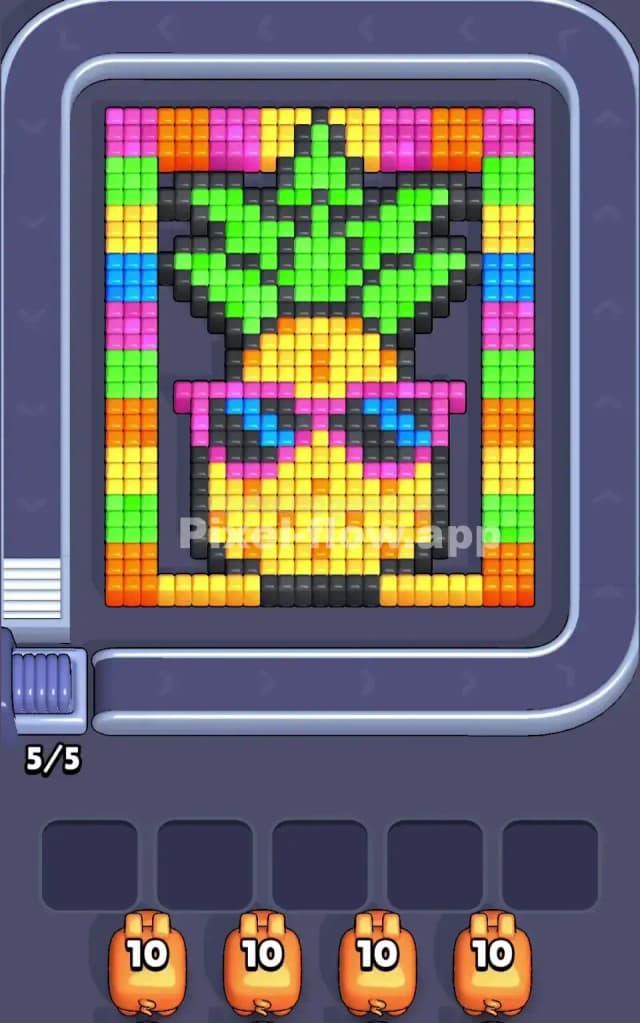
Pixel Flow Level 49 presents a vibrant, multi-layered voxel portrait that demands careful color sequencing. The main subject is a stylized face with a distinctly green complexion, flanked by symmetrical towers of magenta, yellow, and orange blocks that frame the composition. The face itself is rendered in shades of green and black, with an ornamental yellow jaw section and pink-and-blue accents that suggest detailed facial features. You'll notice the board is packed with six dominant colors—magenta, orange, yellow, green, black, and blue—each occupying specific regions of the 16×16 grid. The outer borders are primarily magenta and yellow, while the central mass is dominated by bright green cubes that form the face's main structure. Black cubes pepper the design as both boundaries and inner shadows, creating visual depth and strategic complexity.

Win Condition and Deterministic Pig Mechanics

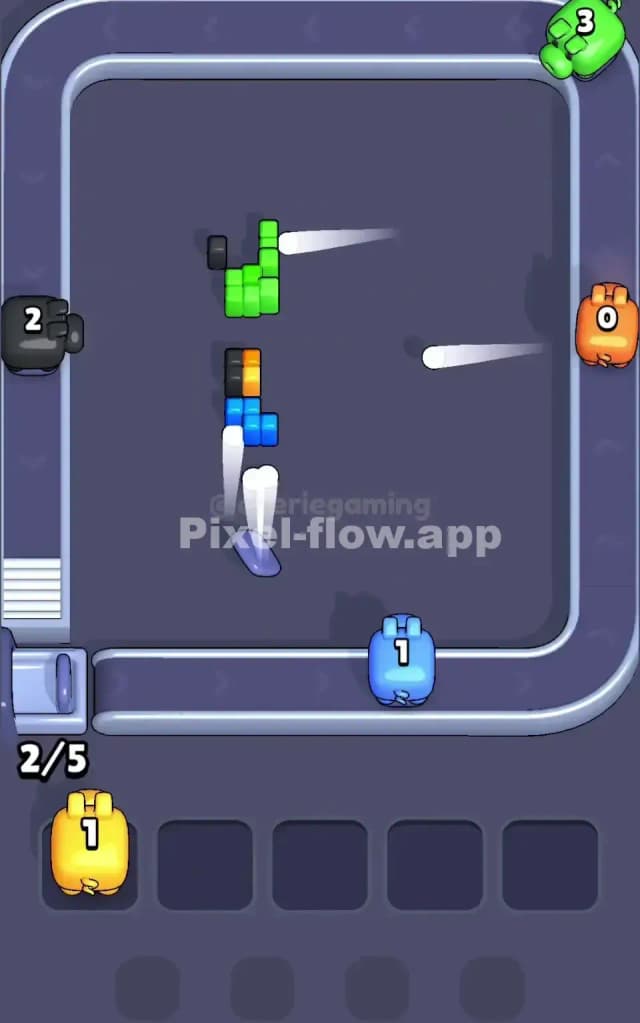
To clear Pixel Flow Level 49, you must destroy every single voxel cube on the board by launching the correct colored pigs in the right order. Your queue shows four orange pigs, each equipped with exactly 10 ammo—a straightforward setup that masks the puzzle's true challenge. Here's the critical insight: every pig will automatically shoot cubes matching its color, and once ammo runs out, that pig drops into a waiting slot. You have five waiting slots at the bottom, and if you fill them all with stuck pigs that can't spend their remaining ammo, you'll lock yourself into a losing state. The pig order is fixed and fully deterministic, so there's no randomness—only your strategic choices about when to trigger each pig and which board sections to clear first.


Why Pixel Flow Level 49 Feels So Tricky

The Green Bottleneck and Waiting Slot Pressure

The biggest threat in Pixel Flow Level 49 is the sheer volume of green cubes dominating the center of the board. You're working with four orange pigs, each with 10 shots, meaning you have exactly 40 ammo total to clear the entire puzzle. The problem is that green blocks form a massive island in the middle, and they're not visible to your orange pigs initially—they're hidden behind the magenta and yellow outer layers. If you're not deliberate about peeling back the border colors first, you'll trigger orange pigs too early, watch them fire away at nothing, and then be forced to dump spent or half-spent pigs into your waiting slots. Once three or four pigs are sitting idle with ammo still loaded, you're essentially locked out of victory. That's why the waiting slot buffer feels like it's breathing down your neck throughout this level.

The Tricky Color Pockets and Hidden Layers

Beyond the green central mass, Pixel Flow Level 49 hides several color pockets that make sequencing awkward. The yellow blocks are split between the outer border (plenty of them) and a concentrated section near the face's jaw (fewer blocks, oddly placed). The magenta and blue accents are sprinkled throughout in small clusters that don't align neatly with the overall strategy. You might think "I'll just blast all the orange blocks first," but there's a critical problem: your pigs are orange, not blue, magenta, or yellow. You're purely reactive to what the board throws at you. This means you can't make progress on pink or blue cubes—they'll stay put until you somehow change the board's structure or until you run out of meaningful orange targets. The black boundary cubes add another layer of confusion because they're visually prominent but completely irrelevant to your pig arsenal.

When the Level Clicked for Me

I'll admit, Pixel Flow Level 49 frustrated me on my first attempt because I panicked and fired orange pigs in rapid succession, watching them blast through the accessible outer border and then sit idle as I realized I'd wasted ammo on blocks I could've saved for later phases. The breakthrough came when I forced myself to pause and count—literally count—how many orange-colored cubes were visible right now versus how many I'd need to clear deeper layers. Once I accepted that I should fire a single pig, wait to see what gets exposed, and only then commit the next pig, the level's logic snapped into focus. It's not about speed; it's about surgical precision and reading the board like a game tree, not a whack-a-mole arcade.


Step-by-Step Strategy to Clear Pixel Flow Level 49

Opening: Carefully Peeling the Outer Border

Start Pixel Flow Level 49 by triggering your first orange pig and allowing it to fire all 10 shots into the magenta and orange blocks on the left and right edges of the board. You'll notice that the outer frame is relatively straightforward—the pigs will automatically target all matching orange cubes, clearing the bottom-left and bottom-right corners first. Don't panic if the pig uses all 10 ammo on the border; that's exactly what you want. Your goal here is to expose the second layer beneath the magenta outer shell without committing more than one pig. Once the first pig finishes, resist the urge to immediately trigger the second pig. Instead, examine what's now visible. Can you see any new orange blocks deeper inside? If yes, park the second pig and let it work. If no, don't fire it yet—hold that slot empty and move on. The key is keeping your waiting queue as clear as possible so you can always make a deliberate choice about the next move.

Mid-Game: Exposing the Green Core and Managing Ammo

Once you've cleared the outer orange and magenta sections, you'll start to see the green face structure emerge, along with scattered yellow and black cubes that form the internal architecture. Here's where Pixel Flow Level 49 becomes a puzzle of layer management. Your second and third orange pigs should target the remaining orange blocks you can see, but do this methodically—fire one pig, observe the board shift, and then decide whether to fire the next. This approach prevents you from over-committing ammo and getting stuck with half-empty pigs. As the green interior becomes visible, you might see that some black boundary cubes are now exposed. Black cubes are a trap for orange pigs; they won't interact with them at all, so don't expect them to contribute to your ammo spending. The yellow blocks in the jaw section are also orange-proof. What you're really doing during the mid-game is watching for that moment when there are no more orange blocks within shooting range. That's your signal to let the next pig drop into a waiting slot and reassess. If you've managed your ammo well, you should have at least one or two empty waiting slots and still have partial progress on the board.

End-Game: Finishing Without a Jam

By the time you're approaching the final stages of Pixel Flow Level 49, you've likely used three orange pigs and are relying on your fourth and final pig to clean up any remaining orange blocks. Don't use this pig carelessly. Instead, fire it conservatively and pay close attention to its ammo count. If your fourth pig finishes and there are still orange cubes on the board, you've made a fatal error in your earlier sequencing—you can't redo turns in Pixel Flow, so avoid this by counting methodically from the start. Ideally, your fourth pig should expend its final ammo just as the last orange block disappears, leaving you with a board that's free of orange and a waiting queue that never fills past two or three pigs. At this point, congratulations—you've cleared Pixel Flow Level 49 because all six colors are gone and the picture is complete.


The Logic Behind This Pixel Flow Level 49 Plan

Exploiting Pig Order and Ammo Determinism

The core strategy for Pixel Flow Level 49 rests on understanding that your pig sequence and ammo counts are fixed—there's no randomness, only your decisions about when to deploy them. By firing pigs one at a time and observing the board state between each pig, you're gathering information that tells you whether your future pigs will have valid targets. This sequential, observation-based approach is far superior to firing all four pigs in rapid succession and hoping for the best. Each orange pig has exactly 10 ammo, so you have 40 total shots to work with. If you count the orange blocks visible on the board at the start of Pixel Flow Level 49, you should come up with a number close to or less than 40. If it's significantly higher, you're missing something—perhaps many orange blocks are hidden behind other colors, and you need to expose them first by clearing the outer layers. The waiting slots exist as a safety valve: if a pig has no valid targets but still has ammo, it parks itself. You should never fill all five slots, because that's a guaranteed loss condition.

Staying Calm Under Pressure: Ammo Awareness and Forward Planning

The psychological trick to mastering Pixel Flow Level 49 is to slow down and think like a computer. Watch the conveyor belt queue of pigs, count the ammo on each one, and mentally simulate where each pig will fire. If you can predict two or three pigs ahead—"First pig clears the left border, second pig will hit the central green mass, third pig will finish the yellow section"—you'll make far fewer mistakes than if you react emotionally to each pig's movement. Keep a mental tally of which colors are present on the board and which colors are absent. When you can't see any blocks of a certain color, that tells you those cubes are either already cleared or hidden beneath other layers. This knowledge guides your pig-firing sequence. Finally, embrace the patience that Pixel Flow Level 49 demands. There's no time limit, no penalty for thinking, and no bonus for speed. Every pig you deploy is a commitment, and every commitment must be strategic. By respecting the puzzle's logic and resisting the urge to panic, you'll find that Pixel Flow Level 49 yields to careful, deliberate play—and that's when the satisfaction really hits.