Pixel Flow Level 522 Solution | Pixel Flow 522 Walkthrough
How to beat Pixel Flow Level 522: Video solution & walkthrough. The fastest way to pass Pixel Flow 522.
Is this the wrong level layout?🤔
Pixel Flow randomizes levels for different players. Don't worry, just upload a screenshot of your board, and our AI will find the correct video instantly.
Pixel Flow Level 522 Walkthrough
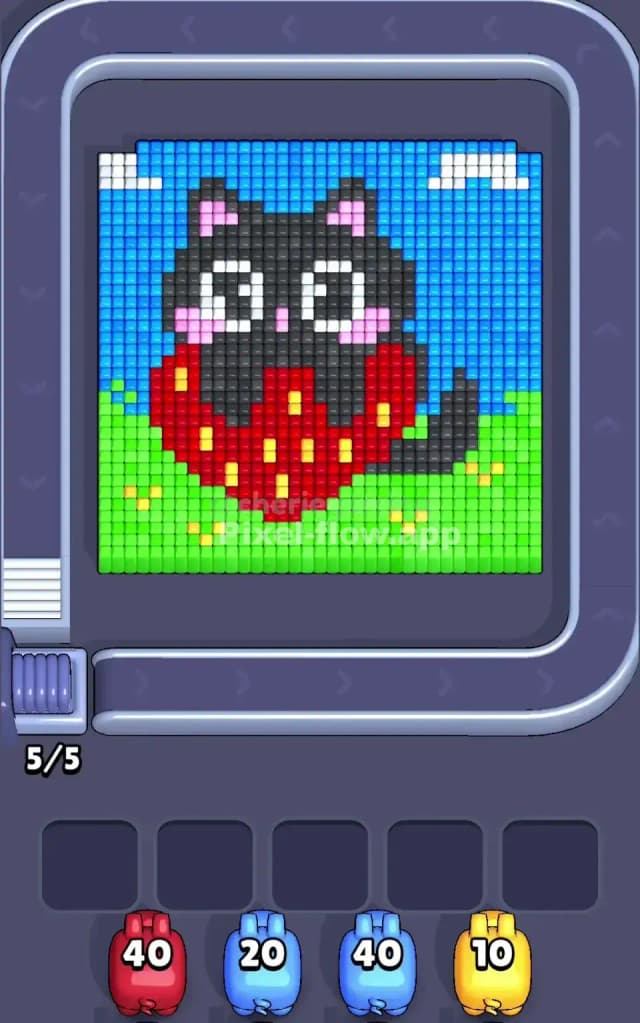
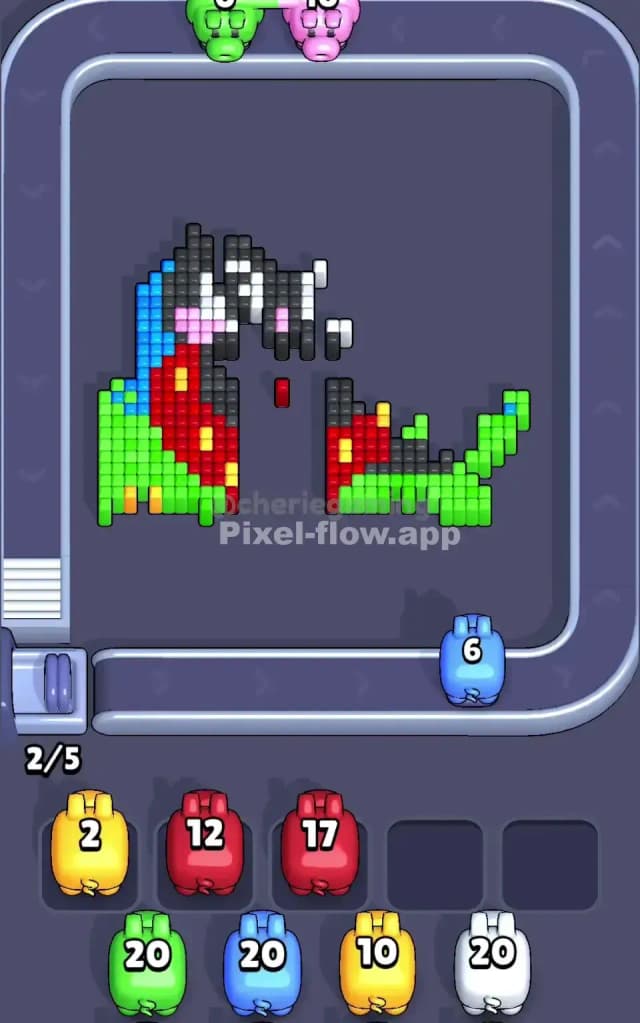
This level features a cute piece of pixel art: a black cat peeking out of a giant red strawberry. The strawberry dominates the bottom center, flanked by green grass on the left and right. Above the cat, a bright blue sky fills the background, dotted with small white clouds in the upper corners. To beat Pixel Flow Level 522, you need to strip away the large outer blocks of color (sky and grass) to reveal the complex layers of the cat and strawberry beneath.
Is this level hard? No. It's actually quite forgiving. The color zones are large and distinct, meaning you rarely have to worry about "clogging" your waiting slots with useless pigs. It is definitely not a very hard level.
Pixel Flow Level 522 Overview
Imagine a sunny day in a garden. The scene is centered on a black kitty who seems to have gotten stuck inside a huge strawberry costume. The strawberry is bright red with yellow seeds.
Here is the tactical layout:
- The Sky (Blue): Massive blocks of blue occupy the top left, top right, and the spaces between the cat's ears. This is "easy ammo" for blue pigs.
- The Grass (Green): Two solid chunks of green sit on the bottom left and bottom right. These are your safety valves. If you have green pigs, they will almost always have a target here.
- The Strawberry (Red & Yellow): This is the dense middle section. It's tricky because the yellow seeds are single pixels buried inside the red mass.
- The Cat (Black, White, Pink): The cat is the final boss. Its black fur is the deepest layer in the center, while the white eyes and pink cheeks are surface details that need careful clearing.
Step by step solution walkthrough for Pixel Flow Level 522
First Color Zone to Erase in Pixel Flow Level 522
I always target the Blue Sky or the Green Grass first.
Why? Look at the sheer volume of blocks. The blue sky is completely exposed on the top edges. The green grass is fully exposed on the bottom edges. Sending a blue or green pig out immediately guarantees they will burn through a ton of ammo without stopping.
If you see a Blue pig with 40 ammo, send it. It will clear the top corners and likely carve out the space around the cat's ears. This exposes the side of the cat's head and the top of the strawberry, making the next steps easier. Do not start with complex colors like White or Yellow; they are too scattered and will just clog your slots.
How to pass Pixel Flow Level 522 without power ups or boosters
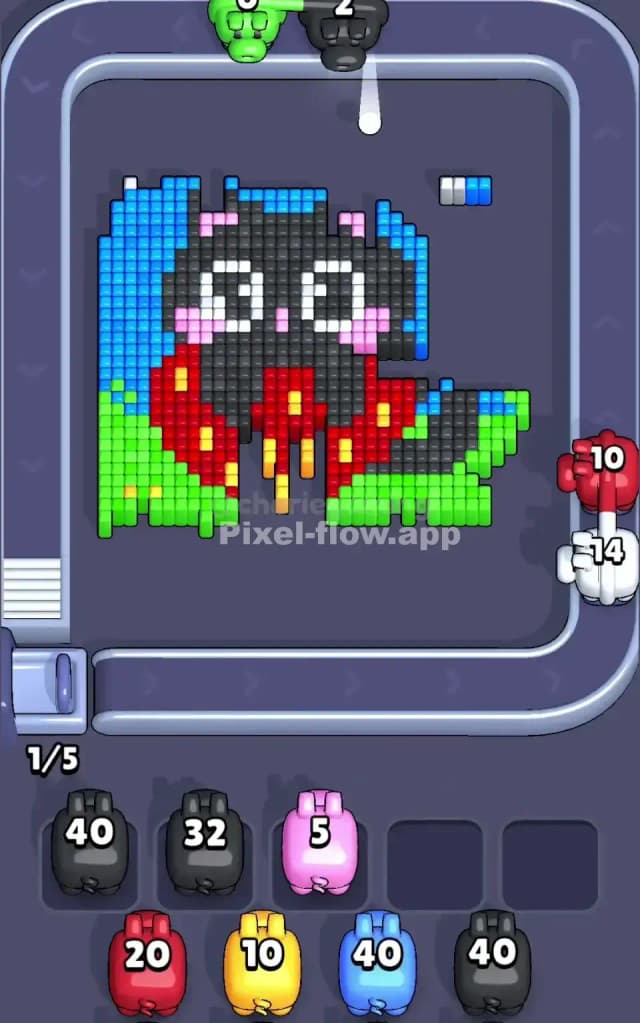
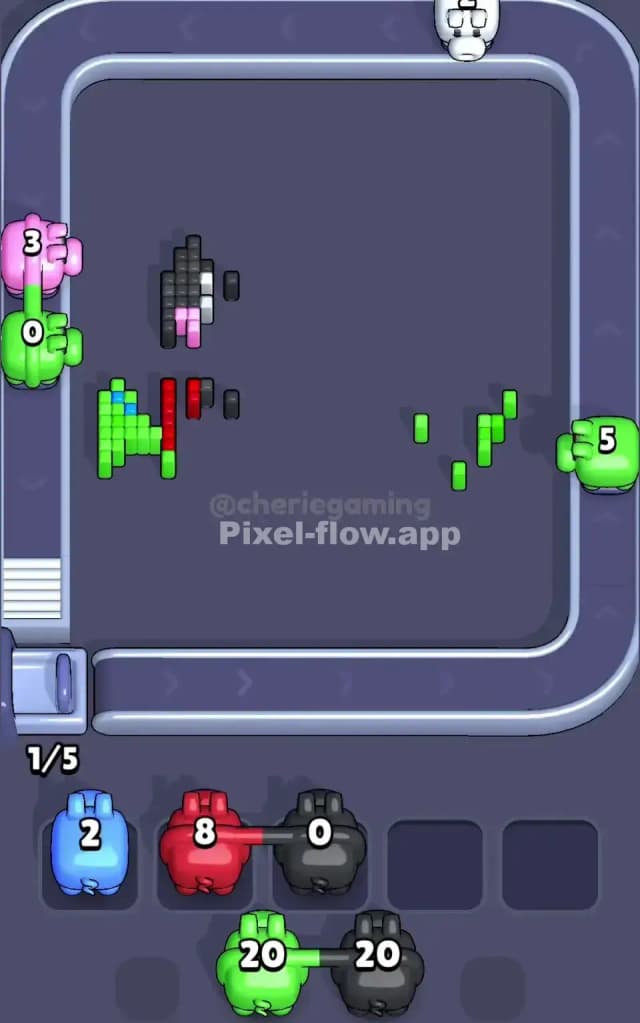
About halfway through, the board usually looks messy. You might have a "U" shape of grass left, or a floating cat head with no body. This is the danger zone.
- Watch the Yellow Seeds: The strawberry has yellow pixels acting as "seeds." These are annoying. They are single blocks surrounded by red. You often cannot clear the red underneath them until the yellow is gone. Prioritize Yellow pigs whenever a seed is exposed. If you ignore them, your Red pigs will have nowhere to shoot.
- The Black Fur Trap: The black pixels forming the cat are dense. Sometimes, a Black pig will clear the face but leave a single column of black pixels acting as a wall. This blocks shots from reaching the other side of the board. Try to clear the black evenly so you don't create accidental walls.
- Slot Management: Since the level isn't very hard, you have wiggle room. However, if you have 3 slots filled with small ammo pigs (like Pink or White) that aren't firing, stop. Do not send another pig until you clear a slot. Use a high-ammo pig of a dominant color (Red/Green) to clear space and trigger the smaller pigs.
Last Details You Clean Up in Pixel Flow Level 522
The end of Pixel Flow 522 is usually just the cat's face or the very bottom of the strawberry.
- The Eyes: The white pixels of the eyes are often the last surface layer to go. You might end up with just two white squares staring at you. A White pig with even 2 ammo is enough here.
- The Pink Cheeks/Ears: These are small clusters. Often, a Pink pig will sit in your slot for a long time waiting for the Black fur around it to vanish. Once the Black is cleared, the Pink pig will instantly snipe the ears and cheeks.
- Strawberry Bottom: Sometimes a row of red pixels at the very bottom gets forgotten because the pigs focus on the top. Keep an eye on the bottom row; if a Red pig drops into a slot and does nothing, it's likely waiting for that one forgotten row at the footer.