Pixel Flow Level 523 Solution | Pixel Flow 523 Walkthrough
How to beat Pixel Flow Level 523: Video solution & walkthrough. The fastest way to pass Pixel Flow 523.
Is this the wrong level layout?🤔
Pixel Flow randomizes levels for different players. Don't worry, just upload a screenshot of your board, and our AI will find the correct video instantly.
Pixel Flow Level 523 Walkthrough
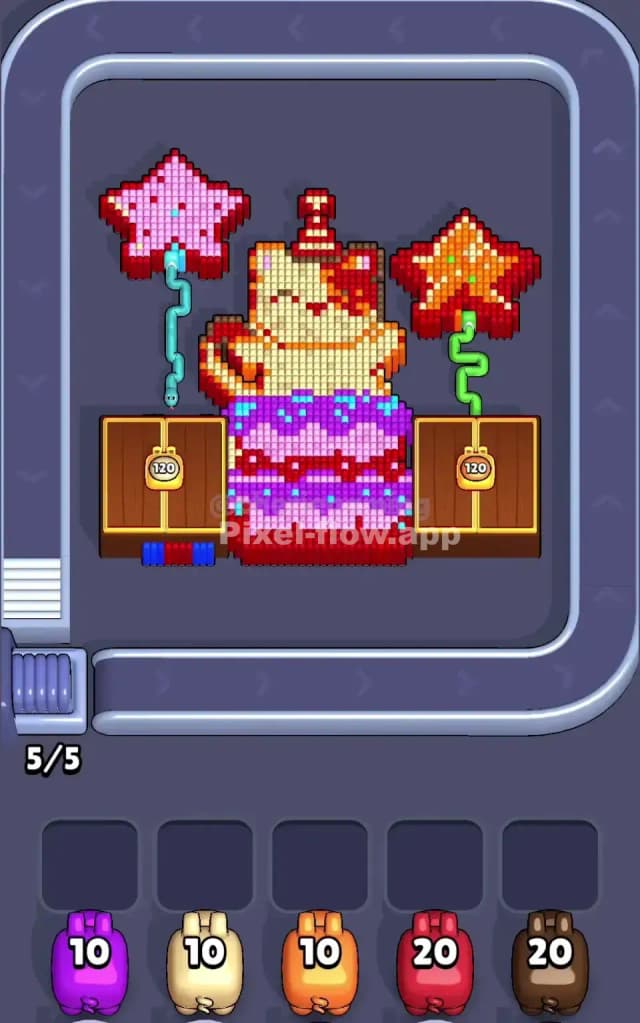
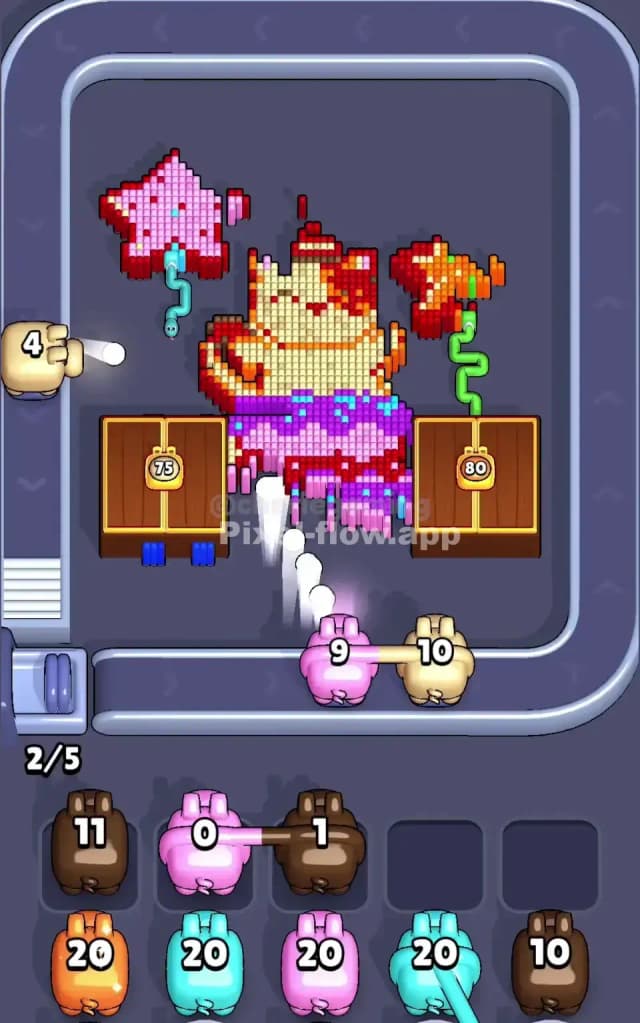
This level features a festive "Birthday Cat" scene. You are facing a cute cat perched atop a tiered cake, flanked by two star-shaped balloons. The rules are standard but the layout is cramped: you need to clear the balloons and cake layers to reveal the core structure. You win by matching pig colors to voxel blocks until the board is clear. Is this a very hard level? No, but it is tricky because of the two large wooden chests blocking the lower corners. These chests hide significant portions of the image and require a lot of ammo to break.
Pixel Flow Level 523 Overview
The scene is a cheerful birthday party. In the center, a cream-and-orange cat sits happily on a purple-frosted cake. To the left, a pink star balloon floats on a blue string. To the right, an orange star balloon floats on a green string.
The most critical feature isn't the cat; it's the two large wooden chests (labeled "120") sitting on the bottom left and right. These aren't just decorations. They obscure the bottom corners of the cake and the balloon strings. You cannot see exactly what colors lie behind them until you start chipping away at the top layers.
The asymmetry here is subtle. The left balloon is pink with a blue ribbon, while the right balloon is orange with a green ribbon. The cat itself is mostly cream, but has orange patches. This color distribution is key: Orange is heavily present on the right (balloon) and center (cat), while Pink is heavy on the left (balloon) and bottom (cake frosting).
Step by step solution walkthrough for Pixel Flow Level 523
First Color Zone to Erase in Pixel Flow Level 523
Start with the Pink Balloon (Left) or the Purple Cake Base.
I recommend prioritizing the Pink pigs first. Here is the logic:
- High Visibility: The pink star balloon on the top left is completely exposed. It's a large, solid block of color.
- Dual Purpose: The cake base also has significant pink frosting layers.
- Ammo Efficiency: Using a Pink pig immediately clears a huge chunk of the upper-left quadrant. This prevents your holding slots from getting clogged early on.
If you don't have a pink pig immediately available, go for Orange. The right-hand balloon is a massive block of orange. Clearing either of these top "balloons" opens up the space and lets you see the layers beneath the cat.
Avoid the Chests initially. You cannot destroy those "120" chests directly with pigs. They likely unlock or open once the layers around or behind them are cleared (or require specific triggers usually hidden behind the main art). Focus on the voxels you can see.
How to pass Pixel Flow Level 523 without power ups or boosters
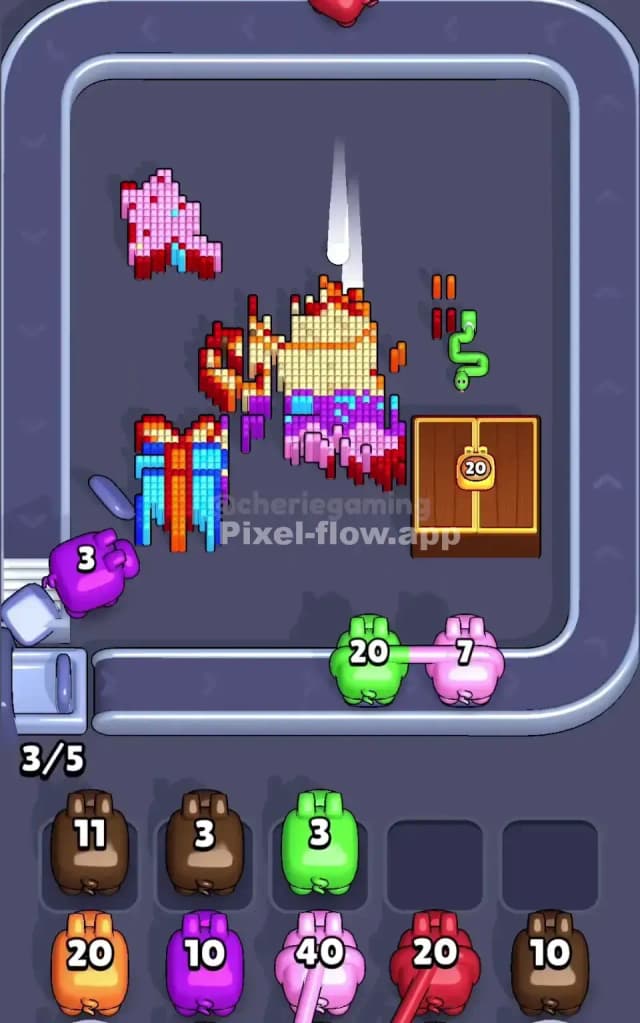
Midway through the level, the balloons will be gone. You will be left with the central cat and the stubborn wooden chests. This is the danger zone.
- The Ribbon Trap: Once the star part of the balloons is gone, you'll see the thin ribbons (Blue on left, Green on right). These are narrow targets. Do not drop a Blue or Green pig into your slots unless you are sure they can hit these ribbons. If the ribbon is blocked by a higher layer (like the cat's arm), that pig will just sit in your slot, useless, taking up space.
- The Cat's Layers: The cat is cream/white with orange spots. As you peel away the front face of the cat, you will likely find more orange inside. Alternate between Cream/White and Orange pigs to shave the cat down layer by layer.
- Dealing with the Chests: As you clear the purple cake and the balloon strings, the game logic often treats the chests as "barriers" that eventually pop or vanish once the supporting pixels are gone. Don't panic if they stay there for a long time. Just keep clearing the pixels touching them.
Priority Plan for Mid-Game:
- Clear Purple (Cake frosting) to lower the stack height.
- Clear Orange (Right balloon remnants + Cat patches).
- Save Blue/Green for when the ribbons are totally exposed.
Last Details You Clean Up in Pixel Flow Level 523
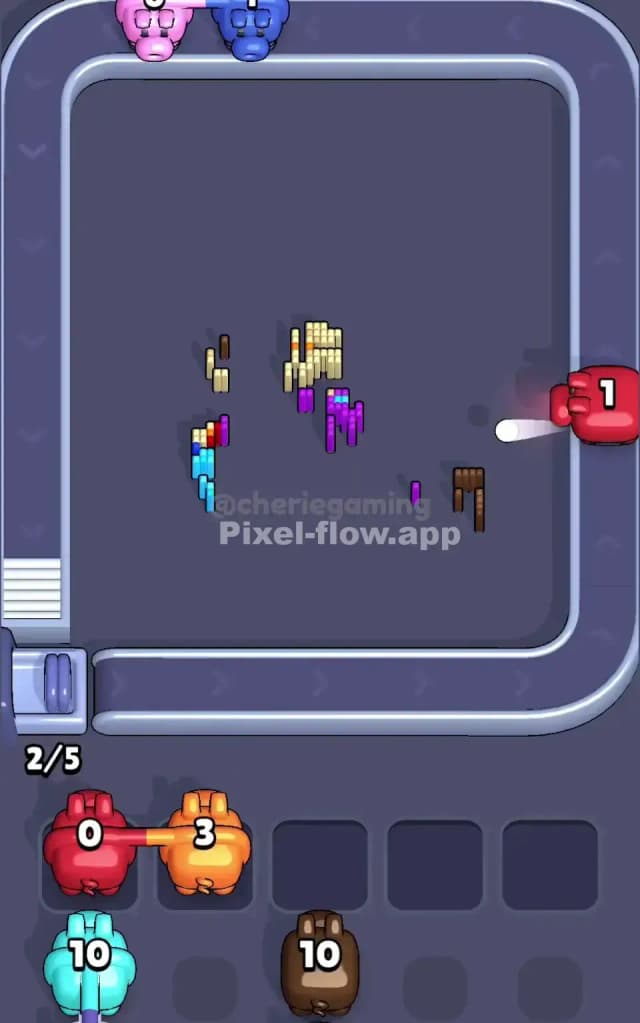
In the final few moves, the board usually looks messy. The cat is gone, the balloons are gone, and you are likely staring at the last few blocks that were hiding behind the wooden chests or at the very back of the canvas.
- The Hidden Base: Often, the bottom-most layer of the cake (behind the chests) has a different color or a solid base (like dark brown or red).
- Straggler Pixels: Watch out for single pixels left over from the balloon strings. A single green voxel floating in the air can ruin a perfect run if you waste a full pig on it without checking if it has friends nearby.
- The Chest Contents: Once the chests finally break or open, they might reveal a final cluster of blocks (like gifts or more cake). Be ready with whatever color dominates that reveal—usually Red or Blue gift boxes are common surprises in birthday levels. Keep one slot open for this final surprise.