Pixel Flow Level 526 Solution | Pixel Flow 526 Walkthrough
How to beat Pixel Flow Level 526: Video solution & walkthrough. The fastest way to pass Pixel Flow 526.
Is this the wrong level layout?🤔
Pixel Flow randomizes levels for different players. Don't worry, just upload a screenshot of your board, and our AI will find the correct video instantly.
Pixel Flow Level 526 Walkthrough
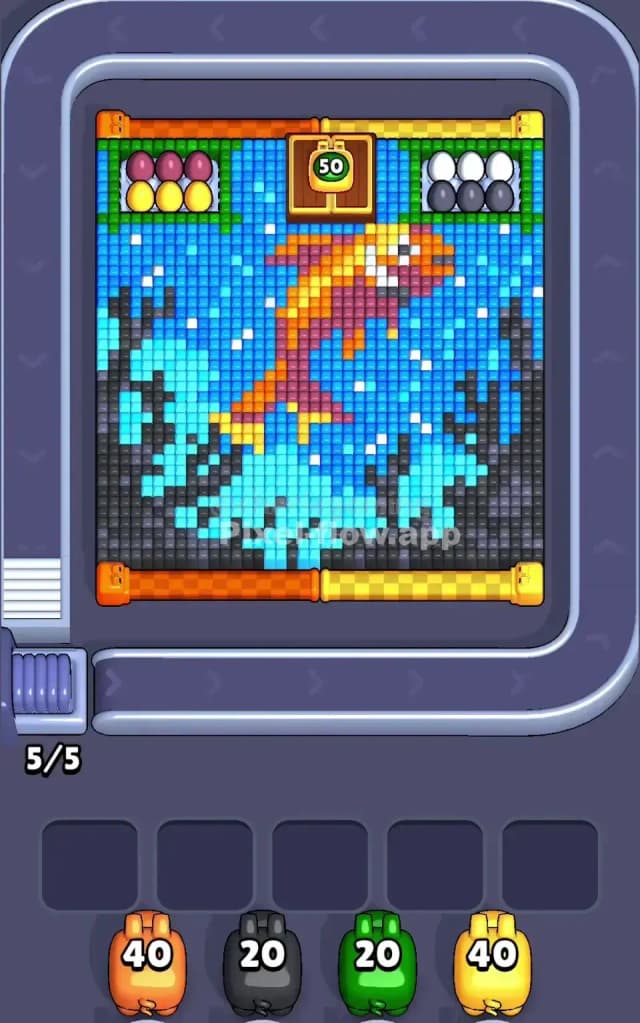
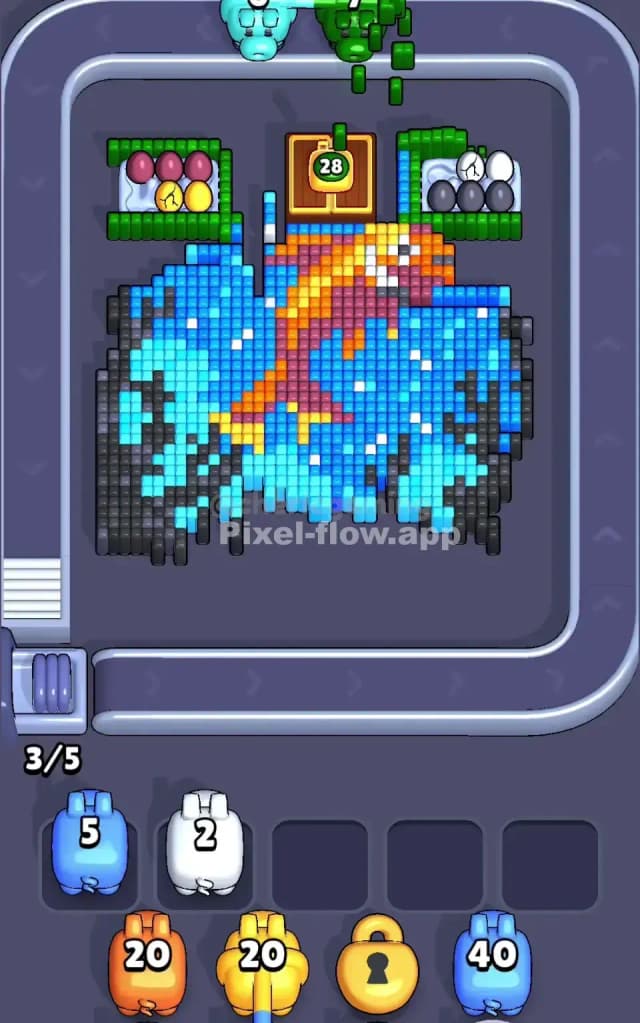
This level is a stunner, but don't let the pretty art fool you. You are looking at a vibrant Koi fish leaping out of the water, flanked by dark rocks and topped with two strange "egg carton" baskets. The colors are dense here. You have deep blues, light blues, oranges, maroons, and greys all fighting for space.
The golden rule for Pixel Flow Level 526 is lateral movement. Because of that massive 50-count chest blocking the top center, you cannot shoot straight down the middle effectively at the start. You have to peel this image like an onion, starting from the outside edges and working inward.
Is it hard? Yes. I would classify this as a very hard level simply because of the slot management. You have distinct zones (rocks, water, fish, eggs) that use totally different colors. If you pull the wrong pig, you clog a slot with ammo you can't spend.
Pixel Flow Level 526 Overview
The scene depicts a Japanese-style Koi pond. The main subject is a large Orange and Maroon fish jumping vertically. The background is split:
- The Flanks: Dark grey/black jagged rocks run down the far left and far right columns.
- The Center: A mix of dark and light blue water pixels representing the splash.
- The Top: This is the weird part. You have two green baskets holding "eggs" or pearls. The left basket holds Maroon and Yellow spheres; the right holds White and Dark Grey spheres.
- The Blocker: Dead center at the top is a brown crate with a 50 timer on it. This blocks your pigs from hitting the top-center pixels until it is destroyed or bypassed.
The asymmetry here is dangerous. The rocks on the left and right are easy targets, but the water in the middle is messy. The pixels are scattered, meaning a Blue pig might waste a lot of time traveling between targets, clogging your flow while other pigs pile up behind it.
Step by step solution walkthrough for Pixel Flow Level 526
First Color Zone to Erase in Pixel Flow Level 526
Ignore the fish. Ignore the center. Your priority is the Dark Grey/Black rocks on the far left and right edges.
Why? Look at the physics of the board. The 50 crate is blocking the middle lanes. If you try to clear the orange fish or the blue water first, your pigs will struggle to find valid lines of sight for the upper pixels. The rocks, however, are completely exposed on the edges.
Grab the Black Pig immediately if it's in your queue. These rocks are vertical columns. A single Black pig can sit in one spot and melt an entire column of rocks without moving. This is the most efficient way to spend ammo early. Clearing these edges widens the "playable area," ensuring that when you do start tackling the blue water, your pigs have room to drift left and right without hitting a wall.
How to pass Pixel Flow Level 526 without power ups or boosters
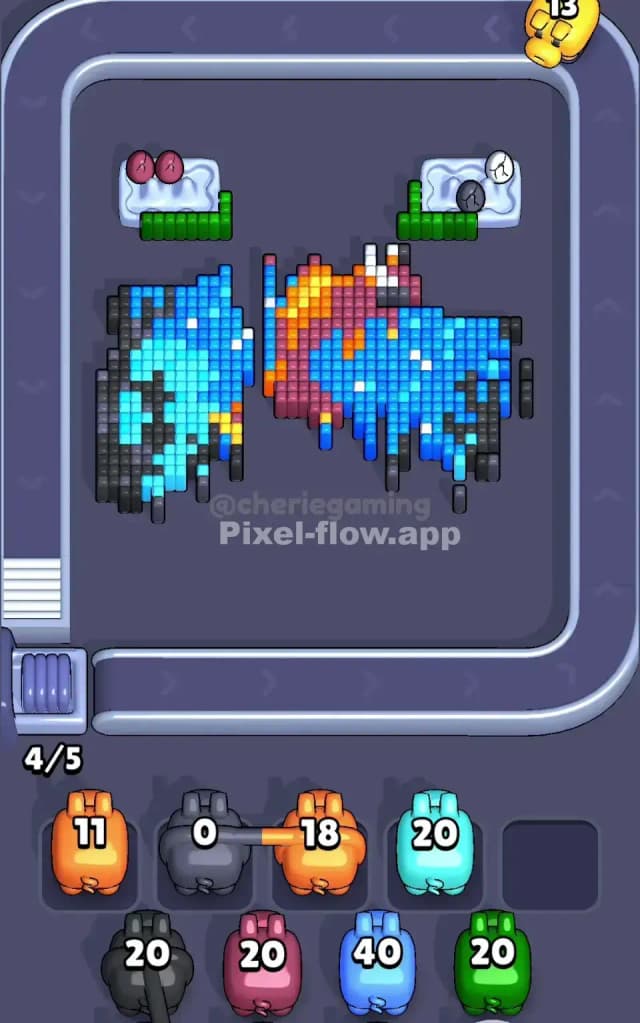
Once the rocks are gone, you hit the mid-game slump. The board will look half-empty, but your slots will be dangerously full. This is where most players lose Level 526.
You need to handle the Green pixels carefully. The Green pixels are acting as "shelves" for the egg baskets at the top.
- The Trap: If you clear the Green too early, you might expose the eggs (Maroon, Yellow, White) before you have the right pigs to clear them. Those eggs will just sit there, untargetable, while you frantically look for a Yellow pig that isn't coming for another 20 turns.
- The Fix: Focus on the Water (Light Blue and Dark Blue) first. The water surrounds the fish and is the largest "noise" on the board. Clear the water to isolate the fish.
Keep an eye on the 50 crate. As you clear the surrounding blue water, you might get angles to chip away at it, or it might open automatically once the supporting blocks are gone (depending on the specific patch version logic). Regardless, do not prioritize the crate until the water is significantly drained. Your waiting slots are your lifeblood here. If you see a Light Blue pig and a Dark Blue pig, prioritize them over everything else to clear that messy background noise.
Last Details You Clean Up in Pixel Flow Level 526
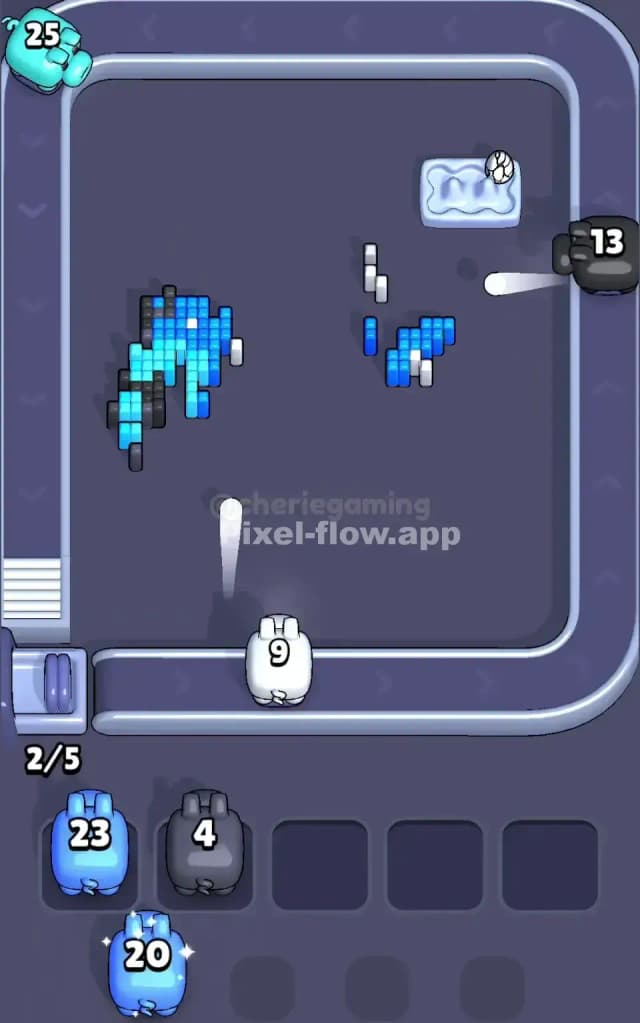
By the end, you should have a floating Koi fish and maybe those stubborn egg baskets.
- The Fish Body: Now you can go ham on the Orange and Maroon. The fish is dense and clustered. An Orange pig here is extremely efficient because the targets are packed tight. You won't waste time watching the pig scroll across the screen.
- The Eggs: Finally, deal with the top corners. Once the Green shelves are gone, you need to clear the specific egg colors. Watch your queue. If you see a White pig, save it for the top right basket. If you see a Yellow pig, it's for the top left.
- The Stray Bubbles: There are often tiny White pixels scattered in the water (bubbles). These are easy to miss. If you have a White pig active for the eggs, make sure it cleans up these stray bubbles in the water zone too before it despawns.
Finish the fish, pop the eggs, and the level is yours.