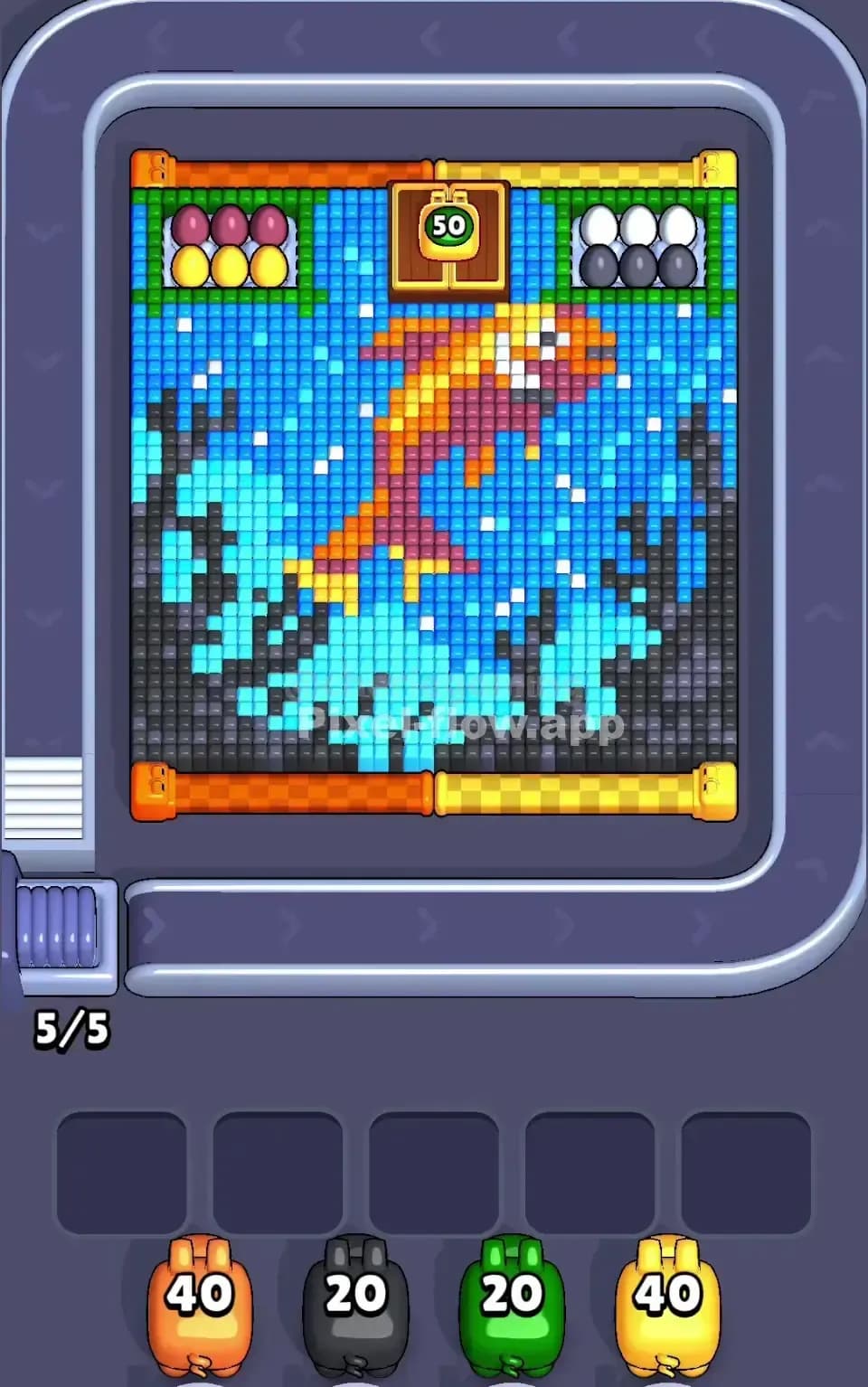
Pixel Flow Level 527 Solution | Pixel Flow 527 Walkthrough
How to beat Pixel Flow Level 527: Video solution & walkthrough. The fastest way to pass Pixel Flow 527.
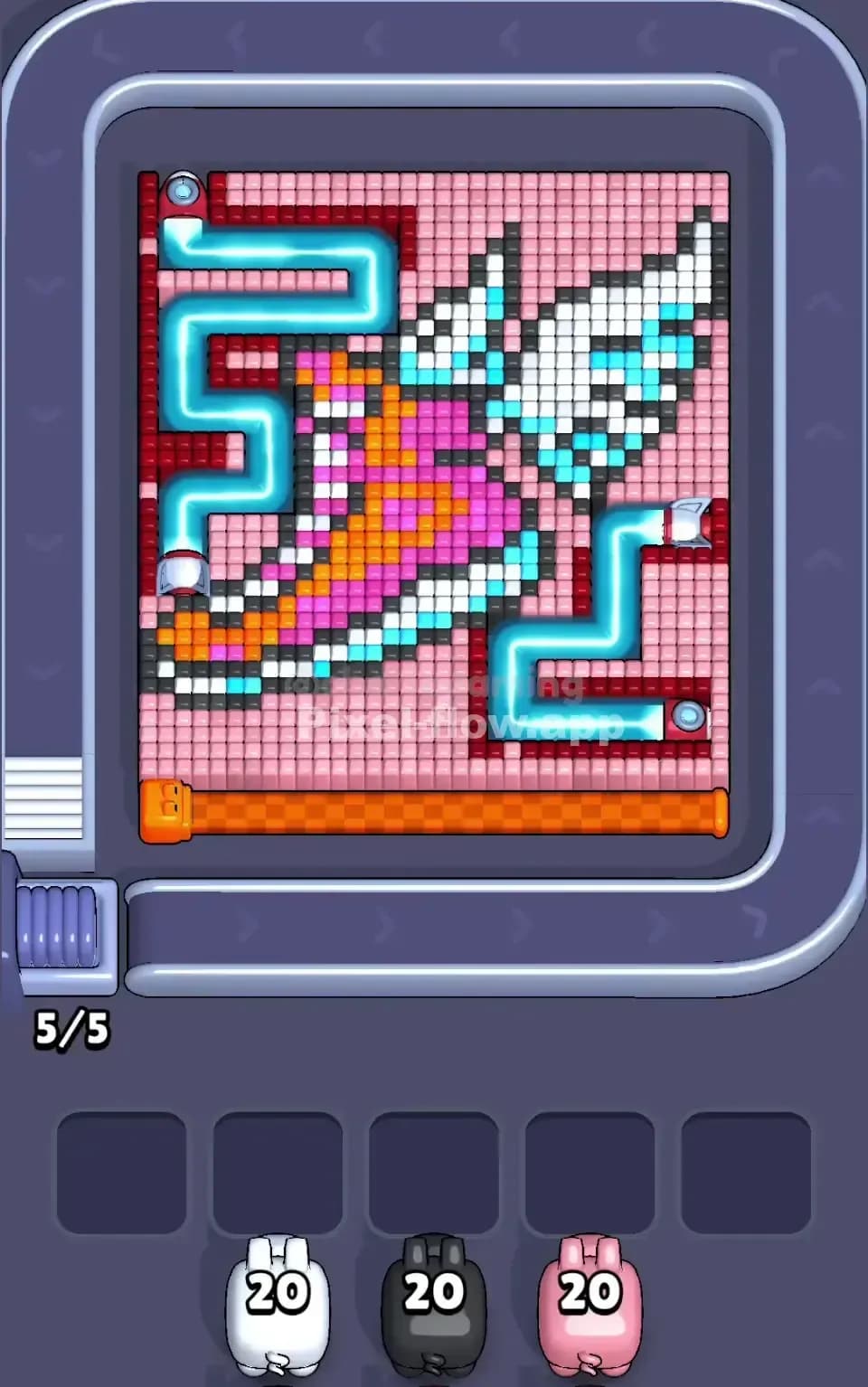
Is this the wrong level layout?🤔
Pixel Flow randomizes levels for different players. Don't worry, just upload a screenshot of your board, and our AI will find the correct video instantly.
Pixel Flow Level 527 Walkthrough
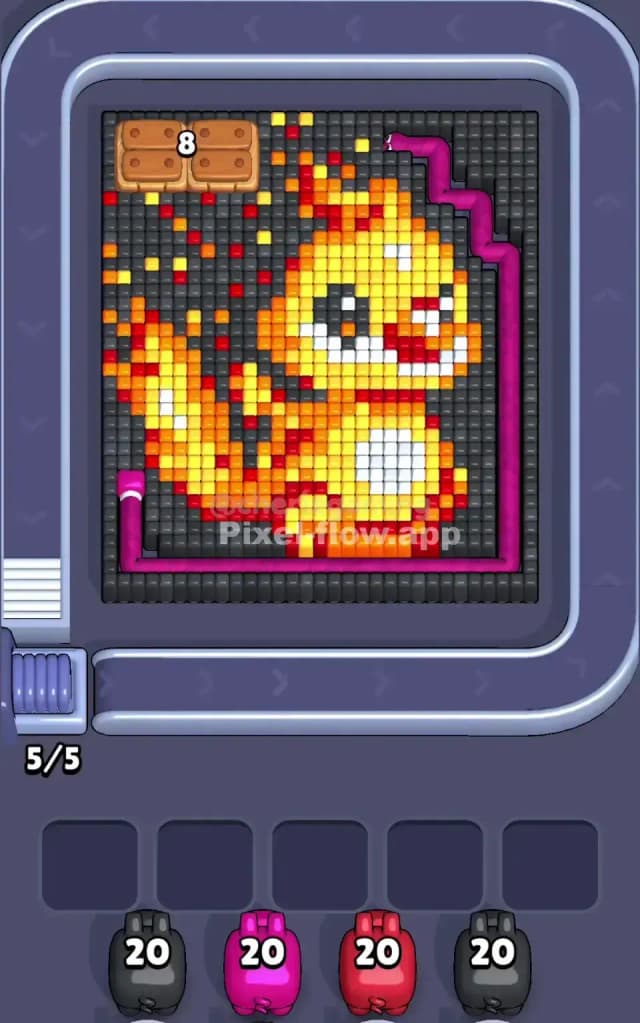
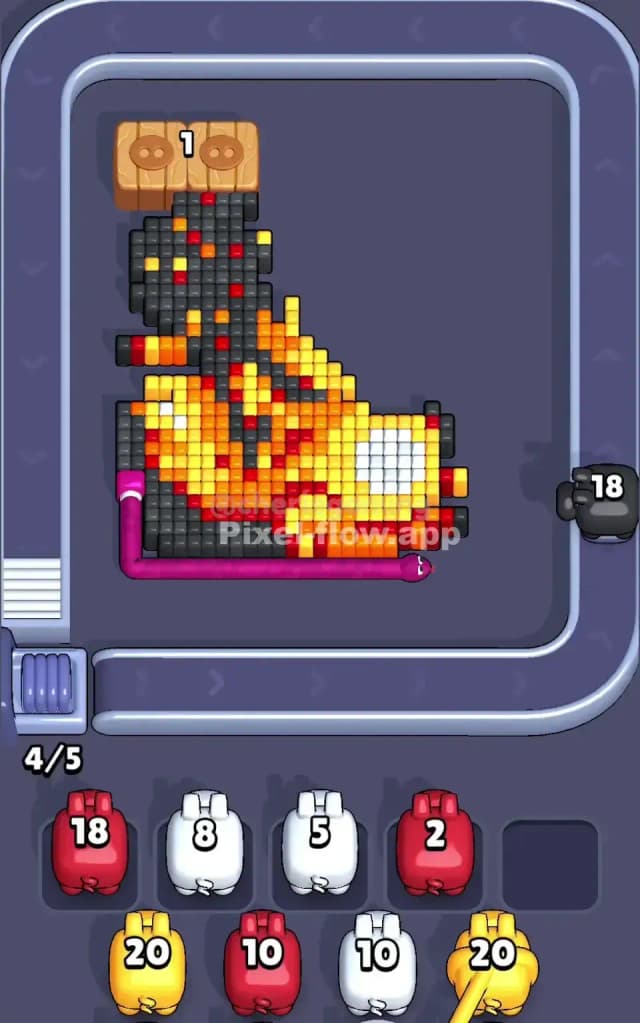
This level features a vibrant, fiery creature—looks a bit like a pixelated squirrel or fox made entirely of flame. It has a large tail on the left and a face facing right. The colors are strictly warm tones: Orange, Yellow, and Red, with a bright White belly and eye. The background is a dense field of Dark Grey voxels.
The main challenge here isn't just the depth of the picture; it’s the obstacles. You have Wooden Crates (HP 8) blocking the top left corner, and a massive Pink Snake Barrier winding along the bottom and right edges. This barrier is a wall. You cannot shoot through it. This makes Pixel Flow Level 527 a very hard level because your firing angles are severely restricted. You effectively can only attack from the left and the top-center.
Pixel Flow Level 527 Overview
Think of this image as a fire spirit caught in a trap. The spirit is trying to look right, but that side is walled off by the Pink Snake Barrier. The creature’s tail is massive and made of Orange and Red pixels, dominating the left side of the board. The White pixels are buried deep in the chest and eye, acting as the "core" you are trying to reach.
The asymmetry here is brutal. The left side is completely open. The right side is a nightmare. The Pink Snake Barrier hugs the pixels so tightly that pigs traveling down the right side of the conveyor belt become useless for almost the entire match. They simply can't see over the wall to hit the pixels behind it.
Furthermore, the Wooden Crates at the top act as a damage sponge. They sit right over the creature's head. You will waste ammo hitting these crates if you aren't careful, or worse, your pigs will refuse to shoot because the crates block the only valid color path.
Step by step solution walkthrough for Pixel Flow Level 527
First Color Zone to Erase in Pixel Flow Level 527
Ignore the creature. Look at the void. You must start by clearing the Dark Grey background, specifically on the Left Side.
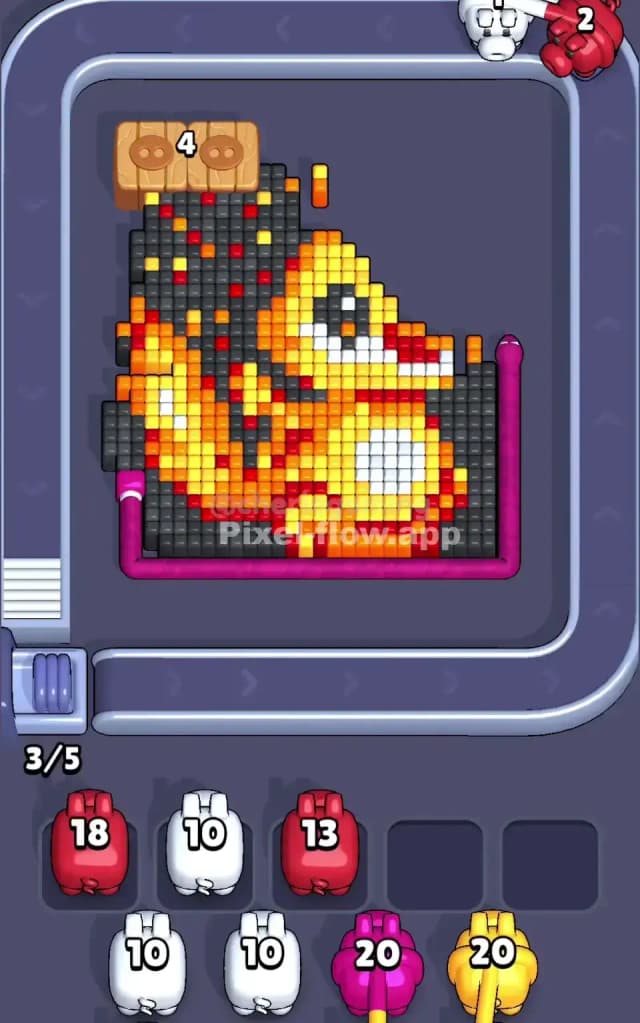
Why the left? Because the right side is dead to you right now. The Pink Snake Barrier prevents your pigs from hitting the dark grey pixels on the far right effectively until the picture thins out. If you send a Dark Grey pig while it is on the right side of the belt, it might drop into a slot because the snake blocks its line of sight.
Wait for Dark Grey pigs to reach the left side of the conveyor belt before tapping. This clears out the massive block of empty space behind the tail. Clearing this zone is critical because it opens up the "side profile" of the fire squirrel. Once that grey wall is gone, you can start hitting the Orange and Red tail pixels from the side, which is the safest way to spend ammo without clogging your slots.
How to pass Pixel Flow Level 527 without power ups or boosters
Once the background is mostly gone, the level gets messy. You will have a half-eaten fire squirrel, and those Wooden Crates will likely still be intact.
Here is the strategy to survive the mid-game slump:
- Peel the Tail: The tail is the thickest part of the image. Use your Red and Orange pigs to shave layers off the tail from the left side. Do not try to snipe the face yet.
- Respect the Snake: Only tap pigs when they have a clear Line of Sight (LOS). If a Yellow pig is on the right side belt, and the Yellow pixels are behind the Pink Snake, do not tap. That pig will fall into your slot and stay there. Wait for the pig to loop around to the top or left.
- The Crate Problem: Eventually, you have to break the Wooden Crates. They have 8 HP. You don't need to focus them down intentionally. As you clear the Dark Grey and Red near the top, stray shots will naturally chip away at them. However, if you see a pig that has no other target but can hit a crate to waste a shot and keep the belt moving, take the shot. It’s better to waste 1 ammo on a crate than to have a full slot bar.
Mid-level, you will likely have a lot of Orange left. This color connects the tail to the body. Focus on severing that connection. If you cut the image in half by clearing the middle, you expose more surface area for your pigs to hit.
Last Details You Clean Up in Pixel Flow Level 527
The end game of Pixel Flow Level 527 is usually the White belly and the Yellow face highlights.
By now, the Wooden Crates should be destroyed, clearing the top lane. The Pink Snake is still annoying, but because you have shaved the picture down from the left, the remaining pixels are likely sitting centrally or to the right.
Be very careful with the final Yellow pixels. They often hide behind the curve of the Pink Snake near the top right. A pig might look like it has a shot, but the angle is too steep. Always prioritize shots from the Top belt or the Left belt for these final pixels.
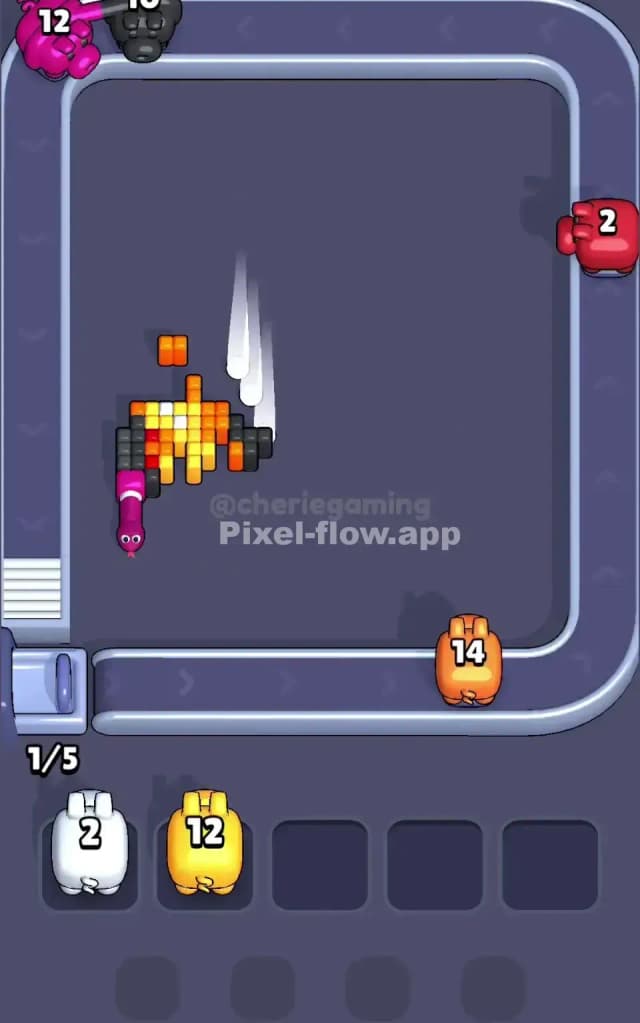
The White blocks are usually stacked in a simple column. They are easy to clear once exposed, but they are often the last thing to go because they are buried under the Orange body. Save your high-ammo White pigs for the very end; don't let them clog your slots early on when they have zero targets.