Pixel Flow Level 528 Solution Walkthrough | Pixel Flow 528

How to solve Pixel Flow level 528? Get instant solution for Pixel Flow 528 with our step by step solution & video walkthrough.

Share Pixel Flow Level 528 Guide:
Pixel Flow Level 528 Gameplay

Pixel Flow Level 528 Overview

The Starting Board and Visual Layout

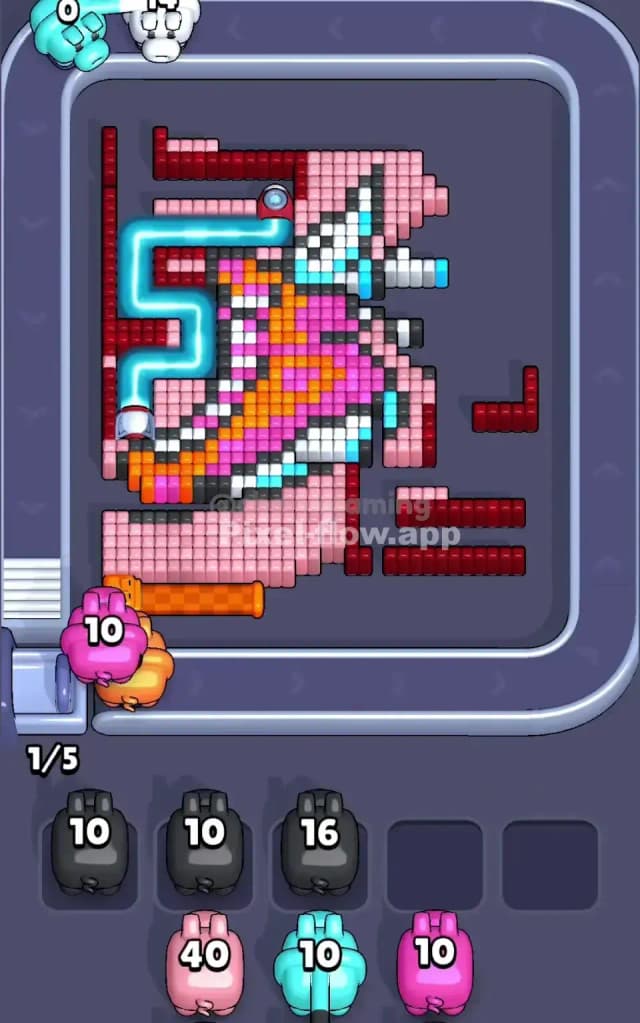
Pixel Flow Level 528 presents a vibrant, intricate voxel mosaic dominated by a swirling abstract design with bold color zones. The board is packed with bright yellows, magentas, cyans, and deep blues arranged in flowing patterns that create an almost hypnotic visual effect. You'll immediately notice a dark gray or black vertical stripe running down the left side of the board—this acts as a critical anchor and separation point. The pixel art is dense and multi-layered, with no obvious empty spaces on the surface, which means you're dealing with a deeply stacked puzzle where colors hide beneath one another. The composition suggests that certain color families dominate the upper and middle sections, while others are buried deeper, waiting to be exposed as you progress through Pixel Flow Level 528.

Win Condition and Deterministic Nature

Your goal in Pixel Flow Level 528 is straightforward: clear every single voxel cube from the board. You'll do this by launching color-matched pigs in the correct sequence—each pig shoots cubes of its own color, and every destroyed cube costs exactly one ammo. The beauty of Pixel Flow Level 528 lies in its complete determinism: the pig queue order is fixed, and each pig's ammo count never changes. This means there's no luck involved, only strategy and foresight. You'll see five waiting slots below the board, and filling all of them with "stuck" pigs (those who've run out of valid targets) while those pigs still have unused ammo is a guaranteed loss. Winning Pixel Flow Level 528 requires planning several moves ahead and ensuring that every pig either depletes its ammo entirely or reaches an empty slot without blocking future progress.

Why Pixel Flow Level 528 Feels So Tricky

The Devastating Bottleneck

The biggest challenge in Pixel Flow Level 528 is managing the dark gray or black color cubes clustered on the left side of the board. These cubes form a dense barrier that doesn't match the ammo counts of the more abundant pigs in your queue. When you encounter a pig that needs to clear these scattered dark gray blocks but doesn't have enough ammo, or when no dark gray pig appears until you've already filled waiting slots with other colors, you hit a critical jam. I've watched runs of Pixel Flow Level 528 collapse because a single black pig arrived three positions too late, leaving cyan and magenta pigs stranded with nowhere to go. This bottleneck isn't just about having the right color—it's about having that color arrive at precisely the right moment in your sequence.

Subtle Problem Spots and Awkward Color Patches

Beyond the dark gray barrier, Pixel Flow Level 528 hides several sneaky traps. The magenta and cyan zones are visually dominant and appear scattered throughout the board, but their actual cube counts don't always match the ammo values of the pigs you'll send. You might think you're safe because magenta looks abundant, only to realize that the visible magenta cubes are exhausted two pigs early, leaving you with a magenta pig holding 50 ammo and nowhere to spend it. Similarly, the yellow clusters in the upper portions can deceive you—some are on the surface, but others are tucked behind deeper layers and won't appear until you've cleared overlying colors. The blue zones present another wrinkle: while blue appears throughout Pixel Flow Level 528, it's often fragmented, meaning a blue pig might clear just 15 visible cubes before running dry, then get stuck with 35 unused ammo points.

When the Level Clicked for Me

Honestly, Pixel Flow Level 528 frustrated me for several attempts. I kept trying to greedily clear the most obvious colors first, thinking that opening up the board would somehow solve itself. That's when I realized I was playing reactively instead of proactively. The moment everything changed was when I sat down and mapped out the pig queue, counted the exact ammo on each, and worked backward from the end of the puzzle. Suddenly, I saw that the final pigs were designed to clean up leftover scraps, not to do heavy lifting. Once I respected the deterministic design and trusted that the level's creators had built in a solvable path, Pixel Flow Level 528 went from infuriating to genuinely elegant.

Step-by-Step Strategy to Clear Pixel Flow Level 528

Opening: Establishing Safe Passage

Your opening moves in Pixel Flow Level 528 should prioritize keeping at least two waiting slots empty for the first 8–10 pigs. Start by sending the first pig, whatever color it is, but don't assume you need to clear every visible cube of that color. Instead, let that pig burn through its ammo and see where it lands. The goal is twofold: gather intel on how many cubes of each color actually exist, and establish a sustainable rhythm where no pig gets stuck prematurely. If the first pig is cyan, for example, let it spray cyan cubes and accept that some cyan will remain for later. Resist the urge to fill all five waiting slots before you've seen at least half of your pig queue. This breathing room in Pixel Flow Level 528 is your insurance policy against catastrophic jams. Watch the waiting slots carefully—if you're filling them faster than three pigs deep after roughly five launches, you're likely being too greedy with one color and need to pivot.

Mid-Game: Sequencing and Layer Exposure

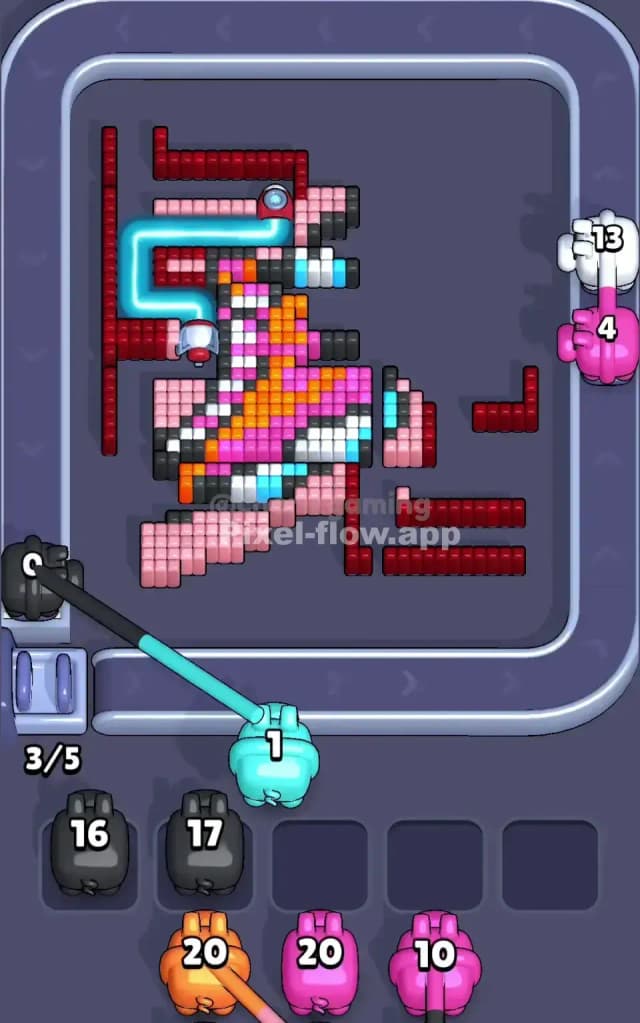
Once you're past the first five pigs in Pixel Flow Level 528, you should have a clearer picture of which colors are abundant and which are scarce. This is where active layer management becomes critical. When you send a blue pig in Pixel Flow Level 528, don't just think about the blue cubes it'll destroy in isolation—think about what it exposes underneath. Often, clearing a surface layer of one color will reveal deeper cubes of a different color, effectively "feeding" a future pig in your queue. If you notice that the dark gray barrier is still blocking progress, strategically park a high-ammo pig (like cyan or magenta) by letting it exhaust onto the exposed board, then immediately follow up with a dark gray pig to break through the logjam. Mid-game is also when you'll identify "trapped" ammo situations: if a magenta pig is coming up and you've already cleared most visible magenta, actively use earlier pigs to expose deeper magenta layers. Don't be afraid to let a pig partially fill a waiting slot if doing so keeps the next pig active and productive in Pixel Flow Level 528.

End-Game: Closing the Loop Cleanly

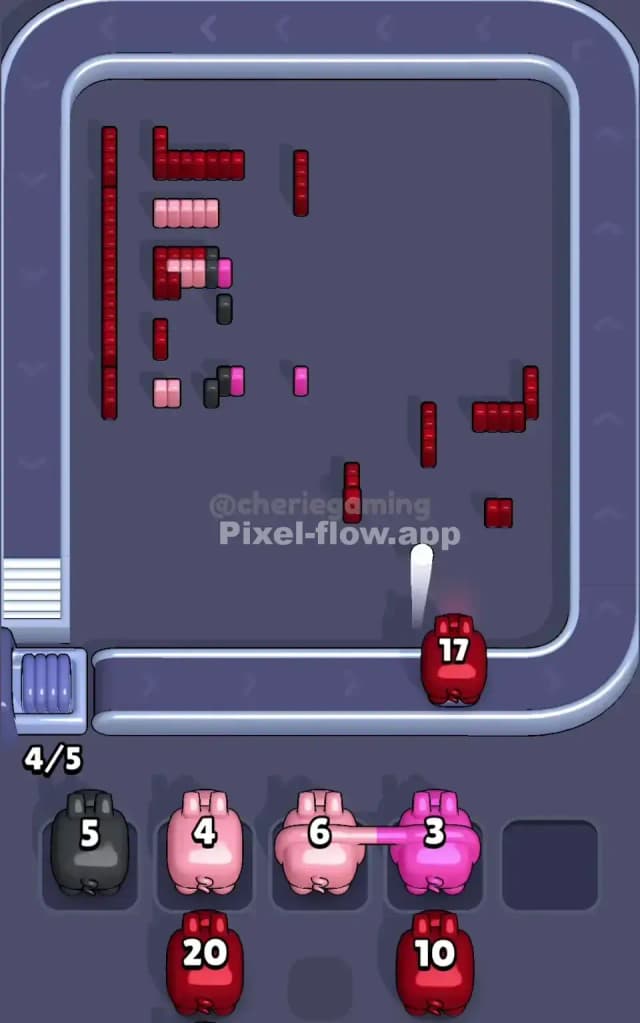
The final stretch of Pixel Flow Level 528 is where precision pays off. By the time you reach the last four or five pigs, your waiting slots should either be empty or contain only pigs with critically low or zero remaining ammo. The last pigs in your queue are typically designed to be "cleanup" units—they target scattered leftovers of multiple colors that have accumulated on the board. Here's the key: don't expect the final pig to be the color you think is most abundant. Instead, trust that the level design has balanced things such that if you've followed the previous strategy correctly, the final pig's color will align perfectly with what remains. If you reach the end-game and find yourself with a waiting slot holding a pig that still has 30+ ammo, you've made a sequencing error earlier—backtrack mentally and identify which pig you should have parked differently. The satisfying moment in Pixel Flow Level 528 comes when the last pig fires its last cube, the board clears completely, and all five waiting slots are empty.

The Logic Behind This Pixel Flow Level 528 Plan

Exploiting Determinism Over Chance

What makes Pixel Flow Level 528 different from casual puzzle games is that every variable is locked in from the start. The pig order is fixed, ammo counts never change, and the board state is always the same. This determinism means you can't rely on luck or improvisation—you must work with the level's hidden architecture rather than against it. The strategy outlined above leverages this by respecting the pig queue as a finite resource and treating waiting slots as a safety mechanism, not a solution. Every decision you make in Pixel Flow Level 528 should account for the next two or three pigs waiting to enter the board. By holding back ammo and deliberately leaving cubes for later pigs, you're essentially choreographing a pixel-perfect sequence where every pig gets its moment to shine without orphaning unused ammo in the waiting slots.

Staying Calm and Counting Ahead

The psychological side of Pixel Flow Level 528 is just as important as the tactical side. When things feel chaotic—pigs stacking in waiting slots, colors running out unexpectedly—it's easy to panic and rush the next move. Instead, pause. Look at the upcoming three pigs in the queue, count their ammo, estimate the visible cubes of their colors on the board, and ask yourself whether sending the next pig will create a jam or relieve one. This mindfulness transforms Pixel Flow Level 528 from a frantic guessing game into a meditative planning exercise. You'll find that your success rate skyrockets once you internalize the habit of planning two or three moves ahead. The level rewards patience and forward-thinking, not reflexive button-mashing. Every time you clear Pixel Flow Level 528, you're really just executing a pre-planned symphony where you've already composed all the notes—you're just playing them in order.