Pixel Flow Level 540 Solution | Pixel Flow 540 Walkthrough
How to beat Pixel Flow Level 540: Video solution & walkthrough. The fastest way to pass Pixel Flow 540.
Is this the wrong level layout?🤔
Pixel Flow randomizes levels for different players. Don't worry, just upload a screenshot of your board, and our AI will find the correct video instantly.


Pixel Flow Level 540 Walkthrough
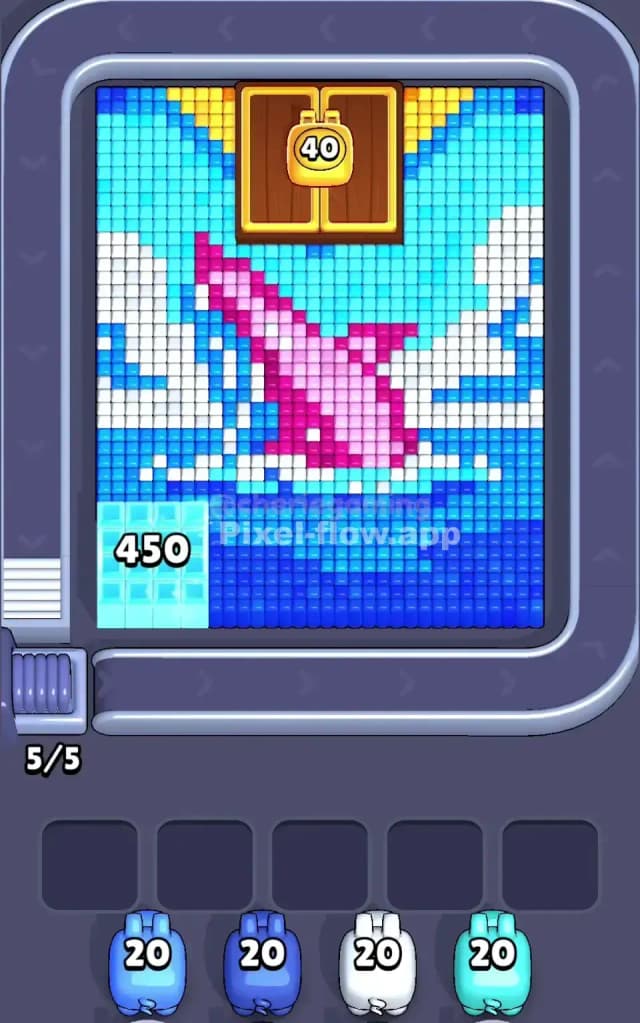
This level features a vibrant pixel art scene of a pink dolphin breaching out of the ocean, splashing white foam into a cyan sky. The board is heavily segmented. You have a massive Cyan sky zone at the top, a Dark Blue ocean at the bottom, and White cloud/splash accents scattered through the middle.
However, the artwork is guarded by two massive obstacles that dictate your strategy. First, in the bottom left corner, there is a massive Ice Block with 450 HP. Second, at the very top center, a set of double Brown doors is locked with a 40-hit padlock. Because of these two high-durability barriers that restrict your board space, this is considered a very hard level. You have to balance grinding down that massive ice block while keeping your five pig slots open.
Pixel Flow Level 540 Overview
The scene is a freeze-frame of a pink dolphin mid-jump. The layout is distinctly layered, which matters for your shot angles.
- The Centerpiece: The dolphin itself is bright Pink and Magenta. It is currently buried in the middle of the board, surrounded by White foam pixels. You cannot access the main Pink body until you clear the surrounding White and Cyan.
- The Background: The top third of the board is almost entirely Cyan (light blue) pixels representing the sky. The bottom third is Dark Blue pixels representing the deep ocean.
- The Obstacles:
- Top Center: The Brown doors obscure a hidden layer. You can see hints of Yellow and Orange peeking out from behind the doorframe, suggesting a sunset or sun rays are hidden behind the lock.
- Bottom Left: The 450 HP Ice Block is an absolute tank. It occupies a 4x4 grid space. It doesn't have a specific color requirement, which means you will likely need to dump spare pigs here, or rely on splash damage if that mechanic is active. However, its sheer size blocks shots from hitting the Dark Blue water behind it.
The asymmetry here is dangerous. The left side is blocked by ice, and the top center is blocked by wood. This funnels most of your early shots to the right side of the board.
Step by step solution walkthrough for Pixel Flow Level 540
First Color Zone to Erase in Pixel Flow Level 540
Your primary target must be the Cyan Sky.
Narratively, this makes sense because the sky is the "lightest" layer sitting on top of the background. Logically, it is the safest bet for two reasons. First, the Cyan pixels are plentiful and spread across the top left and top right corners. They are easy targets that don't require precise aiming. Second, clearing the Cyan pixels opens up the "shoulders" of the board, allowing you to eventually fire at the White foam and the Brown door lock from better angles.
If you ignore the Cyan sky and try to force damage onto the Dark Blue water at the bottom, you will struggle. The Dark Blue pixels are crowded near the 450 HP Ice Block. If your pigs can't reach the dark blue pixels because the ice is in the way, they will drop into your waiting slots. If you fill your slots with Dark Blue pigs while the ice block is still standing, you will clog your board and lose. Clear the high Cyan pixels first to keep your ammo cycling.
How to pass Pixel Flow Level 540 without power ups or boosters
Once the Cyan sky is gone, the board enters a dangerous mid-game state. You will have the Pink Dolphin exposed, surrounded by White foam, and the Brown doors at the top will likely still be locked.
Here is how you survive the grind without boosters:
- Prioritize White Pigs: The White pixels represent the splashing water and clouds. These pixels wind through the middle of the board, separating the sky from the sea. You must clear these to open a direct line of fire to the Pink Dolphin.
- The Door Lock Protocol: The Brown doors have a yellow "40" on them. This lock counts down every time a pig hits it (or a matching color block adjacent to it is cleared). Do not obsess over this. Let it happen naturally as you clear the upper White clouds. The pigs will naturally chip away at the lock while aiming for other blocks.
- Managing the Ice Block: The 450 HP block is your biggest threat. You cannot destroy it quickly. Instead, look at your pig queue. If you see a pig color that has no valid targets on the board (for example, a Green pig when there is no Green), check if the game allows that pig to hit the Ice Block. If not, you must be extremely careful not to let "dead" colors clog your slots.
- Dark Blue Discipline: Only deploy Dark Blue pigs if they have a clear shot at the water pixels on the right side of the board. The left side is blocked by the ice. If the right side is clear, fire away. If the right side is blocked by other colors, wait.
Last Details You Clean Up in Pixel Flow Level 540
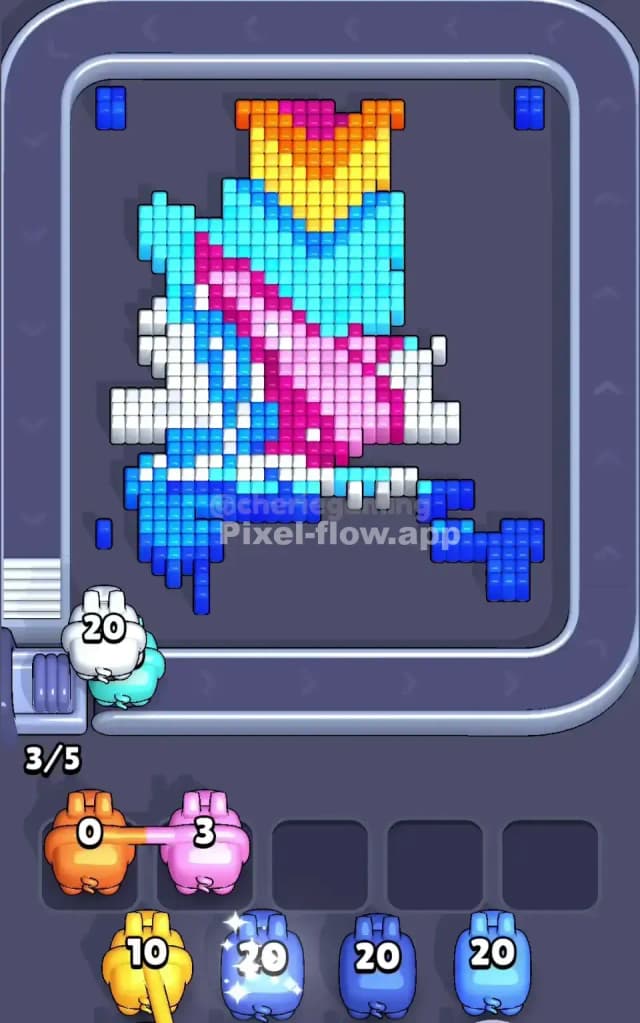
As you approach the end, the visual landscape shifts dramatically. The Cyan sky and White foam are gone. The massive 450 HP Ice Block should finally be destroyed, revealing the Dark Blue water pixels that were hiding behind it.
The Brown doors at the top will shatter, revealing a hidden layer of Orange and Yellow pixels (the sun rays).
Your final moves will involve a specific color sequence:
- Pink/Magenta: You finally clear the dolphin itself. Since it is in the center, it’s usually easy to hit.
- Hidden Sunset: The last cubes to clear are often the Orange and Yellow ones that were trapped behind the Brown doors. Because they were revealed late, you probably haven't spent any ammo on them yet. Ensure you have empty slots ready to catch the Orange and Yellow pigs that the conveyor belt will suddenly start spitting out.
The level ends when you scrub the last Yellow pixel from the top center frame. Watch out for stray Dark Blue pixels that might have been hiding in the bottom left corner behind the ice—don't let those be the reason you fail at 99%.