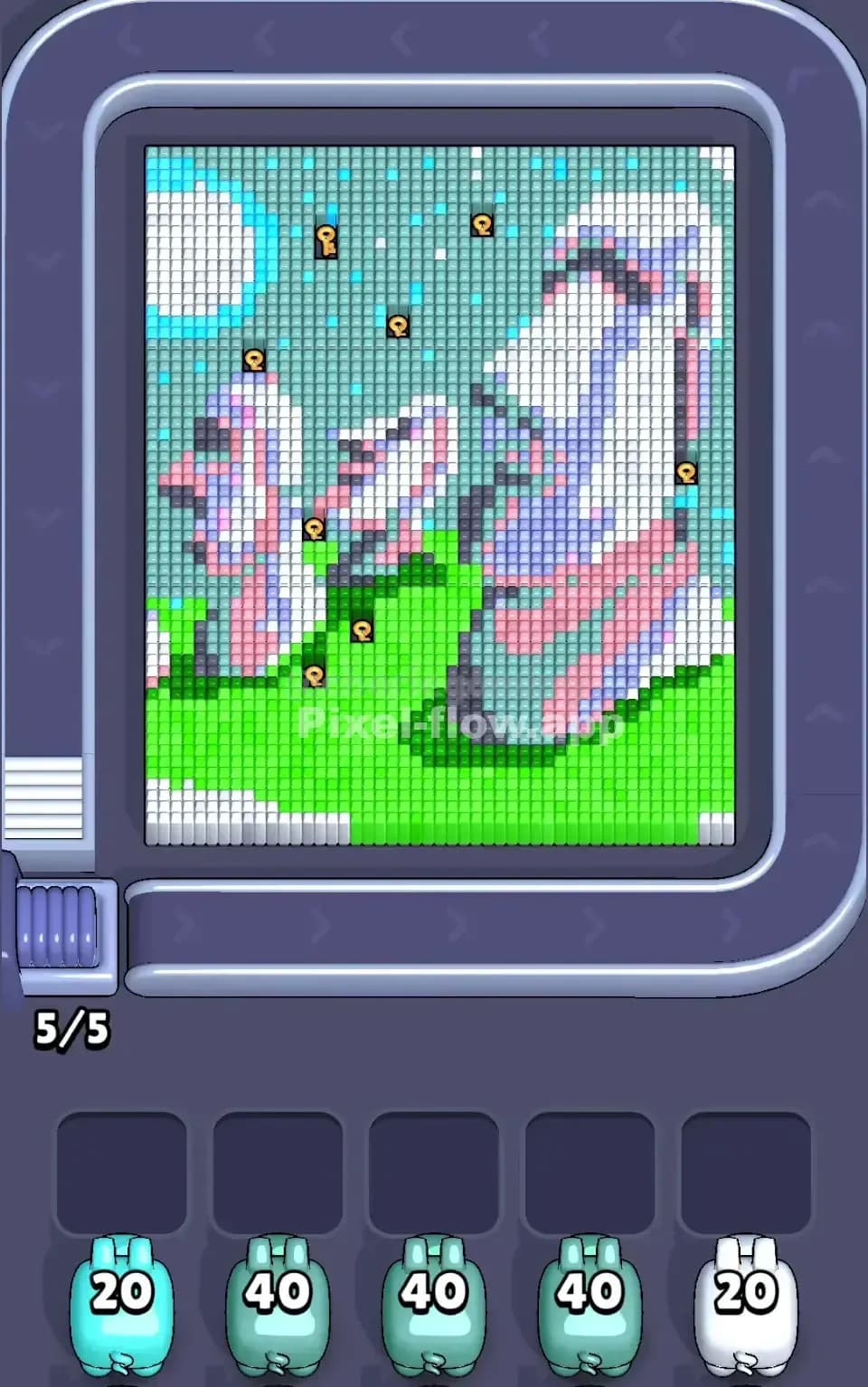
Pixel Flow Level 553 Solution | Pixel Flow 553 Walkthrough
How to beat Pixel Flow Level 553: Video solution & walkthrough. The fastest way to pass Pixel Flow 553.
Is this the wrong level layout?🤔
Pixel Flow randomizes levels for different players. Don't worry, just upload a screenshot of your board, and our AI will find the correct video instantly.
Pixel Flow Level 553 Walkthrough
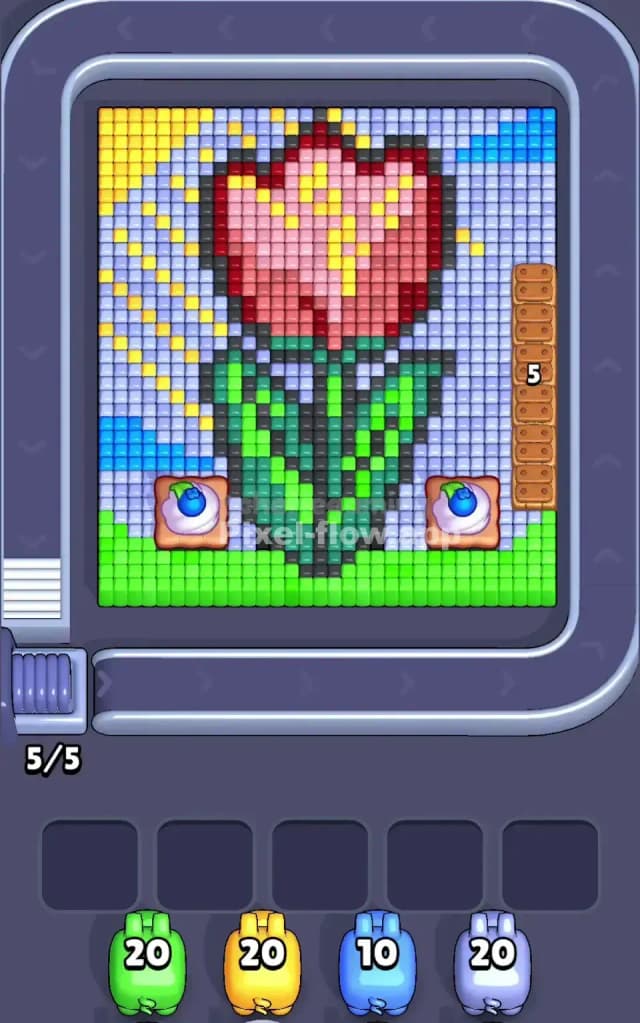
This level features a large, bright pixel art scene of a red tulip standing in a field of green grass, set against a sunny sky. The board is densely packed. You have a massive block of green grass at the bottom, a complex red and pink flower head in the center, yellow sun rays in the top left, and a patchy blue and white sky filling the gaps.
The main challenge here is the sheer volume of "filler" sky blocks (white and light blue) that cage the central flower. You must clear these outer layers to reach the darker colors of the stem and petals buried underneath. Because the layers are deep, mistakes pile up quickly if you grab pigs that can't hit the lower layers yet. Is this a very hard level? No. It is moderately challenging due to the layering, but the color zones are distinct enough to manage if you are patient.
Pixel Flow Level 553 Overview
Imagine a bright spring day. The centerpiece is a tall tulip with red outer petals and a lighter pink/yellow center. It stands on a sturdy green stem flanked by two large leaves. The bottom of the board is a thick, uniform carpet of green grass.
The top left corner is dominated by a yellow sun spreading rays downward. The rest of the background is a mix of white clouds and light blue sky patches. Notice the right side of the board features a vertical column of wooden crates (Obstacles) blocking access to the sky tiles behind them. There are also two "cupcake" power-up tiles sitting on top of the grass layer, one on each side of the stem.
This layout is asymmetrical. The left side is open sky and sun. The right side is cramped by those wooden crates. This means your white and blue pigs will have an easier time clearing the left side first, while the right side requires specific moves to break those crates before you can clean up the sky behind them.
Step by step solution walkthrough for Pixel Flow Level 553
First Color Zone to Erase in Pixel Flow Level 553
I start by shaving off the green grass at the very bottom.
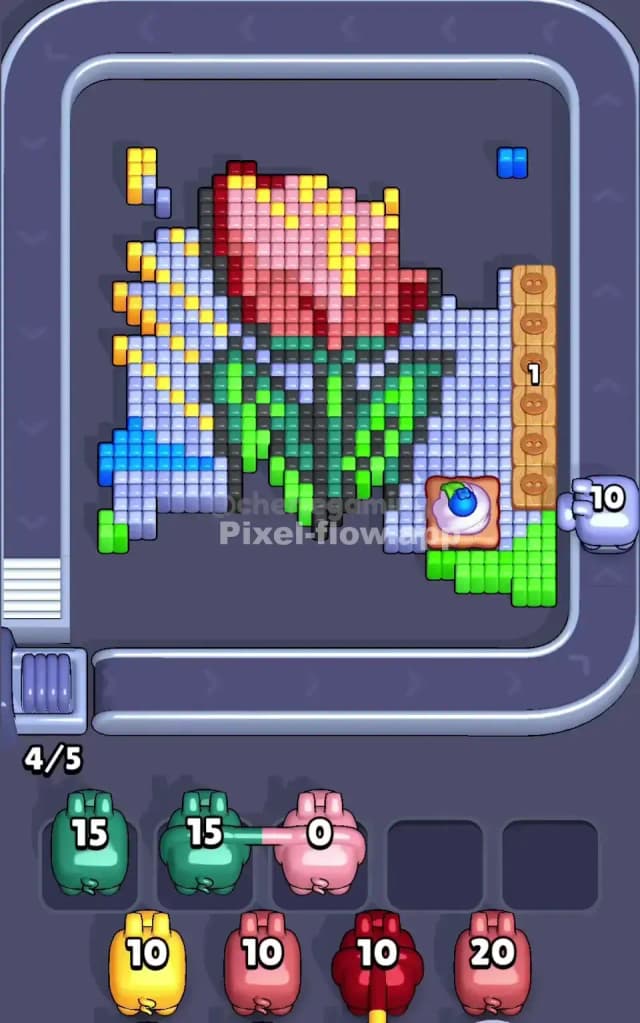
Here is why: it is the most accessible, high-volume color on the board. The bottom row is completely exposed green. Using a green pig here guarantees you will drain its ammo efficiently without clogging your waiting slots. Clearing this bottom foundation also does something crucial: it lowers the stack. By removing the grass, you often expose the bottom tips of the leaves or the stem, and more importantly, you clear a huge horizontal space that prevents stray shots from getting blocked later. Once the grass is gone, the board feels much less claustrophobic.
How to pass Pixel Flow Level 553 without power ups or boosters
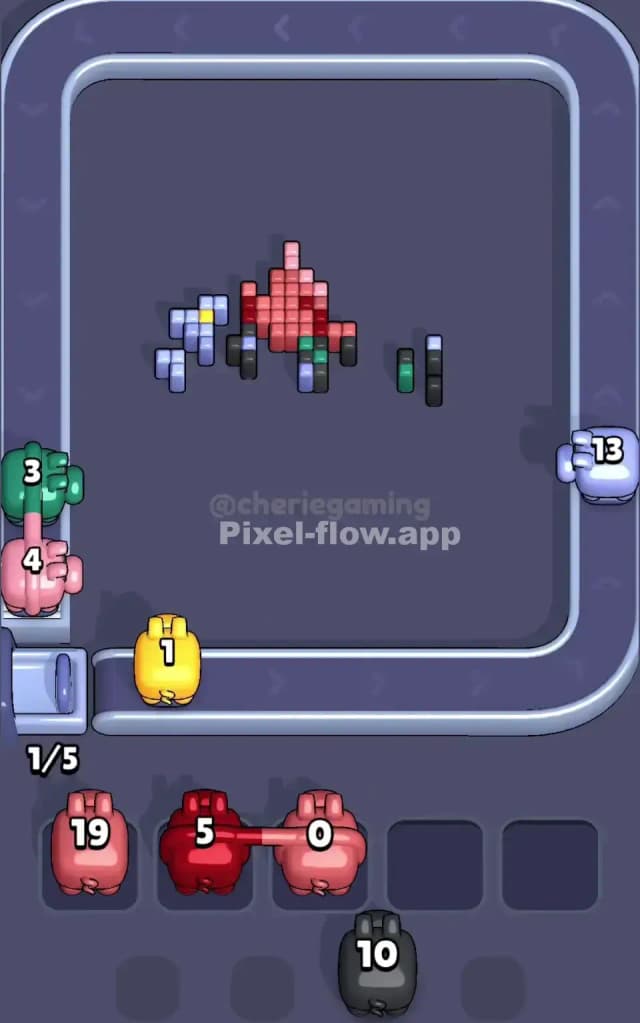
Midway through, the picture looks like a floating flower. The grass is gone. The yellow sun in the top left should be your next target because it sits on the surface layer.
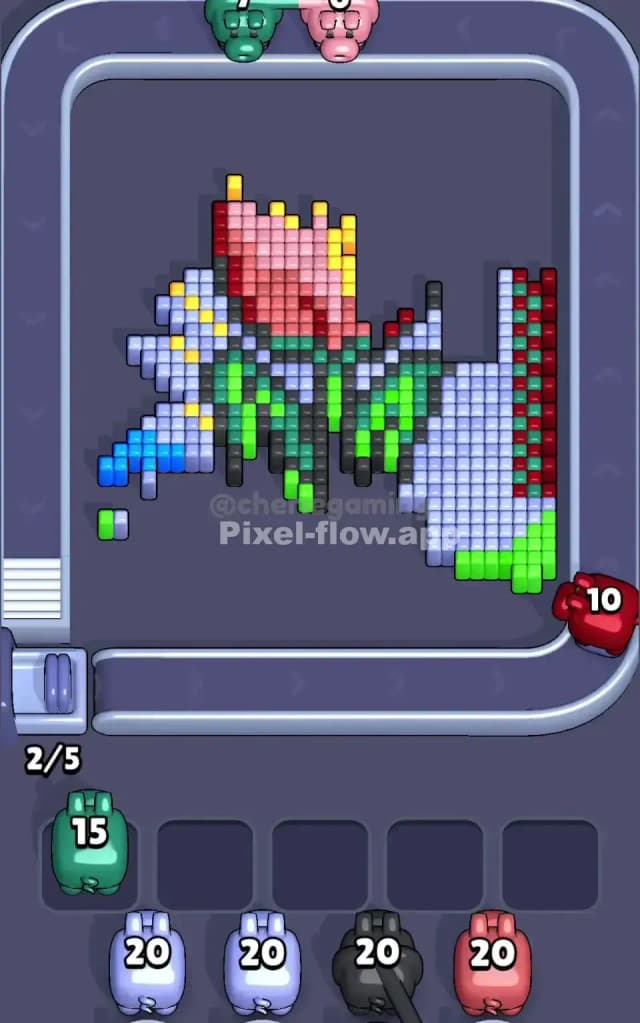
Once the sun and grass are removed, you are left with the tricky "sky cage" of white and blue blocks surrounding the red flower. This is the danger zone. Do not grab red or dark green pigs yet. They will just sit in your slots with 20 ammo and nowhere to shoot because the white/blue sky is blocking the flower.
Focus entirely on White and Light Blue pigs. You need to peel the sky away like an onion skin.
- Use White/Blue pigs to clear the left side of the flower first.
- On the right side, you must deal with the wooden crates. You likely need to clear adjacent blocks or use specific obstacle-clearing pigs if available (though standard color matching often clears the path around them).
- Only when the red petals are clearly visible—meaning there is no white block physically in front of them—should you pick a Red pig.
If you grab a Red pig too early, it will shoot maybe 3 exposed pixels and then sit there, clogging a slot while you desperately wait for a White pig to clear the way. Patience is key. Clear the wrapper (sky) before you eat the candy (flower).
Last Details You Clean Up in Pixel Flow Level 553
The final moves usually involve the deep core of the flower. You will likely have a few stubborn Dark Green blocks from the stem or Dark Red blocks from the petal shadows remaining.
Often, a single column of white sky hides behind those wooden crates on the far right. It’s easy to miss. Make sure you check behind the crates. The very last cubes to pop are usually the dark outline blocks of the tulip, which were buried deepest under the bright pink center. Watch your ammo count on the final stretch; sometimes the game hides a single pixel of a color you thought was finished, forcing you to keep a slot open for that specific pig.