Pixel Flow Level 56 Solution Walkthrough | Pixel Flow 56

How to solve Pixel Flow level 56? Get instant solution for Pixel Flow 56 with our step by step solution & video walkthrough.

Share Pixel Flow Level 56 Guide:
Pixel Flow Level 56 Gameplay
Pixel Flow Level 56 Solution 1
Pixel Flow Level 56 Solution 2
Pixel Flow Level 56 Solution 3

Pixel Flow Level 56 Overview

The Starting Board and Pixel Art

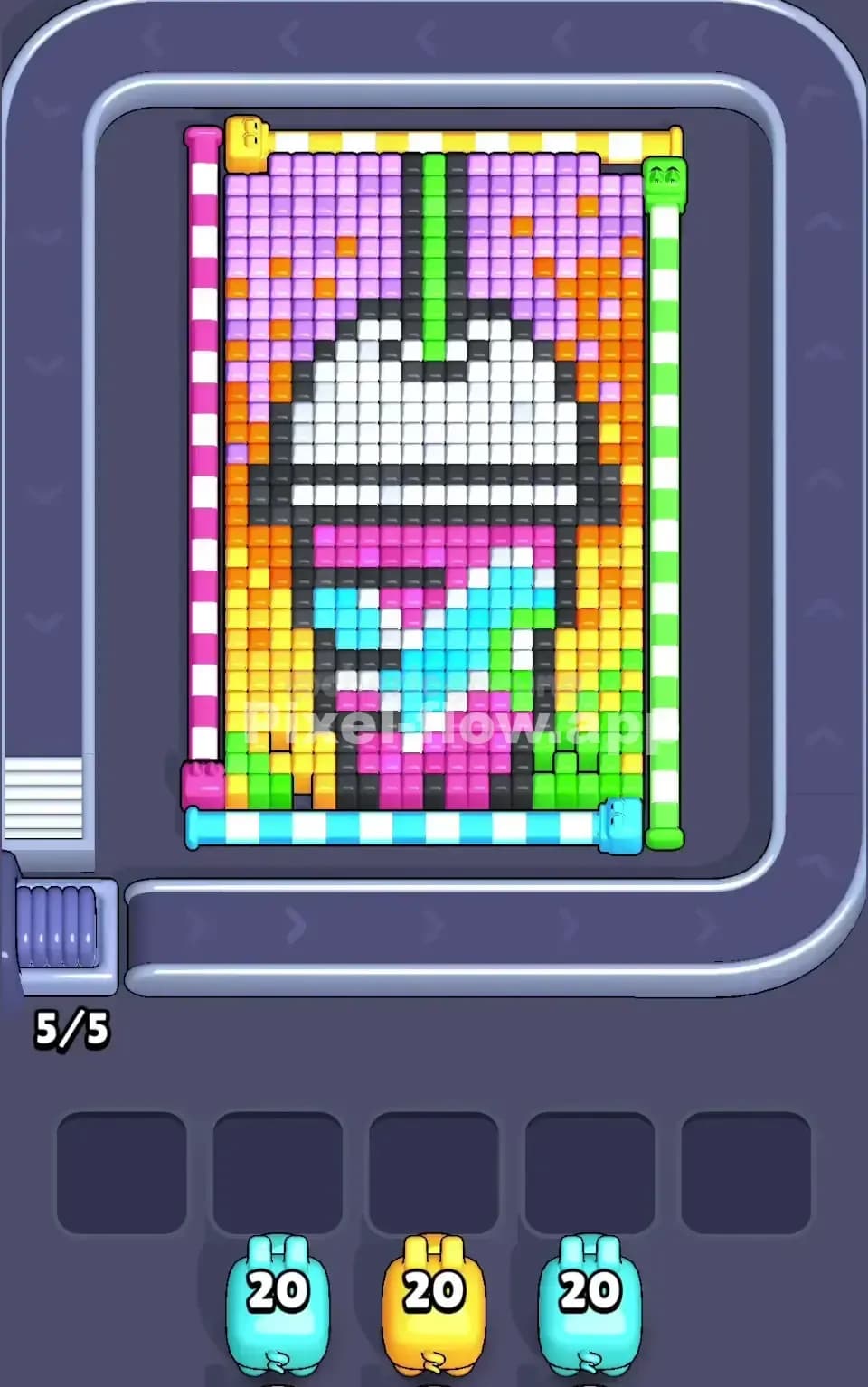
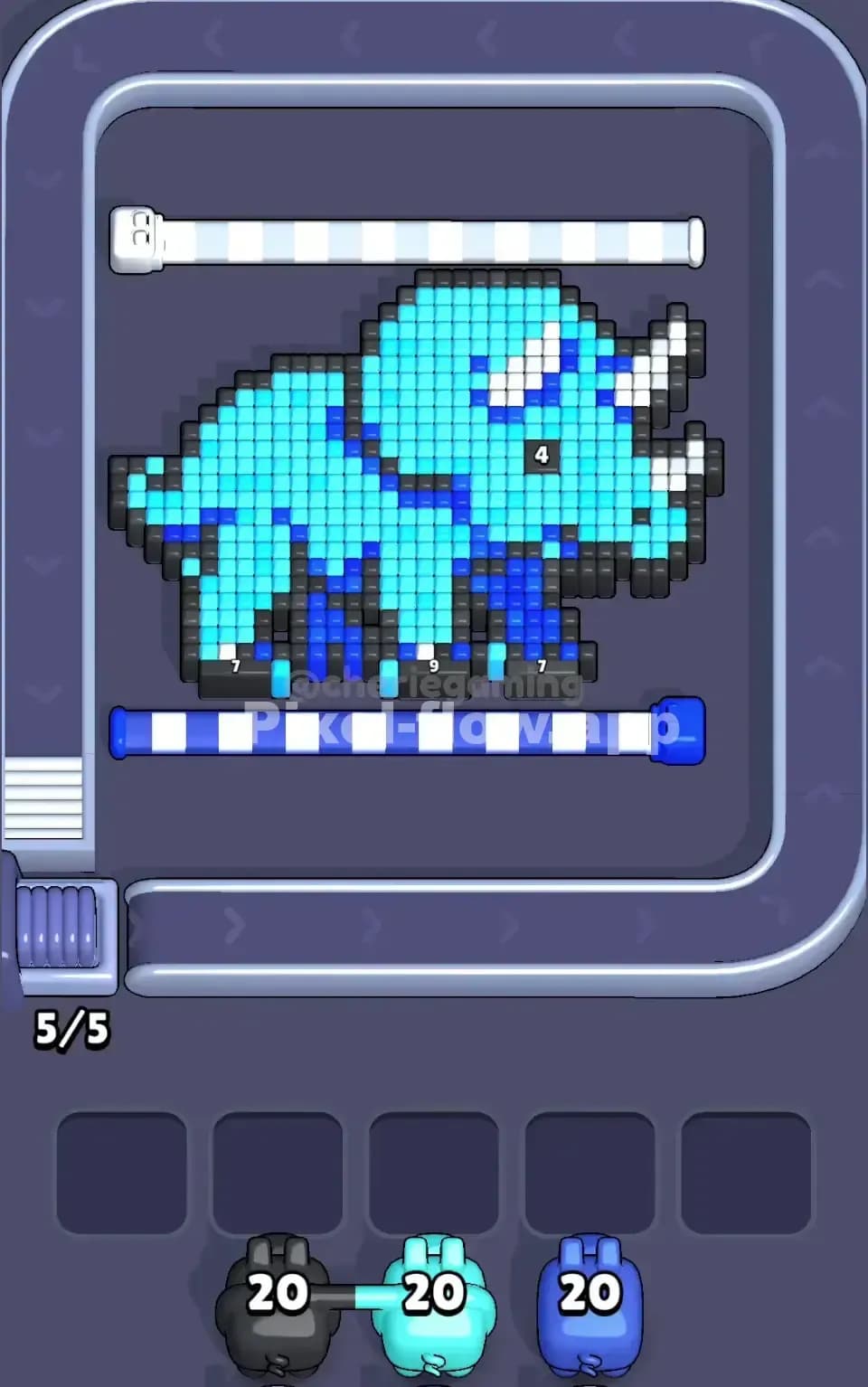
Pixel Flow Level 56 presents you with a striking underwater or aquatic theme, dominated by a large blue and cyan gradient forming what looks like a whale or sea creature in the center of the playing field. The board is framed by layers of black and dark gray voxels that form the "background," with white accent cubes creating highlights and depth. On either side of the board, you'll notice the two active pigs: a red pig on the left and a bright lime-green pig on the right, each perched atop their conveyor belts with 10 ammo visible. A third white pig with 10 ammo sits in the queue, ready to drop once you've made your first move. This tri-color setup means you're managing red, green, and white pixels simultaneously, which is more complexity than it might first appear.

The Win Condition and Deterministic Nature

To beat Pixel Flow Level 56, you must clear every single voxel cube from the board—nothing left behind, no hidden pockets of color lurking beneath. The beautiful part? Every pig's ammo count is locked in from the start, and the pig order never changes. This means Pixel Flow Level 56 isn't a guessing game; it's a logic puzzle where the solution is deterministic. If you know how many red cubes exist, how many the red pig can shoot, and in what sequence to fire them, you can plan your entire run before you press a single button. That certainty is both reassuring and intimidating, because it also means there's often only one correct path to victory.


Why Pixel Flow Level 56 Feels So Tricky

The Central Color Density Bottleneck

The biggest challenge in Pixel Flow Level 56 is the sheer concentration of blue and cyan cubes packed into the center of the board. These light blue pixels form the "body" of the creature and take up a massive portion of your play area. Here's the problem: you only have red and green pigs actively shooting at the start, and neither of those colors directly overlaps with the blue mass. That means you're forced to clear the surrounding white and black frames first, which feels counterintuitive when the real "meat" of the puzzle is sitting right in front of you. If you rush and try to expose the blue layer too quickly, you'll end up with a red or green pig stuck in the waiting slots with ammo still loaded but nowhere to aim. That's an instant loss scenario, and it's what catches most players on their first attempt at Pixel Flow Level 56.

Awkward White and Black Filler Patches

Beyond the central bottleneck, Pixel Flow Level 56 hides several nasty surprises in its white and black cubes. The white pixels aren't evenly distributed; some clusters sit deep within the frame, requiring you to clear specific sequences to expose them. If you fire your white pig too early, you'll burn through ammo on accessible white cubes while leaving inaccessible ones for later, creating an ammo shortage exactly when you need it most. The black cubes are even trickier because they're purely structural—they're the "background" that frames the artwork, yet they still need to vanish for a complete board clear. You might have a pig with 10 ammo aimed at only 7 black cubes on the surface; the remaining 3 are hidden behind red or green, and you can't get to them until those colors are cleared. It's a dependency web that'll trip you up if you're not thinking two or three moves ahead.

The Personal "Aha" Moment

I'll be honest—Pixel Flow Level 56 frustrated me the first three times I tackled it. I kept watching my red pig burn its 10 ammo on scattered white cubes, then get stuck in the waiting slots while perfectly good blue cubes remained untouched. The level felt unfair until I realized I was playing reactively, just mashing pigs as they arrived. Once I took 30 seconds to count the colors and trace the dependencies, everything clicked. The solution for Pixel Flow Level 56 involves restraint and foresight, not aggression. That shift in mindset is what transforms the level from "impossibly cheap" to "satisfyingly intricate."


Step-by-Step Strategy to Clear Pixel Flow Level 56

Opening: Clearing the Left Frame and Exposing Pathways

Start by firing your red pig into the red-and-white striped frame on the left side of the board. Your red pig has 10 ammo, and there are roughly 10 red cubes visible on the left conveyor. Don't panic if the count seems close; your job is to eliminate every red cube on that left edge so you can see what's hiding behind it. Fire methodically, aiming for the topmost red cubes first and working your way down. As you clear the red frame, you'll expose white cubes that were previously hidden, and you'll create "lanes" that your green and white pigs can target later. The key is to stay calm and not switch pigs mid-way. Finish your red pig's job completely before the next pig drops. Keep at least two empty waiting slots at this stage; if you're burning through both slots already, you've made an error in your sequencing. By the end of this opening phase, Pixel Flow Level 56 should look markedly different, with the left frame mostly transparent.

Mid-Game: Sequencing Pigs for Ammo Efficiency

Once your red pig is spent and seated in a waiting slot, your lime-green pig becomes active. Fire your green pig into the right side of the board, mirroring your red pig strategy and clearing the green-and-white striped frame on the right. Again, your goal is to exhaust all visible green targets before the pig gets stuck. The white pig should drop into a waiting slot once you've cycled through red and green. Now comes the tricky part: assess what's been exposed. If you've cleared both frames cleanly, you'll have access to white cubes throughout the board, and the blue creature should be partially visible. Fire your white pig at the white cubes around the blue mass—think of them as "scaffolding" you're removing to reach the art underneath. Don't fire at random whites; prioritize those touching or partially obscuring the blue. After your white pig exhausts its ammo, two of your five waiting slots should be full. You're now at a critical juncture: the red and green pigs are returning to the conveyor for a second round. This is where Pixel Flow Level 56 separates the patient from the panicked. Don't just blindly shoot; take stock of what colors remain and which pigs can actually target them without getting stuck again.

End-Game: The Final Color Push and Buffer Management

By mid-game in Pixel Flow Level 56, your board is mostly cleared except for the blue creature at the center and possibly some stubborn black cubes lodged in corners or hidden recesses. Your red and green pigs are cycling back, but this time, they might not have 10 full cubes to target. Here's where ammo conservation matters: if your red pig can only see 3 red cubes remaining, it'll fire at those three, then drop into a waiting slot with 7 unspent rounds. That's dangerous—a stuck pig with leftover ammo is a ticking time bomb. To avoid this, try to fire red and green pigs at this stage only if you're certain their remaining targets match their remaining ammo, or if you can afford to "park" them in the waiting buffer for later. Your white pig might cycle through again too, and it should handle any remaining white scaffolding or highlights in the image. The absolute final phase of Pixel Flow Level 56 involves eliminating the blue cubes themselves (if they're not already cleared as a side effect of removing white cubes) and any lingering black background pixels. Usually, by the time all red, green, and white are gone, the blue falls away naturally, and the black background remains purely decorative—check if the level considers it cleared. If not, you may need to revisit your earlier strategy to expose those black cubes differently.


The Logic Behind This Pixel Flow Level 56 Plan

Exploiting Determinism Instead of Reacting

The reason this strategy works for Pixel Flow Level 56 is that it respects the deterministic nature of the puzzle. Instead of treating pigs as independent actors who shoot at whatever they feel like, you're treating them as tools with fixed ammo pools that must be spent in a planned sequence. By clearing the frames first (red and green) and the scaffolding second (white), you're removing the obstacles that hide the artwork, not attacking the artwork itself. This layering philosophy means your pigs are spending their ammo on the right targets at the right time, rather than wasting shots on "filler" colors that'll gum up your waiting slots. The blue creature in Pixel Flow Level 56 is the "reward" you're unlocking through discipline, not the first target you should charge. When you respect that order, the ammo counts align perfectly, and no pig gets stranded with unused firepower.

Staying Calm, Counting Ammo, and Planning Ahead

The mental discipline required for Pixel Flow Level 56 is arguably more important than reflexes. Take a breath between pigs. Count the visible cubes of each color—you don't need to be exact, just ballpark it. If your red pig has 10 ammo and you can only spot 7 red cubes on the board, ask yourself: are the remaining 3 hidden? Will clearing other colors expose them? Your waiting slots are your buffer—having all five full means game over. Watching the queue and knowing which pig is coming next lets you plan two pigs ahead. "My green pig is up in three moves; I need to make sure the waiting slots are clear by then, so I'll park my current red pig even if it has ammo left, as long as it's not creating a bottleneck." That forward thinking is what separates a loss from a clear. Pixel Flow Level 56 rewards patience and planning; it punishes panic.