Pixel Flow Level 749 Solution | Pixel Flow 749 Walkthrough
How to beat Pixel Flow Level 749: Video solution & walkthrough. The fastest way to pass Pixel Flow 749.
Is this the wrong level layout?🤔
Pixel Flow randomizes levels for different players. Don't worry, just upload a screenshot of your board, and our AI will find the correct video instantly.
Pixel Flow Level 749 Walkthrough
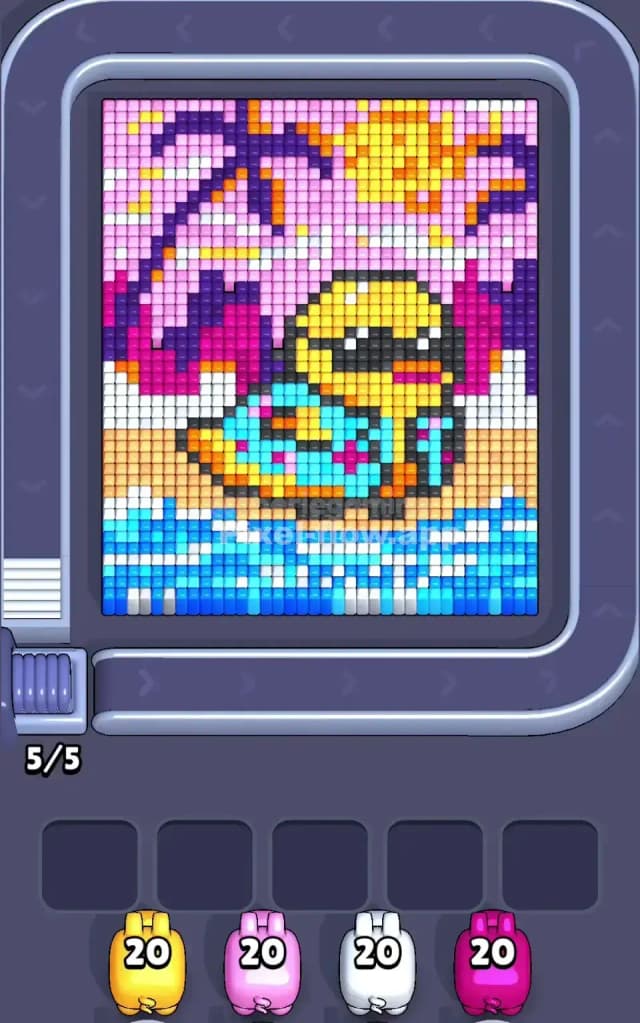
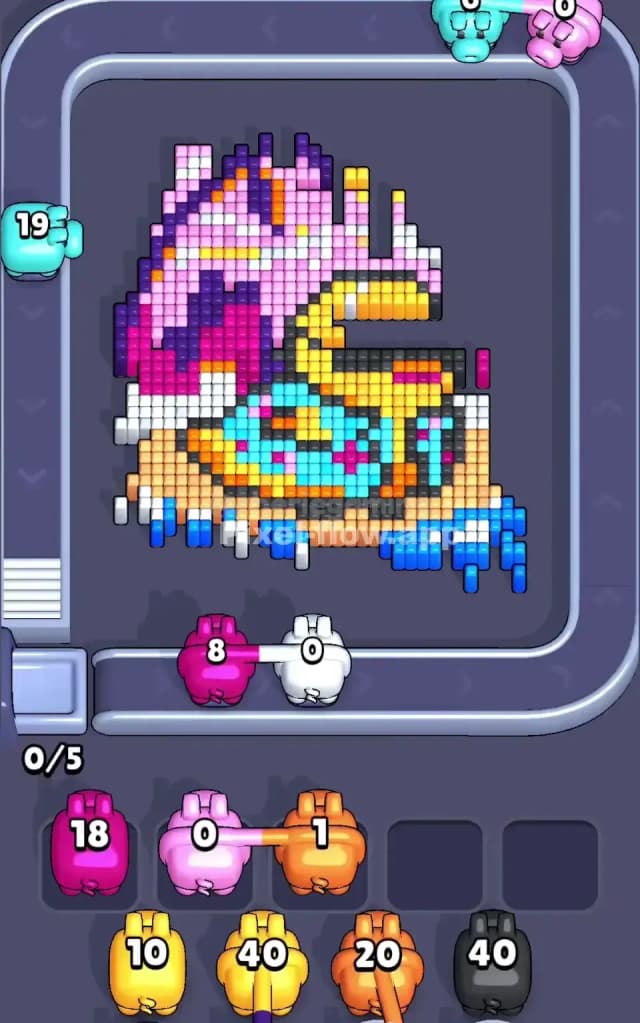
This puzzle is a vibrant summer snapshot: a yellow rubber duck wearing sunglasses, floating near a sandy beach with a sunset and palm trees in the background. Your job is to peel back the chaotic background layers—the sky and the water—to reveal the solid duck in the center.
The rules are strict. You must clear the outer "atmosphere" pixels before you can hit the core character. Because the water at the bottom and the palm trees at the top are made of scattered, mixed colors (checkerboard patterns), this is a very hard level. It is easy to clog your waiting slots with pigs that have no clear shots.
Pixel Flow Level 749 Overview
The scene depicts a "cool" rubber duck vacationing. The duck sits dead center, sporting dark grey sunglasses and pink cheeks. The environment is split horizontally. The bottom third is ocean water, a mix of light blue, cyan, and white foam. The middle band is tan sand. The top half is a pink sunset sky partially obscured by purple palm trees arching in from the left and right.
There is significant asymmetry here. The palm trees on the top left are heavy and thick, composed of dark purple and magenta. The top right is lighter, dominated by a yellow sun. This means your purple and magenta pigs will do heavy lifting on the left side, while yellow pigs will split their work between the sun (top right) and the duck (center). Be careful with the water at the bottom; it looks like a solid block, but it is a "dithered" mix of three different shades, making it a trap for careless ammo usage.
Step by step solution walkthrough for Pixel Flow Level 749
First Color Zone to Erase in Pixel Flow Level 749
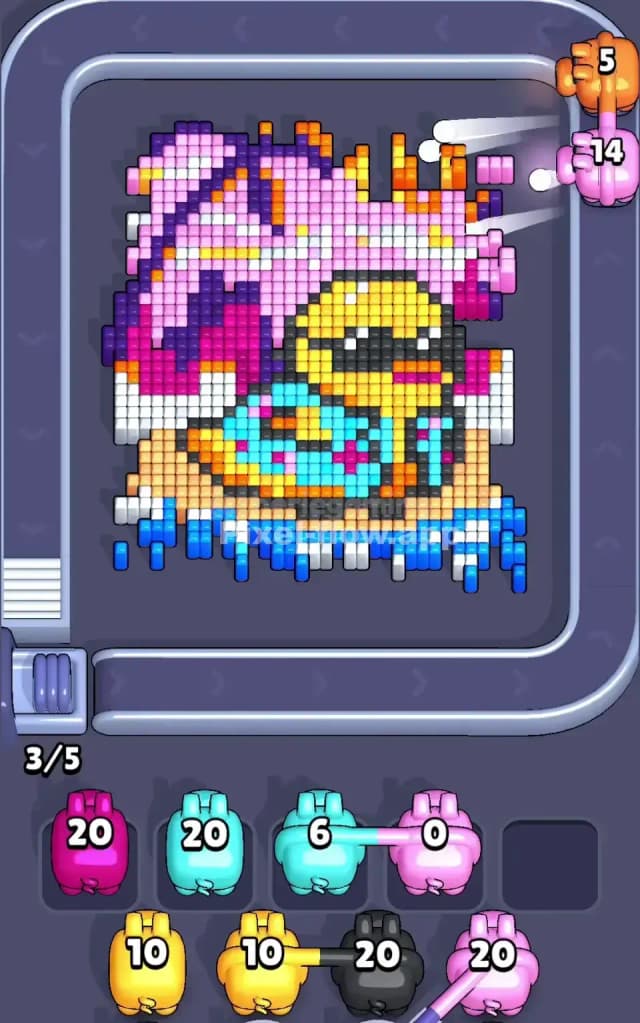
Start with the Light Pink sky.
Here is the logic: The sky fills the gaps between the palm leaves and surrounds the sun. It is the furthest "back" layer visually, but in Pixel Flow physics, it often acts as the filler that blocks access to the distinct shapes of the trees. By clearing the Light Pink zones first, you separate the messy purple palm trees from the yellow sun. This cleans up the top half of the board immediately.
Do not start with the water (Blue/White). The water pixels are interlaced. If you pick a White pig, it might only hit 5 pixels and then drop into your slot, clogging it while you wait for a Blue pig. The Pink sky is more contiguous.
How to pass Pixel Flow Level 749 without power ups or boosters
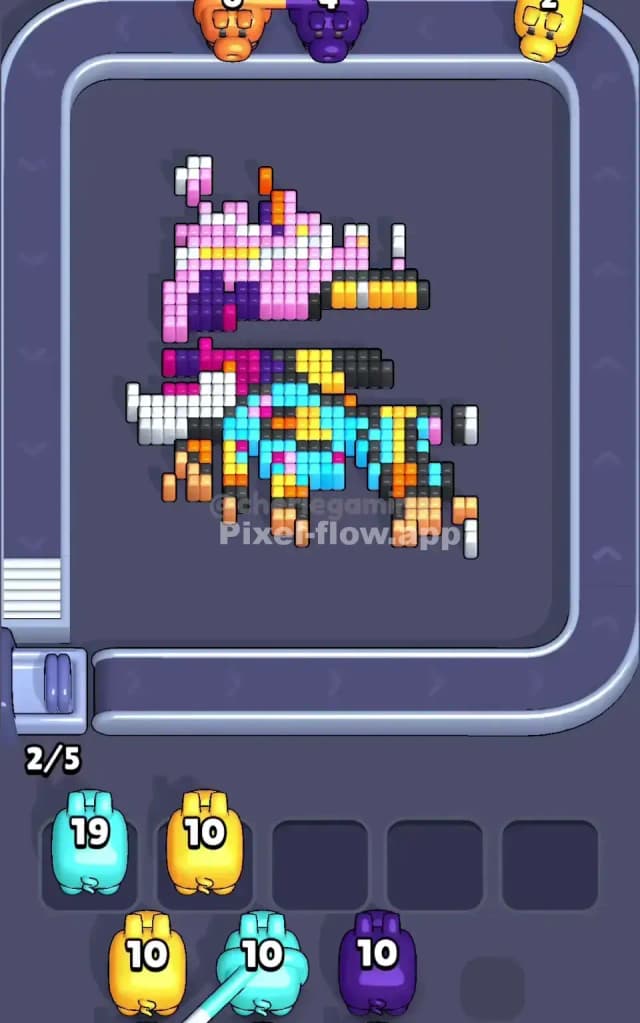
Once the sky is gone, the board usually looks messy. You likely have floating palm tree branches and a half-eaten ocean. At this mid-stage, you must discipline your color choices.
Refuse to touch the Yellow pigs yet. Even though the duck is big and yellow, and the sun is yellow, these are often on a "deeper" layer protected by the sand and water. If you pull Yellow pigs now, they will waste a few shots on the sun and then sit in your waiting slots, blocking you from winning.
Instead, focus entirely on the Tan/Beige Sand and the Cyan/Blue Water. Alternate between these earth tones. The sand creates a solid band behind the duck. Clearing the tan pixels usually unlocks the edges of the duck's body. Watch the bottom of the screen closely; you need to fully scrub the blue and white waves. Until the bottom row is empty, don't try to finish the main character.
Last Details You Clean Up in Pixel Flow Level 749
By now, the beach and sky are history. You are left with the rubber duck itself.
The final moves in Pixel Flow 749 almost always involve the Dark Grey/Black pixels of the sunglasses and the Orange pixels of the beak and wing details. These are small, specific targets. Save your high-ammo pigs for the main Yellow body of the duck, which should be fully exposed now. The very last shot will likely be the black outline or the shades, as they sit on the very top surface of the voxel stack. Ensure you have empty slots ready for these final, low-count colors.