Pixel Flow Level 81 Solution Walkthrough | Pixel Flow 81

How to solve Pixel Flow level 81? Get instant solution for Pixel Flow 81 with our step by step solution & video walkthrough.

Share Pixel Flow Level 81 Guide:
Pixel Flow Level 81 Gameplay
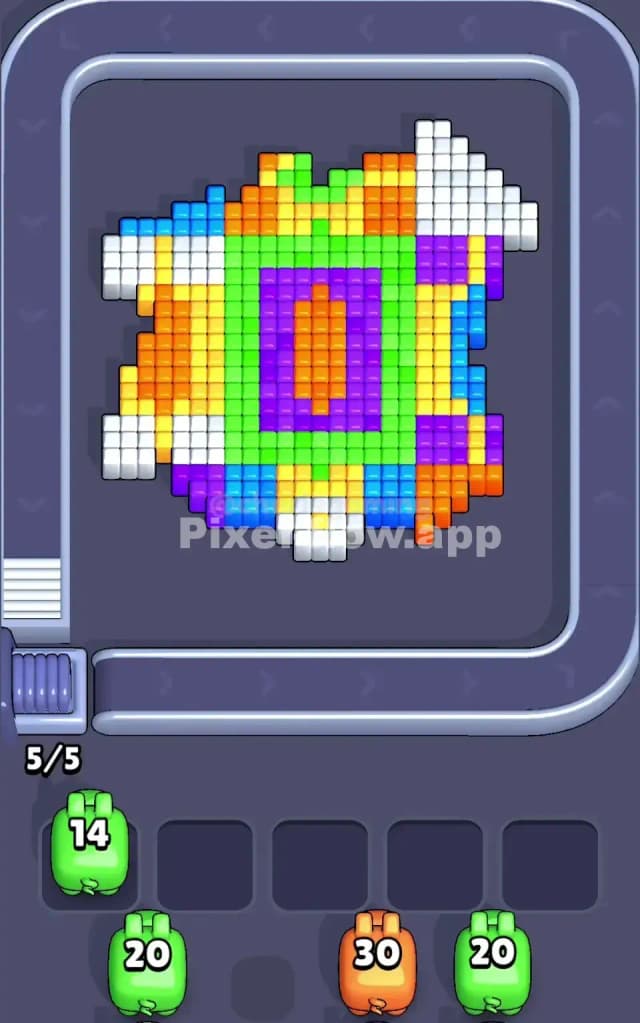
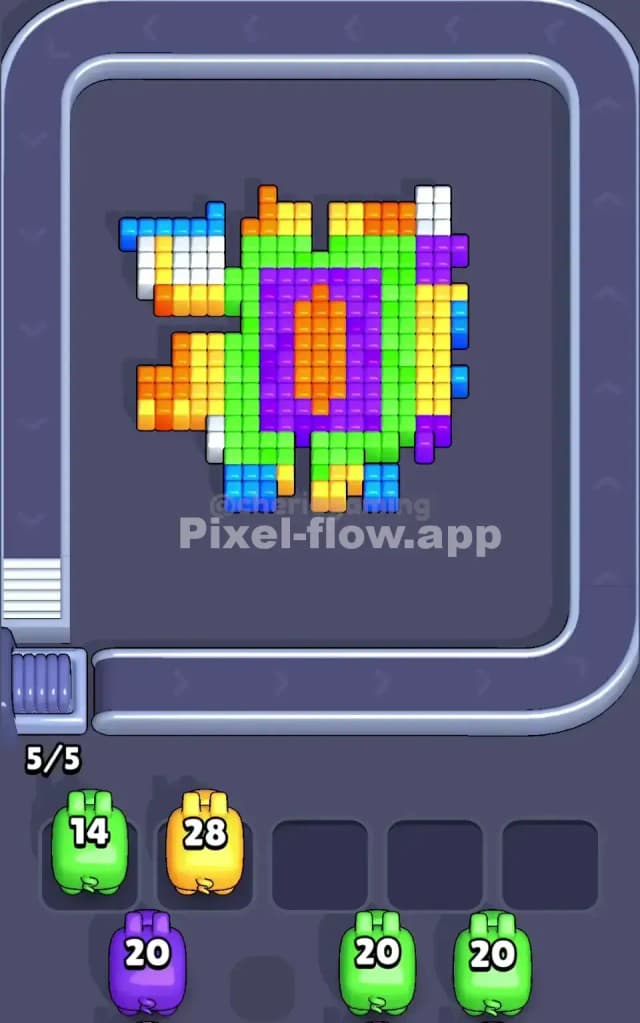
Pixel Flow Level 81 Solution 1
Pixel Flow Level 81 Solution 2
Pixel Flow Level 81 Solution 3

Pixel Flow Level 81 Overview

The Board Layout and Visual Challenge

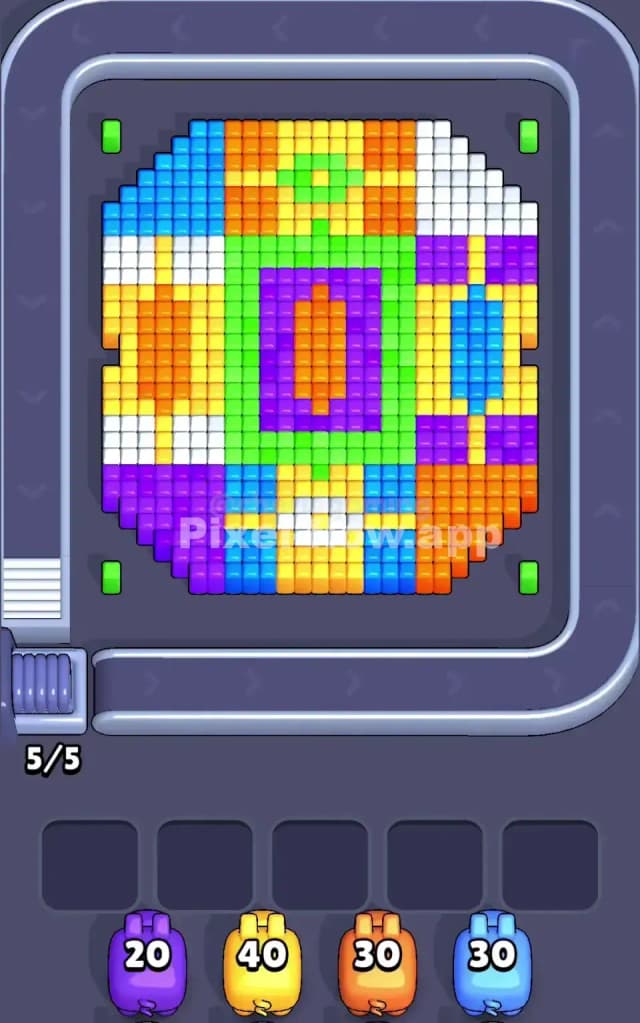
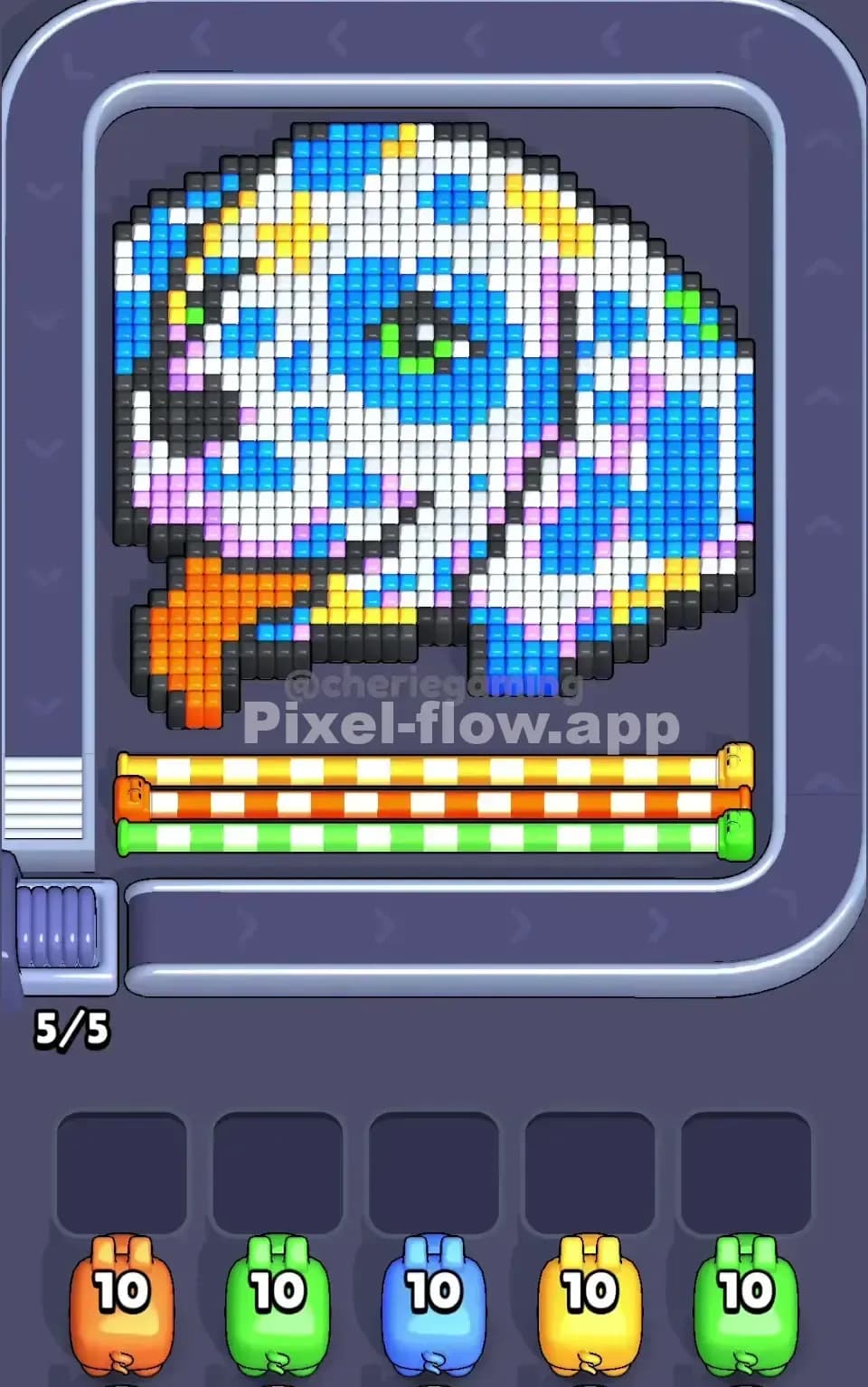
Pixel Flow Level 81 presents a beautiful, complex circular or mandala-like pixel art design with a deeply layered structure. The dominant colors you'll see on the surface are purple, yellow, orange, cyan, green, and white—arranged in a vibrant, intricate pattern that almost looks like a stylized flower or geometric medallion. What makes this level immediately intimidating is the sheer density of cubes and how they're distributed across multiple color zones. You're not just clearing a single band of one color; you're managing a sophisticated interplay of six different pig types, each with its own ammunition pool and targeting responsibility.

The starting board reveals multiple "trapped" colors buried beneath surface layers. White cubes cluster in specific pockets, green dominates large sections, and the purple, yellow, and orange populations are scattered throughout, creating a puzzle where the order of your moves determines whether you'll uncover hidden depths or jam your waiting slots. This is Pixel Flow 81 at its core: a test of sequencing and foresight rather than raw reflexes.

The Win Condition and Deterministic Nature

Your goal in Pixel Flow Level 81 is straightforward on the surface: clear every single voxel cube on the board. However, the path to victory depends entirely on executing a precise sequence with your four available pigs—purple (20 ammo), yellow (40 ammo), orange (30 ammo), and cyan (30 ammo). The conveyor belt will deliver them in a fixed order, and each pig's ammunition count is locked and deterministic. You cannot earn extra ammo or change pig order, so every decision you make in Pixel Flow Level 81 must account for the exact resources you have from the start.


Why Pixel Flow Level 81 Feels So Tricky

The Waiting Slot Bottleneck

The single biggest threat in Pixel Flow Level 81 is filling your five waiting slots with "stuck" pigs—those that have ammo remaining but no valid targets on the board. Once all five slots fill with immobilized pigs, the game ends in failure, even if you're close to victory. This level's complexity means you'll often face situations where a pig arrives but its color isn't exposed yet, forcing it into the buffer. If you're not careful, you'll accumulate three, four, maybe even five stranded pigs before you realize you've created an unrecoverable jam.

The purple pig (20 ammo) arrives first with massive destructive potential, but if you don't expose all the purple cubes early, you'll trap that pig prematurely. Similarly, the yellow pig (40 ammo) is your most ammunition-rich resource, yet yellow cubes are scattered in layers throughout Pixel Flow Level 81, meaning you might use only half its ammo before it bottlenecks.

Color Distribution and Hidden Layers

Pixel Flow Level 81 hides significant portions of each color beneath the surface. White cubes sit in isolated pockets that only become accessible after you've cleared surrounding colors. The cyan and orange populations are fragmented, with some cubes visible immediately and others locked behind layers of green and purple. This fragmentation creates a catch-22: you need to fire certain pigs to expose new colors, but firing those pigs might leave you unable to clear all their remaining targets later.

Another subtle problem spot is the green layer, which dominates the visual center of the board. Green cubes form solid walls in Pixel Flow Level 81, and while you don't have a green pig, these cubes are destroyed by whatever pig clears them—meaning you're "spending" another pig's ammo on something unrelated to the board state you're trying to create. This overhead makes it even more critical to plan your moves three or four pigs ahead.

The Frustration Point and When It Clicks

I'll be honest: Pixel Flow Level 81 frustrated me for a while. I kept firing pigs reactively, targeting whatever color I saw, and consistently ended up with two or three unused pigs floating in the buffer with no legal moves. The turning point came when I stopped thinking about "clearing this block now" and started thinking about "what does the board need to look like when pig X arrives?" Once I flipped that mental switch—planning the board state for each incoming pig rather than deciding on the fly—Pixel Flow Level 81 transformed from a brick wall into a solvable puzzle.


Step-by-Step Strategy to Clear Pixel Flow Level 81

Opening: Clearing Your Path Without Clogging the Buffer

Start Pixel Flow Level 81 by deploying your purple pig (20 ammo) strategically. Purple cubes form a significant cluster in the center-right and bottom portions of the board, but not all of them are immediately visible. Your first move should target the purple cubes that are exposed and clustered—aim for the central core of purple to unlock deeper layers beneath them. Don't immediately fire at every purple cube you see; instead, focus on one or two dense regions to free up space and expose hidden colors underneath.

After the purple pig commits its ammo, you should have at least three free waiting slots. This buffer gives you breathing room as the yellow pig enters the conveyor belt. The yellow population in Pixel Flow Level 81 is large and spread across the top third and middle sections, so the yellow pig (40 ammo) will have plenty of targets right away. However, don't let yellow waste ammo on dispersed cubes; concentrate its firepower on one cohesive region (usually the top-left or top-center area) to maintain a clear strategy and avoid diluting its efforts across isolated targets.

Mid-Game: Exposing Layers and Parking Half-Spent Pigs

Once yellow and purple have fired, you're entering the critical middle phase of Pixel Flow Level 81. The orange pig (30 ammo) arrives next, and this is where your planning pays dividends. Orange cubes form distinct bands in the upper portion and scattered throughout the mid-board in Pixel Flow Level 81. Use the orange pig to target high-density clusters, but more importantly, use it to expose cyan cubes that sit behind orange layers. In Pixel Flow Level 81, the lower sections and right edge hide significant cyan population, and you need the orange pig's ammo to unearth them.

Here's where the "parking" strategy becomes essential: if the orange pig still has 10–15 ammo remaining after clearing its visible targets, don't panic. Let it drop into a waiting slot. You can bring it back later when additional orange cubes become visible after other pigs have fired. This patience prevents you from jamming all five slots prematurely. The same logic applies if yellow has leftover ammo; park it, and let the next pig cycle through.

End-Game: Closing the Buffer Cleanly

The cyan pig (30 ammo) arrives last and is your final opportunity to clear the board in Pixel Flow Level 81. By this stage, you should have exposed nearly all cyan and white cubes, and any remaining purple, yellow, or orange that was hidden beneath. The cyan pig should have abundant targets waiting for it. Fire methodically, clearing pockets of cyan that were locked away earlier.

If you've sequenced correctly, cyan's 30 ammo will be just enough (or very close) to finish the job. Watch your waiting slot count carefully; if you end the game with more than one stuck pig in the buffer, you've likely misallocated ammo somewhere in the mid-game phase of Pixel Flow Level 81.


The Logic Behind This Pixel Flow Level 81 Plan

Exploiting Order and Ammo Counts

The strategy for Pixel Flow Level 81 works because it respects the deterministic nature of the game. You have exactly 120 ammo total (20 + 40 + 30 + 30) and four delivery windows. Every cube on the board must be destroyed, so the puzzle is fundamentally about matching ammo supply to demand. By clustering your firepower—using each pig to clear one or two dense regions rather than scattering shots—you maximize the chance that you'll expose new colors for subsequent pigs while minimizing wasted ammo on isolated cubes.

The waiting slot buffer isn't a penalty; it's a feature you can leverage. Deliberately parking a pig with ammo remaining is sometimes the optimal move in Pixel Flow Level 81, because it preserves your buffer space and allows you to recycle that pig later when its color becomes abundant again. This inverts the typical reactive mindset and forces you to think systematically.

Staying Calm and Planning Ahead

Mastering Pixel Flow Level 81 requires discipline. Before each pig fires, glance at the upcoming queue and count how many waiting slots are occupied. If you're down to one or two free slots, your next pig must have abundant targets, or you risk a game-ending jam. Keep a mental tally of which colors remain on the board and roughly where they're hiding. When you fire a pig, ask yourself: "What color will become visible next, and does my upcoming pig have ammo for it?"

This forward-thinking approach transforms Pixel Flow Level 81 from a frantic scramble into a calm, calculated sequence of moves. You'll still encounter surprises—unexpected color pockets or ammo shortfalls—but you'll navigate them confidently because you're thinking three pigs ahead rather than reacting to the present board state.