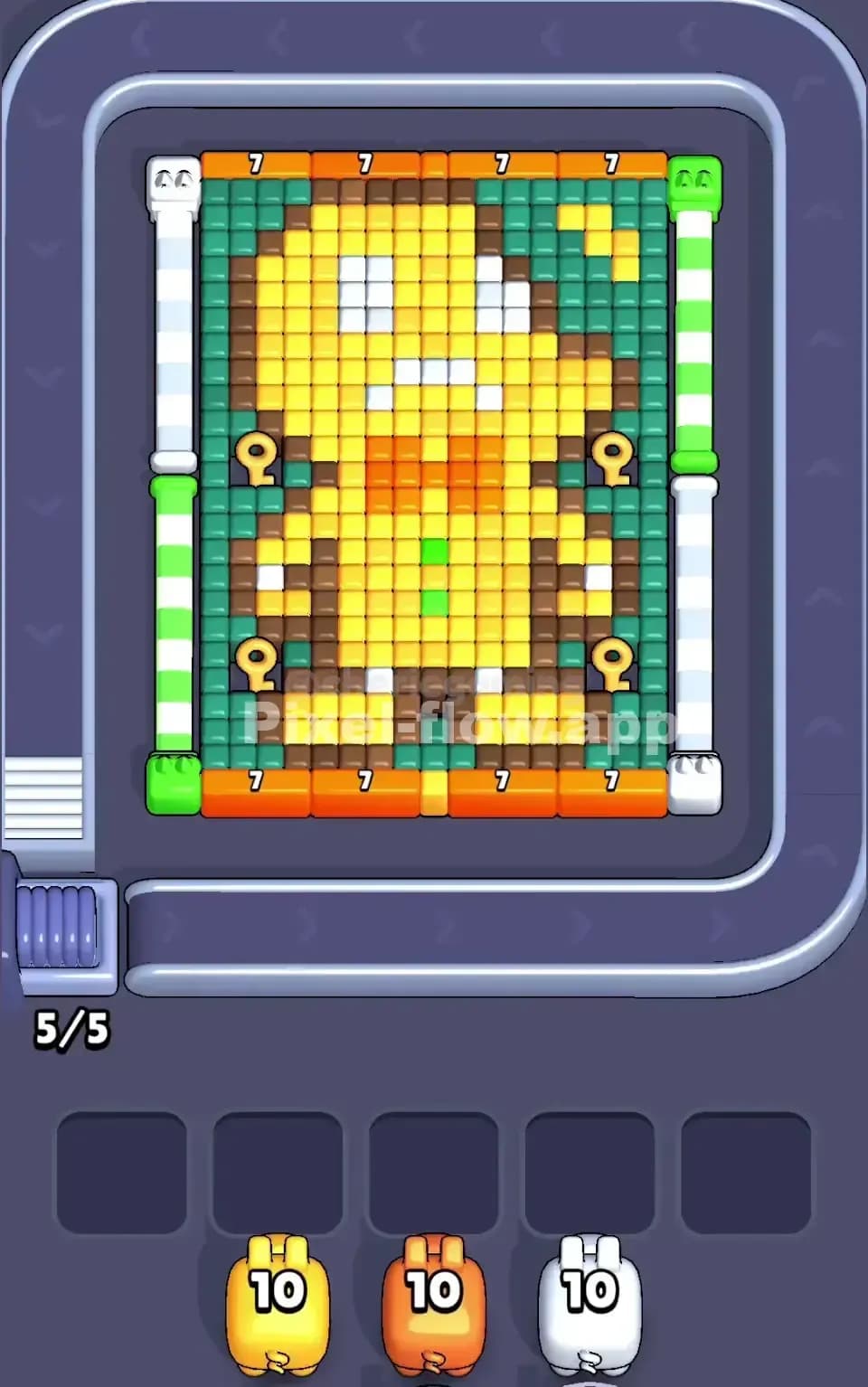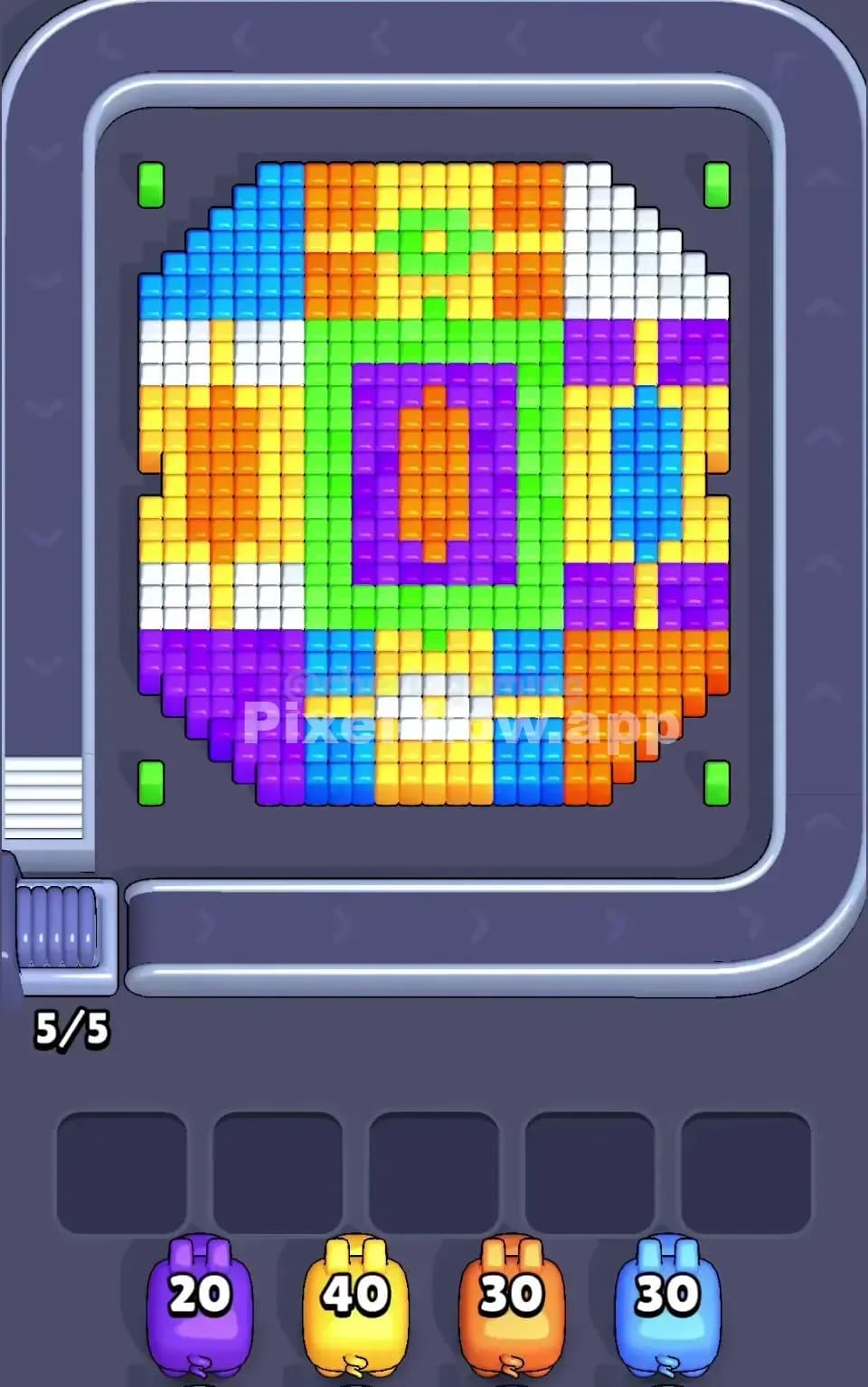
Pixel Flow Level 80 Solution | Pixel Flow 80 Walkthrough
How to beat Pixel Flow Level 80: Video solution & walkthrough. The fastest way to pass Pixel Flow 80.
Is this the wrong level layout?🤔
Pixel Flow randomizes levels for different players. Don't worry, just upload a screenshot of your board, and our AI will find the correct video instantly.


Pixel Flow Level 80 Walkthrough
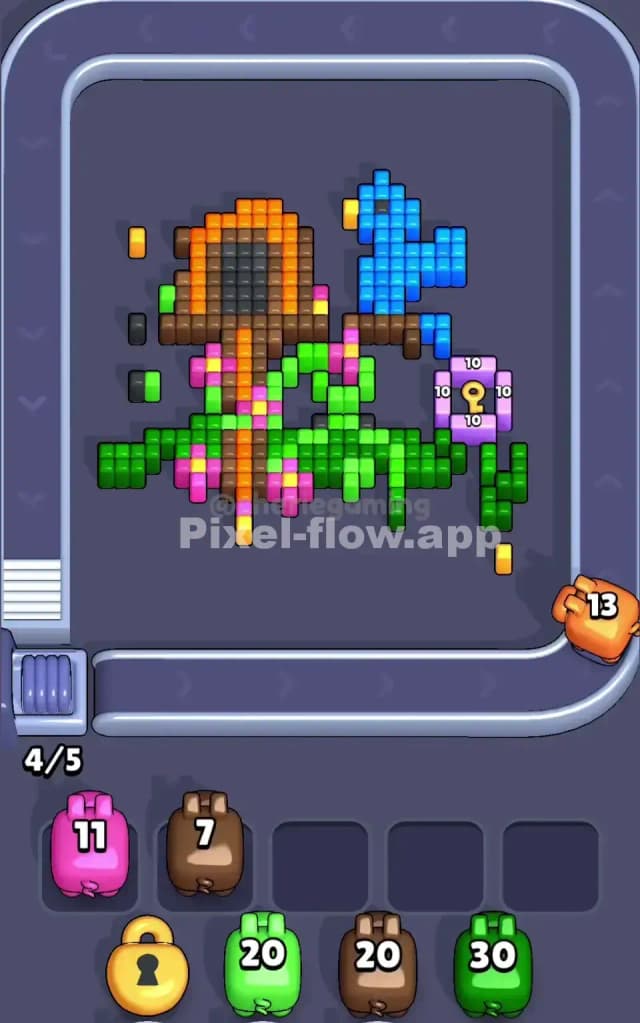
This level introduces a scenic garden composition: a brown birdhouse perched on a tree post, flanked by climbing vines on the left and a large blue bird on the right. The entire scene rests on a thick bed of green grass. Your main obstacle here is not just the layers, but a specific blocker mechanic: a Purple Lock floating beneath the blue bird.
The rules are standard: match the pig color to the pixel color. However, Pixel Flow Level 80 is deceptive. The sheer volume of green pixels at the bottom tempts you to play fast, but the Purple Lock on the right side acts as a gatekeeper. If you ignore it, your waiting slots will clog with useless pigs, leading to a quick loss. Because of this specific choke point and the high ammo count required to break the lock, this is a very hard level.
Pixel Flow Level 80 Overview
Think of this board as three distinct columns that need to be dismantled.
On the far left, you have a vertical stack of green leaves dotted with Pink Flowers. It’s messy. The flowers break up the solid blocks of green, meaning you can’t just spam green pigs blindly; you have to watch out for those pink interruptions.
In the center stands the Brown Birdhouse. It has a high-contrast orange roof and a dark center hole. This is the "spine" of the level. It’s thick. It requires multiple passes to shave down the front wall to reveal the darkness inside.
On the right, the situation is dangerous. A bright Blue Bird sits on a branch, but directly below it hovers a Purple Lock encased in blocks labeled with "10". This isn't just decoration. These blocks effectively shield the grass and the trunk behind them. Until you smash this lock mechanism, the right side of the board is a "dead zone" for many shots. The asymmetry here is lethal: the left is open and easy to chip away at, while the right is a fortress until you find the right key.
Step by step solution walkthrough for Pixel Flow Level 80
First Color Zone to Erase in Pixel Flow Level 80
Your opening moves must focus on the Green Grass at the very bottom.
Narratively, you are "mowing the lawn." Logically, this is the only play that makes sense for survival. The bottom three rows are almost entirely solid Green. This is your safety valve. When the conveyor belt starts moving, you will likely see a mix of colors. If you see Green pigs, dump them immediately into this bottom section.
Do not try to get cute and hit the upper leaves on the left yet. Clear the bottom foundation first. Why? Because the Purple Lock and the Brown Trunk are going to require specific, rare pigs later. You need your waiting slots empty to accommodate them. By clearing the massive patch of green at the bottom, you ensure that any Green pig that spawns has an immediate, valid target, keeping your belt moving and your slots open.
How to pass Pixel Flow Level 80 without power ups or boosters
The mid-game of Pixel Flow Level 80 is where most players fail. You will reach a point where the grass is mostly gone, the birdhouse is half-destroyed, and your slots are threatening to fill up.
At this stage, your absolute priority is the Purple Lock.
You will notice blocks with the number "10" on them. This indicates they take multiple hits or specific heavy ammo to clear. When a Purple Pig appears on the belt, it is more valuable than gold. Do not let it pass. Even if you have to put it in a waiting slot for a second, do it. You must hammer that purple section aggressively. Until that lock breaks, you cannot effectively clear the Brown branch holding the bird, nor can you reach the Green layer obscured behind the lock.
A common trap here is the Pink Flowers. They are small, single-voxel targets scattered in the vines. If a Pink Pig comes down the belt and you don't have a clear shot at a flower, do not put it in a waiting slot. Let it loop around. A Pink pig in a waiting slot is a wasted slot because there are so few pink targets. Only slot pigs that have "mass targets" (like Brown or Blue) or crucial utility (Purple).
If you find your slots filling up with mismatched colors (like the tragedy in the reference image where slots are clogged with Green and Brown while the targets are blocked), stop firing. Look at the belt. Only tap a pig if you are 100% sure it has a direct line of sight to a matching color. If the Blue Bird is blocked by the Brown branch, do not tap the Blue pig. Patience saves you here.
Last Details You Clean Up in Pixel Flow Level 80
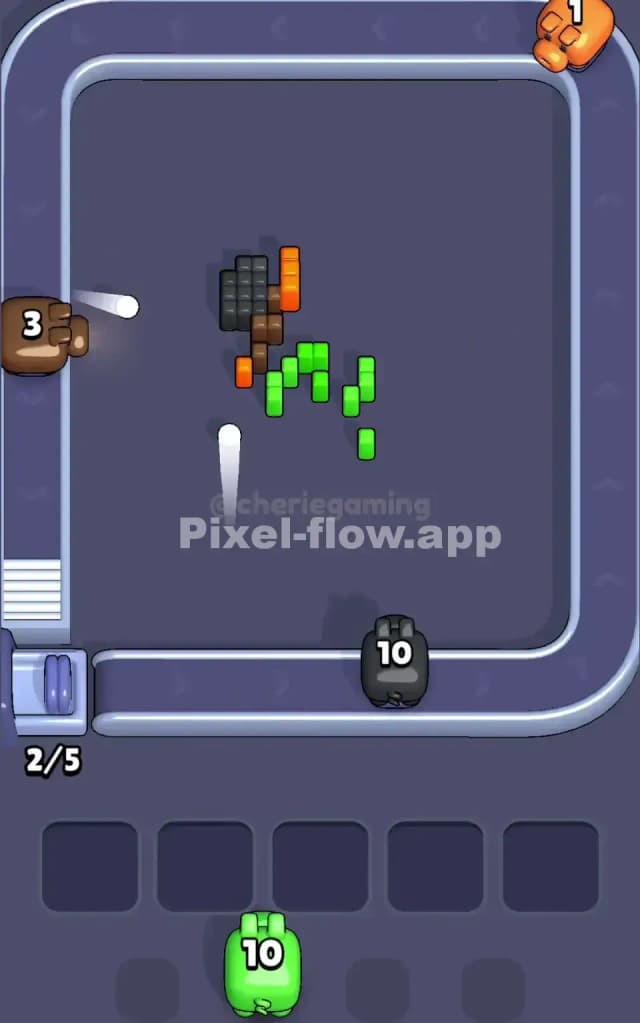
Once the Purple Lock shatters and the Blue Bird falls, you enter the cleanup phase. The board usually looks like a skeleton of its former self.
The final cubes are almost always hidden in the center of the birdhouse. You will be looking for Orange and Dark Grey/Black pixels that make up the interior hole of the house. These are often shielded by the outer Brown wall.
At this point, the danger is low, but the annoyance is high. You might have a Brown Pig with 20 ammo, but only 2 brown pixels left on the screen. This is fine. Use the ammo. Don't worry about wasting shots now; just worry about clearing the path to the Orange center.
Watch out for stray Green pixels that were hiding behind the lock on the right side. They are easy to miss against the background. Scan the bottom right corner carefully to ensure you haven't left a single green voxel that will prevent the level from ending. Clear the orange roof, and you’re done.