Pixel Flow Level 101 Solution | Pixel Flow 101 Walkthrough
How to beat Pixel Flow Level 101: Video solution & walkthrough. The fastest way to pass Pixel Flow 101.
Is this the wrong level layout?🤔
Pixel Flow randomizes levels for different players. Don't worry, just upload a screenshot of your board, and our AI will find the correct video instantly.
Pixel Flow Level 101 Walkthrough
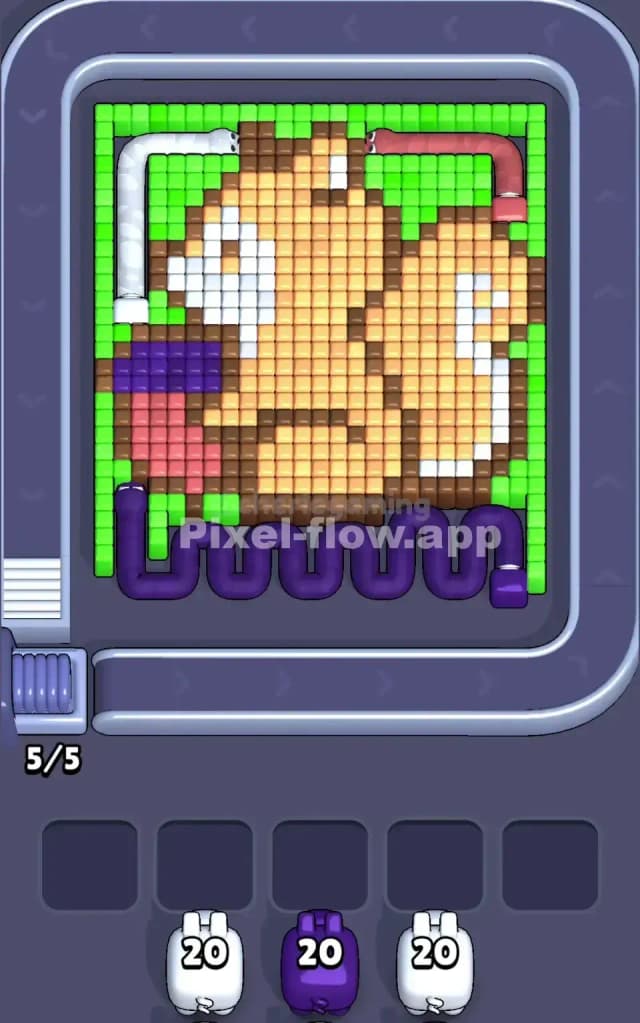
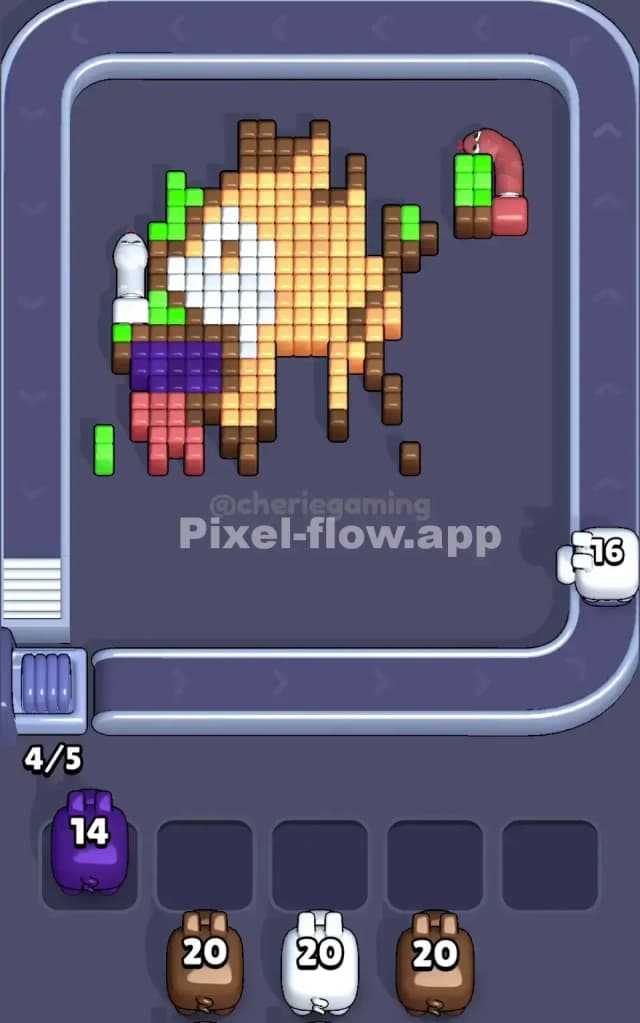
This level features a cute, wide-eyed squirrel holding a nut, but you can barely see the poor guy at the start. He is buried under layers of colored "worms" or pipes that zig-zag across the screen. The board is dense. The layering is deceptive. You have a solid Green background that acts as a wrapper, and then three distinct snake-like shapes (Purple, White, Red) sitting on top of everything.
To beat Pixel Flow Level 101, you must follow a strict "outside-in" demolition process. You have to remove the snakes first, then the green wrapper, and only then can you touch the squirrel. If you try to snipe the brown squirrel pixels too early, your pigs will waste ammo hitting the green walls, or worse, they won't find a valid target at all and will clog your slots.
Is this level hard? Yes, it is very hard. The mixture of scattered colors (the squirrel’s fur is two shades of brown plus white) means you can easily get stuck with a pig that has 2 ammo left and nowhere to shoot.
Pixel Flow Level 101 Overview
Imagine a pixel art portrait of a squirrel that has been vandalized with neon silly string. That’s this board. The central figure is a classic woodland squirrel, rendered in Light Tan and Dark Brown, holding what looks like a nut or berry on the left side.
However, the "silly string" is the problem.
- The Bottom: A massive, undulating Purple worm covers the entire bottom third of the image. It blocks access to the squirrel's feet and tail.
- The Top Left: A White pipe curves down from the corner, obscuring the green background and the squirrel's ear.
- The Top Right: A Red/Pink worm curls around the top right corner.
- The Background: A bright, solid Green field surrounds the squirrel.
The board is highly asymmetric. The left side is cluttered with the white pipe and the purple berry shape, while the right side is dominated by the squirrel's fluffy tail. This imbalance makes the left side more dangerous; there are more "small" color patches there that can trap your pigs.
Step by step solution walkthrough for Pixel Flow Level 101
First Color Zone to Erase in Pixel Flow Level 101
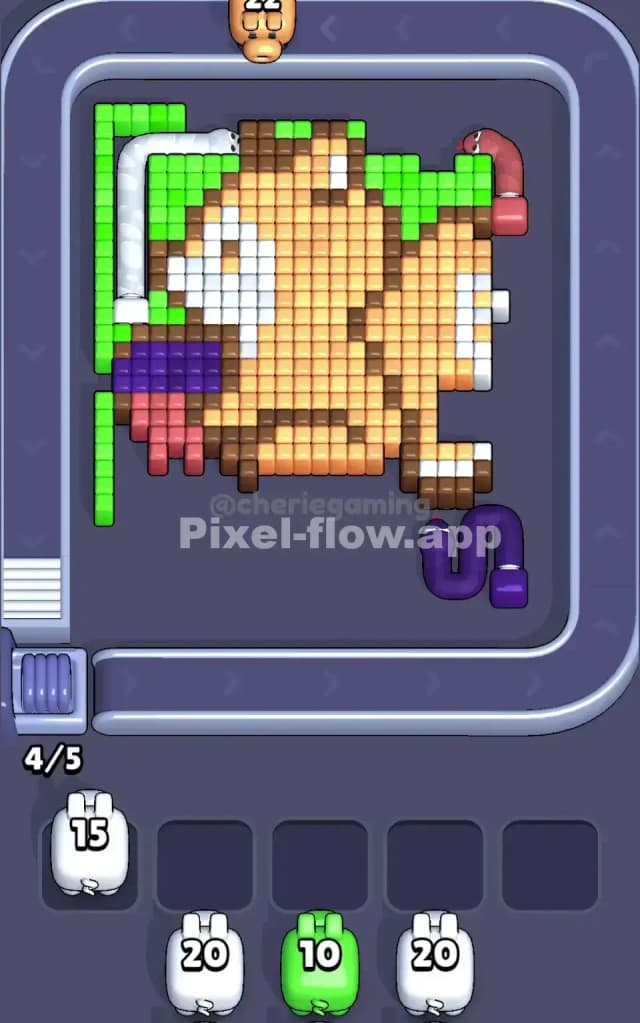
I start by attacking the Purple worm at the bottom. Narratively, it’s the biggest eyesore. Logically, it is the safest play you can make.
In the initial queue, you will likely see a Purple pig. Use it immediately. The purple worm is thick and long, easily consuming a full ammo bar (and probably requiring a second pig to finish completely). By clearing this bottom purple zone, you expose the "floor" of the level. This is critical. Once the purple blockade is gone, you can see the bottom row of the Green background and the squirrel's feet. If you ignore the purple worm, any Green or Brown pigs you send might accidentally hit the bottom row, get blocked, and fail to clear their layers efficiently.
How to pass Pixel Flow Level 101 without power ups or boosters
Once the purple worm is history, you hit the mid-level grind. This is where most players lose. The board looks messy. You have parts of the squirrel exposed, but the Green background is still hugging the sides tight.
Here is the discipline you need to survive without boosters:
- Prioritize the Green Background: You will see Green pigs in your queue. Do not save them. Send them as soon as the path is clear. The green layer wraps around the squirrel's complex shape. You need to strip this away to expose the Dark Brown outline of the squirrel. If you don't clear the green, your Brown pigs will have no angle of attack on the side pixels.
- Watch the White Pig Trap: You have a White pipe in the top left, and the squirrel has a White belly/face. This is a trap. If you send a White pig early, it will destroy the top-left pipe (easy). But if it has leftover ammo, it will try to hit the squirrel's face. If the face is still blocked by Green or Brown pixels, that pig drops into your slot with leftover ammo. Clogged slot. Game over.
- The Red Worm: Treat the Red/Pink worm on the top right as a "filler" move. Only send a Red pig when it is at the front of the belt. Do not dig for it. It doesn't block much critical geometry compared to the Green and Purple layers.
Last Details You Clean Up in Pixel Flow Level 101
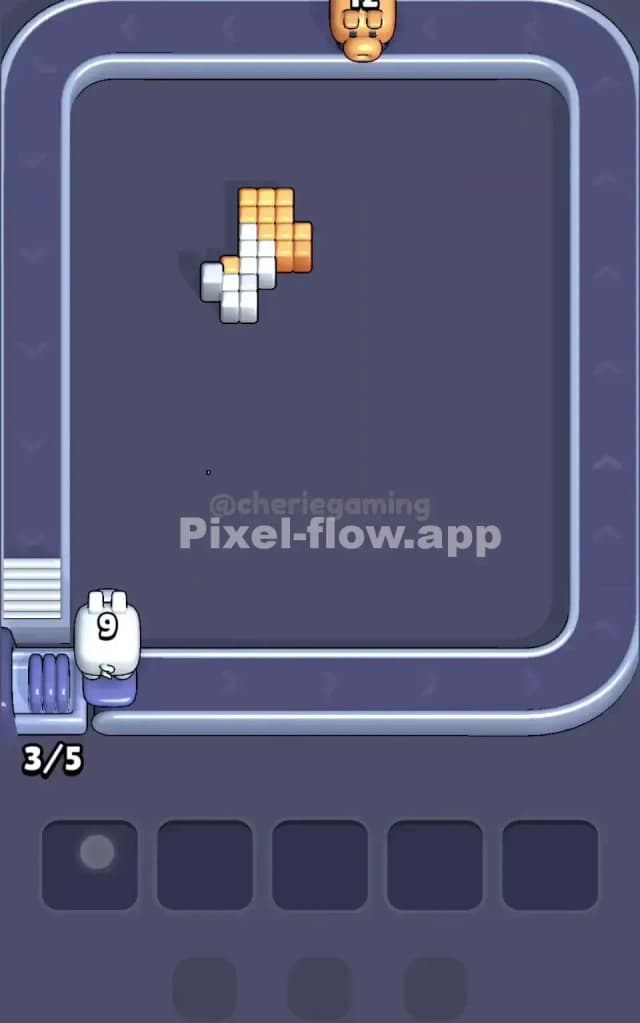
The endgame of Pixel Flow Level 101 is almost entirely Brown and Tan. Once the worms and the green background are gone, you are left with the squirrel itself.
Be careful here. The squirrel is not a solid block. It has a Dark Brown outline and a Light Tan fill.
- The Dark Brown pixels act as a cage. You usually have to peel them off before you can hit the Light Tan pixels inside.
- If you have a Light Tan pig and a Dark Brown pig, send the Dark Brown one first. It breaks the outline.
- The very last cubes to go are usually the scattered White pixels of the eye and the Tan pixels in the center of the tail. These are buried deepest in the voxel stack. Ensure you have empty slots available before tackling the tail, as the uneven shape often leaves pigs with 1 or 2 ammo left.