Pixel Flow Level 103 Solution | Pixel Flow 103 Walkthrough
How to beat Pixel Flow Level 103: Video solution & walkthrough. The fastest way to pass Pixel Flow 103.
Is this the wrong level layout?🤔
Pixel Flow randomizes levels for different players. Don't worry, just upload a screenshot of your board, and our AI will find the correct video instantly.
Pixel Flow Level 103 Walkthrough
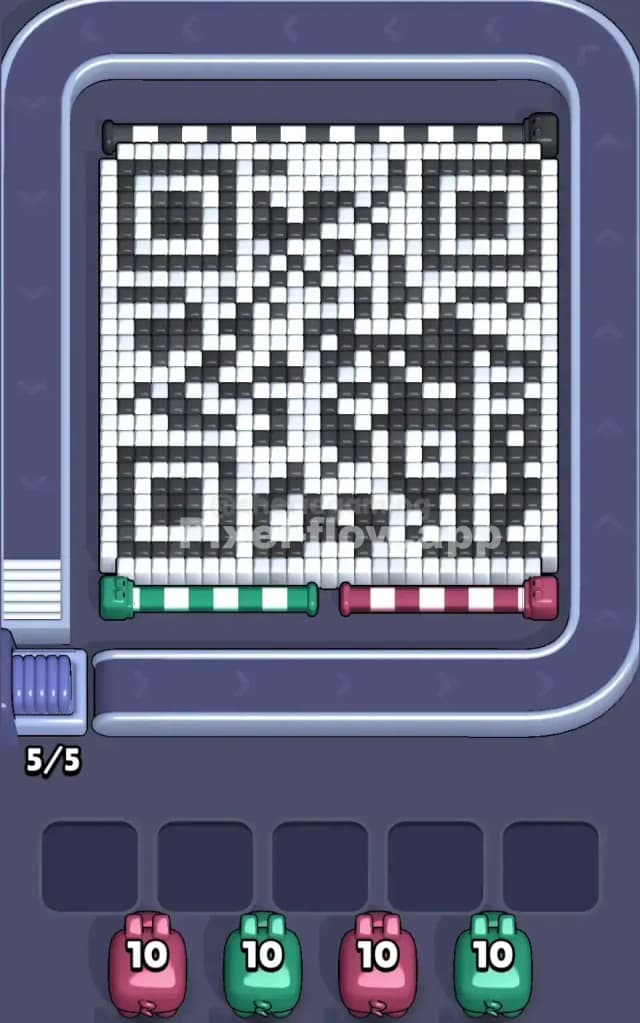
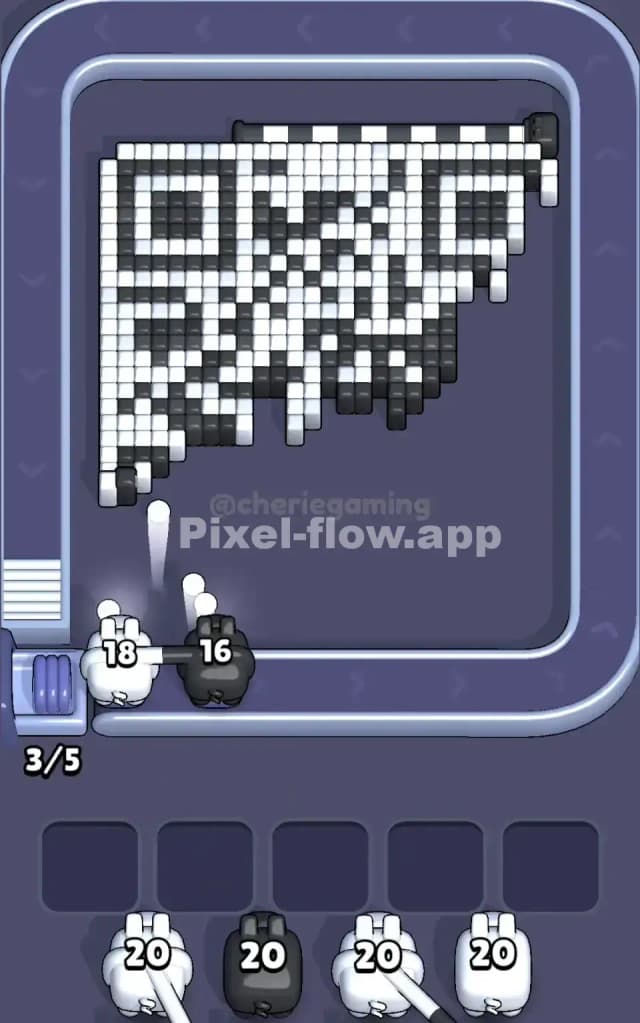
This level is a massive headache disguised as a piece of digital art. You are looking at a giant, complex QR Code made of black and white voxels, but there is a catch. Before you can even touch the code, you are blocked by two colored barrier pipes at the very bottom.
The rules for Pixel Flow Level 103 are tricky because of this two-stage structure. You have to destroy the colored gates (Teal and Pink) before you can start chipping away at the black and white noise behind them. Because of the density of the single pixels in the QR code later on, I judge this to be a very hard level.
Pixel Flow Level 103 Overview
The artwork here isn’t a cute animal or a landscape; it’s pure data. It is a classic QR code, defined by its three large square "finder patterns" in the corners (top-left, top-right, bottom-left) and a chaotic mess of pixels in the middle. It feels mechanical and cold.
The most critical visual feature isn't the code itself, but the two horizontal pipes guarding the bottom.
- On the left, there is a Teal (Green) pipe.
- On the right, there is a Pink pipe.
These pipes act as a shield. Until they are gone, the main Black and White pigs cannot effectively reach the bottom rows of the QR code. The level is vertically asymmetrical because the QR code's pattern is random noise, meaning a column that looks easy on the left might be a nightmare of alternating colors on the right.
Step by step solution walkthrough for Pixel Flow Level 103
First Color Zone to Erase in Pixel Flow Level 103
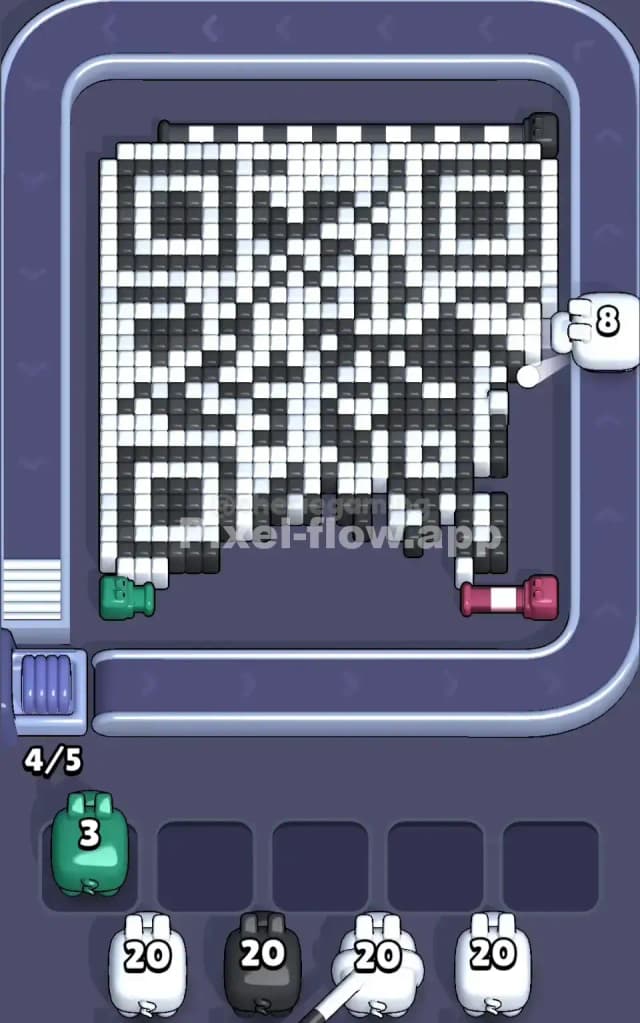
You have zero choice here: you must destroy the Teal and Pink barrier pipes first. The game will initially feed you Teal and Pink pigs. Do not try to save them.
I start by dropping the Teal pigs immediately on the left side to smash that green pipe. Narrative-wise, you are "opening the gate." If you let these pigs sit in your waiting slots while waiting for Black or White pigs, you will clog your board instantly. The pipes are solid blocks, meaning one pig can unload its entire ammo clip into them without moving. This is the easiest part of the level. Clear the Pink pipe on the right simultaneously. Once these colorful distractions are gone, the real grind begins.
How to pass Pixel Flow Level 103 without power ups or boosters
Once the pipes are destroyed, the game switches to Black and White pigs. This is where it gets dangerous. The QR code is "noisy," meaning there are lots of single, isolated pixels rather than big solid chunks. This eats up ammo fast because a pig might shoot one pixel and then fall into a slot with 9 ammo left.
To survive without items:
- Target the "Finder Patterns" first. Look for the big square hollow blocks in the corners. These have long vertical lines of solid black or white. Place your pigs here first. It guarantees they spend 4-5 ammo shots before dropping, keeping your board clear.
- Ignore the "Noise" early on. Do not place a fresh pig in a column that only has one matching pixel at the bottom. Wait. Let the conveyor belt bring you a pig that matches a column of blocks.
- Watch the Slot Limit. Pixel Flow Level 103 is a "slot-killer." Because the pixel colors alternate so frequently (Black-White-Black-White), your pigs will stop shooting constantly. You will end up with 5 pigs in your slots, all with partial ammo. Always prioritize clearing a pig from a slot over placing a new one from the belt. If a Black pig in a slot has a clear shot, tap it. Don't get greedy for the perfect column.
Last Details You Clean Up in Pixel Flow Level 103
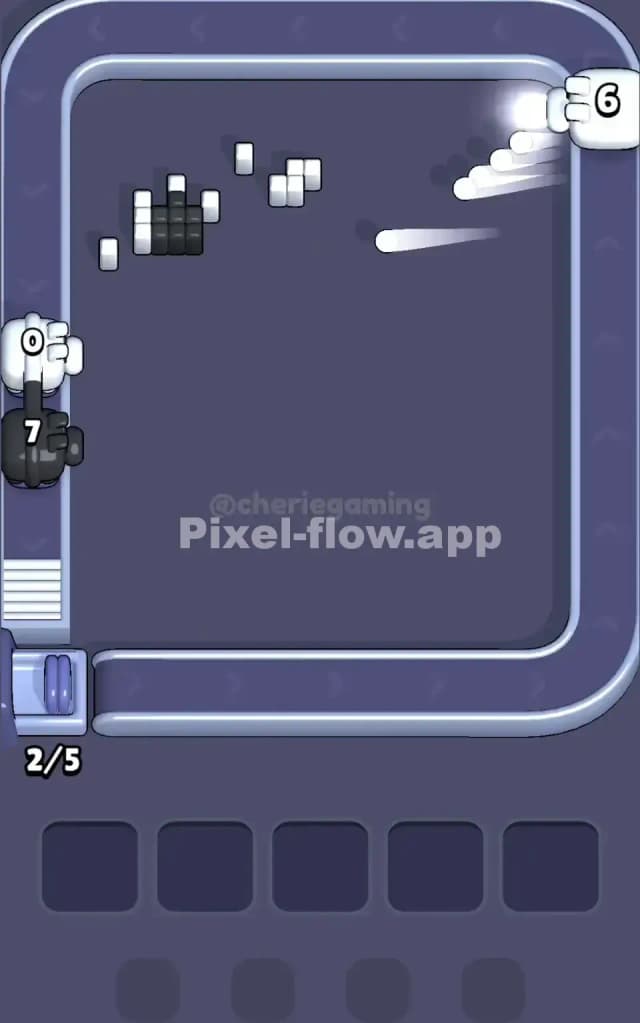
By the end, the recognizable squares of the QR code will be gone. You will be left with a floating, jagged cloud of single pixels in the center of the board. This is the "scraps" phase.
The last few moves are usually frustrating because the remaining pixels are often hidden behind each other or spaced out in a way that requires one pig per pixel. Save your high-ammo pigs for columns where pixels are stacked. If you see a single white pixel floating alone in column 4, wait until you have a low-ammo pig or no other choice before attacking it. Patience wins here. Rush, and you'll run out of slots with ten blocks left to go.