Pixel Flow Level 110 Solution Walkthrough | Pixel Flow 110

How to solve Pixel Flow level 110? Get instant solution for Pixel Flow 110 with our step by step solution & video walkthrough.

Share Pixel Flow Level 110 Guide:
Pixel Flow Level 110 Gameplay
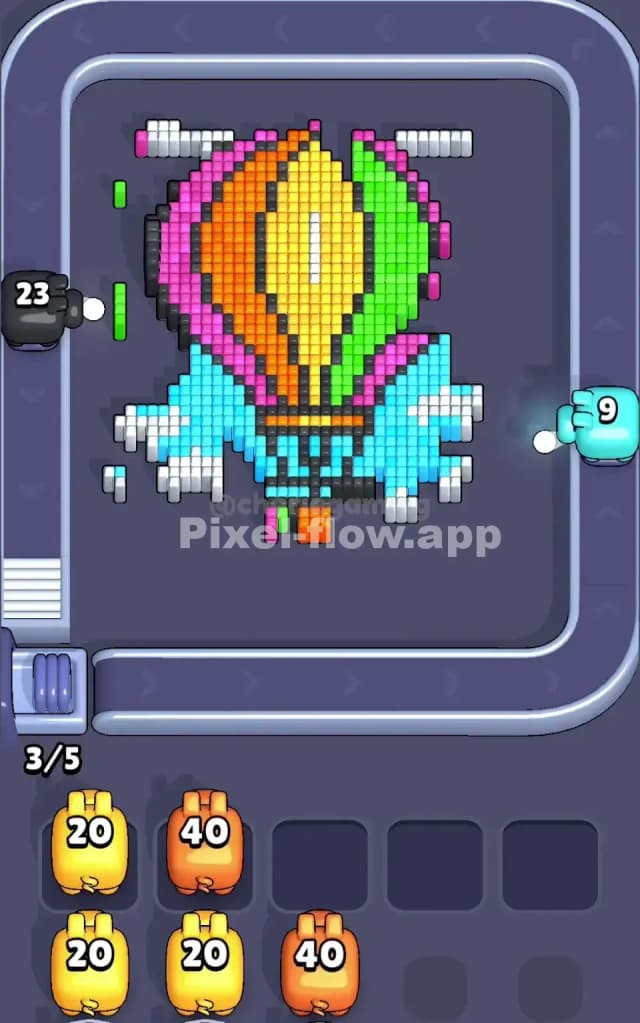
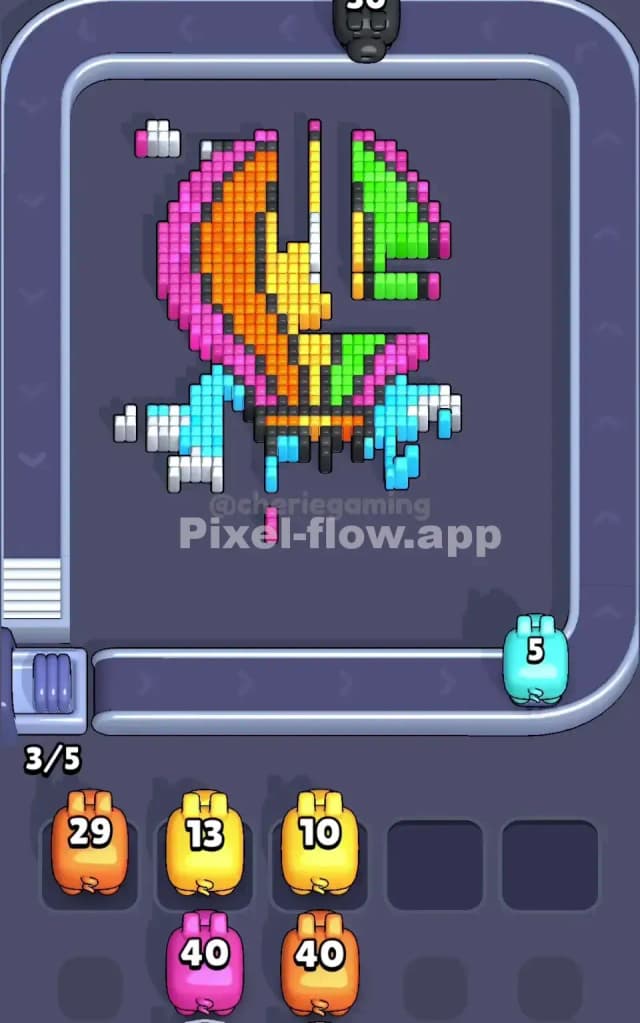
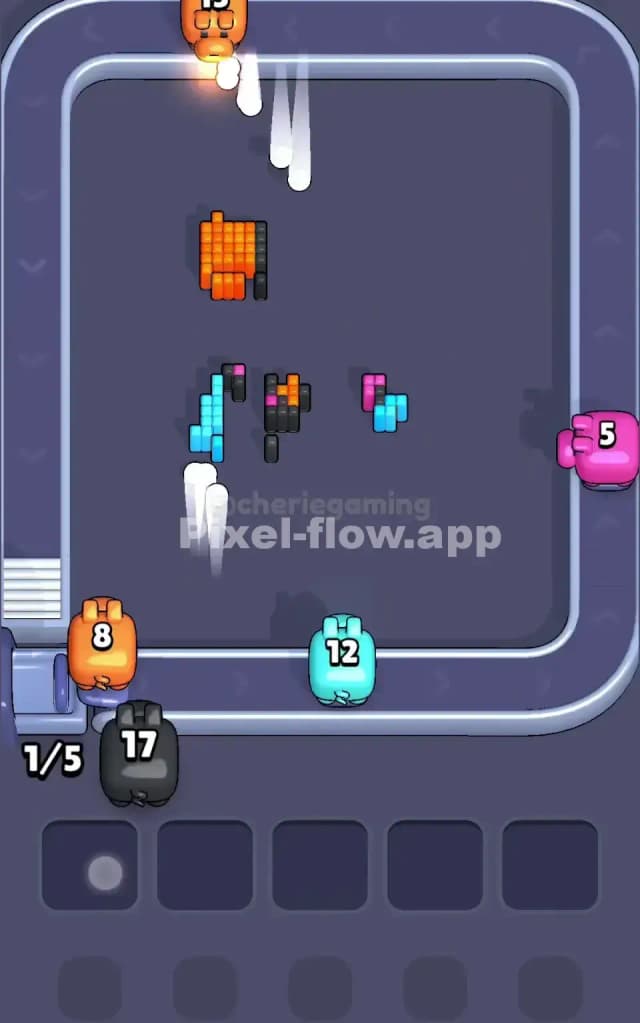
Pixel Flow Level 110 Solution 1
Pixel Flow Level 110 Solution 2
Pixel Flow Level 110 Solution 3

Pixel Flow Level 110 Overview

The Board: A Hot Air Balloon in the Sky

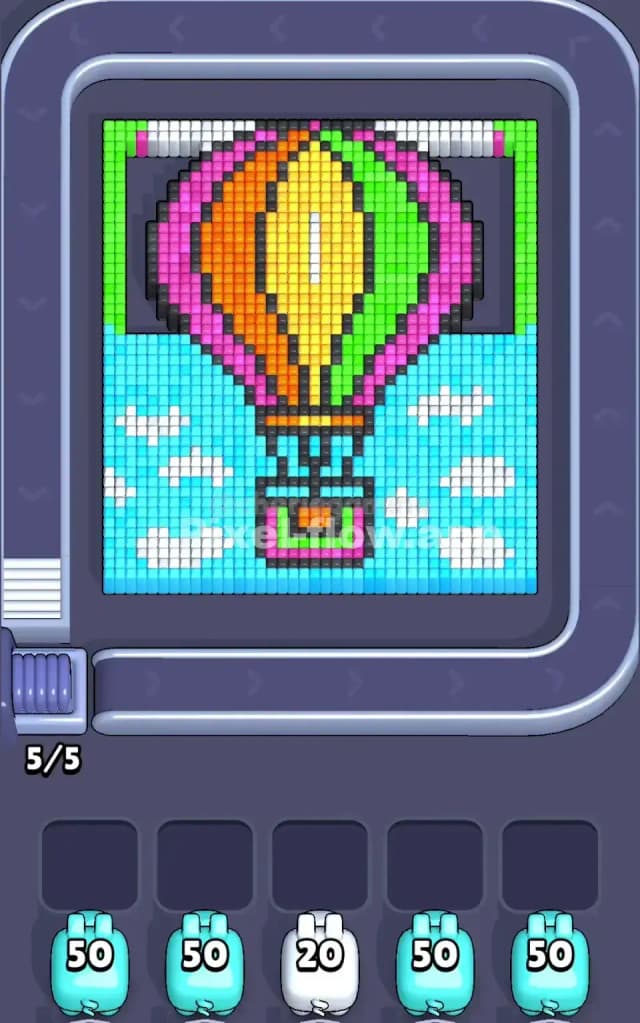
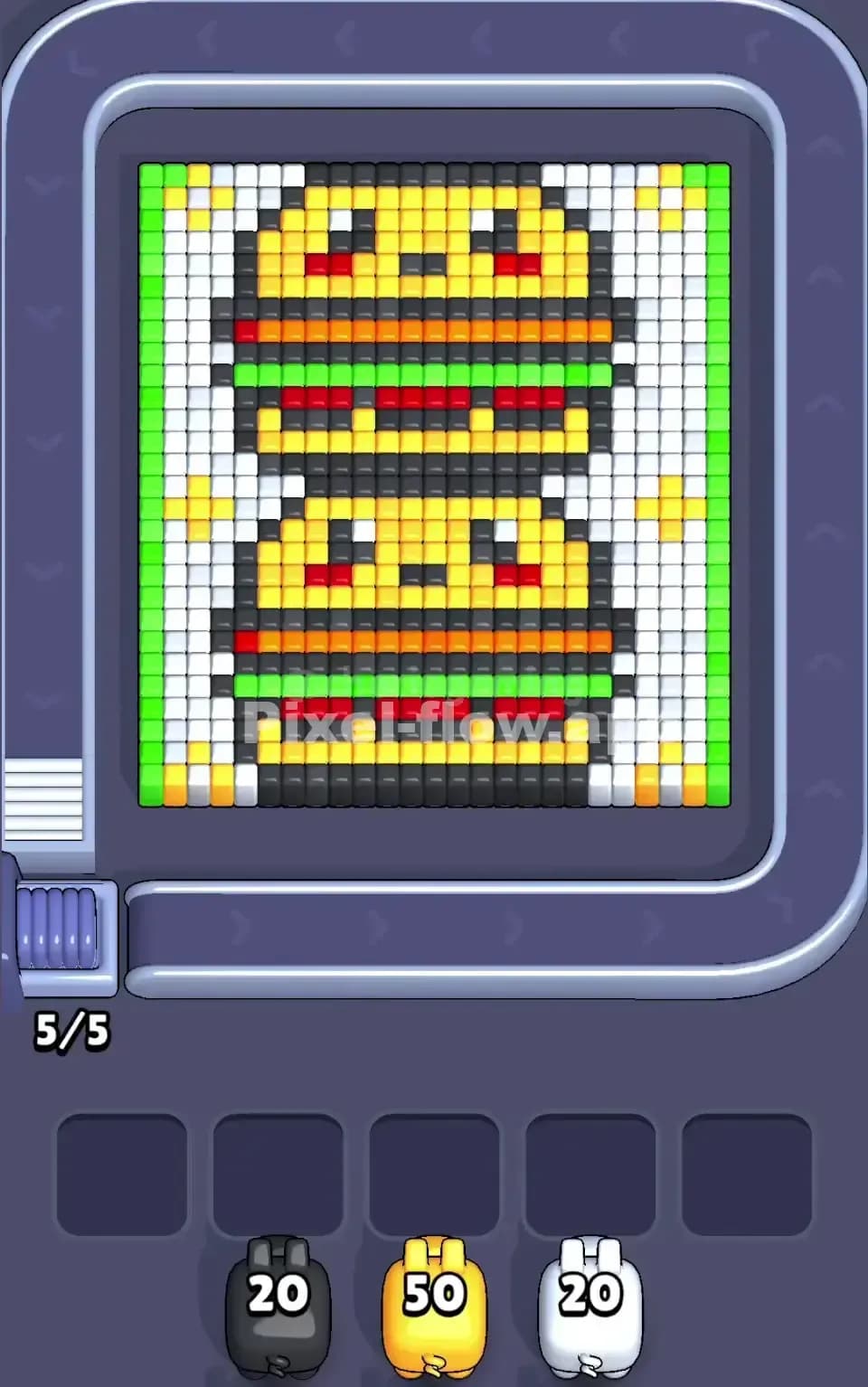
Pixel Flow Level 110 presents you with a charming hot air balloon floating against a bright cyan sky. The balloon's envelope is a stunning diamond shape filled with vibrant greens, magentas, oranges, and yellows, creating a striking focal point in the upper half of the board. Below that sits the basket, rendered in darker earth tones with pops of magenta and orange detail. The sky itself is dominated by cyan cubes, punctuated with white clouds scattered throughout. This isn't just eye candy—the color distribution tells you exactly what pigs you'll need and how much work each one has to do.

The board structure is deceptively layered. At first glance, you're staring at a dense concentration of colors in the balloon section, while the sky feels spacious. Don't let that fool you. Once you start clearing the balloon's outer rings, you'll expose deeper layers that demand precision targeting. The win condition is straightforward: clear every single voxel cube on the board. Your five waiting slots will fill with pigs as they arrive from the queue, and each pig automatically shoots cubes matching its color until it runs out of ammo.

Deterministic Ammo and the Stakes

Every pig in Pixel Flow Level 110 carries a fixed ammo count, and those numbers are locked in from the start. Looking at the queue at the bottom, you've got cyan pigs with 50 ammo each, one white pig with 20 ammo, and more cyan pigs with 50 ammo. Your pigs will shoot in that exact order, and their ammo will deplete by exactly one for each matching cube destroyed. This deterministic system means there's no randomness—only strategy. If you send pigs into the waiting slots without a clear plan, you'll jam the buffer and fail. Your job is to sequence these pigs so they always have valid targets waiting for them.


Why Pixel Flow Level 110 Feels So Tricky

The Cyan Bottleneck

Here's what makes Pixel Flow Level 110 genuinely frustrating: cyan dominates the board, and you've got four cyan pigs carrying 50 ammo each. That's 200 ammo dedicated to one color, and while the sky is packed with cyan cubes, they're not evenly distributed across the board's layers. Early on, you might send your first cyan pig down, watch it blast through the obvious sky cubes, and then suddenly—it runs out of valid targets with ammo still in the tank. Now that pig drops into a waiting slot as a "stuck" pig. Send two more cyan pigs in the same reckless order, and you've filled three of your five slots with partially spent pigs that can't shoot anything. You're now one or two bad decisions away from a complete jam.

The trick is that cyan cubes hide beneath the balloon's outer layers. Until you systematically clear the magenta, orange, yellow, and green rings, many cyan cubes remain completely inaccessible. If you burn your cyan ammo too early on the surface-level sky, you'll have nothing left for the buried cyan once you expose it later.

Tricky Color Patches and Visibility Issues

The white pig in the middle of your queue is another subtle trap. It carries only 20 ammo, and white cubes are scattered across the top edges and integrated into the clouds. They're not clustered in one convenient region. If you don't strategically expose or target white cubes at precisely the right moment, this pig will find itself stranded with ammo left to burn but nowhere to shoot, clogging your buffer again.

The magenta is also deceptively complex. Magenta forms part of the balloon's outer structure and creates a diagonal band across the design, but it's split into sections. Some magenta cubes are surface-level, while others sit sandwiched between the balloon layers and the sky. If you're not careful about which magenta pigs you send and when, you'll clear one cluster and leave another isolated, leading to yet another stuck pig.

When It Clicks

Honestly, when I first tackled Pixel Flow Level 110, I spent five minutes just sending pigs at random, watching my waiting slots fill up with increasingly desperate accuracy. By the third attempt, I realized I was thinking about this all wrong. The real "aha" moment came when I stopped reacting to what was visible and started planning around which colors would become exposed after clearing outer layers. Once I mapped out a rough sequence of cyan, then magenta, then the balloon details, the level stopped feeling chaotic and started feeling like a puzzle I could actually solve.


Step-by-Step Strategy to Clear Pixel Flow Level 110

Opening: Establishing Control and Space

Start by sending your first cyan pig (50 ammo) into the fray. This is your opening move, and you're targeting the obvious cyan sky cubes—specifically the ones you can see clearly without any obstruction. Don't go crazy. Let this pig work through the surface-level cyan in the upper sky region, exposing white cloud cubes and potentially some of the balloon's outer edges. You want this pig to deplete maybe 30 to 40 ammo, leaving it with a comfortable buffer.

The goal here is simple: keep at least three waiting slots completely empty. You're establishing control, not trying to finish entire colors in one shot. Once your first cyan pig is done, it'll drop into slot one. Now send the white pig (20 ammo) immediately afterward. The white cubes are scattered, so this pig will find targets in the cloud patches and around the balloon edges. Let it burn through its ammo completely—white is manageable because there's enough of it visible that the pig shouldn't jam. Your white pig should drop into slot two once it's exhausted.

At this stage, you've used only two of your five waiting slots. You still have room to maneuver.

Mid-Game: Exposing Layers and Sequencing Carefully

Now comes the careful part. Your next move is to send a second cyan pig (50 ammo) to continue clearing sky cubes, but this time you're being strategic about which cubes you target. As the white pig clears its targets, more of the balloon's outer magenta and orange edges become visible. Let this cyan pig work on the exposed sky, but—and this is crucial—don't send it down if it'll immediately jam. Watch the board. If there are 25+ cyan cubes visible and accessible, send the pig. If there are fewer, wait. Park this expectation in your mental queue.

Once you've made some headway with cyan, it's time to introduce magenta. Send a magenta pig and let it nibble at the outer balloon structure. Magenta forms those diagonal bands, and as you clear magenta, you're exposing orange and yellow underneath. Each magenta pig will likely have plenty of targets because magenta is so integral to the balloon's structure. Magenta pigs should clear cleanly without jamming too often.

By the mid-game phase, you should have three to four pigs in your waiting slots, with one or two still completely empty. Your board should look noticeably different—the balloon is beginning to lose its outer layers, the sky is getting sparser, and you're starting to see yellow and orange in the middle of the balloon. This is progress. The key is patience. Don't rush just because you have ammo available. Every pig you send should have a clear target waiting.

End-Game: The Final Push and Buffer Management

As you approach the end of Pixel Flow Level 110, you'll need to finish the remaining colors in a specific order. Orange and yellow typically come next—these colors are concentrated in the balloon's core. Send your orange and yellow pigs in sequence, watching carefully as each depletes its ammo. By now, the board should be opening up significantly, and you'll have better visibility of what's underneath.

The final cyan pig is your last heavy hitter. By the end-game, most of the surface cyan is gone, but buried cyan cubes from the inner layers will finally become accessible. This is why you saved your ammo. That final cyan pig should have a clear target-rich environment waiting for it. If you've sequenced correctly, this pig will burn through its remaining 50 ammo almost entirely on the inner cyan layer, clearing everything it touches.

The final piece is cleaning up the buffer. If you've been careful, your first cyan pig (the stuck one in slot one) may have only 10–15 ammo left and no targets. That's okay—it's staying in the waiting area, harmless. Your other pigs should exit cleanly once their ammo hits zero. The last few pigs to arrive should have just enough targets to finish themselves off without jamming.


The Logic Behind This Pixel Flow Level 110 Plan

Exploiting Order, Ammo, and Slot Management

The strategy outlined above works because it respects the game's deterministic nature. You're not gambling or hoping—you're planning. Every pig arrives in a fixed order with a fixed ammo count. By understanding which colors appear in which order, you can predict which pig will jam first and plan accordingly. In Pixel Flow Level 110, cyan pigs dominate, so the majority of your effort is distributing those 200 ammo units across multiple phases: early surface cyan, mid-game support, and late-game deep cyan clearing.

The waiting slots aren't a punishment; they're a resource. When a pig has no valid targets, it sits in a slot. By keeping at least two slots empty throughout the game, you're buying yourself flexibility. If a pig jams unexpectedly, you have room to work around it. If an incoming pig desperately needs a target, you've got breathing room to expose something relevant before it arrives.

Staying Calm and Thinking Ahead

Pixel Flow Level 110 is winnable if you resist panic. The moment you feel frustrated—say, after your second cyan pig jams—take a breath and count. How much cyan is still visible on the board? Are there any unexposed layers that might contain more cyan? What's the next pig in the queue? Is it a color you can actually use right now? These questions are your roadmap. You're not reacting; you're anticipating.

Plan two or three pigs ahead. Before you send your first cyan pig, already know that your white pig follows and where it'll find targets. Before your second cyan pig launches, have spotted the magenta patches waiting to be cleared. This forward thinking transforms Pixel Flow Level 110 from a stressful scramble into a satisfying puzzle where each move feels intentional and purposeful.