Pixel Flow Level 113 Solution Walkthrough | Pixel Flow 113

How to solve Pixel Flow level 113? Get instant solution for Pixel Flow 113 with our step by step solution & video walkthrough.

Share Pixel Flow Level 113 Guide:
Pixel Flow Level 113 Gameplay
Pixel Flow Level 113 Solution 1
Pixel Flow Level 113 Solution 2
Pixel Flow Level 113 Solution 3

Pixel Flow Level 113 Overview

The Pixel Art Subject and Color Layers

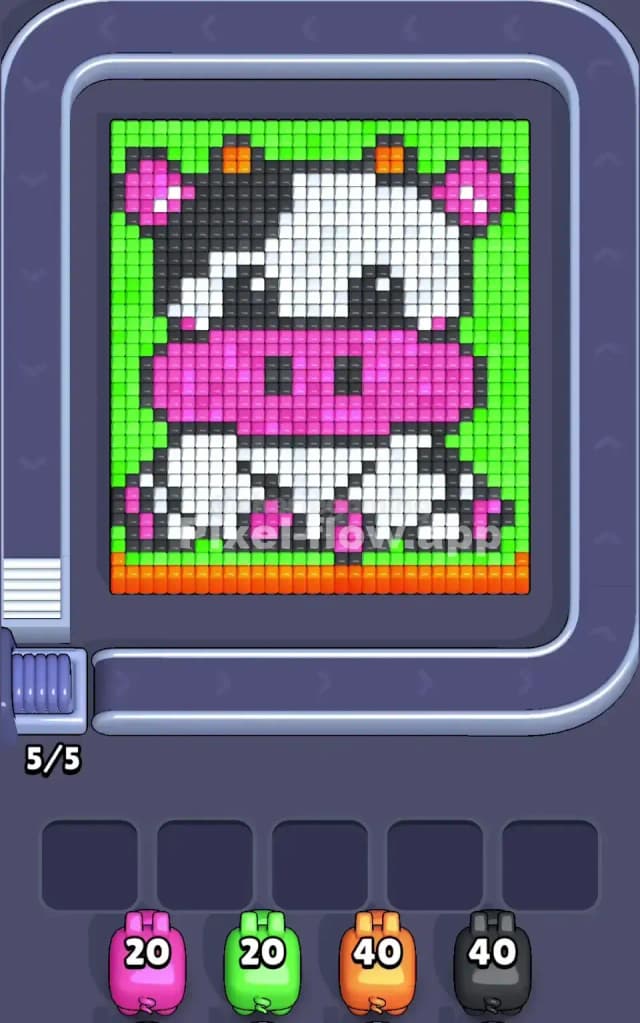
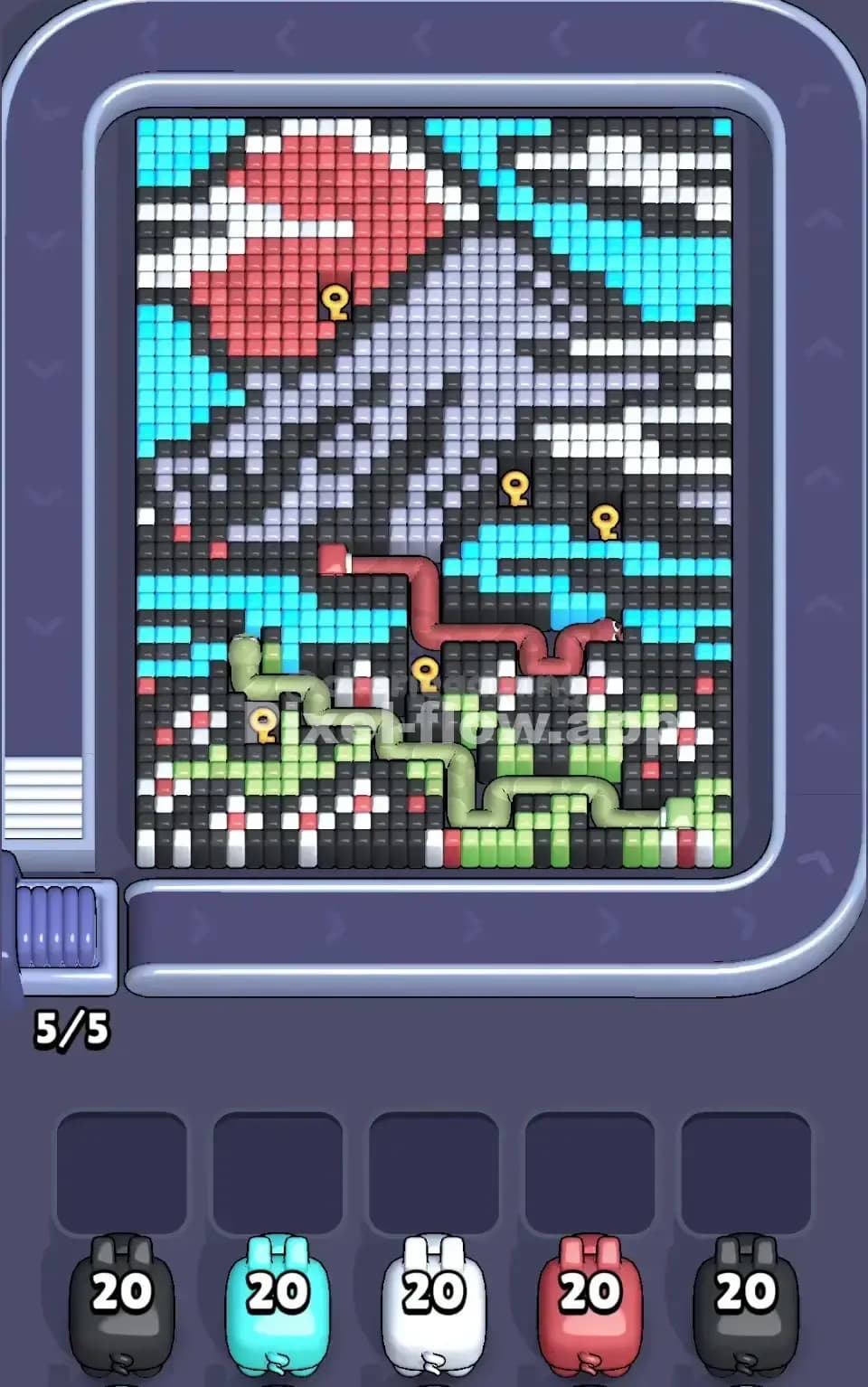
Pixel Flow Level 113 presents a charming pixel-art cat face set against a vibrant layered background. The cat itself is rendered primarily in white and black voxels, forming the familiar feline features—round eyes, pointed ears, and a calm expression. Behind and around the cat, you'll find a dominant bright green background that forms the outermost layer, with magenta (hot pink) accents framing the cat's head like a decorative crown or bow. Orange and additional black details create depth and visual interest, while an orange stripe runs along the bottom of the board. This multi-layer structure is intentional: you're not just clearing random cubes, you're methodically peeling away the pixel art itself to reveal what lies beneath.

The starting pig queue shows four incoming pigs with fixed ammo counts: a magenta pig with 20 ammo, a green pig with 20 ammo, an orange pig with 40 ammo, and a black pig with 40 ammo. This deterministic sequence means your success hinges entirely on sequencing—you must feed each pig the right targets in the right order so that no pig runs out of valid matches and gets stuck in the waiting slots before you've cleared the board.

Win Condition and Deterministic Gameplay

To clear Pixel Flow Level 113, you must destroy every single voxel cube on the board. Your pigs automatically fire at cubes matching their color, and each successful hit costs 1 ammo. The challenge isn't aim or reflexes—it's planning. Because the pig order never changes and each pig's ammo is fixed, there's a mathematically perfect solution (or a set of solutions) that works every time. Once you understand the bottleneck and the ammo-to-target ratio, Pixel Flow Level 113 becomes a logic puzzle rather than a chaotic shooter.


Why Pixel Flow Level 113 Feels So Tricky

The Green and Magenta Bottleneck

Here's where most players hit a wall: the green background is enormous, and the magenta decorative elements are numerous. Your first green pig carries only 20 ammo, yet the green layer sprawls across the entire outer edge of the board. If you fire the green pig too early without exposing more green cubes underneath, it'll burn through its ammo on surface-level targets and still have nowhere to go. Meanwhile, that 40-ammo black pig is waiting in queue, and if the green pig lodges itself in a waiting slot with ammo remaining but no targets visible, you've created a traffic jam that might be impossible to escape. The magenta pig faces a similar trap—20 ammo sounds reasonable for the pink decorative sections, but if you don't sequence your other pigs correctly, magenta will either fire on hidden layers you can't access yet or run dry while important cubes remain.

Awkward Patch Problems and Hidden Depths

The white voxels forming the cat's face create a visual focal point, but they're surrounded by black outlines and details that themselves need clearing. If you rush to remove white early, you'll leave black pockets scattered across the board—and your black pig (the last in queue) needs those black cubes to have something to shoot. Additionally, the orange stripe at the bottom and the orange accent cubes near the cat's eyes are spread across two separate regions. Your orange pig has 40 ammo, which should be plenty, but only if you don't waste shots on orange cubes you could've exposed later by clearing green or magenta first. It's the classic Pixel Flow Level 113 gotcha: abundant ammo doesn't guarantee success if you can't access all targets in a logical order.

The "Click" Moment

I'll be honest—my first five attempts at Pixel Flow Level 113 felt chaotic. I'd fire the magenta pig, watch it devour pink targets from the upper corners, feel confident, then panic when the green pig arrived and had almost nothing to shoot because I'd left the green background unexposed in critical areas. The frustration peaked around attempt seven when I realized I was thinking about the problem backwards: instead of asking "where should I shoot next?", I should've been asking "which color layer needs to come down first to expose the layers beneath?" That mental flip transformed Pixel Flow Level 113 from maddening to methodical. Once I accepted that the board is a series of nested, interdependent layers and that pig order is sacrosanct, the solution clicked into place.


Step-by-Step Strategy to Clear Pixel Flow Level 113

Opening: Establish Breathing Room

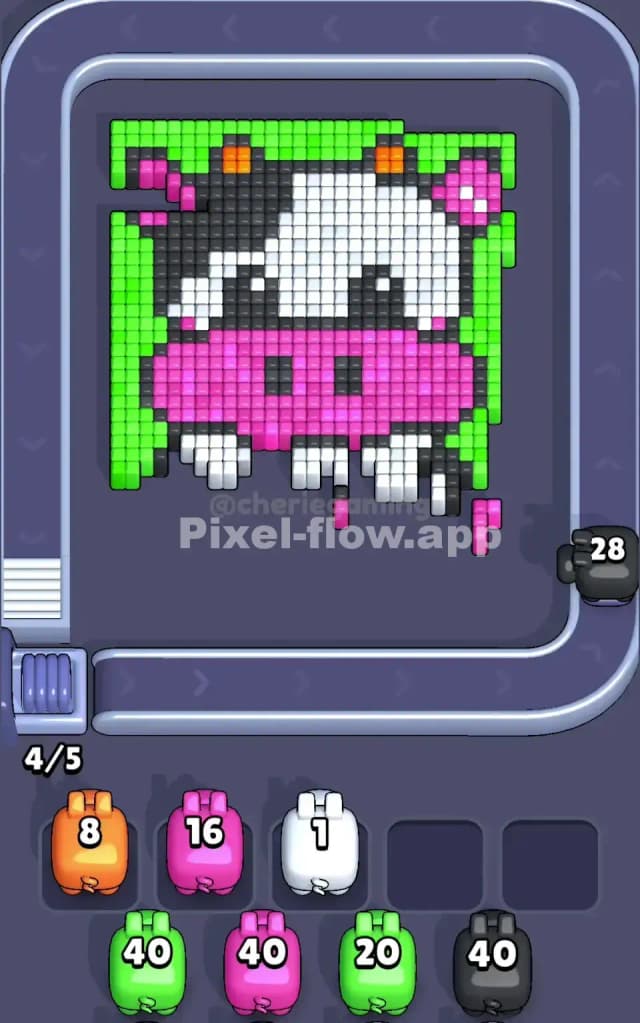
Start by deploying your magenta pig to clear the decorative magenta sections in the upper left, upper right, and mid-frame areas. Don't go crazy—fire enough magenta shots to eliminate the obvious pink targets, but keep at least 6–8 ammo in reserve. Your goal in this opening phase is to achieve two things: expose some of the black outline work that will otherwise clog your board later, and crucially, keep at least 3 of your 5 waiting slots empty. If you burn both magenta and green pigs on the outer layers and neither has ammo left, you're finished before the orange and black pigs even arrive.

Next, send your green pig to work on the bright green background, but be surgical about it. Target the green cubes at the very edges and corners first—the ones that don't obscure anything beneath them. Aim especially for the green background directly above the orange stripe at the bottom, because clearing that zone early will give your orange pig clear firing lines later. Again, preserve ammo: use maybe 12–14 of your 20 green ammo here, leaving room for a second green volley if needed.

Mid-Game: Sequence Exposures and Park Strategically

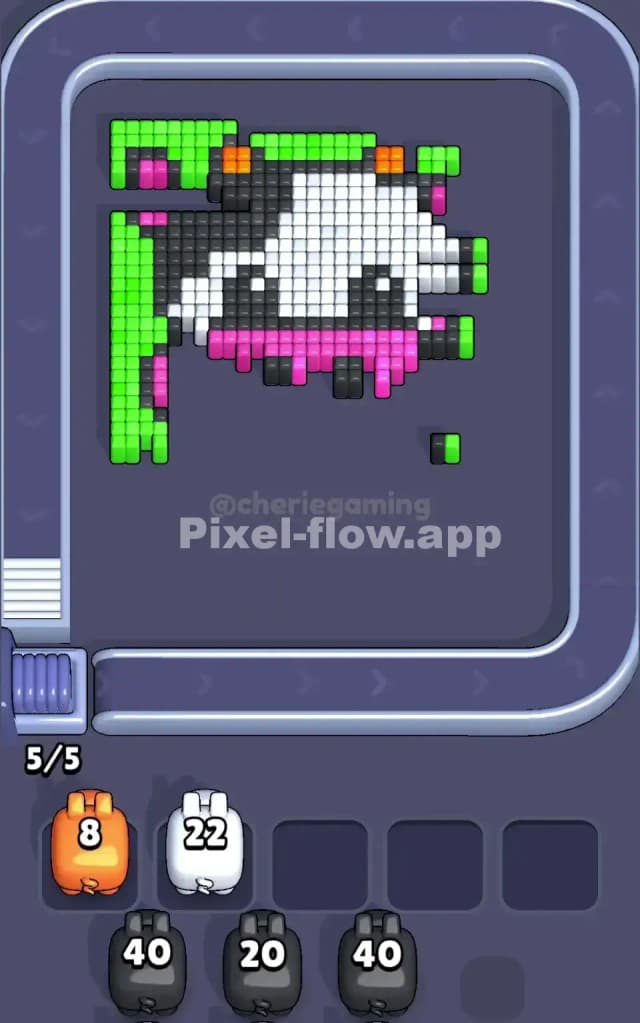
Once your magenta pig is parked (either fully spent or deliberately sitting idle with ammo), your green pig should be in a holding pattern too. Now it's time to let your orange pig have the spotlight. The orange pig carries 40 ammo—plenty for its job—and orange appears in two main zones: the accent squares near the cat's eyes and the stripe along the bottom. Fire the orange pig at the bottom stripe first, clearing that entire row. This is cathartic and gives you a huge visual and psychological win. Then pivot to the accent cubes around the eyes.

Here's the critical maneuver: as you're firing orange, watch what layers begin to appear underneath. The white voxels of the cat's face may start peeking through. Don't immediately assume your white job is done—save that task for later when you can see exactly how many white cubes remain. Instead, once your orange pig is adequately spent (aim for 10–15 ammo remaining), park it in a waiting slot.

Now, if your magenta or green pigs still have ammo and you've exposed new targets for them by clearing orange, bring them back. This is where Pixel Flow Level 113 rewards forward planning: a magenta pig with 3 ammo left can finish off the last few pink targets you've just exposed, freeing a waiting slot before your black pig arrives.

End-Game: The Black Pig Finale

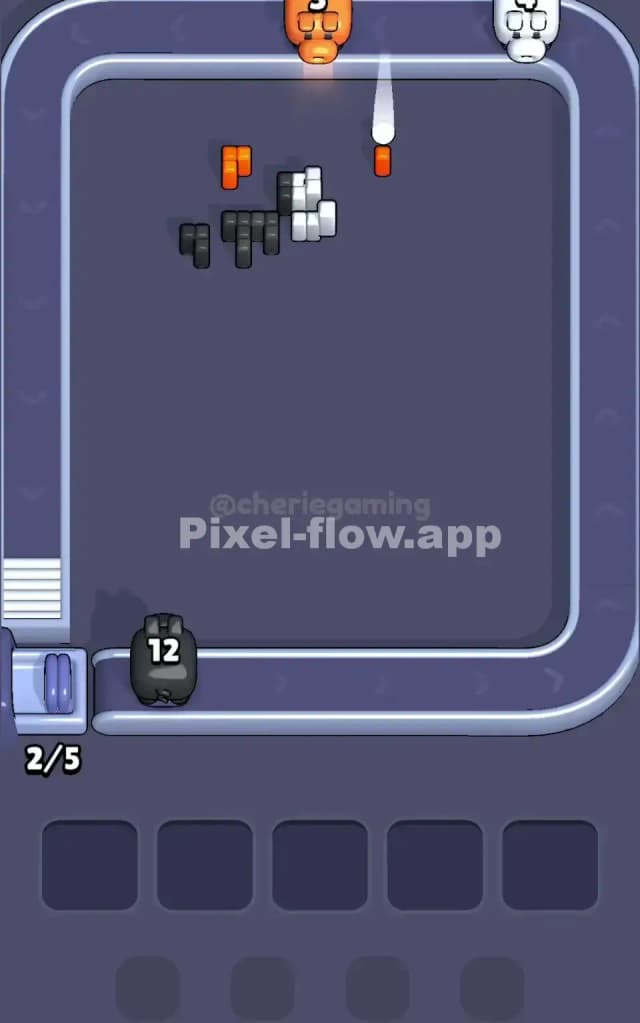
By the time your black pig rolls onto the conveyor belt, the board should be noticeably cleaner. Most of the colored layers—green, magenta, orange—should be mostly or fully cleared. What remains are the black outline details, black pockets in the middle of the image, and possibly some white cubes if they're layered oddly. Your black pig with 40 ammo should tackle these methodically. Fire at dense clusters of black first to prevent them from multiplying (in terms of waiting slot occupancy), then sweep the remaining isolated black cubes.

To avoid a last-second jam, keep count: when your black pig has roughly 5–8 ammo left, it should only have black targets remaining. If you spot a stray white or green cube that somehow slipped through, stop and reassess. You may have made a sequencing error earlier, and doubling back now (if the pig still has ammo and targets are exposed) is better than watching it get stuck. Fire your final ammo shots with intent, leaving the board completely clear and your waiting slots empty. The satisfying completion of Pixel Flow Level 113 comes when that last black cube vanishes and your queue shows no more pigs incoming.


The Logic Behind This Pixel Flow Level 113 Plan

Ammo-to-Target Ratios and the Queue Order

The genius of Pixel Flow Level 113 lies in its deterministic nature. Your pig order is fixed, your ammo counts are fixed, and the board is static. This means you're not fighting randomness—you're optimizing against a known constraint. The magenta pig's 20 ammo isn't arbitrary; there are exactly enough pink and related-color targets to keep it fed if you expose them in the right sequence. Same goes for every other pig. By respecting the queue order and thinking of the board as a series of layers rather than a flat puzzle, you're aligning your strategy with the game's underlying logic.

The strategy above exploits this by deliberately parking pigs before they're fully spent. Yes, you could fire the magenta pig until it's bone-dry, but if doing so leaves no more magenta targets exposed, that pig will slide into a waiting slot and waste a precious slot on a pig with zero utility. By using each pig strategically and leaving it with a small ammo buffer, you preserve flexibility and waiting slots for the pigs yet to come.

Staying Calm, Counting Ammo, and Planning Ahead

Here's the personal discipline required to consistently beat Pixel Flow Level 113: watch the queue, count ammo, and always ask "what's my next pig's job?" As soon as your magenta pig is firing, you should already be thinking about which green patches will be exposed once it stops, and which of those green patches your green pig should prioritize. This two-pig-ahead mentality transforms Pixel Flow Level 113 from a reactive scramble into a calm, methodical solve.

When you feel pressure rising—maybe your waiting slots are filling up or a pig is running low on ammo with targets still visible—take a breath. Remember that the board isn't conspiring against you; it's following deterministic rules. The solution exists. You just need to think layerwise, count carefully, and trust that parking a pig early is better than jamming the system by overcommitting to one color. Master this mindset, and Pixel Flow Level 113 becomes not a cruel challenge, but an elegant puzzle waiting for you to unlock it.